Understanding ecosystems Normal Animals Worksheets for Ages 6-8
3 filtered results
-
From - To
Discover the fascinating world of ecosystems with our "Understanding Ecosystems Normal Animals Worksheets" designed for kids ages 6 to 8. These engaging worksheets provide a fun and interactive way for young learners to explore the interdependence of animals and their environments. Each activity is tailored to enhance critical thinking, boost observation skills, and encourage a love for science. From identifying various habitats to analyzing animal behaviors, these worksheets are perfect for parents and teachers alike. Empower your child’s learning journey and inspire curiosity about nature with our printable resources. Join us in nurturing the next generation of eco-conscious thinkers!
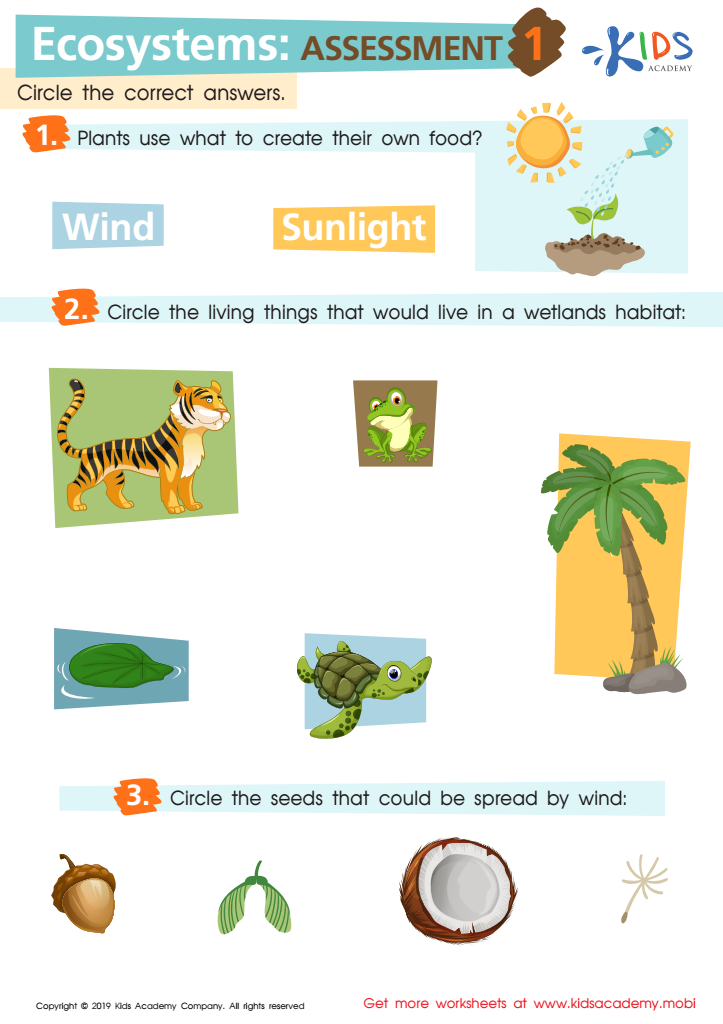
Ecosystems: Assessment 1 Worksheet
 Assign to My Students
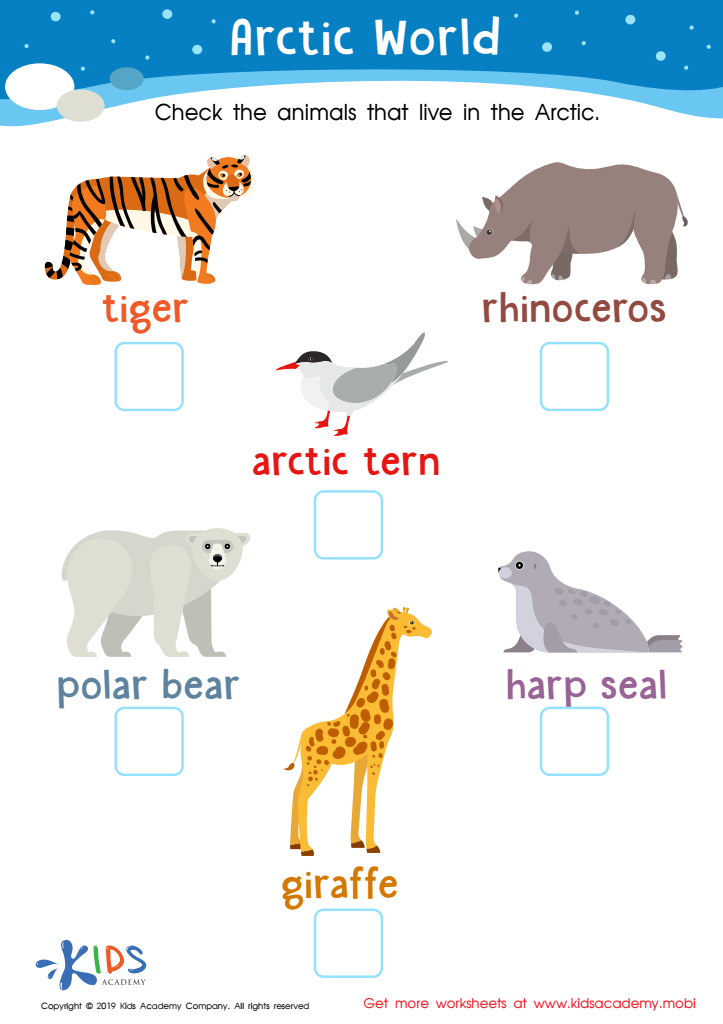
Arctic World Worksheet
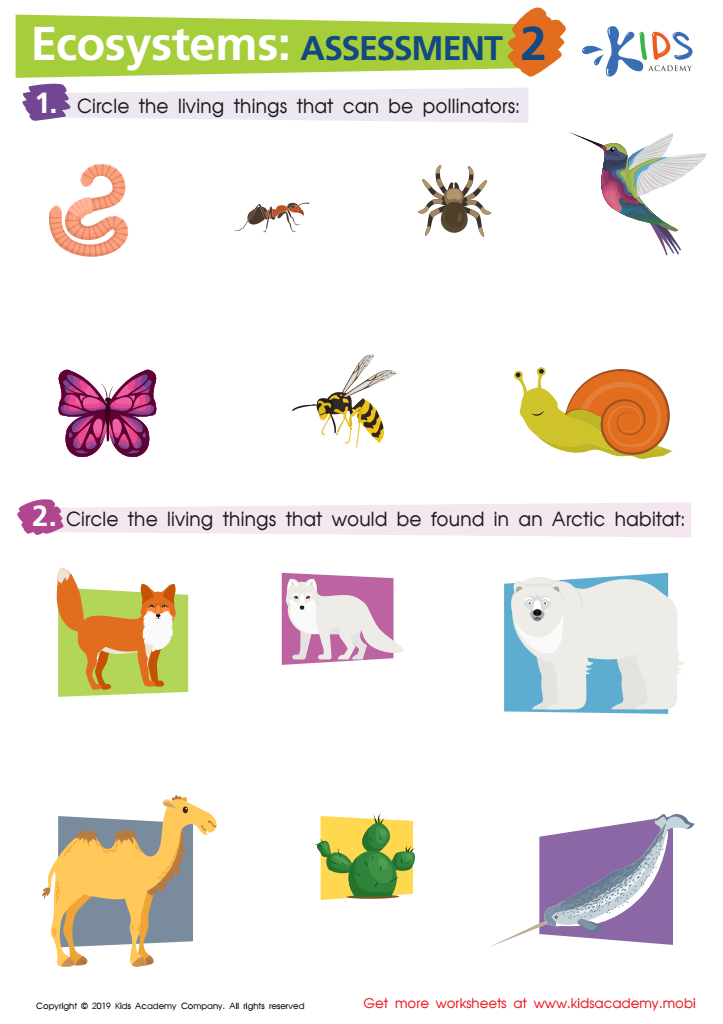
Ecosystems: Assessment 2 Worksheet








Understanding ecosystems and normal animals is crucial for parents and teachers, especially for children aged 6-8. At this age, children are naturally curious and eager to learn about the world around them. Ecosystems represent the intricate connections between living organisms and their environments, fostering an appreciation for nature.
Teaching young learners about ecosystems helps them recognize the importance of biodiversity, demonstrating how each species plays a role in maintaining a balanced environment. When children understand the roles of normal animals—such as predators, prey, and pollinators—they begin to grasp fundamental ecological concepts, which lays the groundwork for lifelong environmental stewardship.
Moreover, these lessons can enhance critical thinking and scientific inquiry skills. Kids learn to observe, ask questions, and consider the effects of human actions on ecosystems. This exploration promotes curiosity and compels them to look at interconnected systems, nurturing future generations of informed citizens.
Ultimately, an understanding of ecosystems encourages empathy towards animals and the environment, reinforcing values such as conservation and responsibility. By educating young minds, parents and teachers can inspire a commitment to preserving the planet, ensuring that children grow up as thoughtful, nature-loving individuals who advocate for a healthy environment.








