Categorizing objects Normal Science Worksheets for Ages 6-8
4 filtered results
-
From - To
Discover the joy of learning with Kids Academy's "Categorizing Objects" worksheets, tailored for children aged 6-8. Our engaging and educational worksheets help young learners enhance their critical thinking by sorting and classifying everyday objects. Each worksheet is designed to develop essential science skills, promoting curiosity and a deeper understanding of the world. With vibrant illustrations and interactive activities, kids will love exploring various categories, such as animals, plants, and shapes. Foster a love for learning and build a strong science foundation with Kids Academy's fun and effective "Categorizing Objects" worksheets.
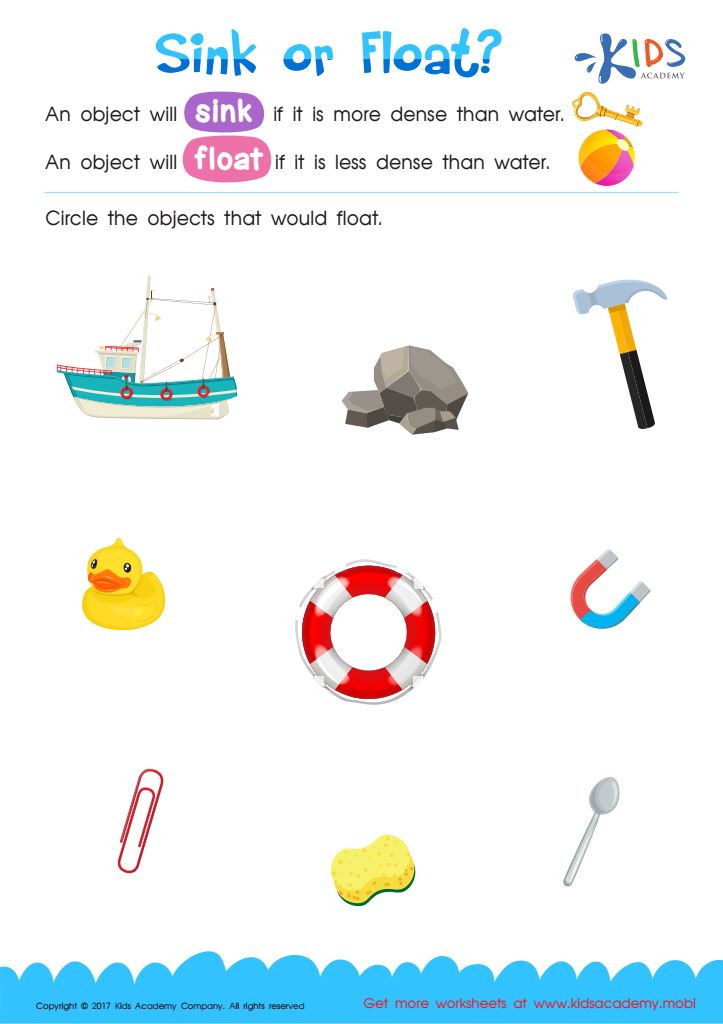
Sink or Float Printable
 Assign to My Students
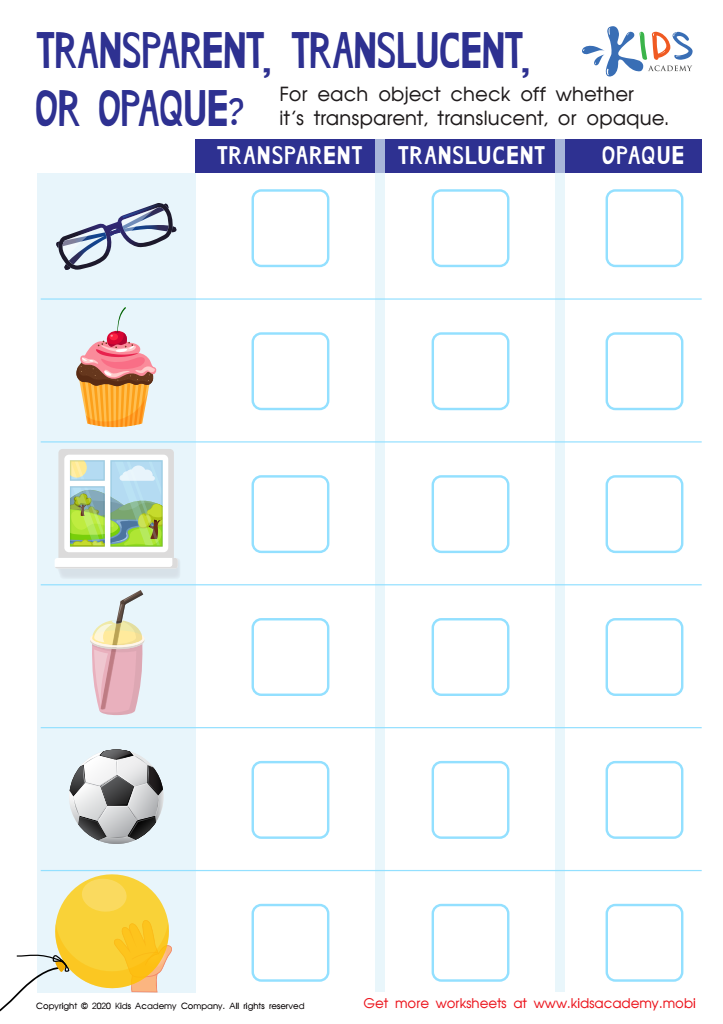
Transparent, Translucent, or Opaque Worksheet
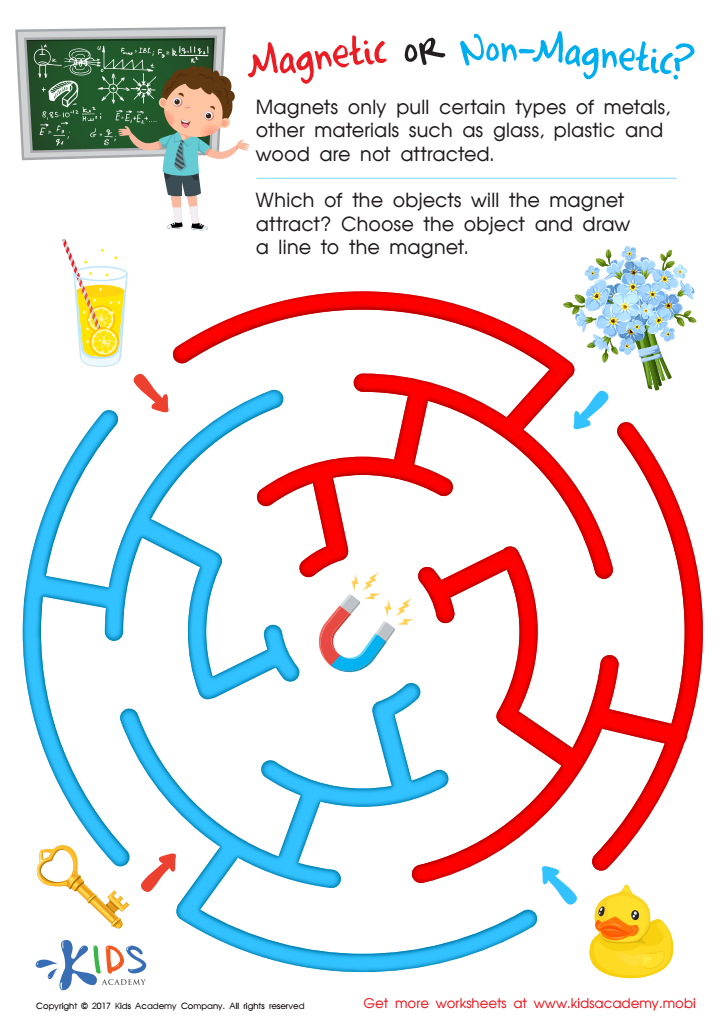
Magnetic or Non–Magnetic Worksheet
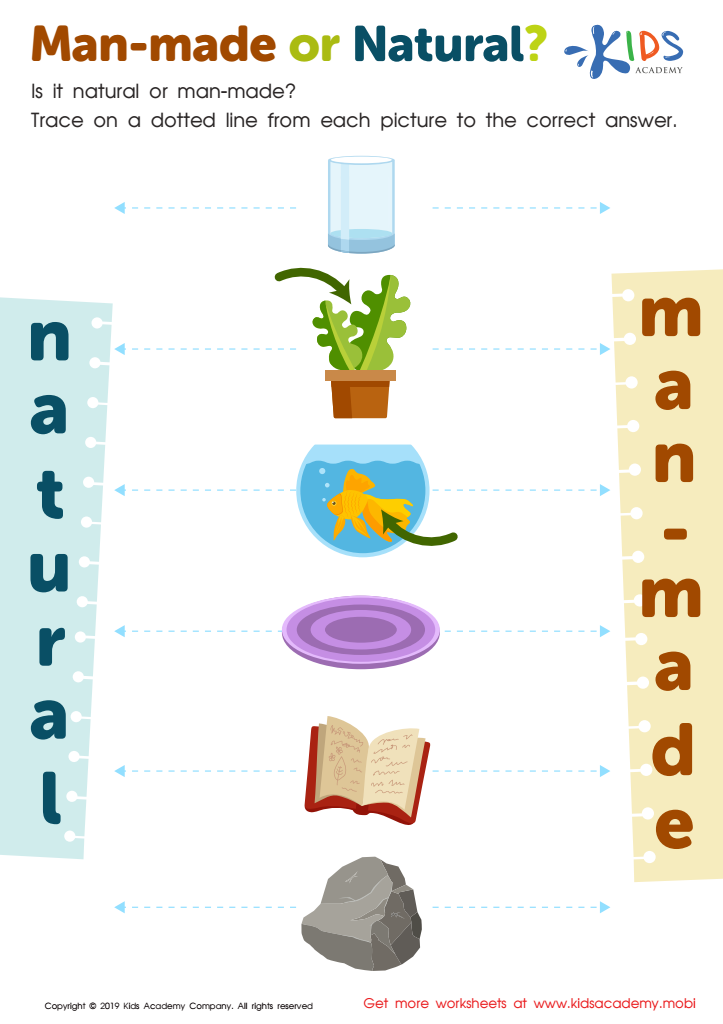
Man-Made or Natural? Worksheet






Categorizing objects is a crucial skill for children aged 6-8, forming a foundation for developing cognitive and academic abilities in various disciplines. For both parents and teachers, understanding and nurturing this skill in the early stages is particularly important.
Firstly, categorization enhances cognitive development by training young minds to observe similarities and differences. This critical thinking skill is vital for problem-solving, logical reasoning, and the ability to make connections between different pieces of information.
In the realm of science, normal science lessons often involve sorting objects by characteristics such as size, shape, color, texture, or function. Introducing children to these practices at an early age allows them to internalize scientific thinking processes, preparing them for more complex concepts and inquiries.
Moreover, categorizing not only boosts academic knowledge but also language development. When children sort and group items, they often learn new vocabulary and concepts, thus enhancing their ability to communicate effectively.
Socially, categorizing tasks can improve collaboration as students share and debate their reasoning behind classifications, leading to improved interpersonal and social reasoning skills.
In essence, supporting the development of categorization skills in young children provides a multi-faceted educational advantage, laying a cornerstone for future academic, cognitive, and social success.







