Understanding natural resources Normal Science Worksheets for Ages 6-8
4 filtered results
-
From - To
Explore the "Understanding Natural Resources" worksheets designed for young learners ages 6-8! These engaging and educational resources introduce kids to the concept of natural resources in a fun and interactive way. Through colorful illustrations and relatable examples, children will learn to identify various natural resources, understand their importance, and discover how to conserve them. These worksheets promote critical thinking and foster a love for environmental science, making learning both enjoyable and meaningful. Perfect for classroom activities or home schooling, our collection encourages creativity and helps develop essential skills while connecting children to the world around them. Start nurturing eco-conscious kids today!
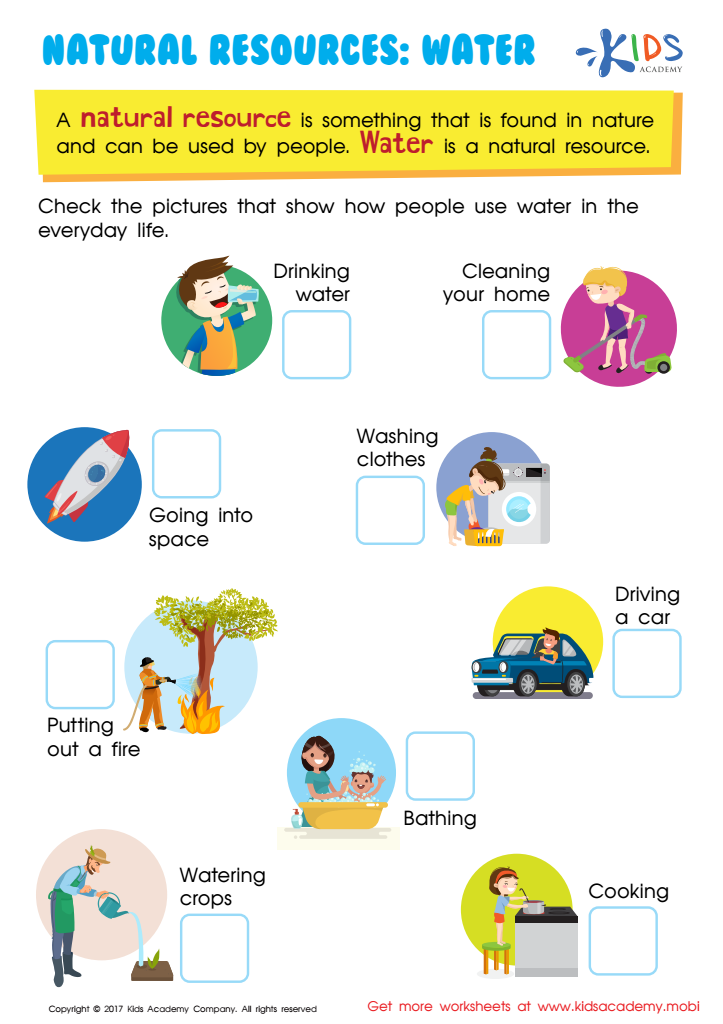
Natural Resources: Water Worksheet
 Assign to My Students
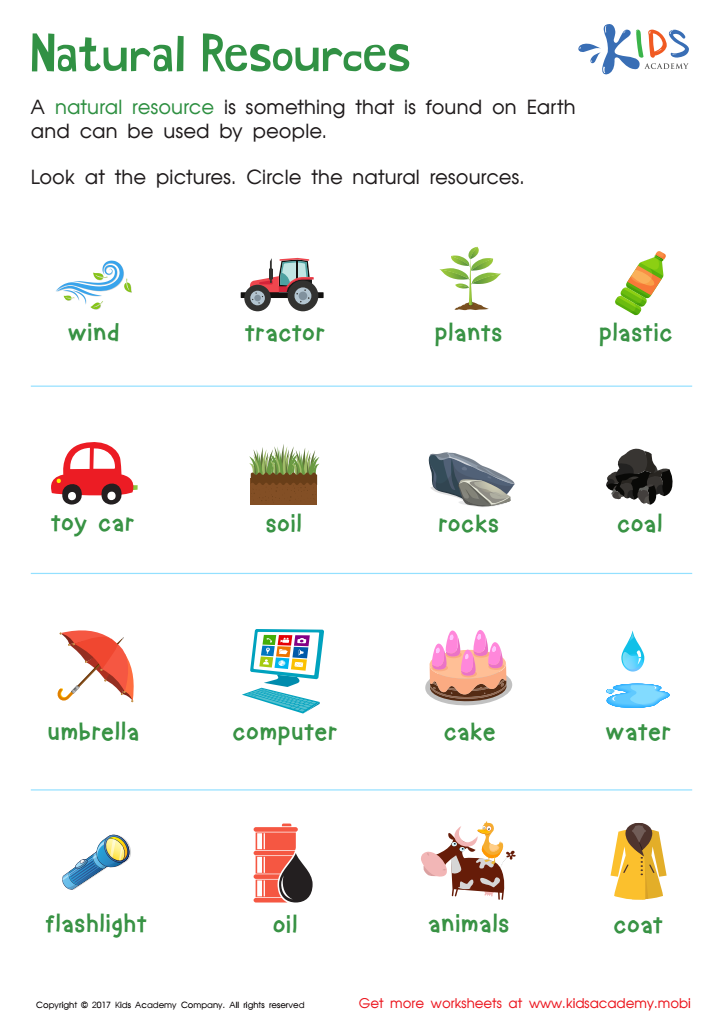
Natural Resources Worksheet
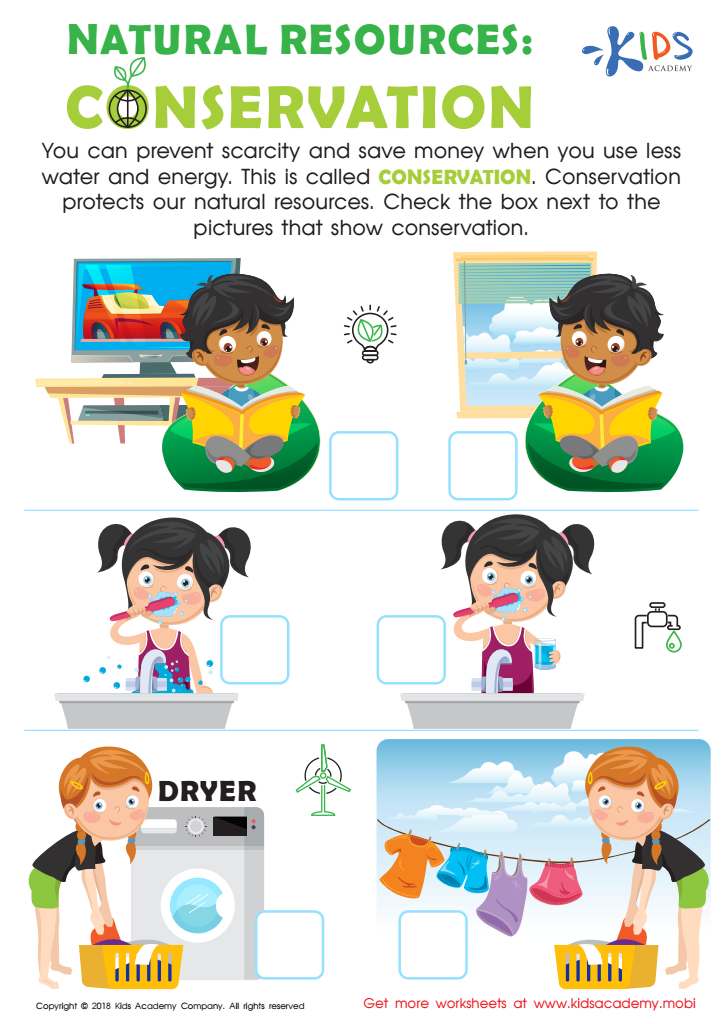
Natural Resources: Conservation Worksheet
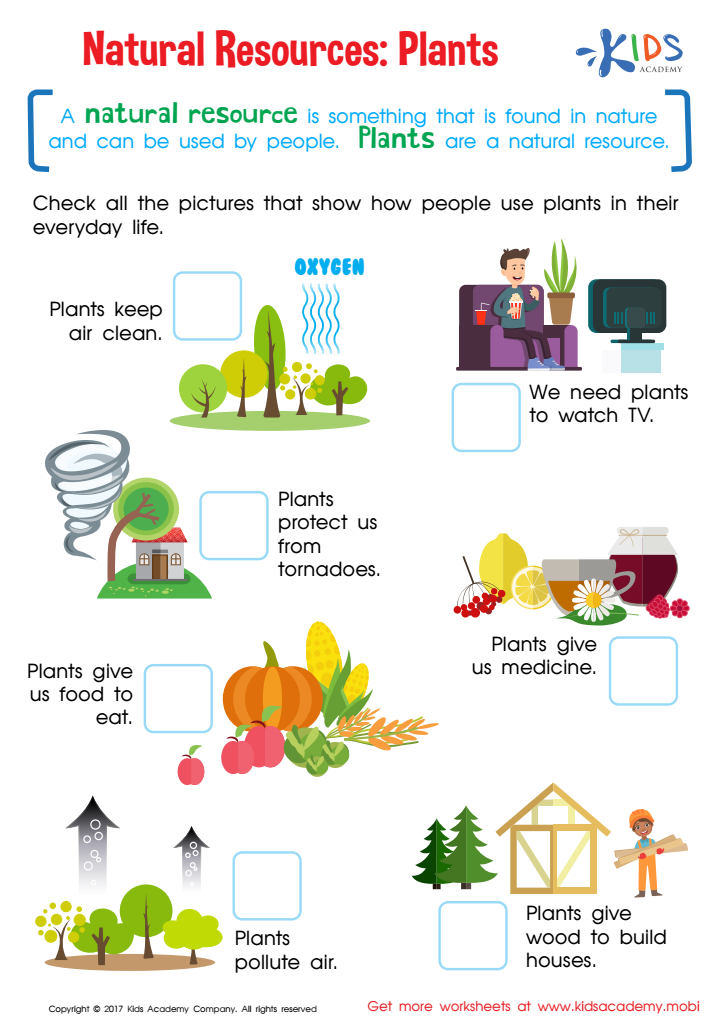
Natural Resources: Plants Worksheet






Understanding natural resources and the concept of "Normal Science" is crucial for children aged 6-8 because it lays the foundation for environmental awareness and scientific literacy. At this age, children are naturally curious and eager to learn about the world around them. By introducing them to natural resources—such as water, air, soil, plants, and minerals—parents and teachers can help foster a sense of appreciation for the Earth and its ecosystems.
Learning about natural resources encourages sustainable practices and instills a sense of responsibility towards protecting these resources. It's important for children to understand that these resources are finite and need to be used wisely. Through engaging activities and lessons, educators can cultivate critical thinking skills, enabling children to make informed decisions that impact the environment.
Moreover, the principles of Normal Science—observation, experimentation, and explanation—strengthen a child's ability to think critically and develop problem-solving skills. Such skills are essential for navigating the complexities of our world. In summary, investing time in teaching young learners about natural resources and scientific inquiry promotes a generation of informed citizens who value and protect their environment. This foundational knowledge is essential for fostering both personal growth and societal responsibility.







