Phonics recognition Normal Writing Worksheets for Ages 6-8
3 filtered results
-
From - To
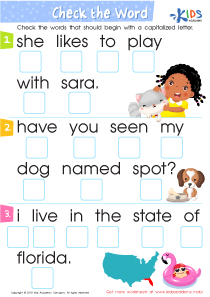
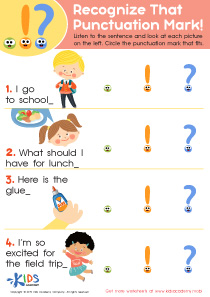
Discover our engaging Phonics Recognition Normal Writing Worksheets designed specifically for children aged 6-8. These worksheets help young learners strengthen their phonics skills through fun, interactive exercises that enhance their reading and writing abilities. Each worksheet is thoughtfully crafted to promote letter-sound correspondence, blend sounds, and recognize common words, making it an essential resource for early literacy development. With a variety of activities to keep students entertained, these worksheets provide the perfect balance of education and enjoyment. Foster a love for learning and watch your child's reading confidence soar with our Phonics Recognition worksheets today!
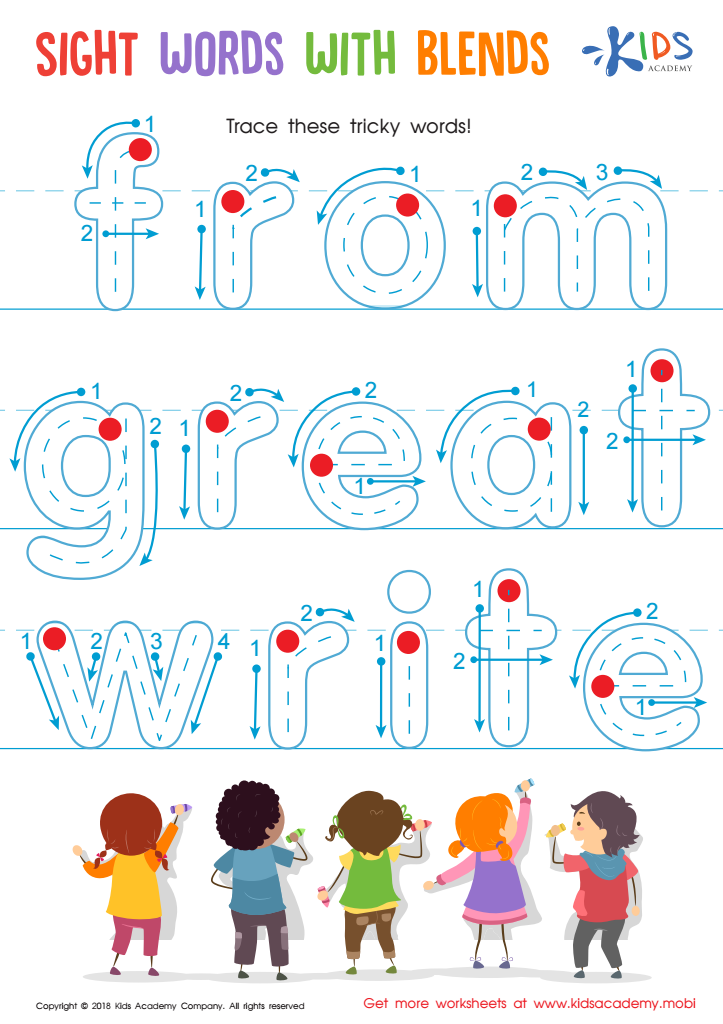
Sight Words with Blends Worksheet
 Assign to My Students
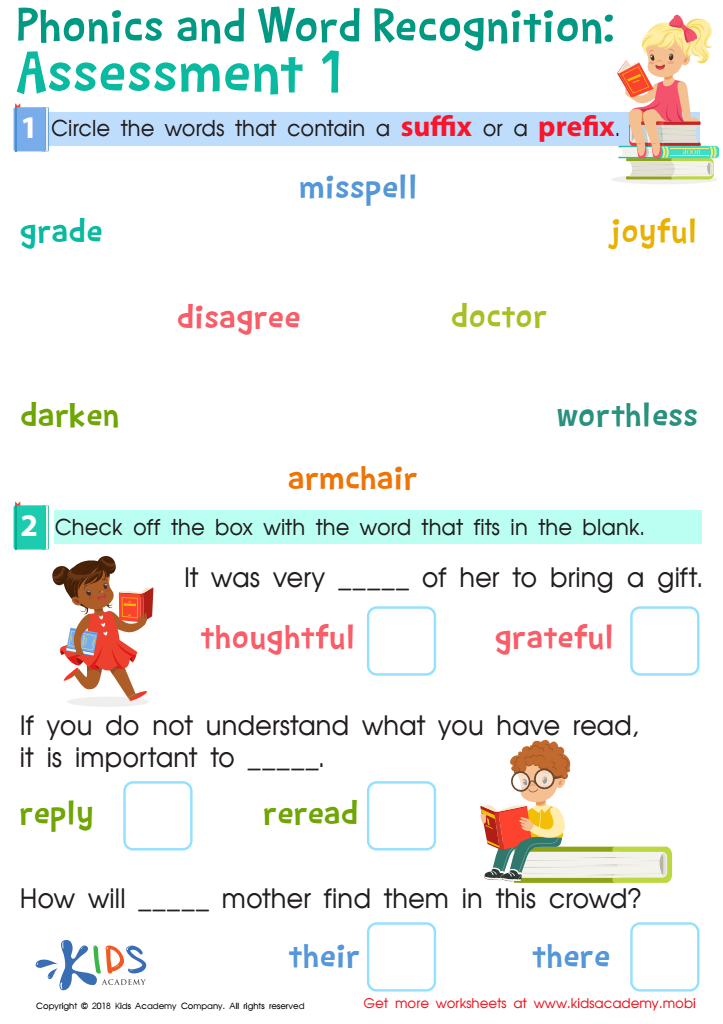
Phonics and Word Recognition: Assessment 1 Worksheet
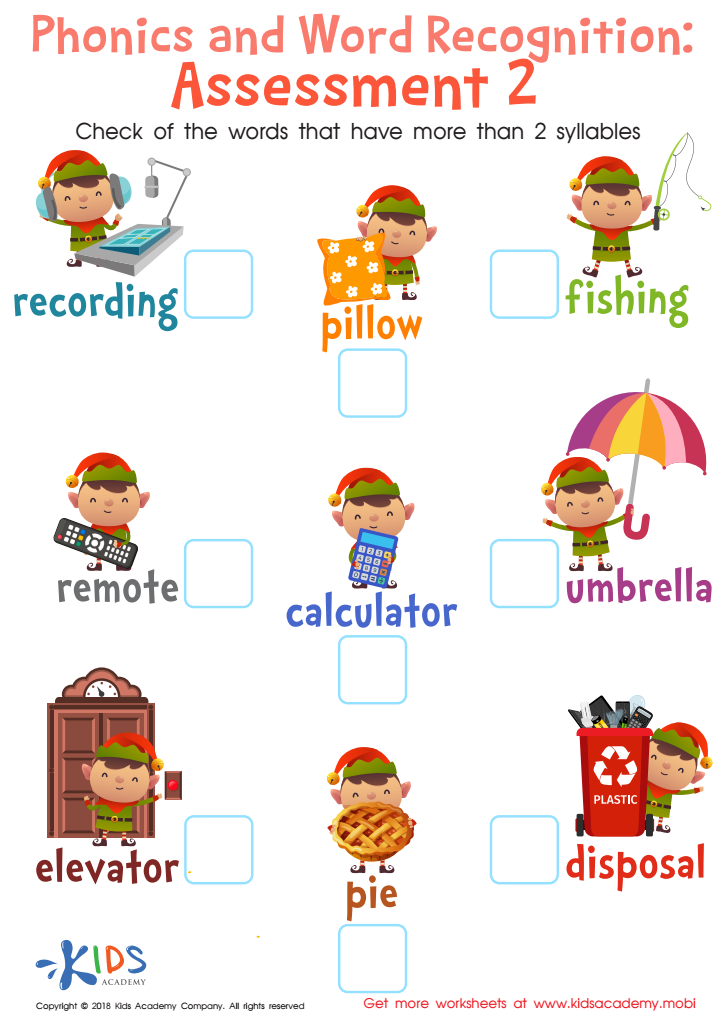
Phonics and Word Recognition: Assessment 2 Worksheet








Phonics recognition is crucial for children aged 6-8 as it lays the foundation for reading and literacy skills. At this age, children are transitioning from learning to read to reading to learn. Understanding phonics—the relationship between sounds and letters—enables them to decode words, improving their reading fluency and comprehension.
Parents and teachers should prioritize phonics recognition because it enhances vocabulary development. As children become more proficient in recognizing phonetic patterns, they can tackle more complex texts, which exposes them to new words and concepts. Furthermore, strong phonics skills foster confidence in young readers, encouraging them to explore literature independently.
Moreover, phonics recognition has a significant impact on writing skills. As children learn to identify sounds in words, their spelling improves, leading to clearer communication of their ideas. In a world filled with digital communication, the ability to express thoughts clearly is increasingly important.
Additionally, early mastery of phonics can reduce future reading difficulties, creating a more positive educational experience. Overall, by emphasizing phonics recognition, parents and teachers can equip children with essential skills for academic success and lifelong learning. Investing in phonics early on sets a solid foundation for growth in all areas of literacy.