Reading comprehension Normal Consonant Blends Worksheets for Ages 6-9
3 filtered results
-
From - To
Unlock the power of reading with our "Reading Comprehension Normal Consonant Blends Worksheets" designed for ages 6-9! These engaging printable worksheets focus on essential consonant blends, enhancing young learners' vocabulary, decoding skills, and overall reading fluency. Perfect for classrooms or at-home practice, each worksheet features fun and interactive activities that make learning an adventure. From blending sounds to understanding context, our materials support students in developing strong reading comprehension and critical thinking skills. Help your child master foundational literacy skills with expertly crafted worksheets from Kids Academy. Download and watch their confidence soar!
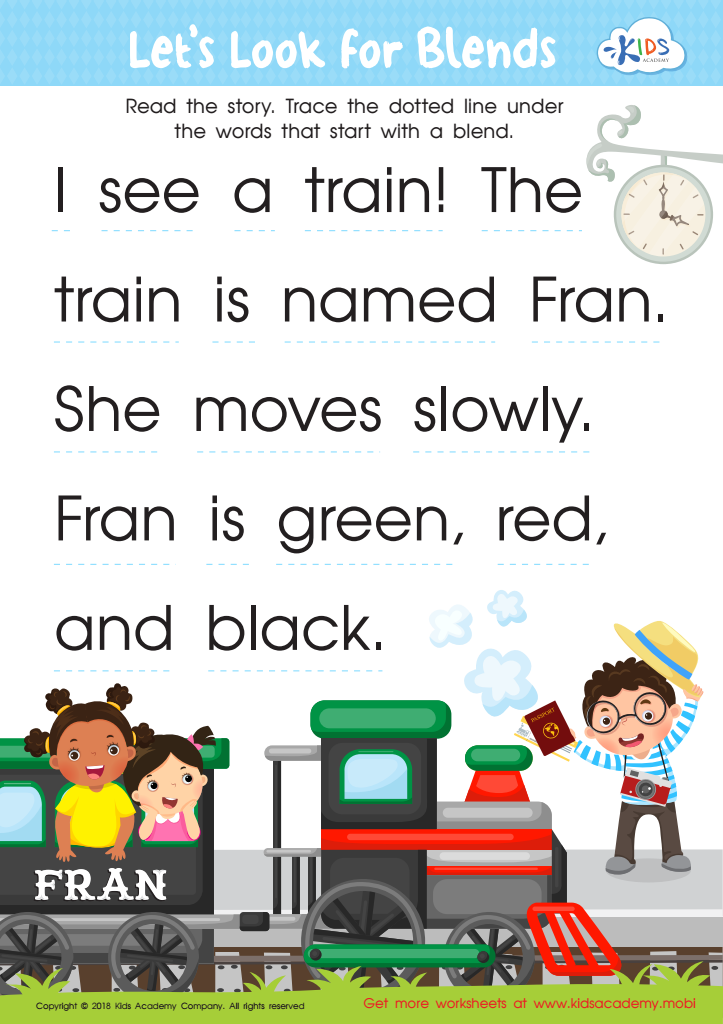
Let's Look for Blends Worksheet
 Assign to My Students
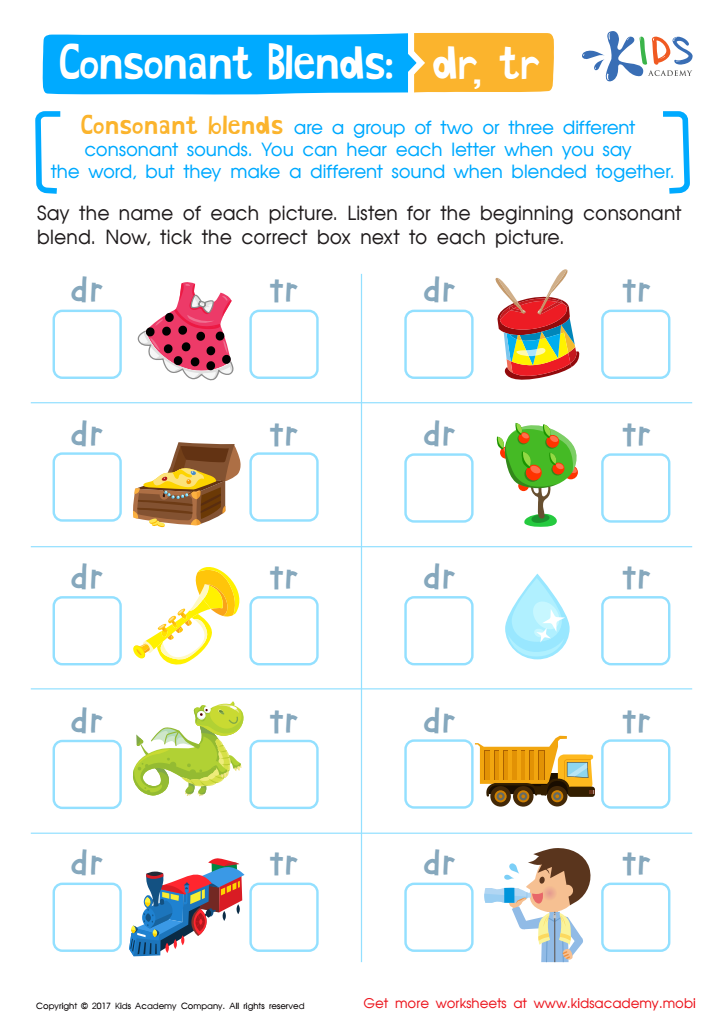
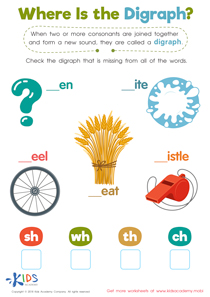
Consonant Blends: "Dr" and "Tr" Printable
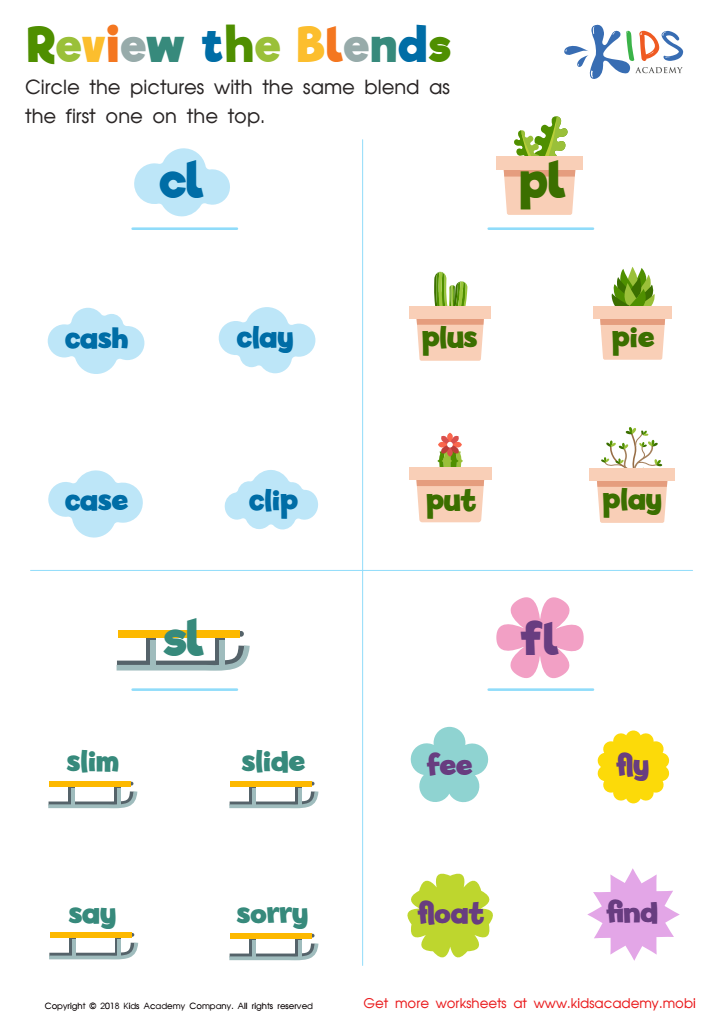
Review the Blends Worksheet





Reading comprehension is an essential skill for young learners, particularly ages 6-9, as it sets the foundation for their academic success and overall intellectual development. Parents and teachers should care immensely about normal consonant blends — combinations of two or three consonants that create distinct sounds (e.g., bl, cr, st) — because they play a crucial role in a child's ability to decode and understand written text.
First, mastering consonant blends enhances phonemic awareness, which is critical for effective reading. Children who can fluently identify and pronounce blends are better equipped to tackle new and complex words. This boosts their reading confidence, leading to a greater willingness to read independently and venture into more advanced materials.
Second, comprehension improves as children recognize and pronounce words more accurately. When children can effortlessly decode words, they're able to focus on the meaning of the text rather than getting bogged down by individual sound or letter recognition. This deeper level of engagement with reading materials empowers them to develop critical thinking skills and a love for literature.
Finally, investing time in teaching consonant blends fosters stronger speech and spelling abilities. This holistic development in language arts lays the groundwork for lifelong communication skills, which are vital across all areas of life. Hence, parents and teachers have a substantial role in prioritizing this aspect of early literacy.