Word Recognition Normal Consonant Digraphs Worksheets for Ages 6-9
5 filtered results
-
From - To
Enhance your child's reading skills with our "Word Recognition Normal Consonant Digraphs Worksheets" designed for ages 6-9. Our engaging, educational printables focus on helping young learners recognize and understand common consonant digraphs such as "sh," "ch," and "th." These worksheets are crafted to improve word recognition, boost phonemic awareness, and build a strong foundation in reading. Perfect for use at home or in the classroom, they make learning interactive and fun with colorful illustrations and varied exercises. Download today to support your child’s journey towards becoming a confident and fluent reader.
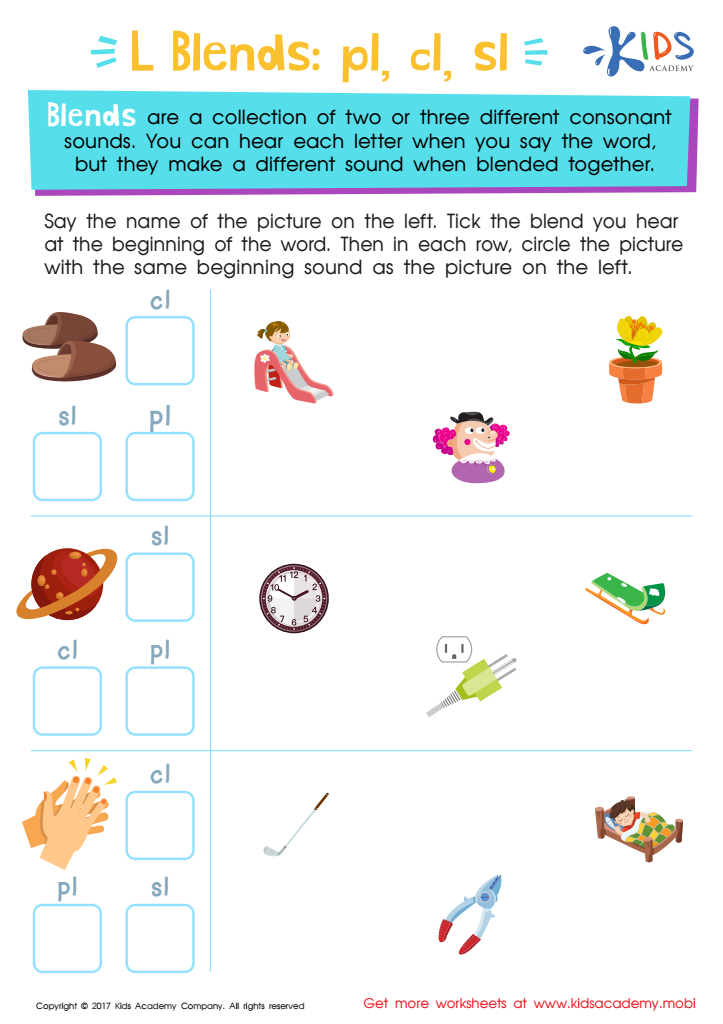
L Blends: "Pl", "Cl" and "Sl" Printable
 Assign to My Students
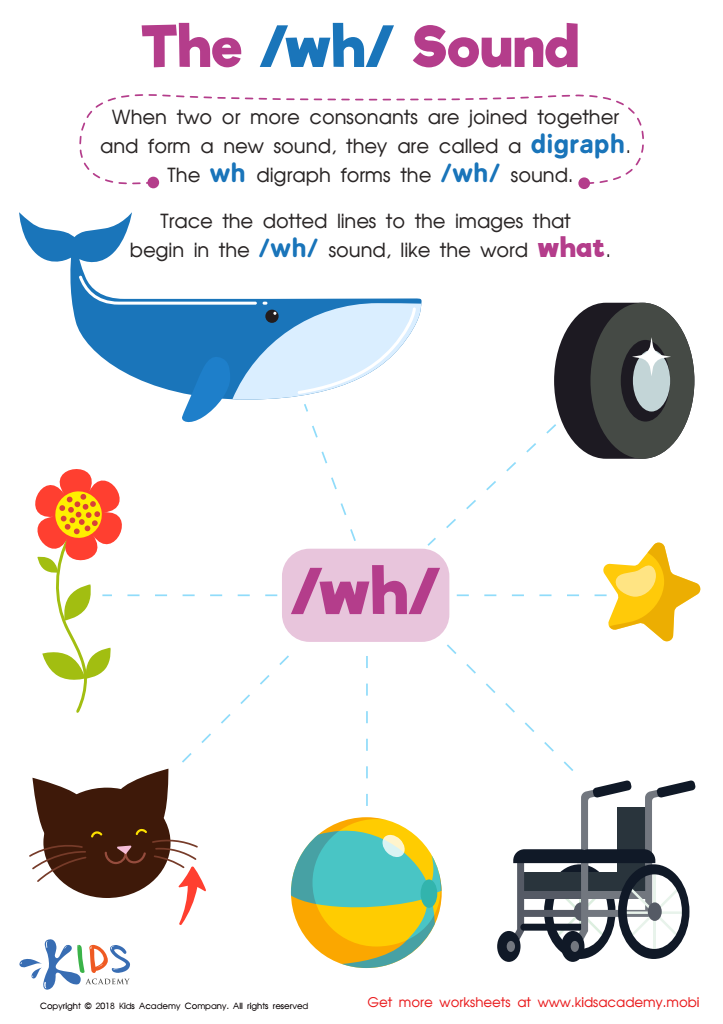
The /wh/ Sound Worksheet
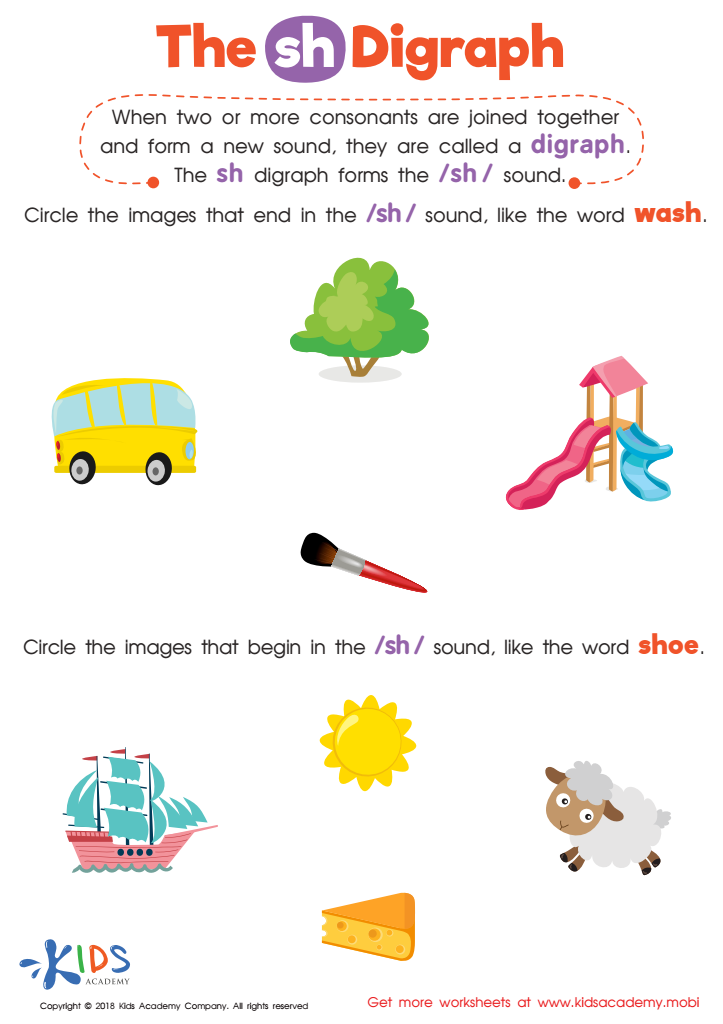
The SH Digraph Worksheet
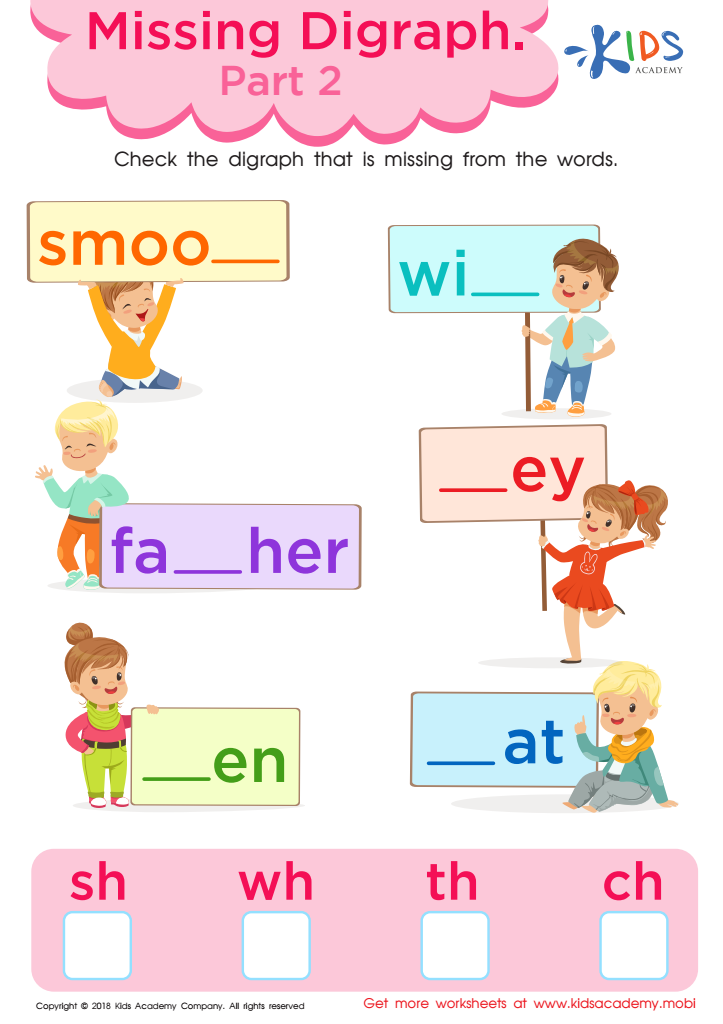
Missing Digraph: Part 2 Worksheet
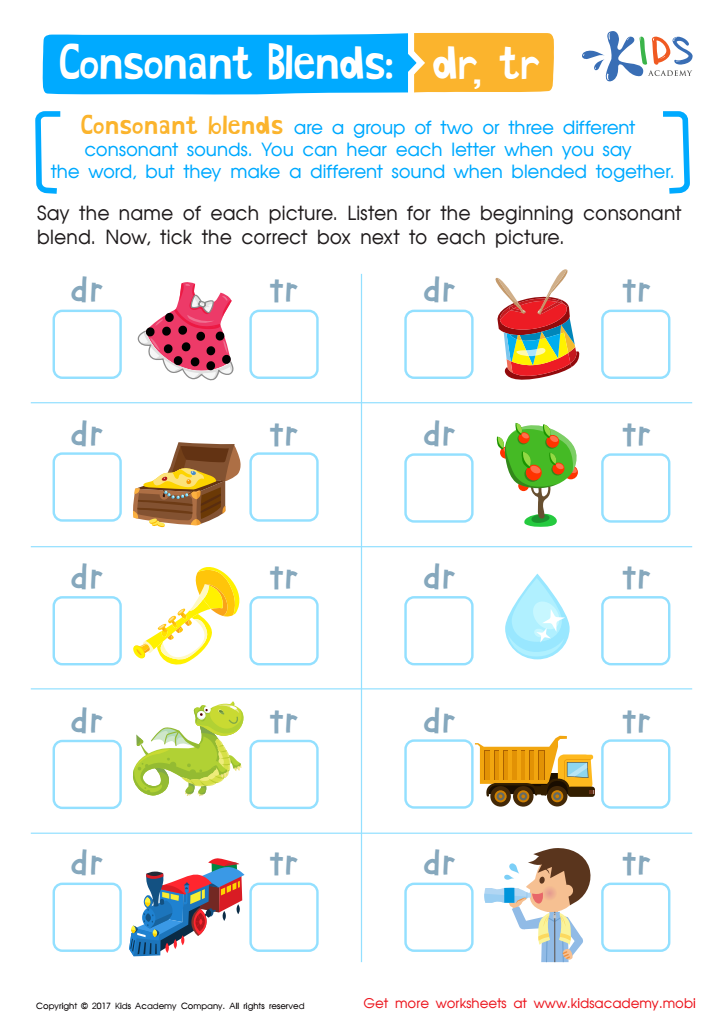
Consonant Blends: "Dr" and "Tr" Printable


Word recognition includes understanding and identifying words quickly and efficiently, which is fundamental for young children learning to read. Among the key elements of word recognition are normal consonant digraphs, combinations of two consonants that produce a single sound (like "sh," "ch," "th," and "wh"). For children aged 6-9, mastering this concept is crucial.
Firstly, proper grasp of consonant digraphs helps children decode words more accurately. This improves reading fluency, making the early reading experience more enjoyable and less frustrating, which fosters a love for reading. When children can smoothly recognize sound patterns, their overall language comprehension improves, permitting them to focus on understanding the story rather than decoding each word.
Secondly, strong word recognition skills lead to better spelling. Familiarity with consonant digraphs empowers children to spell words phonetically, aiding their ability to write coherently and accurately express their thoughts.
Lastly, solid word recognition lays the foundation for advanced literacy skills. As children progress in their education, they encounter more complex words and texts. A nuanced understanding of text construction, beginning with consonant digraphs, equips them for future academic success.
Parents and teachers should therefore prioritize consonant digraphs as a building block of early literacy, offering children the foundational skills essential for lifelong learning and communication.