Normal Silent Vowels Worksheets for Ages 6-9
5 filtered results
-
From - To
Discover our engaging "Normal Silent Vowels Worksheets" designed specifically for children aged 6-9! These interactive resources help young learners understand the concept of silent vowels in a fun and supportive way. Through a variety of activities like fill-in-the-blank exercises, matching games, and word searches, children will enhance their reading and spelling skills while boosting their confidence. Perfect for classroom or home use, these worksheets provide valuable practice that aligns with educational standards. Help your students master silent vowel recognition and improve their literacy with our thoughtfully crafted materials—available for easy download and printing straight from the Kids Academy website!
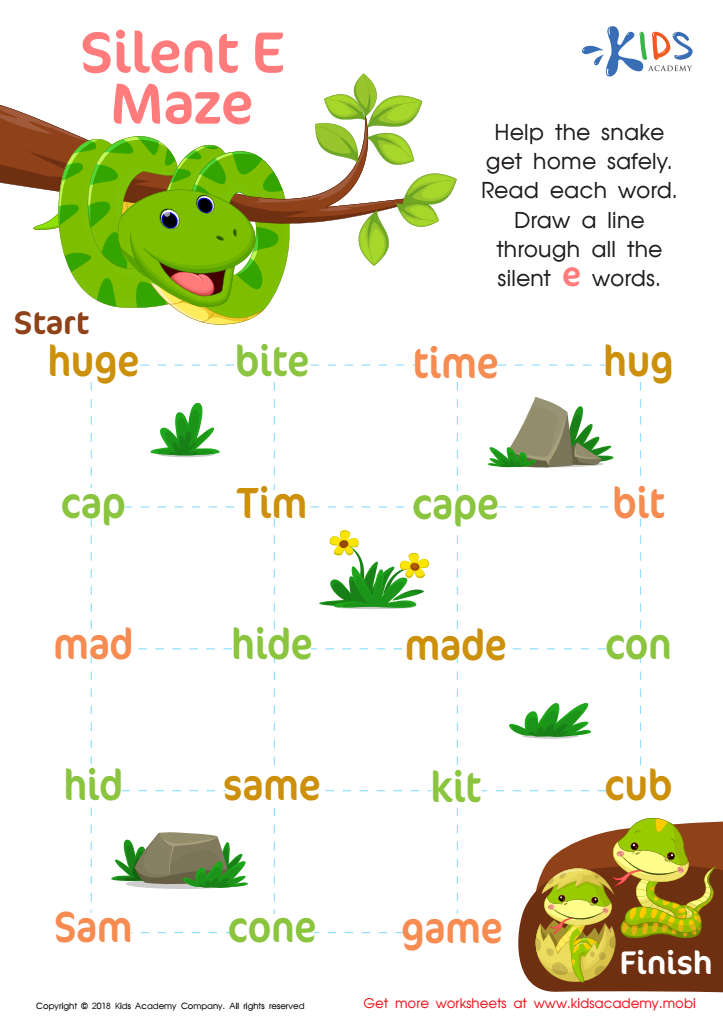
Silent E Maze Worksheet
 Assign to My Students
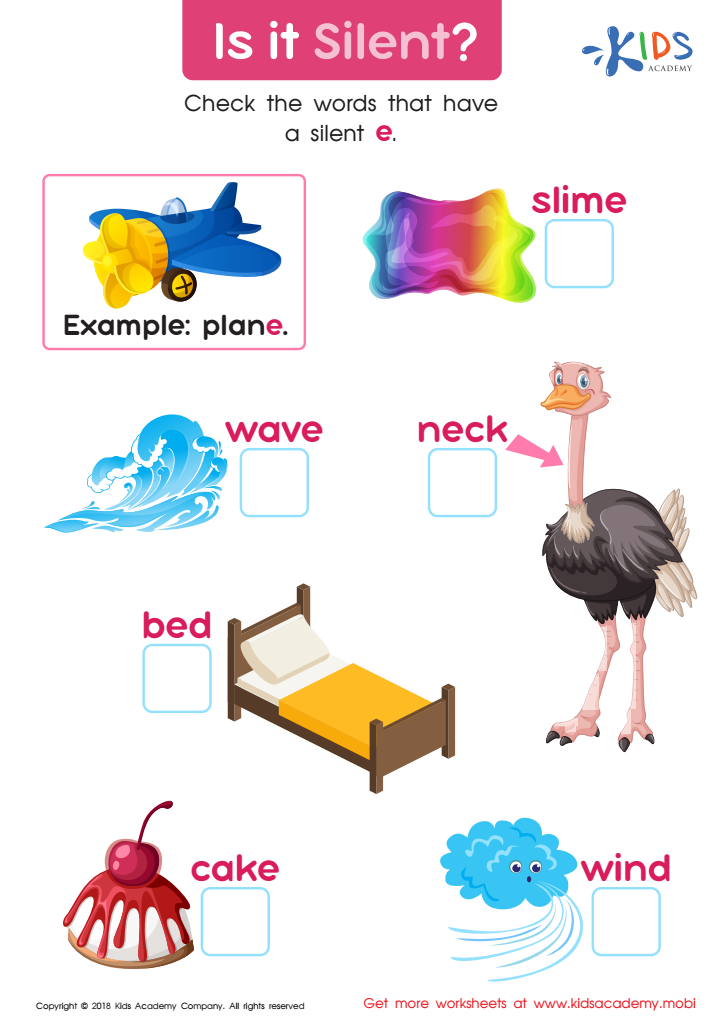
Is It Silent? Worksheet
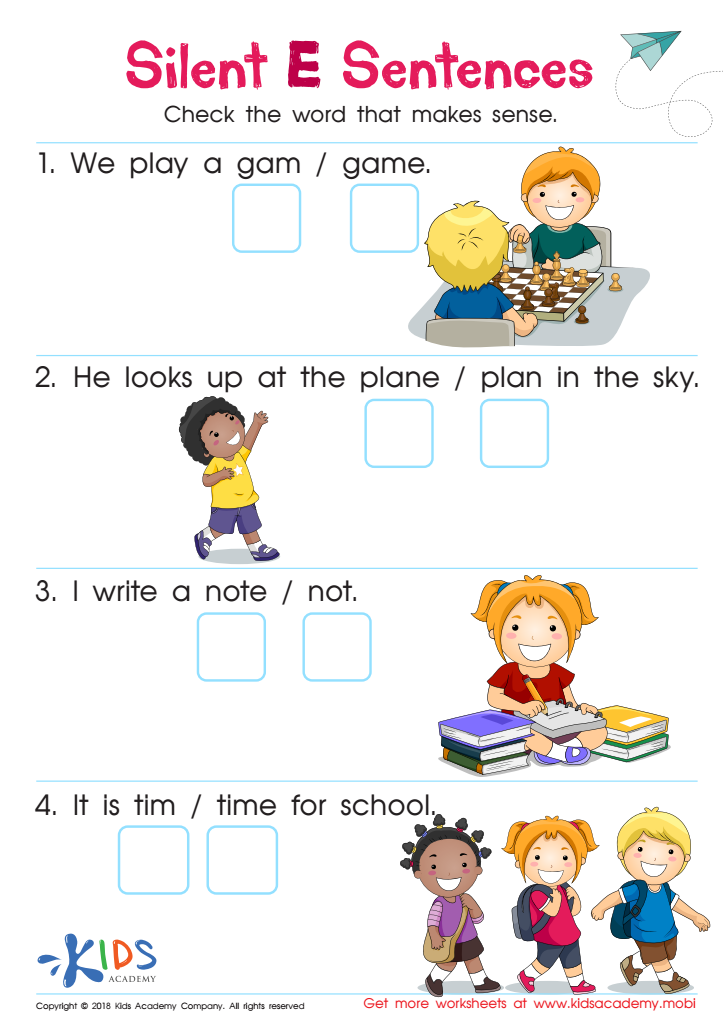
Silent E Sentences Worksheet
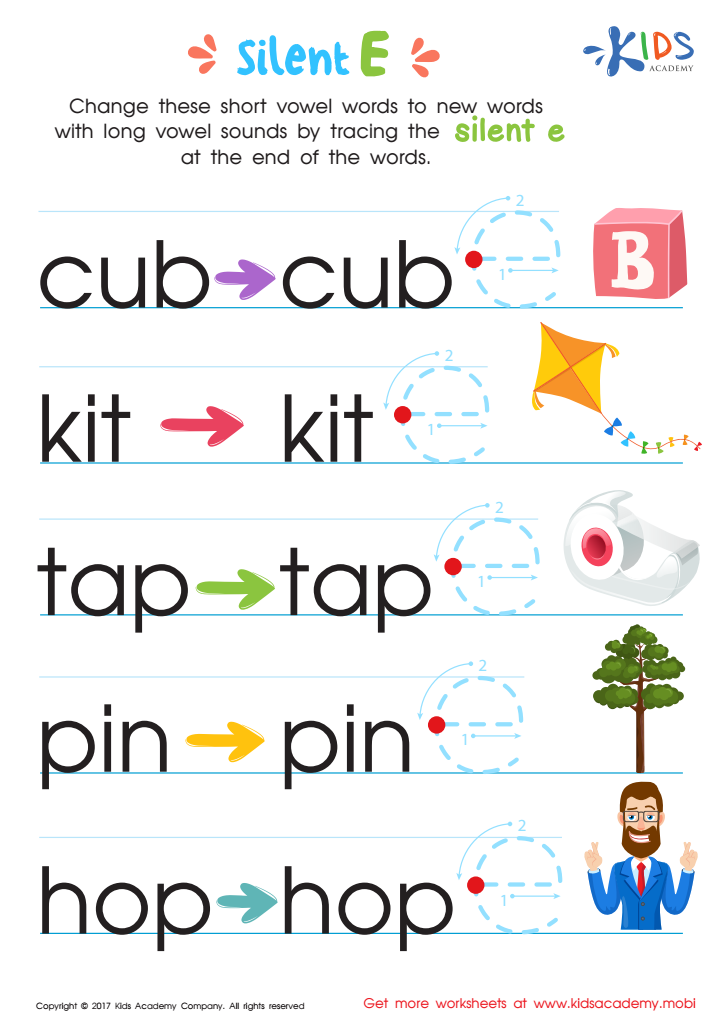
Silent E Words Worksheet
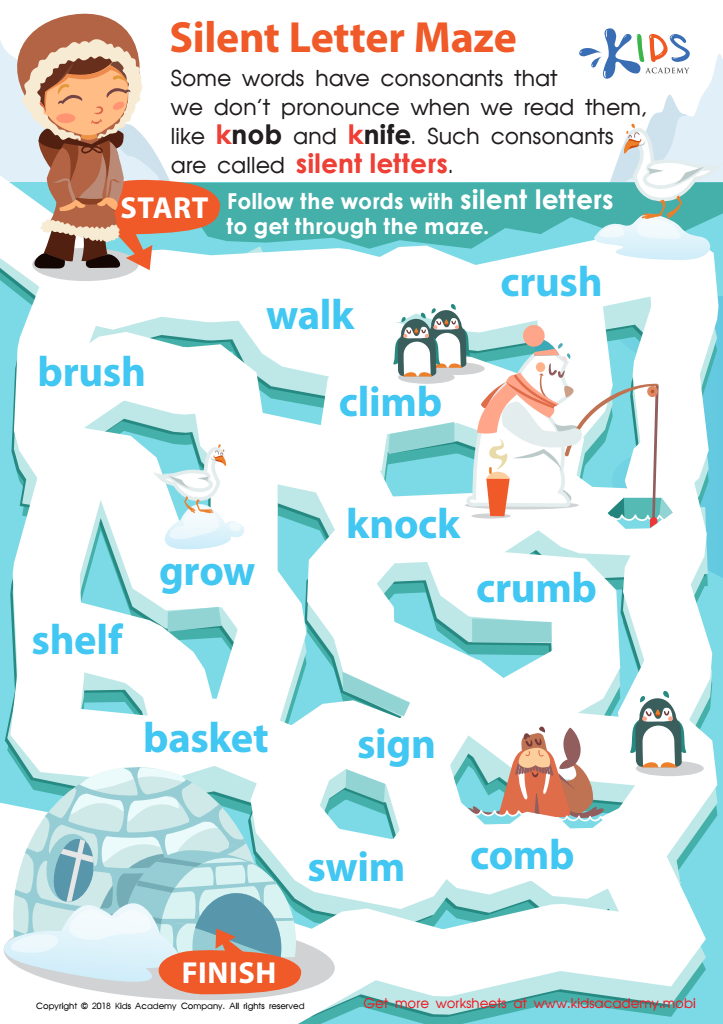
Silent Letter Maze Worksheet


Understanding normal silent vowels is essential for young students aged 6-9, as it significantly enhances their reading and writing skills. Silent vowels, such as the "e" in "make" or the "u" in "build," transform the way words are pronounced and understood. By recognizing these silent vowel patterns, children develop a more robust phonemic awareness, crucial for reading fluency.
For parents and teachers, emphasizing silent vowels helps foster a love for reading and writing. When children grasp the nuances of how silent vowels operate, they become more confident in decoding unfamiliar words. This confidence extends to their spelling skills, allowing them to apply these rules in their writing, ultimately bolstering their overall literacy development.
Encouraging discussions about silent vowels also sparks curiosity and engagement, making learning interactive and enjoyable. As children participate in activities involving silent vowels—be it games, storytelling, or creative writing—they cultivate critical thinking and problem-solving skills.
In summary, prioritizing normal silent vowels in early education empowers students, nurtures their literacy capabilities, and prepares them for more complex reading and writing challenges ahead.