Letter recognition Normal Upper & Lowercase Letters Worksheets for Ages 6-9
22 filtered results
-
From - To
Boost your child's letter recognition skills with our engaging worksheets designed for ages 6-9! Our collection includes a variety of activities focused on normal uppercase and lowercase letters, helping young learners master the alphabet with ease. Each worksheet is crafted to enhance recognition through fun exercises, including tracing, matching, and identifying letters in different contexts. Perfect for classroom use or at-home learning, these resources promote foundational literacy skills, making learning enjoyable and effective. Help your child develop confidence in reading and writing by exploring our comprehensive pack of letter recognition worksheets today!
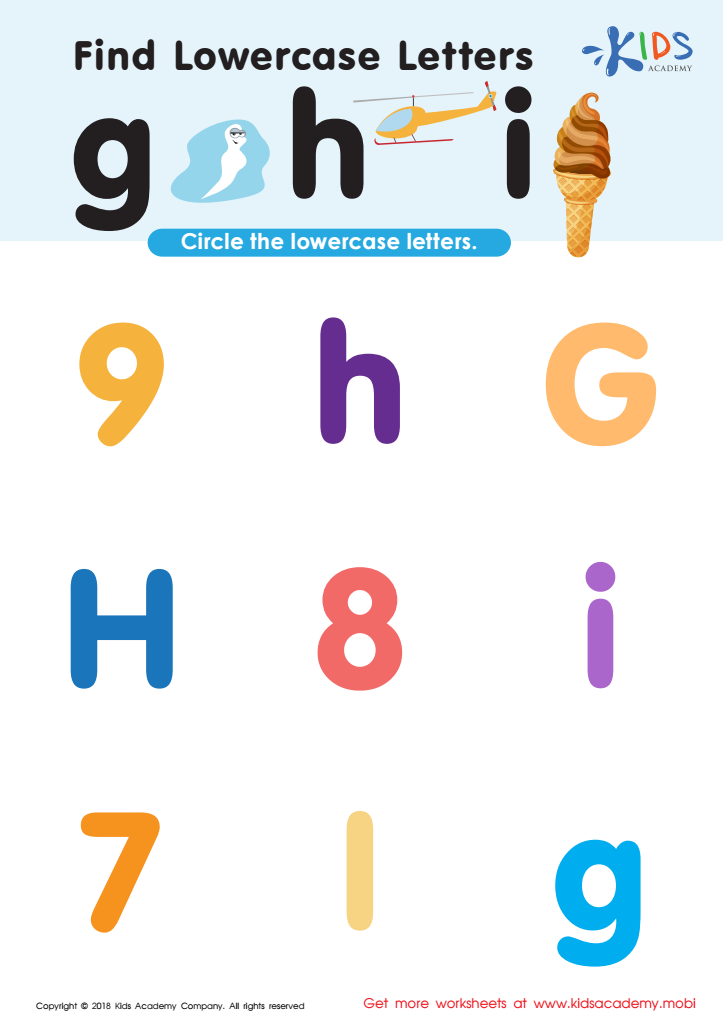
Find Lowercase Letters g h i Worksheet
 Assign to My Students





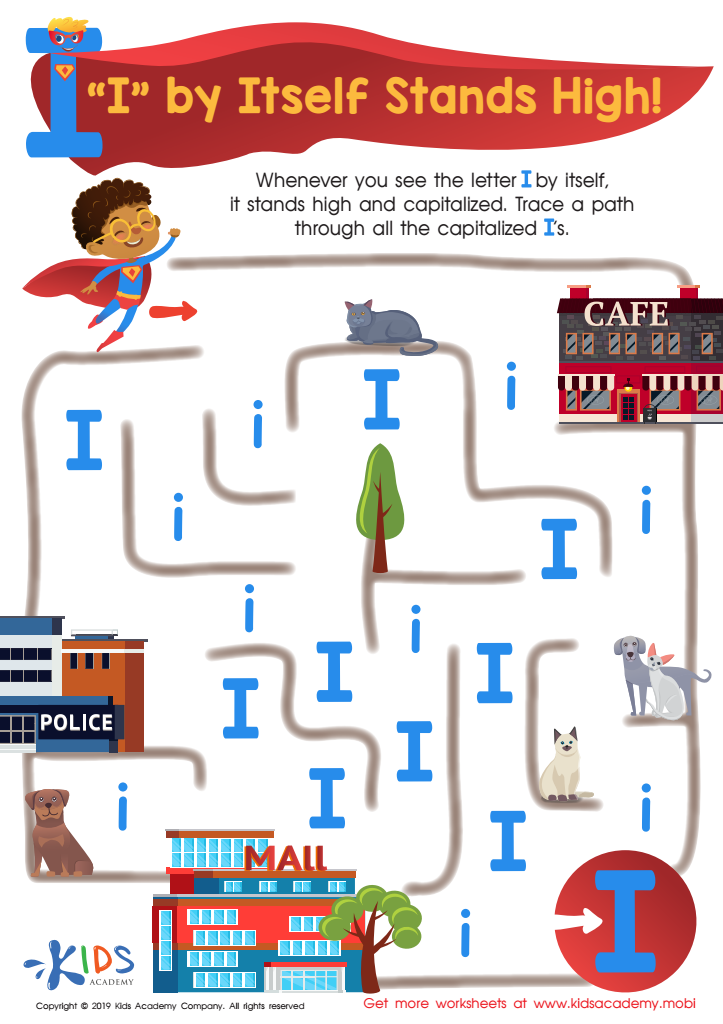
I Stands High Worksheet
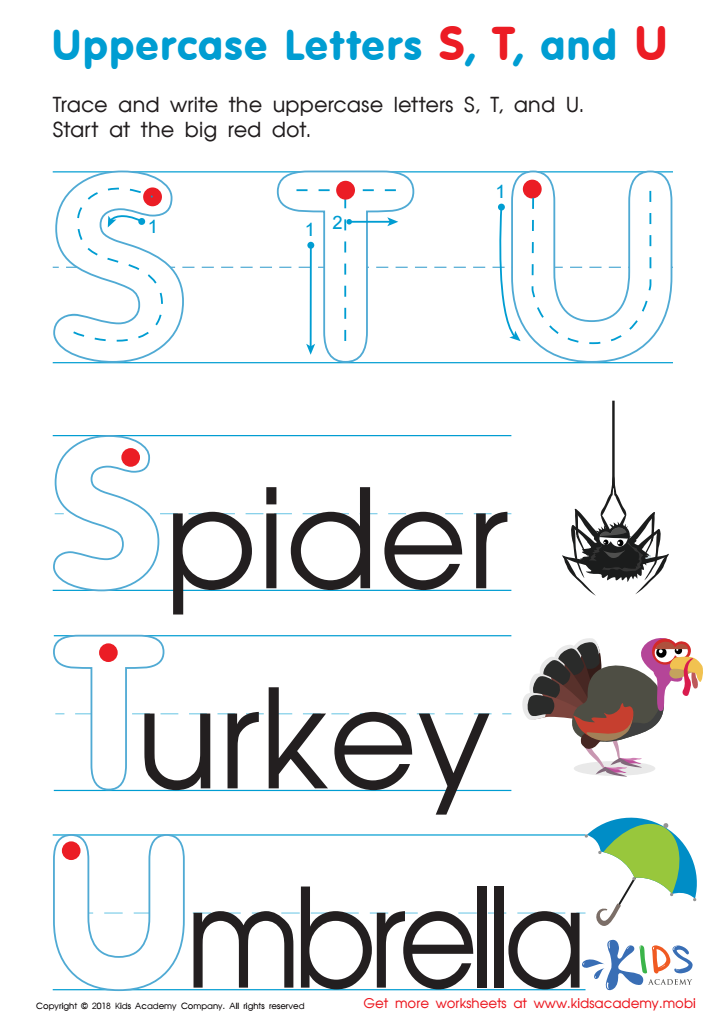
Uppercase Letters S, T, and U Worksheet
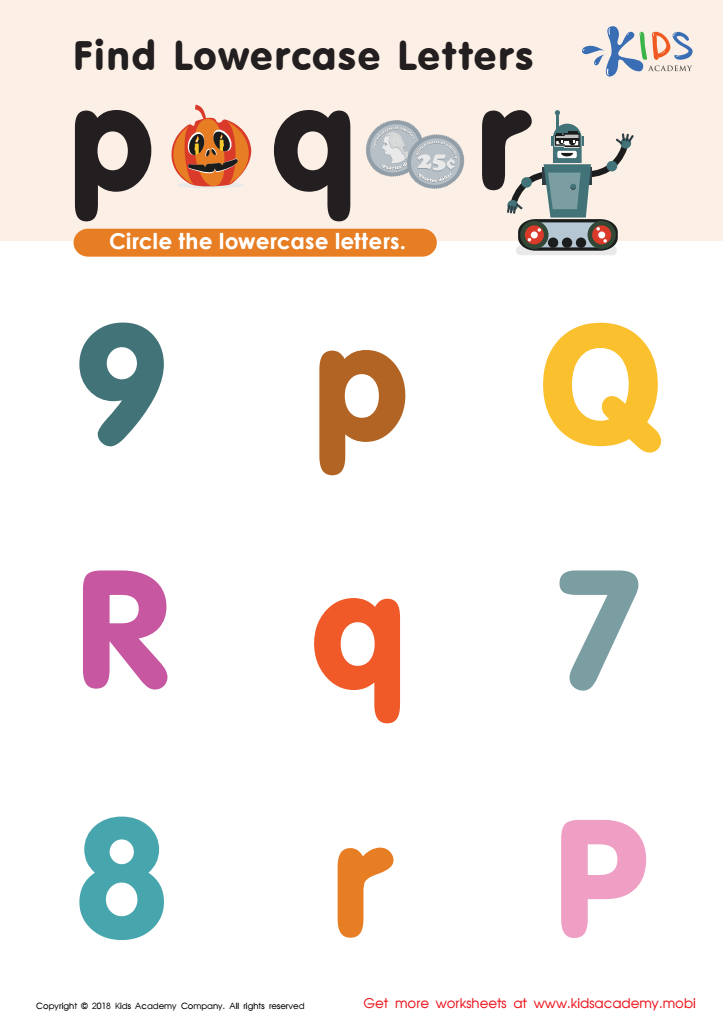
Find lowercase Letters p q r Worksheet
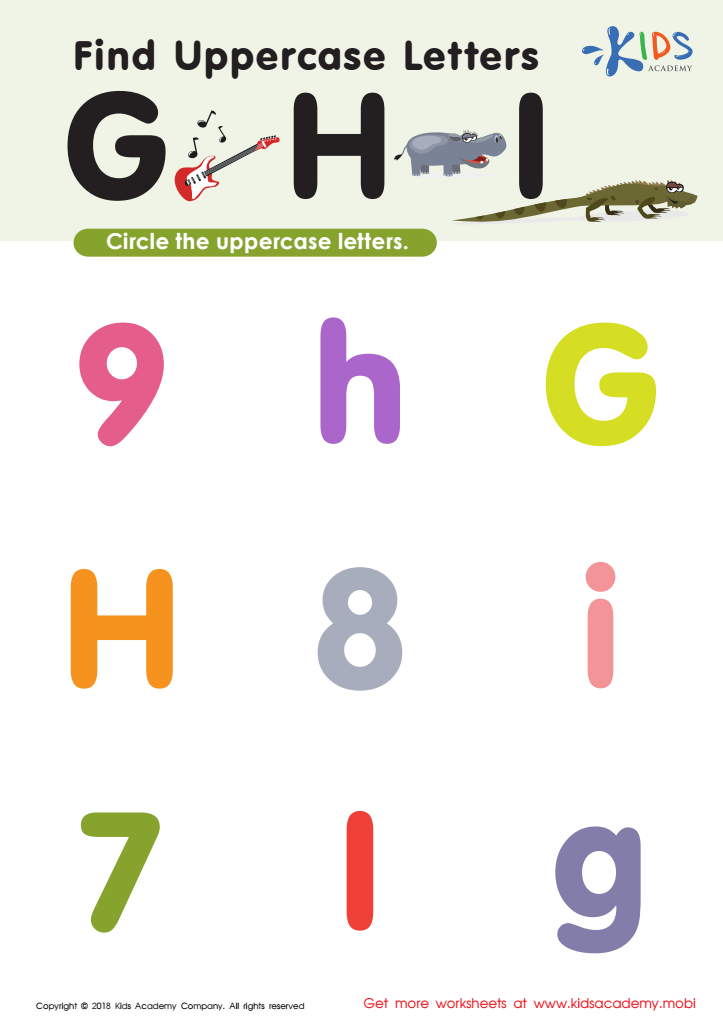
Find Uppercase Letters G, H, and I Worksheet
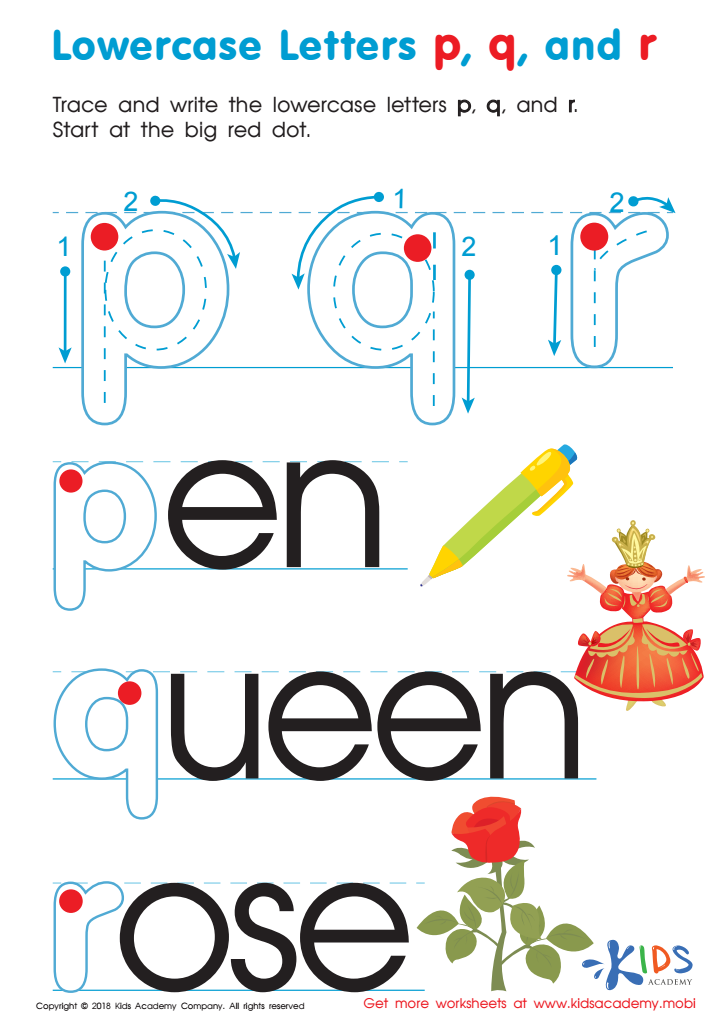
Lowercase Letters p q r Worksheet
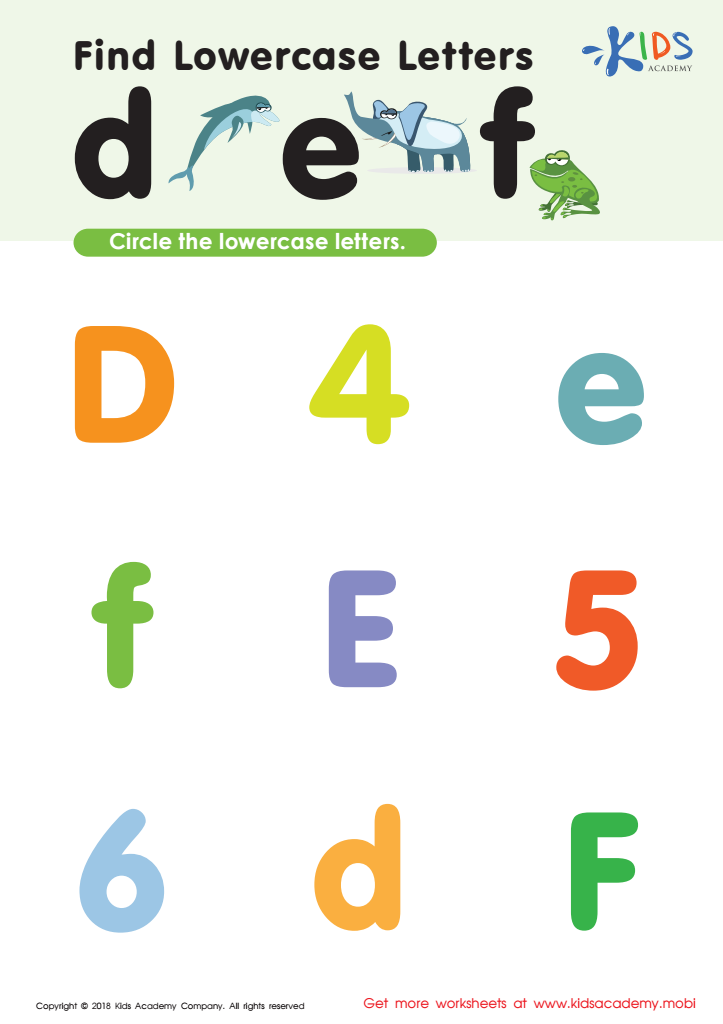
Find Lowercase Letters d e f Worksheet
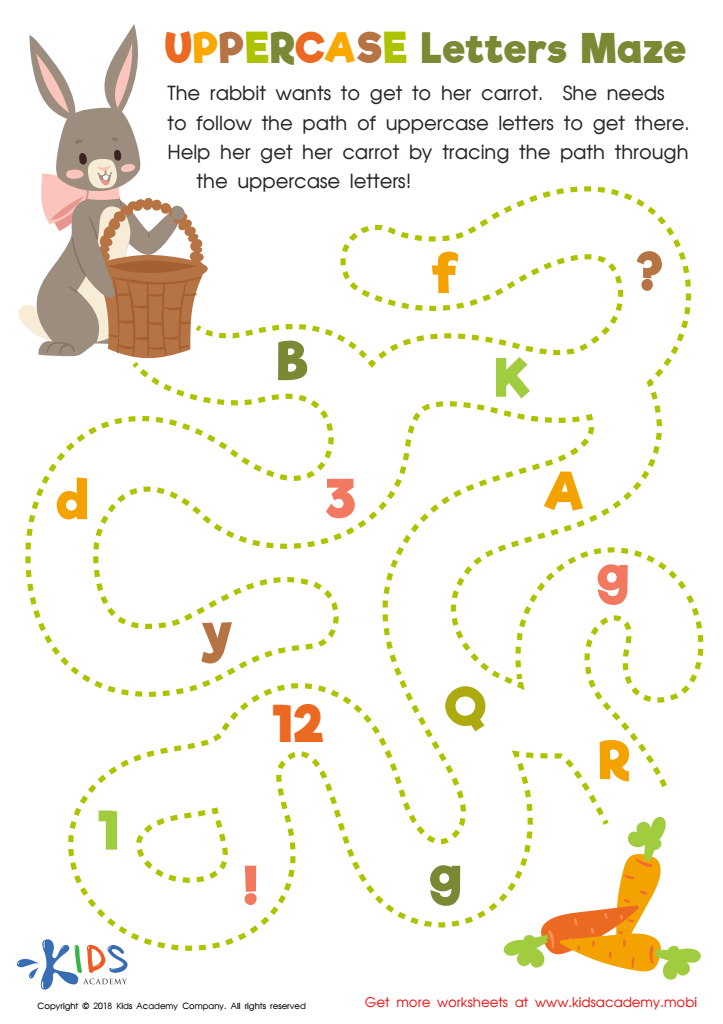
Uppercase Letters Maze Worksheet
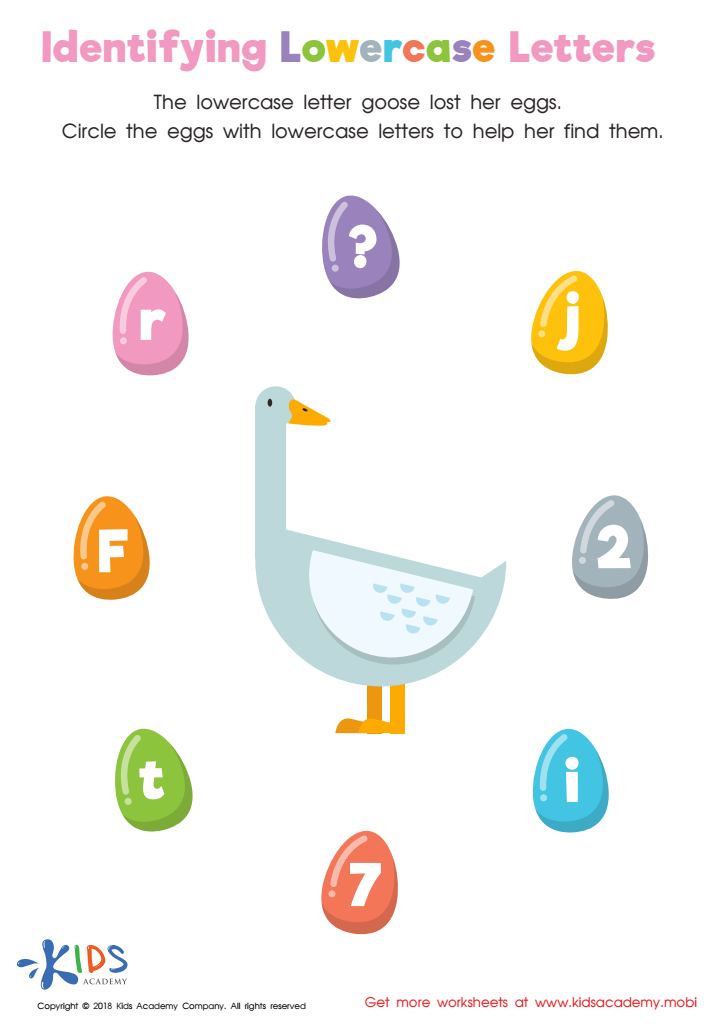
Identifying Lowercase Letters Worksheet
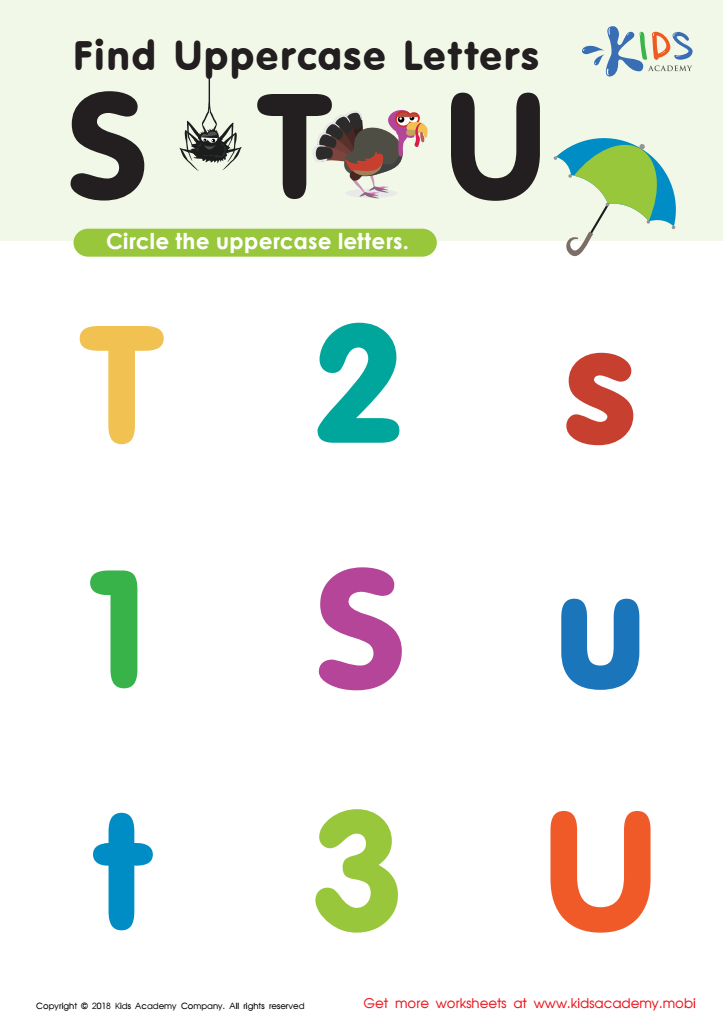
Find Uppercase Letters Worksheet
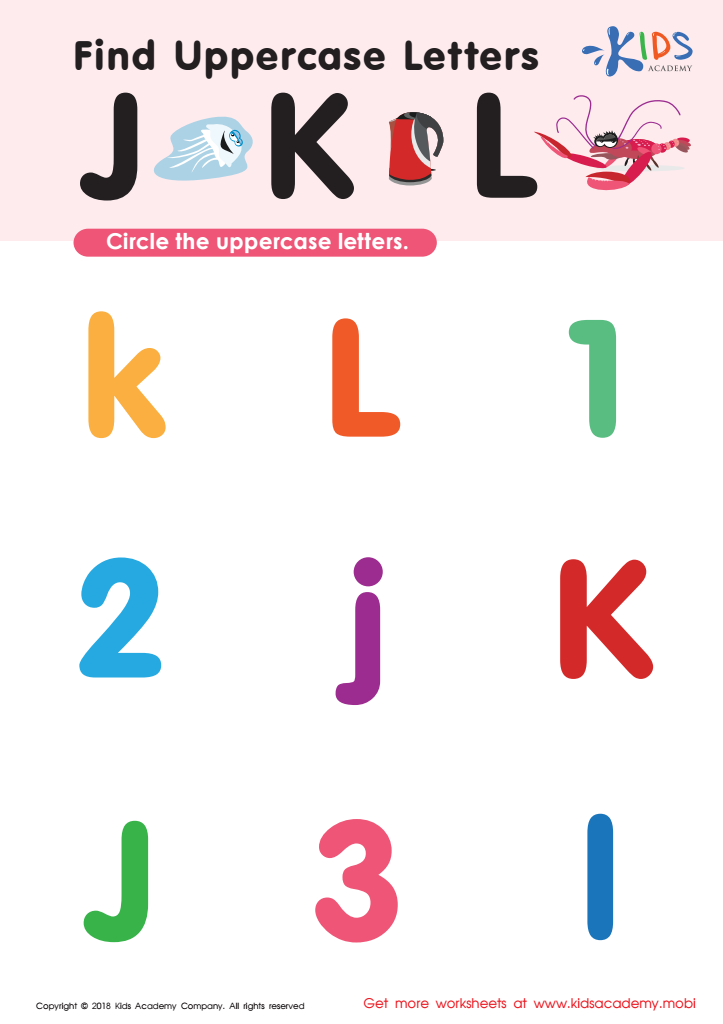
Find Uppercase Letters J, K, and L Worksheet
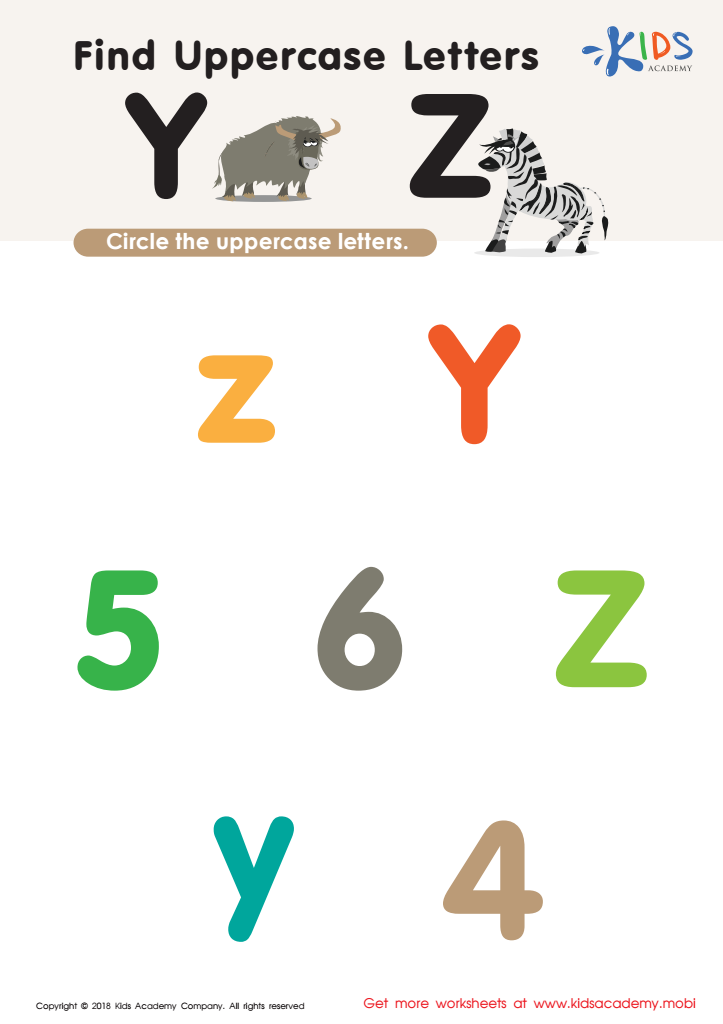
Find Uppercase Letters Y Z Worksheet
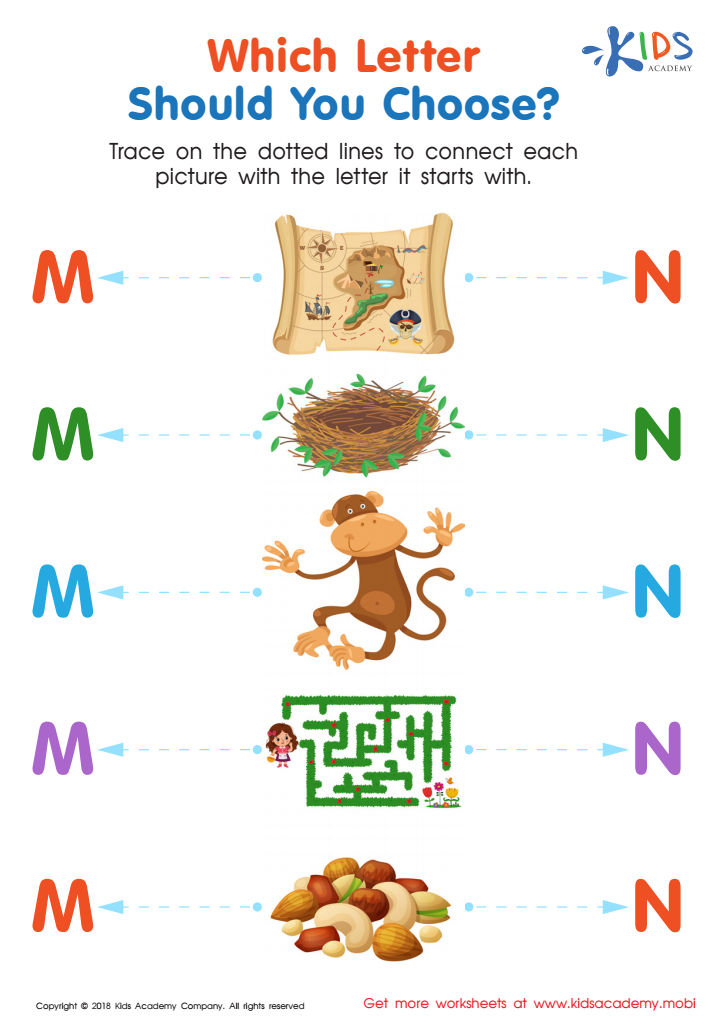
Which Letter Should you Choose? Worksheet
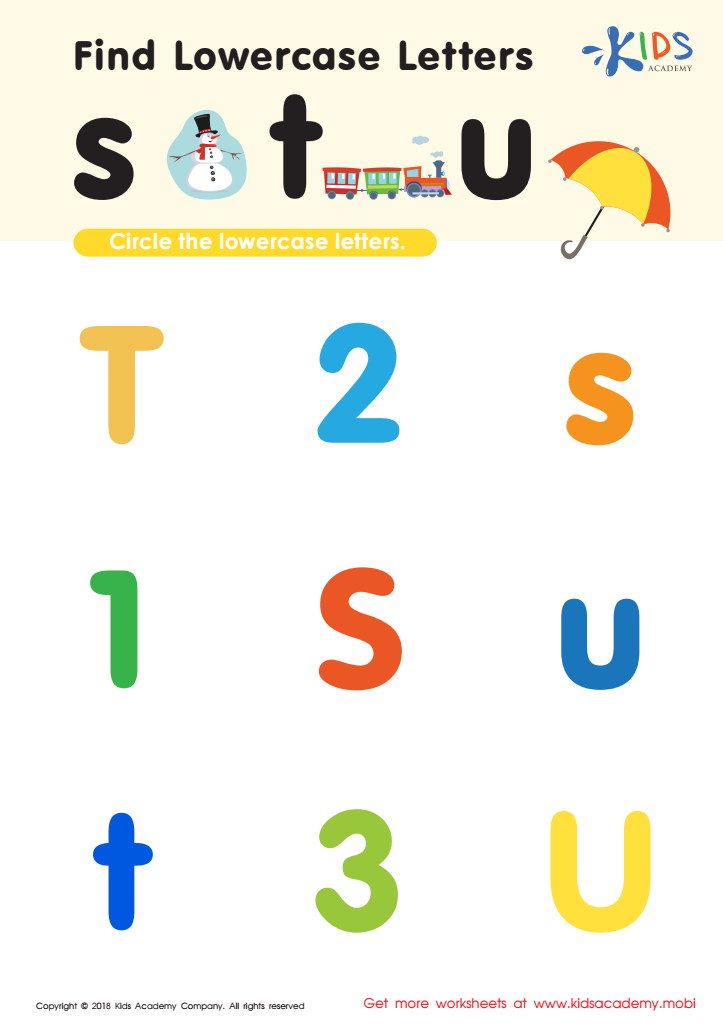
Find lowercase Letters s t u Worksheet
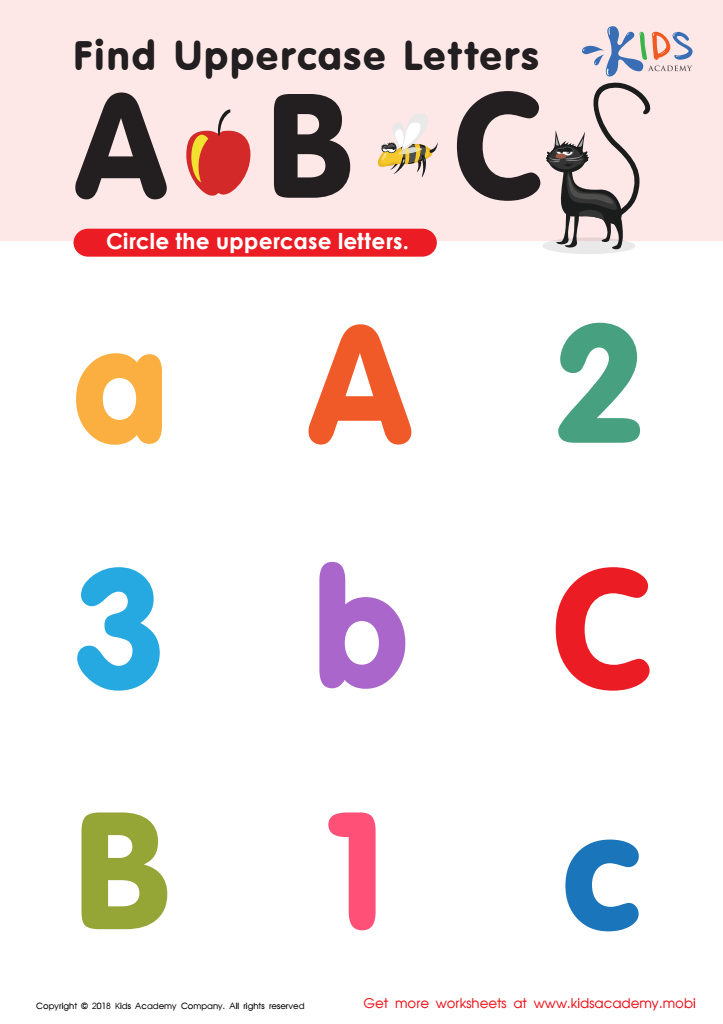
Find Uppercase Letters A, B, and C Worksheet
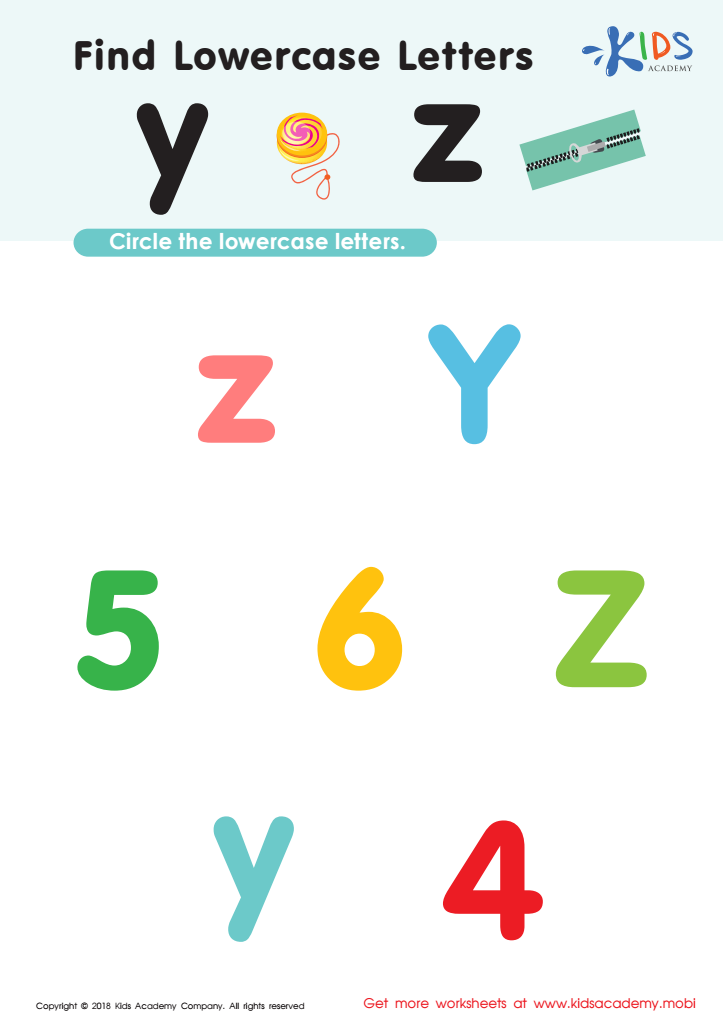
Find Lowercase Letters y z Worksheet
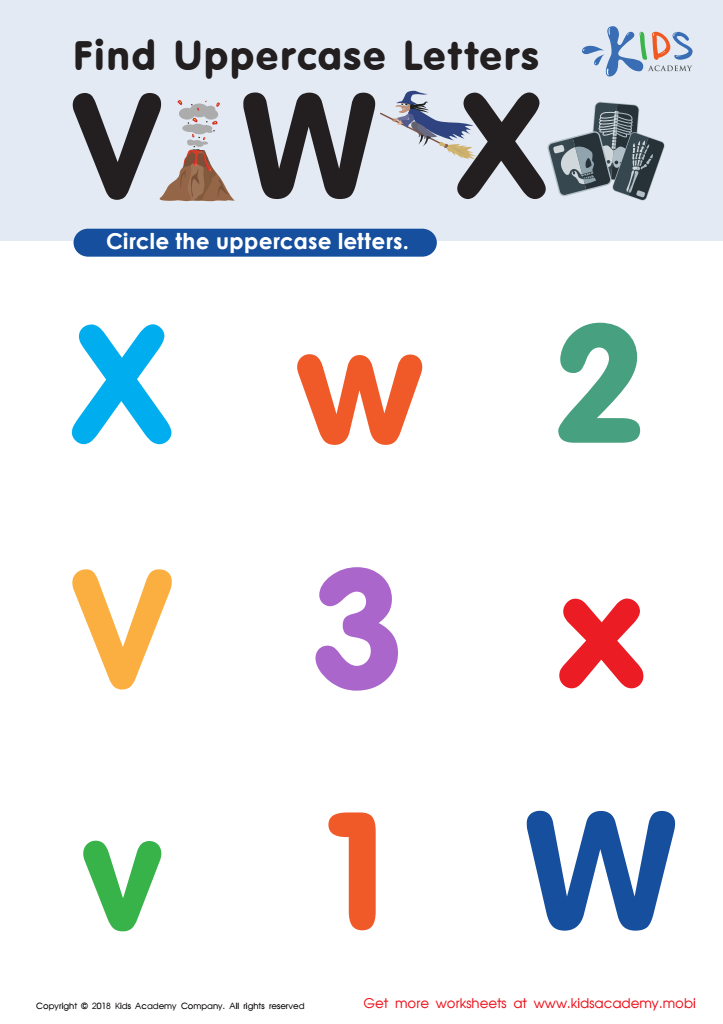
Find Uppercase Letters V, W, X Worksheet
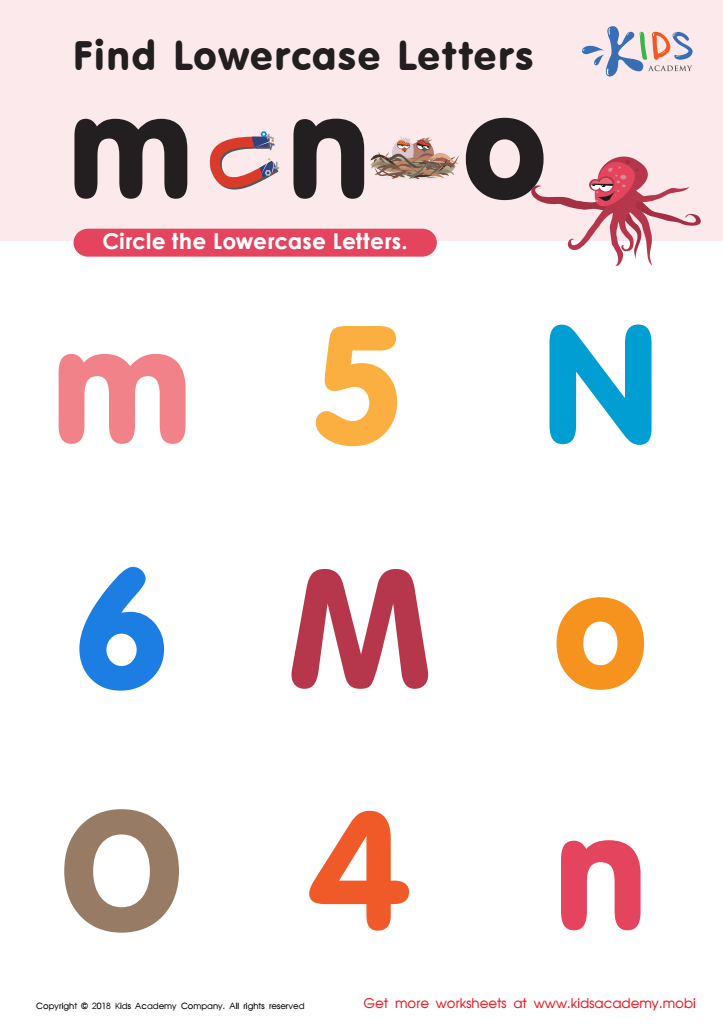
Find Lowercase Letters m n o Worksheet
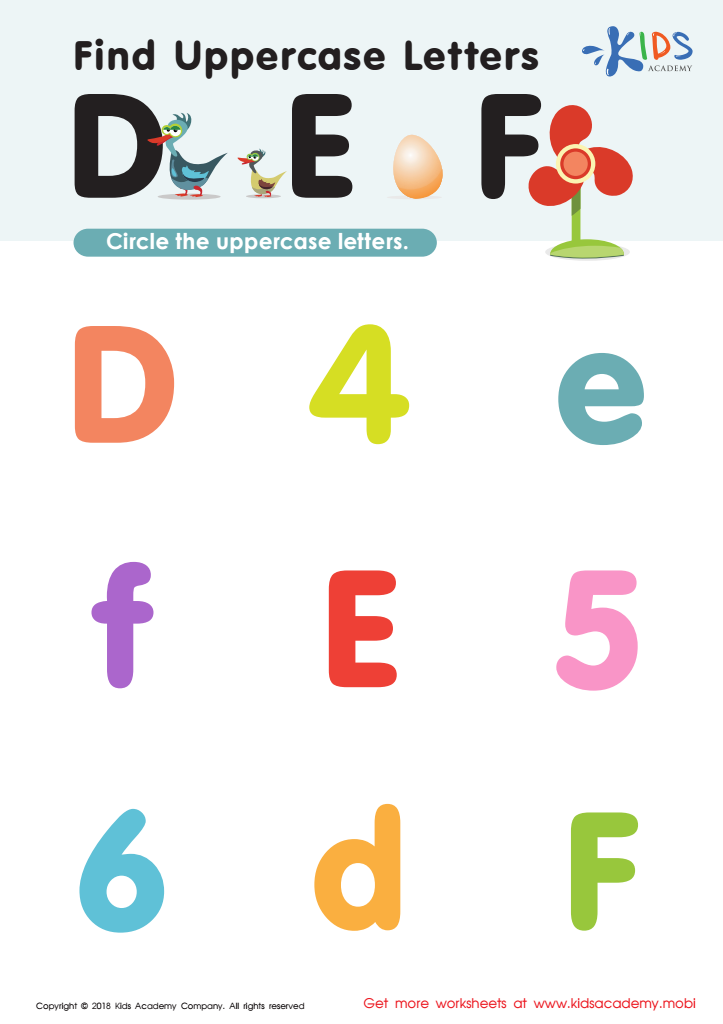
Find Uppercase Letters D, E, and F Worksheet
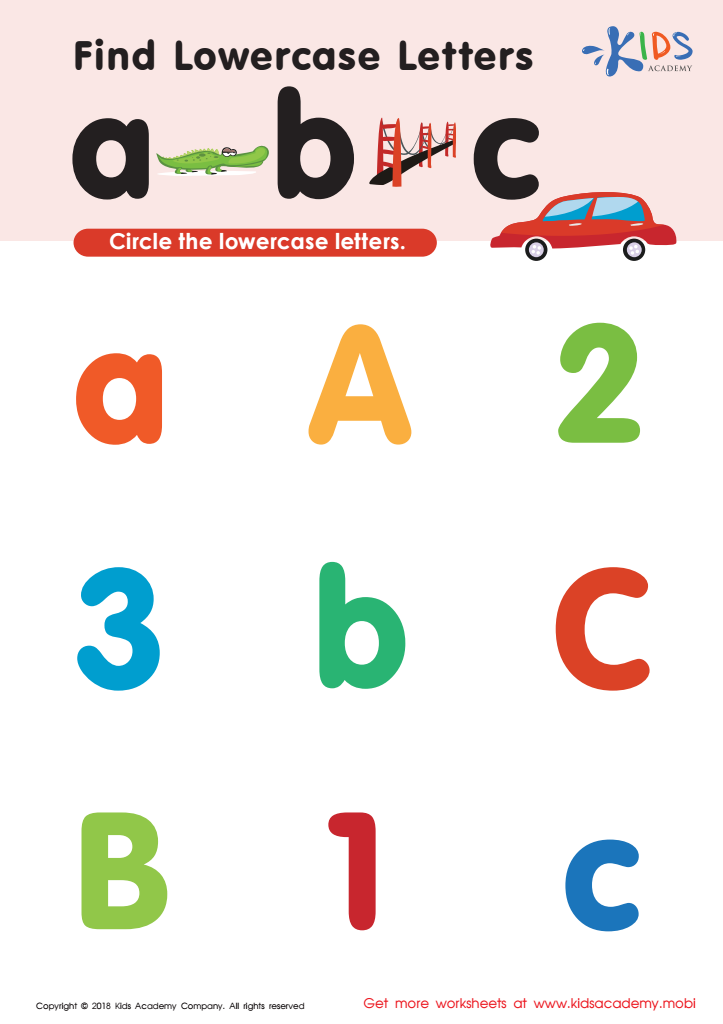
Find lowercase letters a b c Worksheet
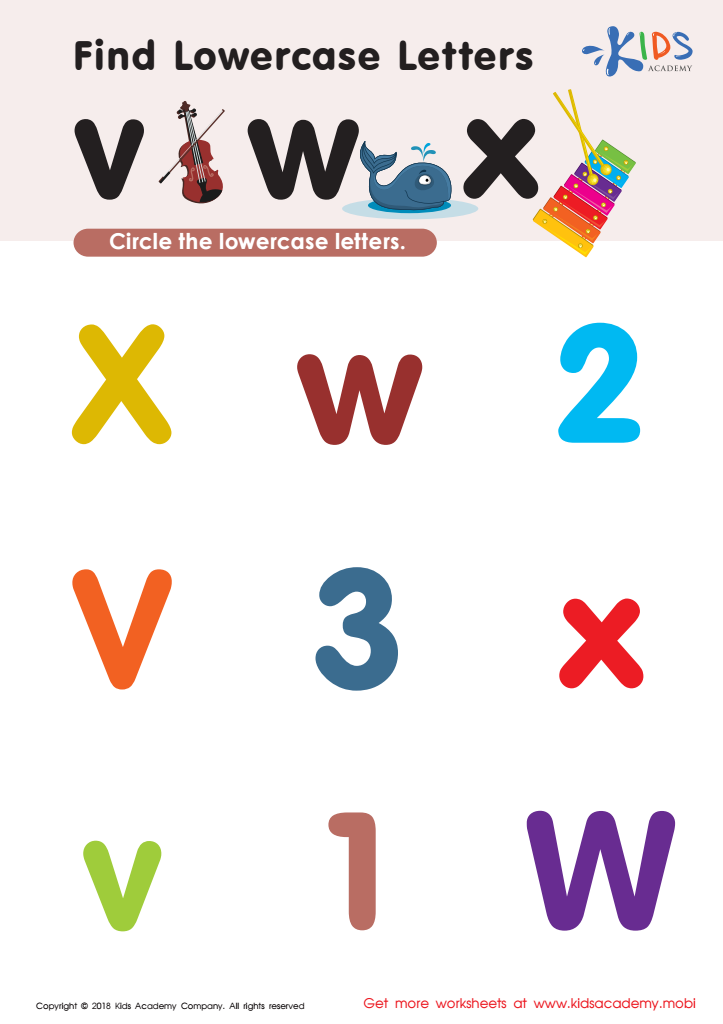
Find Lowercase Letters v w x Worksheet
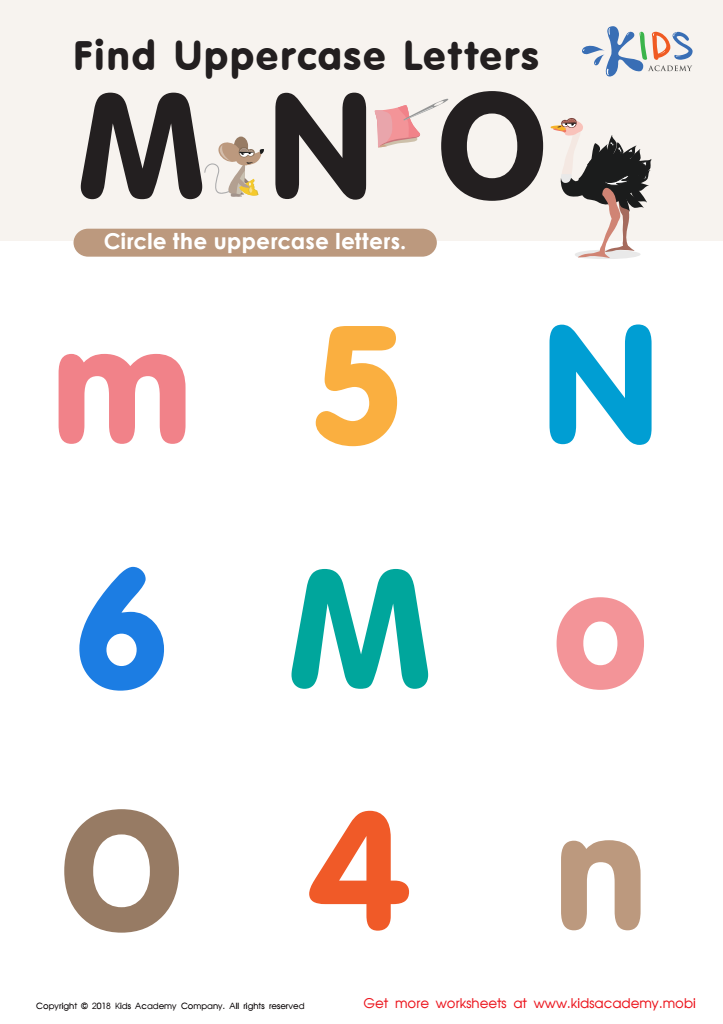
Find Uppercase Letters M, N, and O Worksheet






Letter recognition, both upper and lowercase, is a critical skill for children aged 6-9, serving as a foundational building block for literacy development. During these formative years, children transition from learning to read to reading to learn. Accurate recognition of letters helps them decode words, which is essential for developing fluent reading skills.
Research shows that early literacy experiences, including recognition of letters, significantly influence a child's future academic success. When children can quickly identify both uppercase and lowercase letters, they are better equipped to understand the writing system and engage with various texts. This understanding fosters self-confidence and motivation to read, which supports broader educational growth.
Moreover, knowledge of letter forms aids in writing skills. Children who can distinguish between uppercase and lowercase letters are more proficient in using correct capitalization and punctuation, essential for effective communication.
For parents and teachers, focusing on letter recognition means promoting a love for reading and a positive attitude toward learning. Encouraging this skill can lead to better academic outcomes and prepare children for the challenges of later schooling. Supporting letter recognition in fun and engaging ways can reignite children's enthusiasm for literacy, setting the stage for lifelong learning.







