Filters

7 filtered results

Clear all filters
Favorites
With answer key
Interactive

7 filtered results

Difficulty Level

Grade


Enhance your child's reading skills with our engaging Normal Vowel Blends Worksheets, designed specifically for ages 6-9! These fun and interactive activities help young learners master vowel blends while improving their reading comprehension. Each worksheet features colorful illustrations and straightforward instructions, making it easy for kids to grasp essential language concepts. Perfect for use at home or in the classroom, these resources provide a solid foundation in early literacy. Encourage a love for reading as children engage with lively stories and exercises that boost confidence and fluency. Download our worksheets today and watch your child's reading skills thrive!

Check out this FREE Trial Lesson on Vowel Blends for age 6-9!

Vowel Teams

Favorites
With answer key
Interactive
  • 6-9
  • Reading comprehension
  • Vowel Blends
  • Normal
Reading: Long E and IE Worksheet

Reading: Long E and IE Worksheet

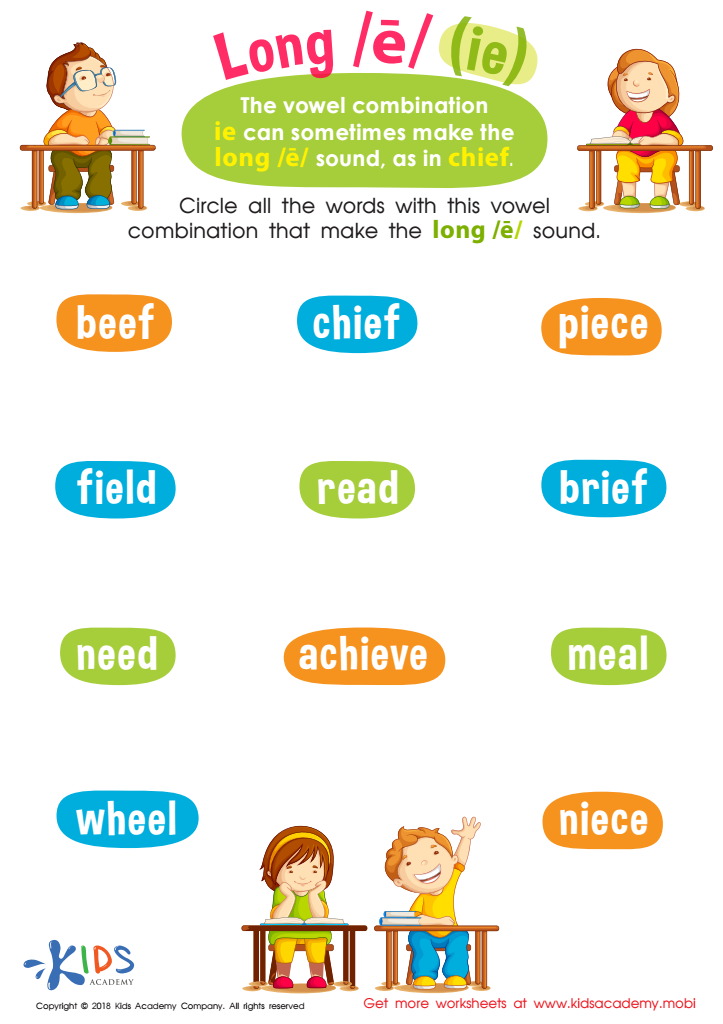
Ask your child to name some words with the long /e/ sound they hear every day. Then, read aloud all the words in the worksheet with them. Ask them to circle the words containing ie that make this sound.
Reading: Long E and IE Worksheet
Worksheet
short vowels Worksheet

short vowels Worksheet

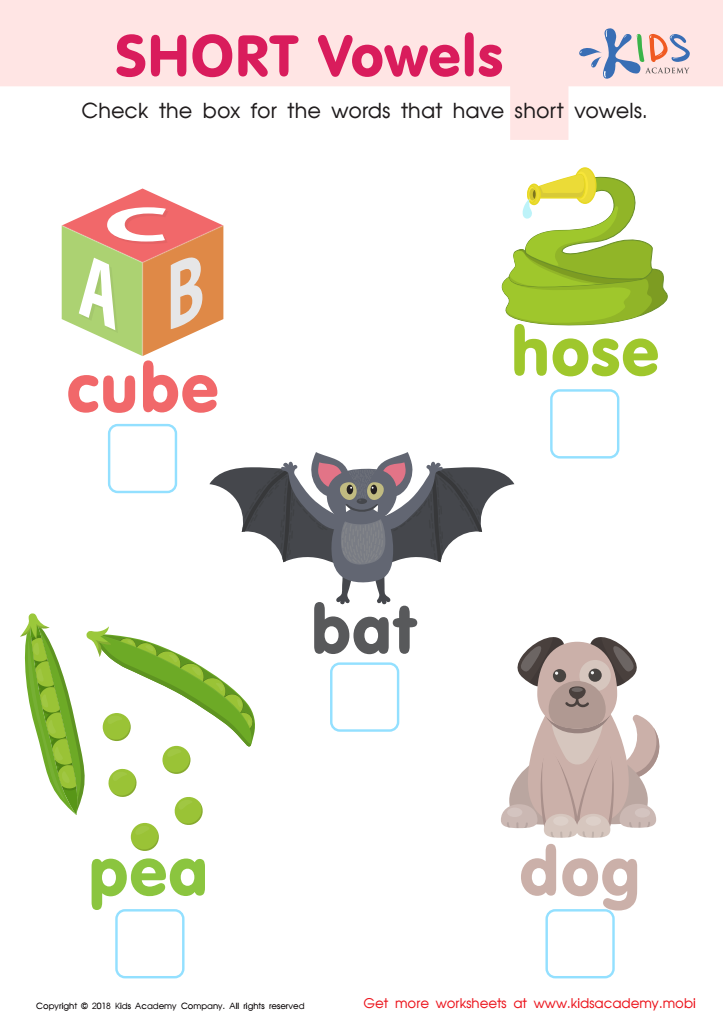
Say "dog" and notice how long it takes to pronounce the vowel. Is it short or long? Compare it to "pea" and use this worksheet to quickly assess your child's mastery. Have them name each picture and listen for the vowel sounds. Only check the boxes for words with short vowel sounds.
short vowels Worksheet
Worksheet
Reading: OA or OW Worksheet

Reading: OA or OW Worksheet

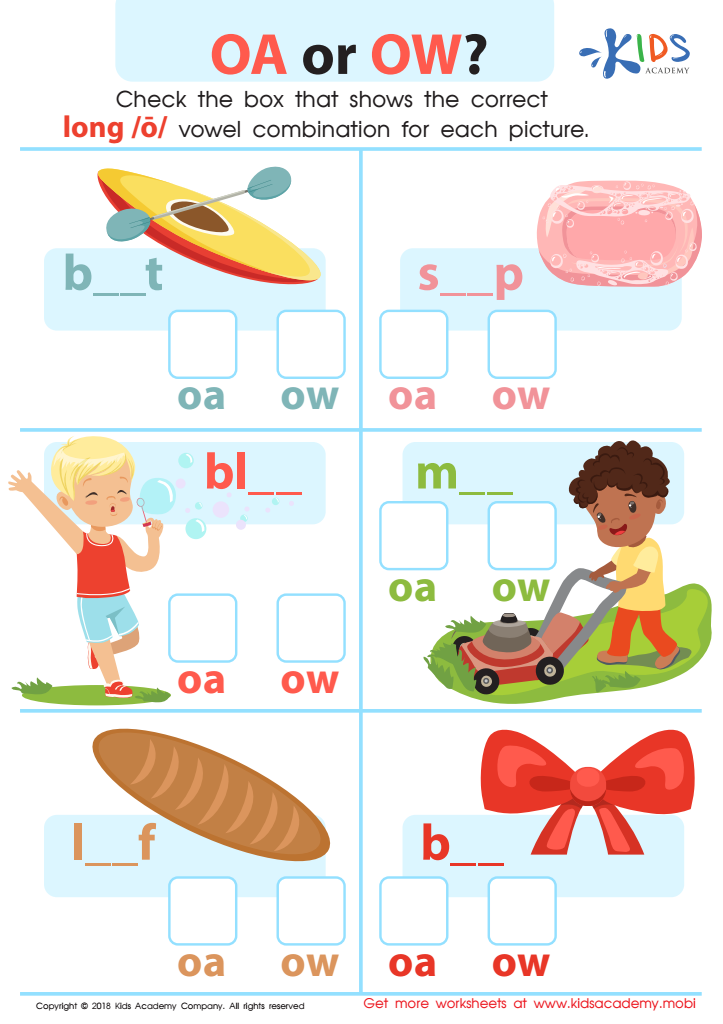
This printable worksheet helps young and emergent readers with decoding words and understanding digraphs (two letters with one sound). It requires students to complete the spelling for each word based on the picture, focusing on /oa/ and /ow/ spellings. It's ideal for a reading classroom and for spelling practice.
Reading: OA or OW Worksheet
Worksheet
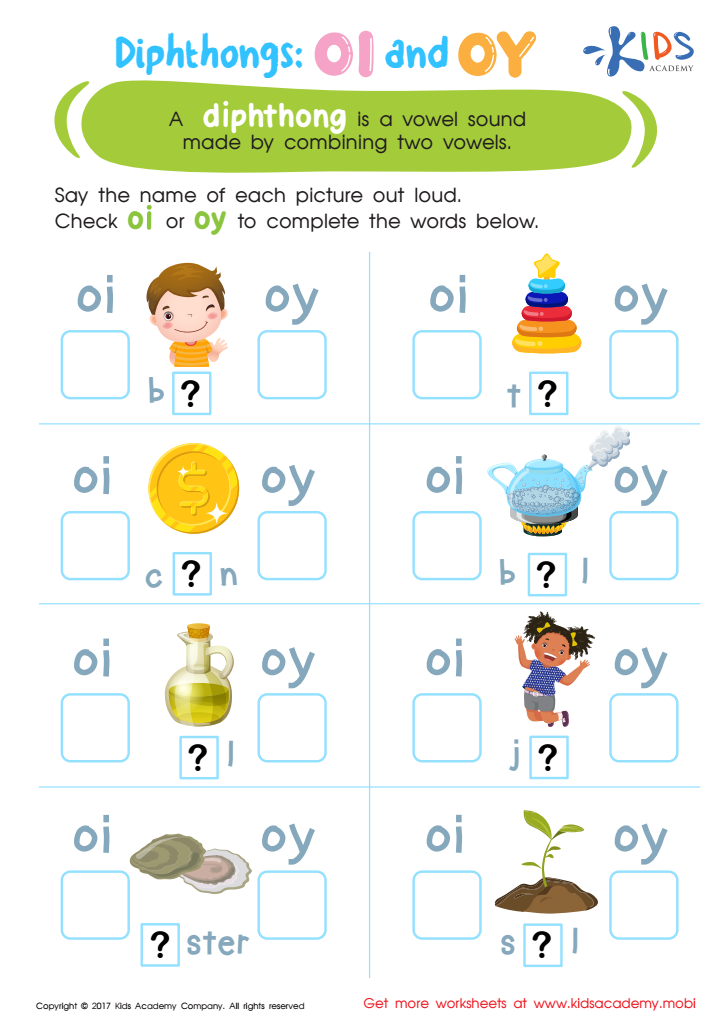
Vowel diphthongs oi oy worksheet

Vowel Diphthongs OI OY Worksheet
It'll help them read and spell accurately. This fun activity is a helpful way to learn tricky spellings of oi and oy diphthongs. It also aids in reading and spelling comprehension.
Vowel Diphthongs OI OY Worksheet
Worksheet
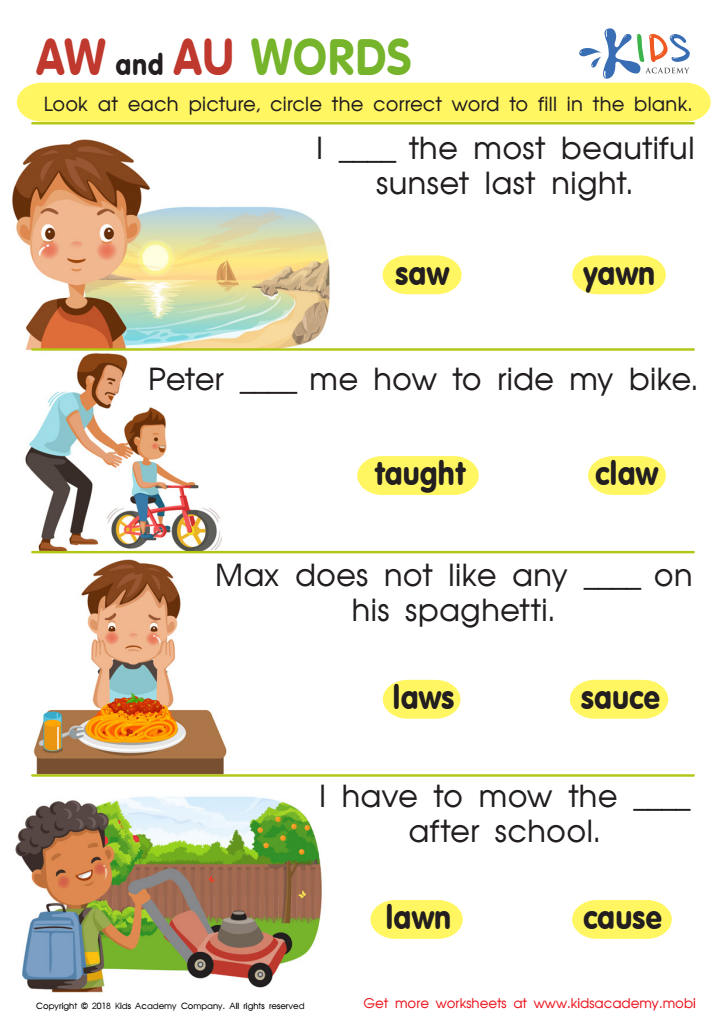
Reading: AW and AU Words Worksheet

Reading: AW and AU Words Worksheet

This worksheet helps kids recognize that /au/ and /aw/ can make the same sound. Students read sentences and pick the correct word with one of the digraphs. Understanding digraphs improves decoding and reading fluency. Perfect for reading and phonics classes.
Reading: AW and AU Words Worksheet
Worksheet
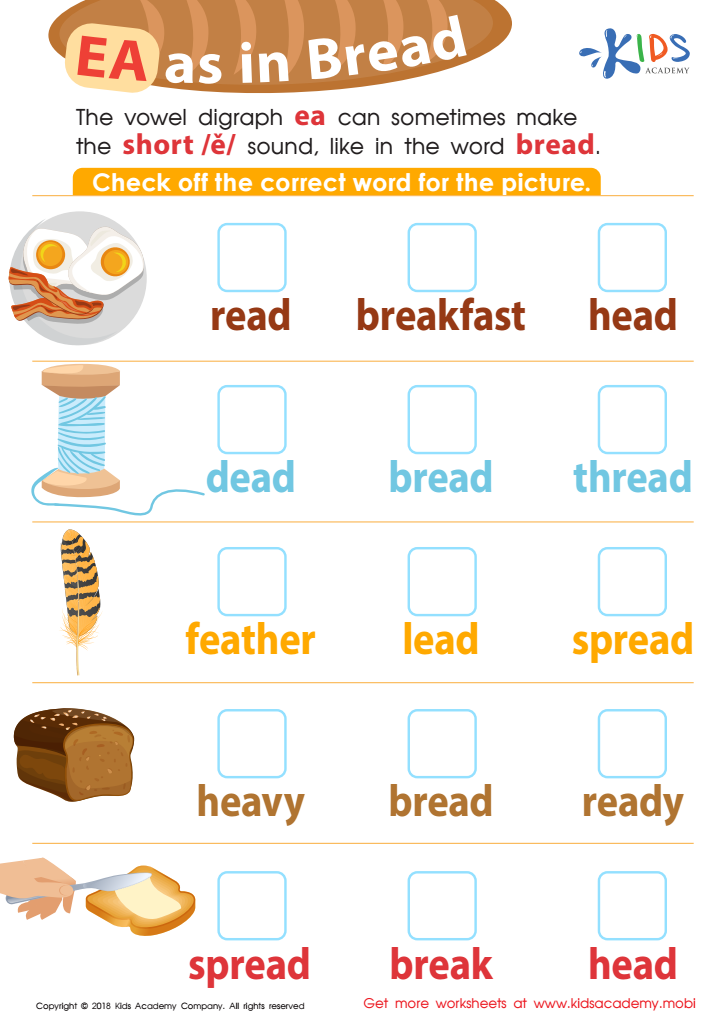
Reading: EA as in Bread Worksheet


Reading: EA as in Bread Worksheet

The vowel digraph ea can be read in two ways. Examples of the long sound are "read" and "lead"; examples of the short sound are "bread" and "head". Ask your kids to give you more examples and then have them check off the correct word for the pictures on this worksheet. This will help them understand the ea sound.
Reading: EA as in Bread Worksheet
Worksheet
Long and Short E Worksheet

Long and Short E Worksheet

This fun printout makes learning phonics enjoyable for Grade 3 students. Get them to read the words “tree” and “bed” to recognize the different sounds of the letter “E”. After hearing the words they can color the words and the pictures to understand differences between long and short vowels.
Download (PDF)
Assign to My Students
Long and Short E Worksheet
Worksheet


Reading comprehension is a crucial skill for children aged 6-9, and understanding normal vowel blends plays a significant role in developing this ability. Vowel blends are combinations of two vowels that create unique sounds, such as "ai," "ea," "oi," and "ou." Recognizing and mastering these blends enriches a child’s phonetic understanding, enabling them to decode words more effectively.

When children systematically learn vowel blends, they can better predict and comprehend the meaning of texts they encounter. This skill is essential as they move from learning to read to reading to learn—a critical transition in their educational journey. Improved reading skills also boost confidence, fostering a love for reading and learning.

Moreover, as parents and teachers nurture reading comprehension, they not only support academic success but also enhance a child's cognitive development. Engaging with stories becomes more enjoyable and meaningful, allowing children to connect with characters and themes on a deeper level.

In summary, focusing on normal vowel blends is imperative for helping children in this age group thrive in literacy, paving the way for lifelong reading habits that extend beyond the classroom and into all areas of life.