Normal Vowels and Consonants Worksheets for Ages 6-9 - Page 2
26 filtered results
-
From - To
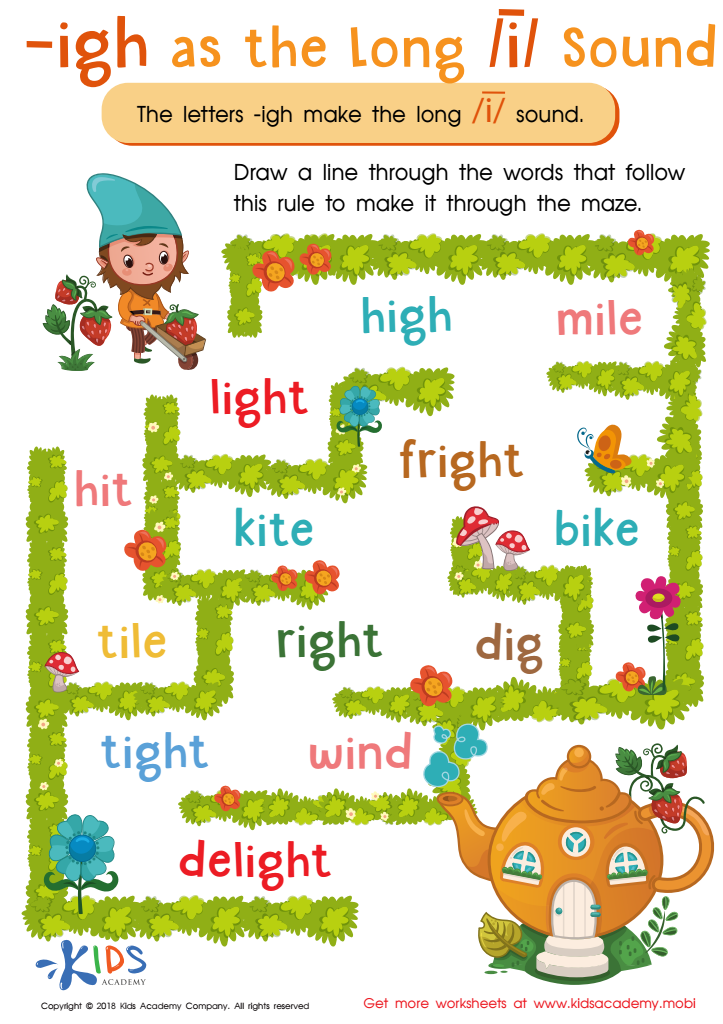
Reading: IGH as Long I Worksheet
 Assign to My Students
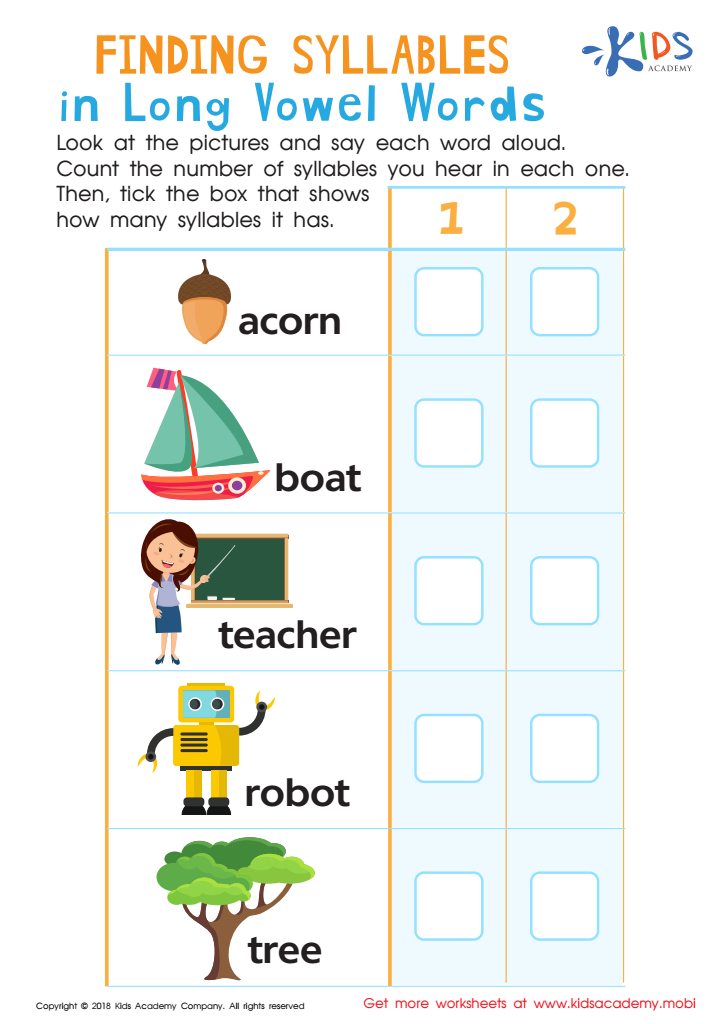
Finding Syllables in Long Vowel Words Worksheet



Understanding normal vowels and consonants is crucial for children aged 6-9 as it forms the foundation of their reading and writing skills. At this developmental stage, children are transitioning from learning letters and sounds to applying this knowledge in more complex language tasks. Familiarity with vowels and consonants enhances their phonemic awareness, allowing them to decode words more effectively. This understanding is essential for reading fluency, as it enables children to recognize familiar patterns in language.
Moreover, mastering these fundamental elements greatly impacts spelling abilities. Children begin to develop strategies for word construction, which supports their writing skills and boosts their confidence. Parents and teachers should foster a playful and engaging learning environment where children can explore these sounds through games, songs, and stories, making learning enjoyable.
Encouraging conversations around vowels and consonants also enriches vocabulary development. As children learn to identify and manipulate these sounds, they become more capable of expressing their thoughts clearly. Ultimately, a strong grasp of normal vowels and consonants equips children with vital tools for effective communication, laying the groundwork for future academic success and instilling a lifelong love for literacy. Investing attention in these areas is critical for holistic language development in early learners.






