
Comprehension skills Normal Worksheets for Ages 6-9
21 filtered results
Difficulty Level
Grade
Age
-
From - To
Subject
Activity
Standards
Unlock your child's reading potential with our engaging Comprehension Skills Normal Worksheets designed for ages 6-9. These meticulously crafted worksheets enhance critical reading abilities by focusing on understanding, inference, and vocabulary. Each activity encourages young learners to draw conclusions, identify main ideas, and interpret text meaning through fun and educational exercises. Perfectly suited for classroom and home learning, our worksheets support the development of essential literacy skills. Explore our diverse collection to empower your child with the comprehension tools necessary for academic excellence. Visit Kids Academy for more resources to inspire confident and fluent young readers.
Favorites
With answer key
Interactive
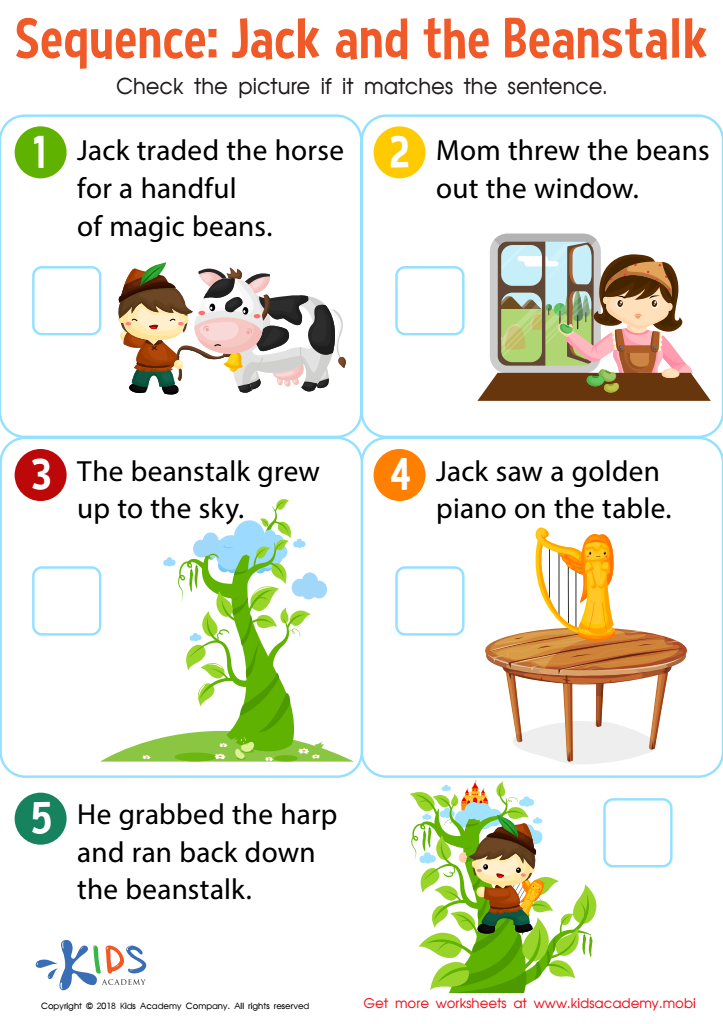
Sequence: Jack and The Beanstalk Worksheet
Ensure your kids are familiar with Jack and the Beanstalk before starting this worksheet. If not, read them the story. In the pdf, there are five pictures with sentences. Read the sentences, ask your kid if it matches the picture, then help them check if it does.
 Assign to My Students
Sequence: Jack and The Beanstalk Worksheet
Worksheet
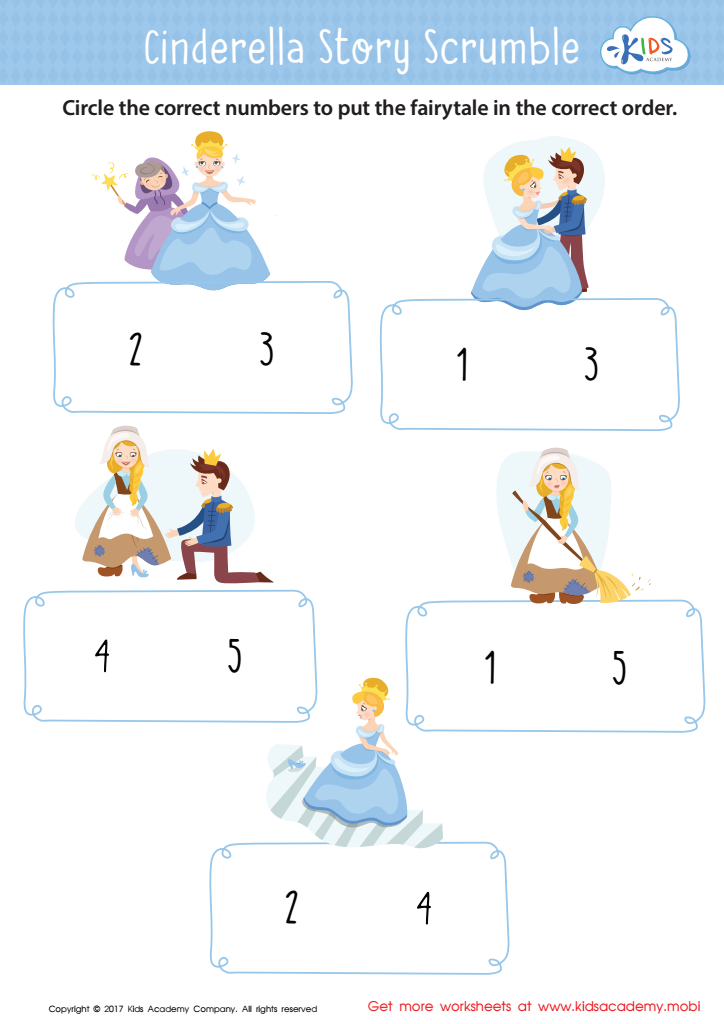
Cinderella Story Sequencing Worksheet
This worksheet helps strengthen reading comprehension skills by getting your child to remember key moments from the Cinderella story. They'll be asked to place pictures in the right order to tell the story.
Cinderella Story Sequencing Worksheet
Worksheet
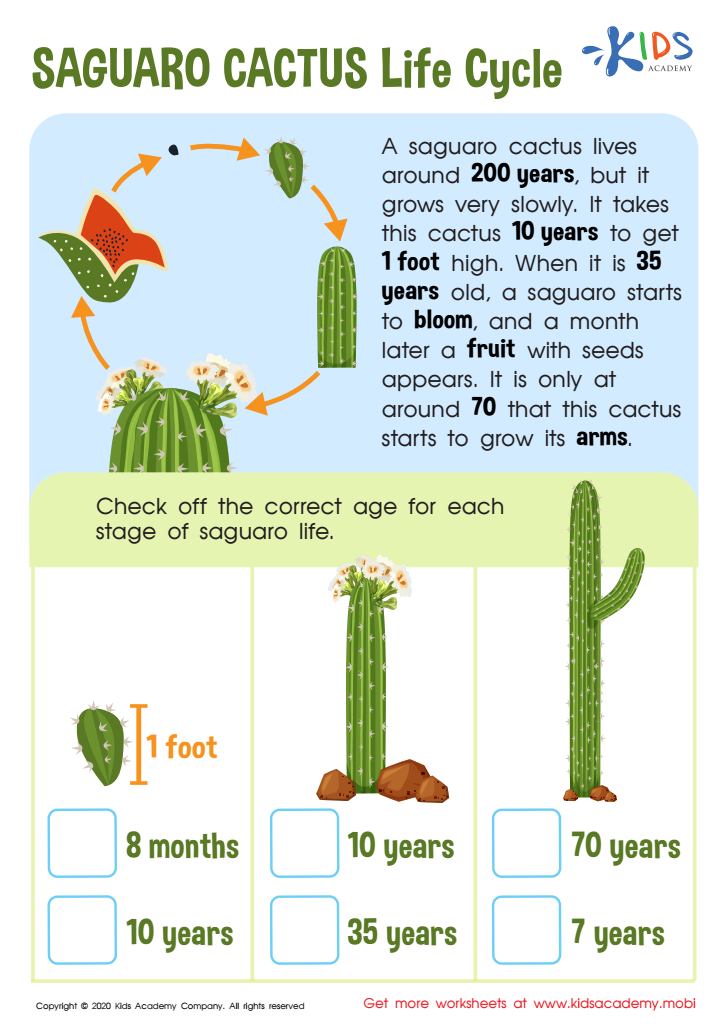
Saguaro Cactus Life Cycle Worksheet
Teach your child about the saguaro cactus, which takes 35 years to bloom and can live up to twice the lifespan of a human! Print this free PDF worksheet to engage learners with an interesting passage. Check off the correct answers to reflect their learning!
Saguaro Cactus Life Cycle Worksheet
Worksheet
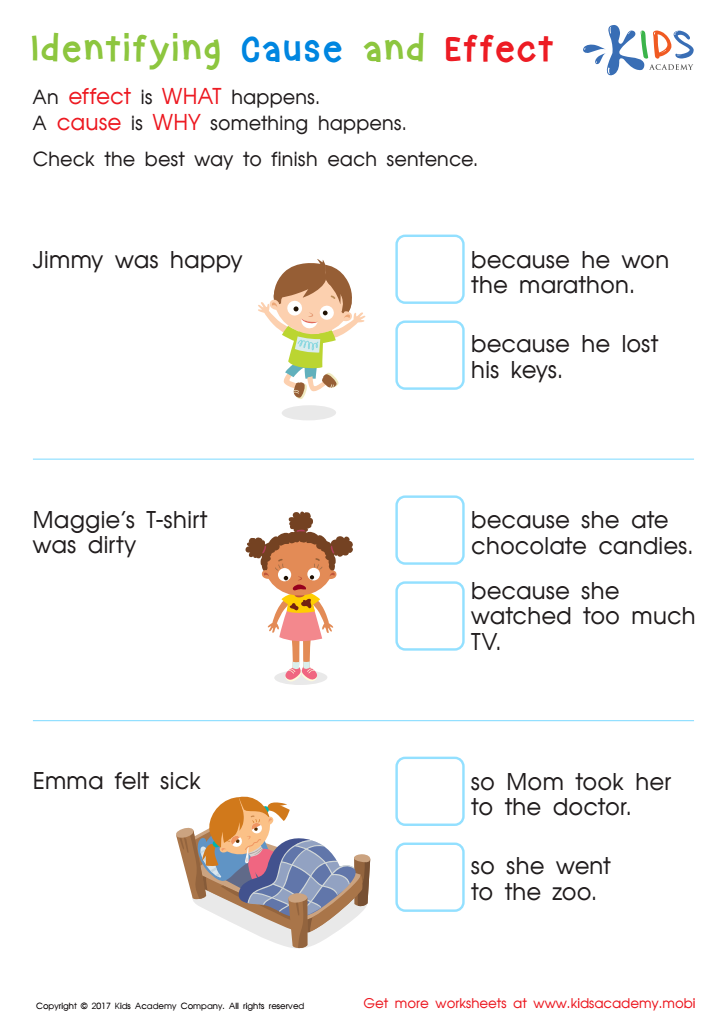
Indentifying Cause and Effect Worksheet
2nd grade cause & effect worksheets give your child practice making connections between events and their results. Fun activities help develop reading and critical thinking skills.
Indentifying Cause and Effect Worksheet
Worksheet
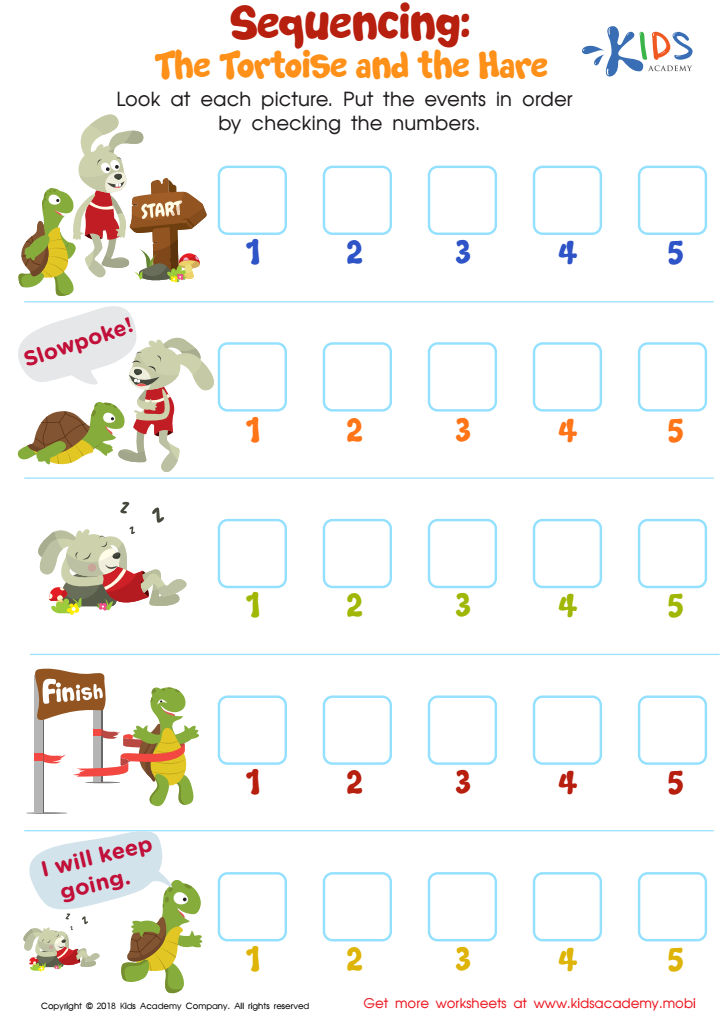
Sequencing: The Tortoise and the Hare Worksheet
Help your child become an independent reader and critical thinker with a sequencing worksheet from Kids Academy! Have them read the classic tale of the tortoise and the hare and use the accompanying worksheet to check their understanding of the story's sequence of events. Have kids identify the correct order of events by selecting the box next to the correct number for each image!
Sequencing: The Tortoise and the Hare Worksheet
Worksheet
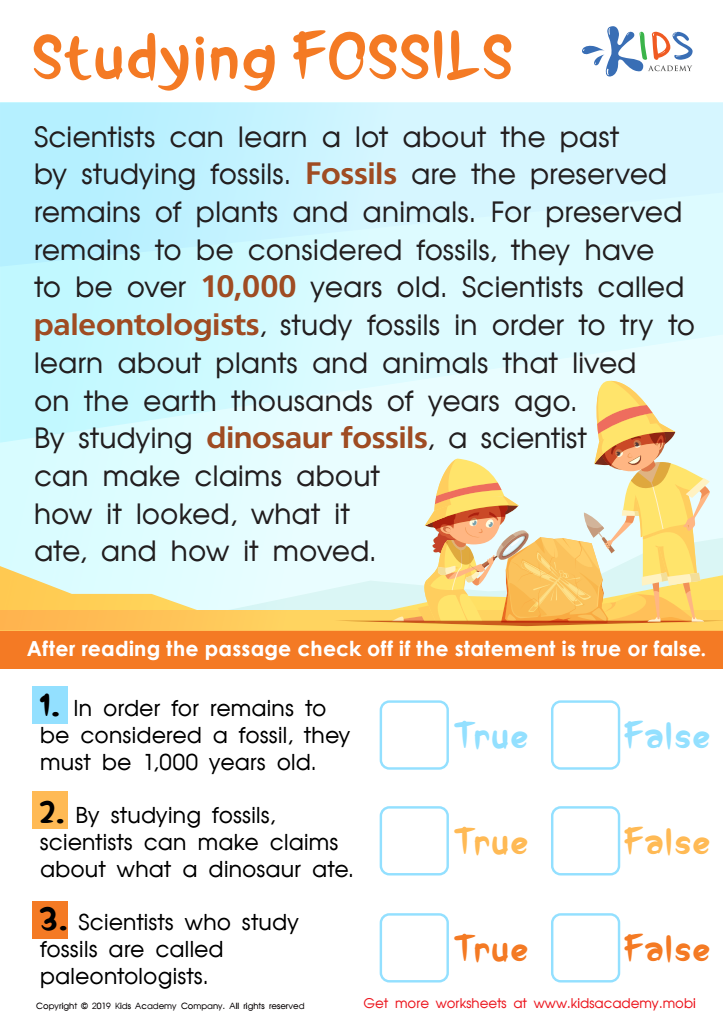
Studying Fossils Worksheet
Fossils captivate children! It's no wonder why; when we learn about them, we are getting a glimpse into history and uncovering old mysteries! With this free download, kids will understand what a paleontologist is and how they use fossils to learn about long-gone plants and animals. They'll discover that old bones are priceless and that exploring ancient history can be exciting!
Studying Fossils Worksheet
Worksheet
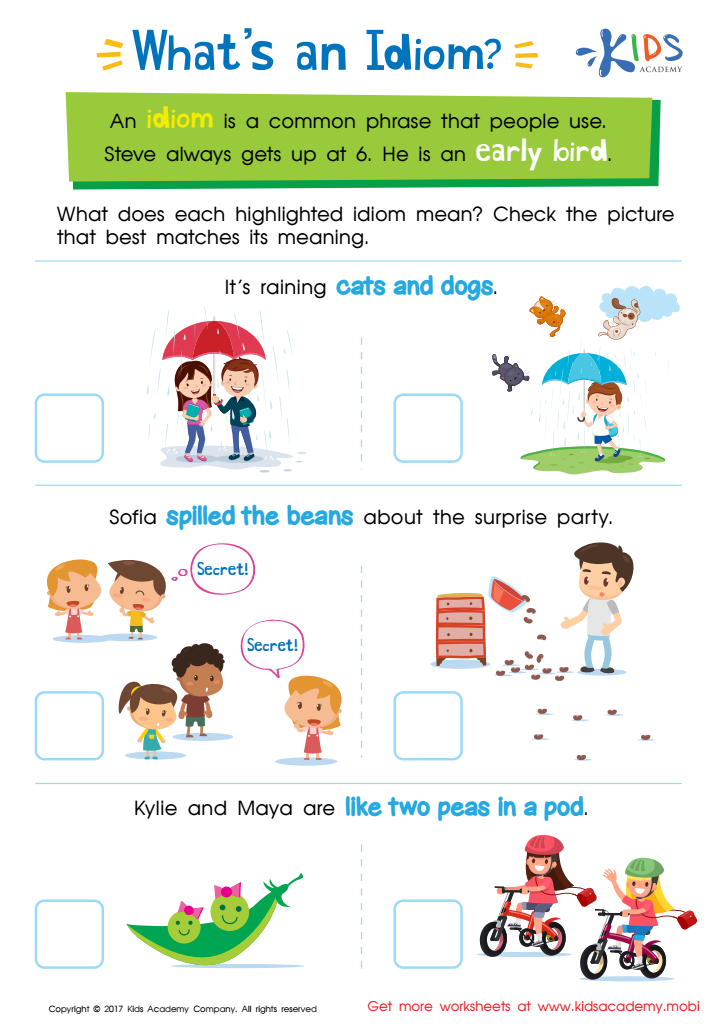
Idiom Worksheet
This idiom worksheet for 3rd grade is the answer.
Make learning idioms a breeze! Help your 3rd grader understand figurative language with a fun worksheet based on the common expressions they already know. Unlock the mystery behind these phrases and make learning fun!
Idiom Worksheet
Worksheet
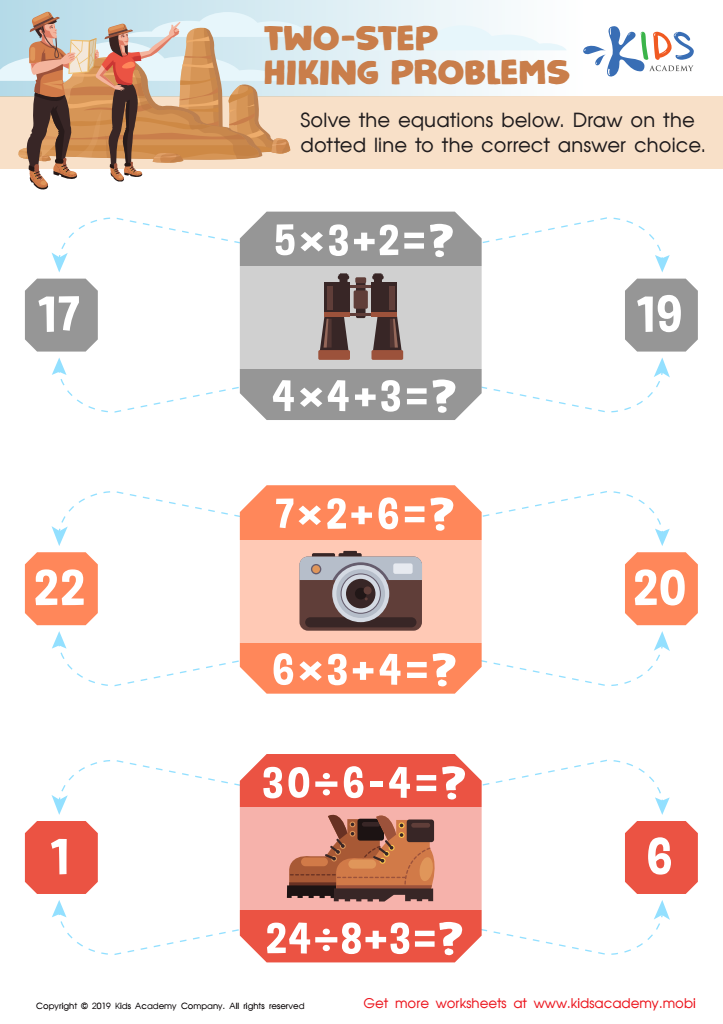
Two-Step Hiking Problems Worksheet
Help your kids ease into math with this worksheet. Solve the three basic equations, then draw on the dotted line to the correct answer. You can help your kids make their journey smoother by guiding them through it.
Two-Step Hiking Problems Worksheet
Worksheet
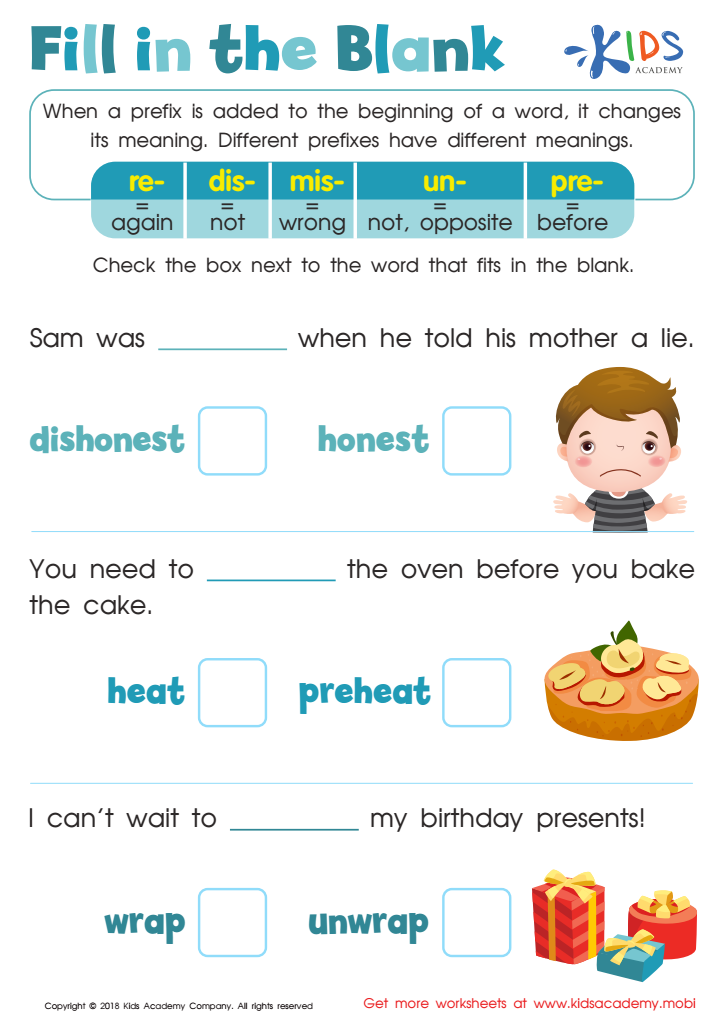
Reading: Fill in the Blank Worksheet
Students can practice understanding the meaning of common prefixes with this worksheet. They read sentences and pick the correct word with the appropriate prefix to complete it. Downloadable and a great addition to reading and vocabulary resources, this helps improve comprehension with mastery of the skill!
Reading: Fill in the Blank Worksheet
Worksheet
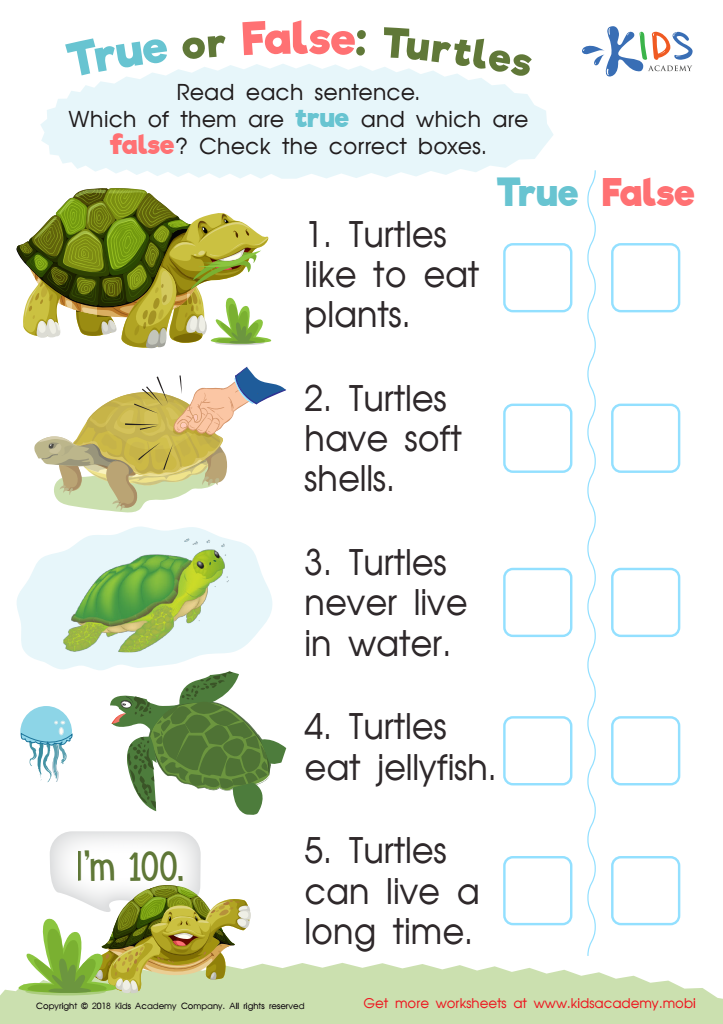
True or False: Turtles Worksheet
Print this free downloadable worksheet to strengthen your child's reading comprehension. Assist them to read each sentence and recall facts about turtles. Check true or false for each statement to verify their knowledge. Perfect for early learners!
True or False: Turtles Worksheet
Worksheet
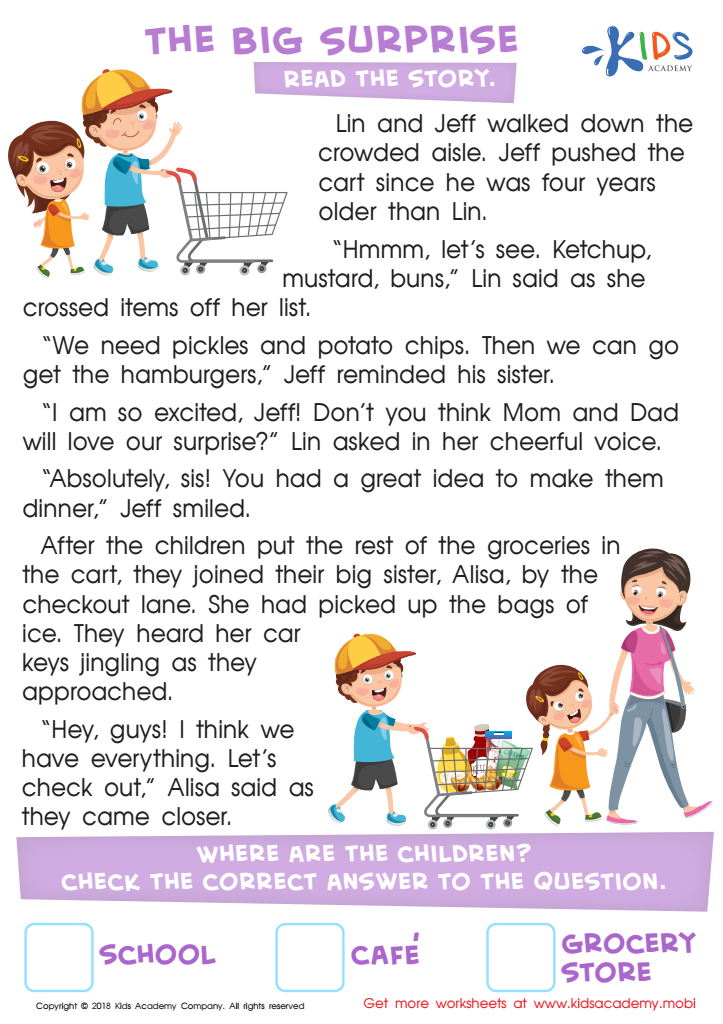
The Big Surprise Worksheet
Read this story to your kids: Lin and Jeff are in the supermarket with their big sister Alisa. They're excited to buy groceries. Listen closely to the details and ask the questions at the end to check your understanding. Read it twice to ensure full comprehension.
The Big Surprise Worksheet
Worksheet
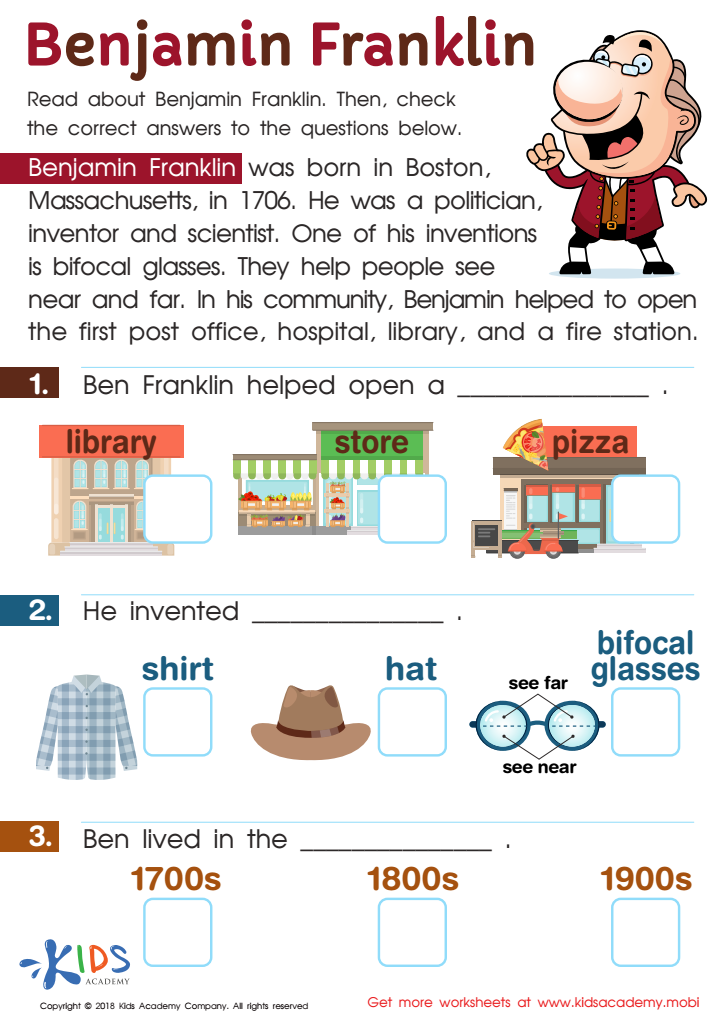
Benjamin Franklin Worksheet
Introduce your kids to one of history's most important figures - Benjamin Franklin! Tell them all about his remarkable contributions to the world and then use this worksheet to teach them even more. Read the text to them and check their answers against the questions afterwards.
Benjamin Franklin Worksheet
Worksheet
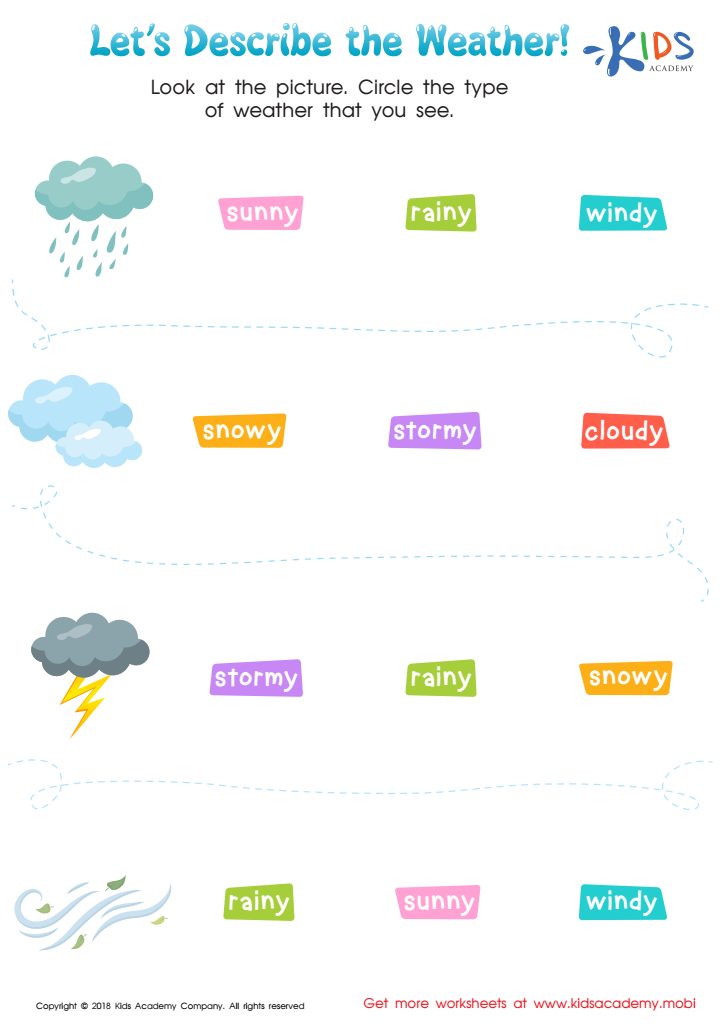
Let's Describe the Weather! Worksheet
Test your child's knowledge of weather with this fun worksheet. Ask them to look at the pictures and identify the type of weather. Then, have them select the correct answer from the options on the right. See how well your kids have been paying attention to the weather forecast!
Let's Describe the Weather! Worksheet
Worksheet
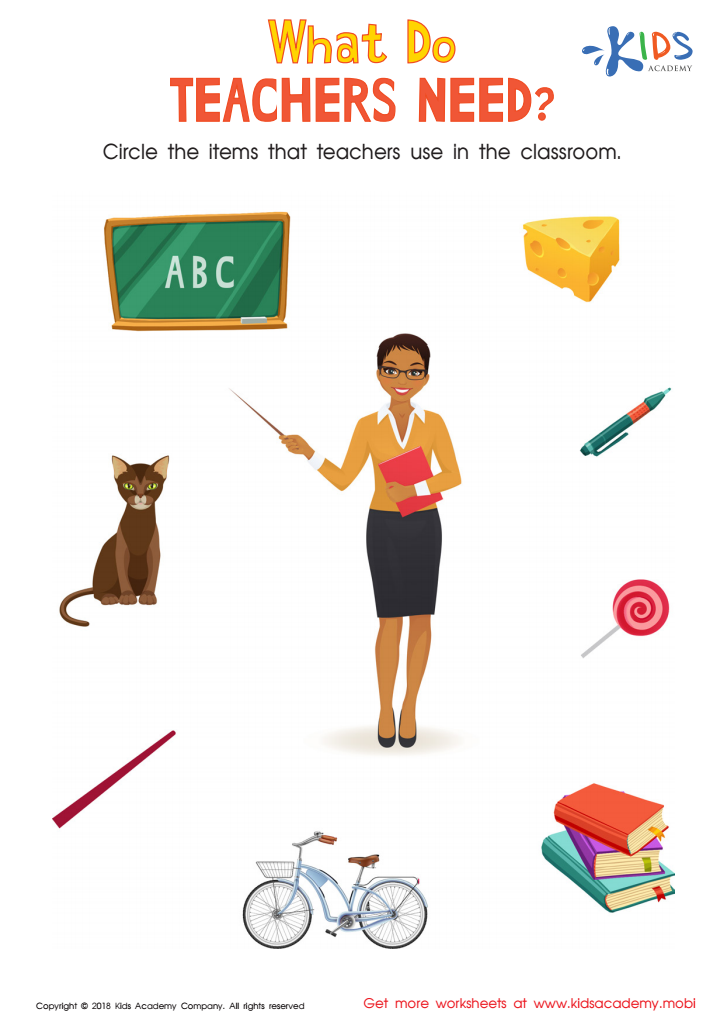
What Do Teachers Need Worksheet
This interactive worksheet tasks kindergarten students with identifying essential items a teacher needs in a classroom. They will be asked to circle items, helping them learn what teachers need to have in their classrooms.
What Do Teachers Need Worksheet
Worksheet
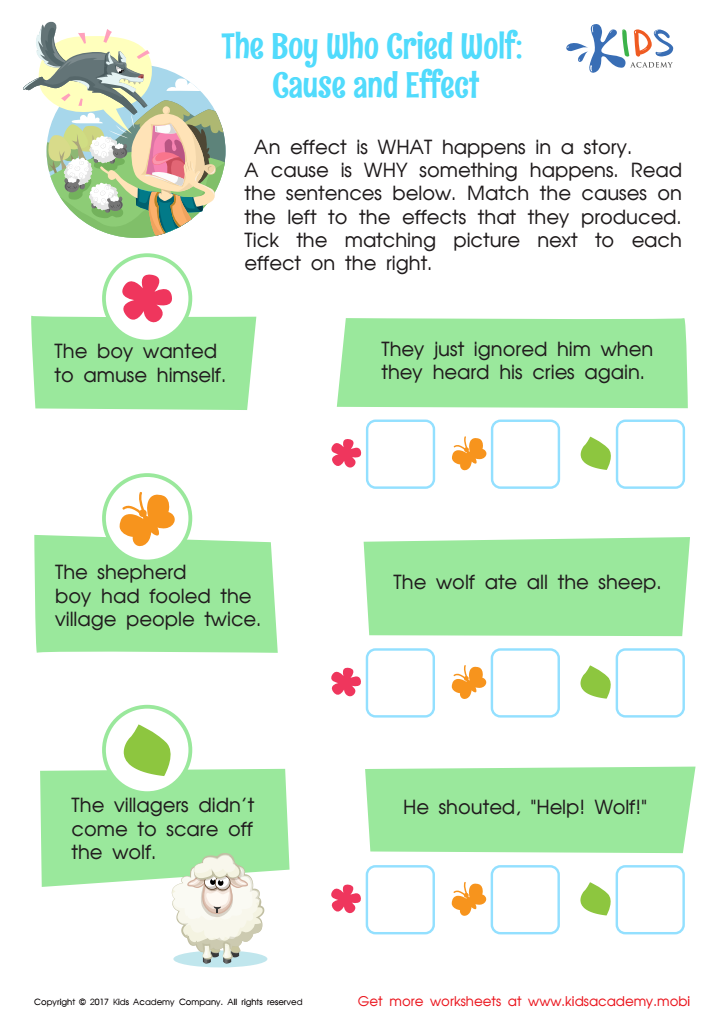
The Boy Who Cried Wolf: Cause and Effect Worksheet
With classic stories and fables, learning reading comprehension is easy - and fun!
The Boy Who Cried Wolf: Cause and Effect Worksheet
Worksheet
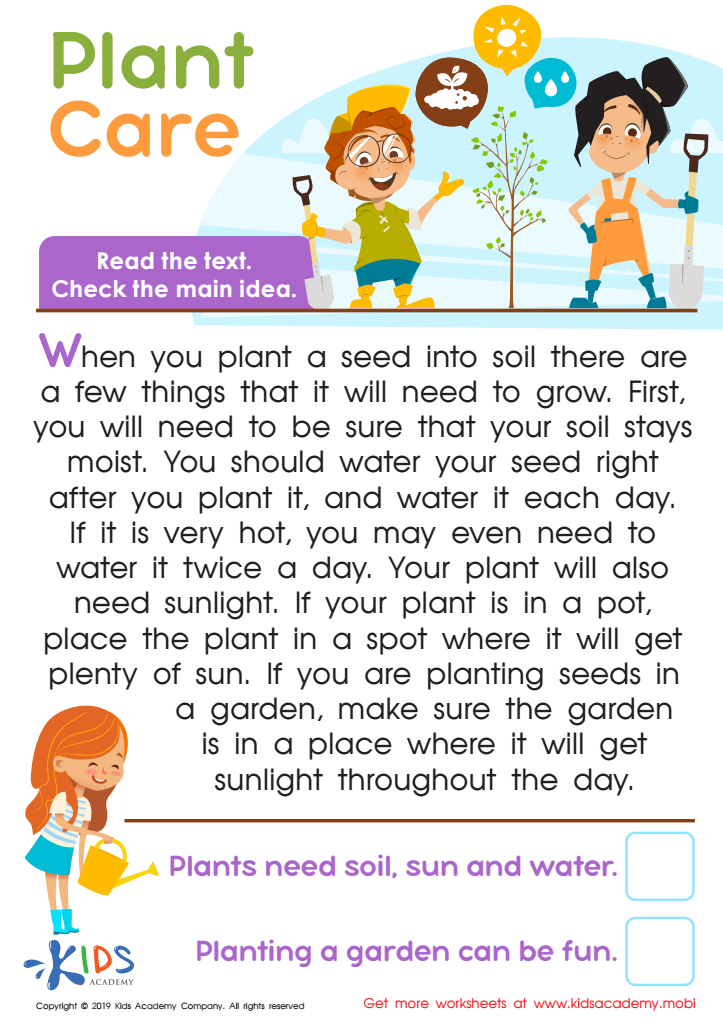
Plant Care Worksheet
Encourage your children to read by helping them practice. Print out the worksheet and read the text with them. Help them understand the words and find the main idea. This will improve their reading skills and prepare them for school.
Plant Care Worksheet
Worksheet
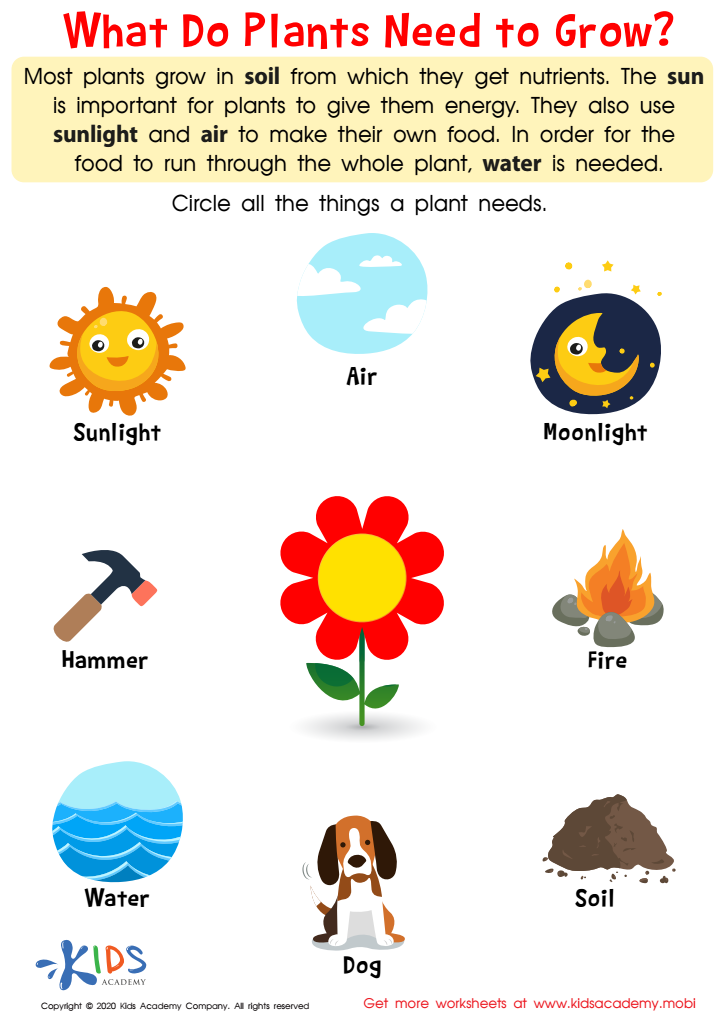
What Do Plants Need to Grow Worksheet
Help your child explore and discover the world of plants with this fun how do plants grow worksheet! They'll gain knowledge, sharpen problem solving skills, and build science foundations as they identify what plants need to grow. Afterward, plant a seed together and watch it sprout right before their eyes!
What Do Plants Need to Grow Worksheet
Worksheet
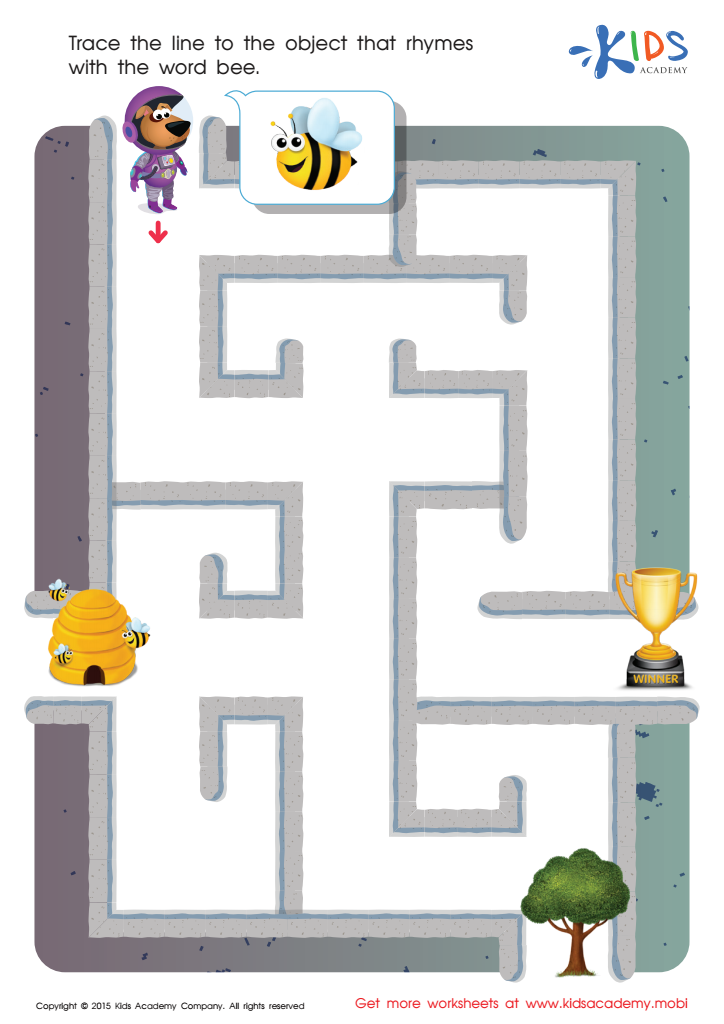
Bee Rhyming Words Worksheet
Download our new vocab builder worksheet and help our pup find rhymes. See how easy it is to trace the root between words! Make learning fun with our collection of English materials and worksheets. Get them now on our web site.
Bee Rhyming Words Worksheet
Worksheet
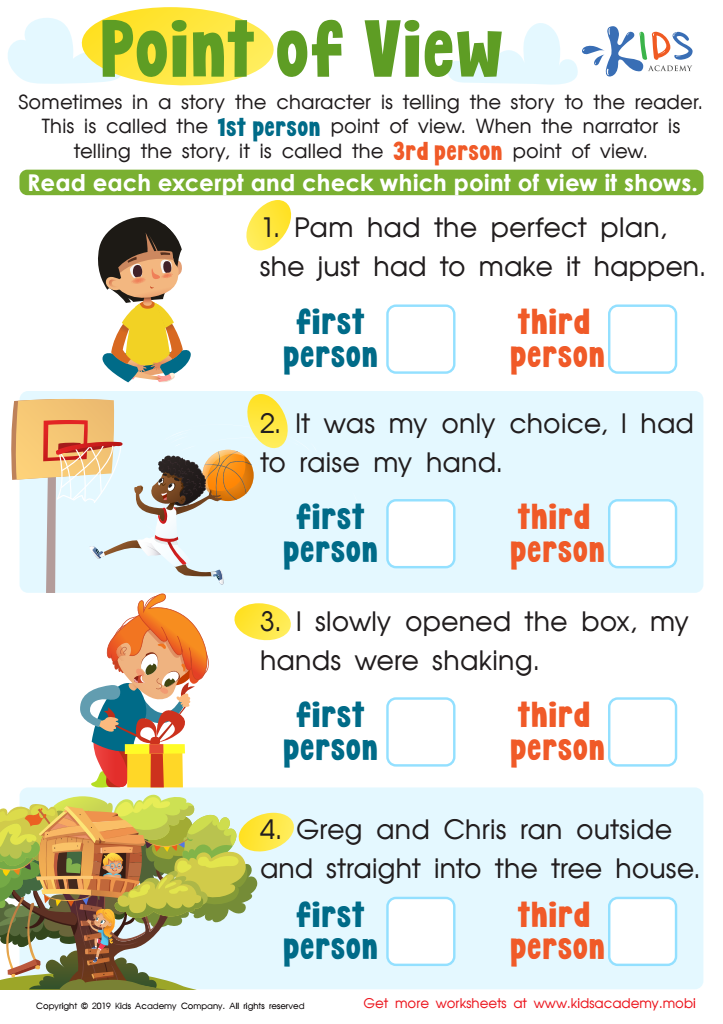
Point of View Printable
Teach your kids about points of view with this worksheet! In a story, characters can tell the story in first person or it can come from a narrator in third person. Read the excerpt in the worksheet and ask your kids to identify which point of view it is.
Point of View Printable
Worksheet
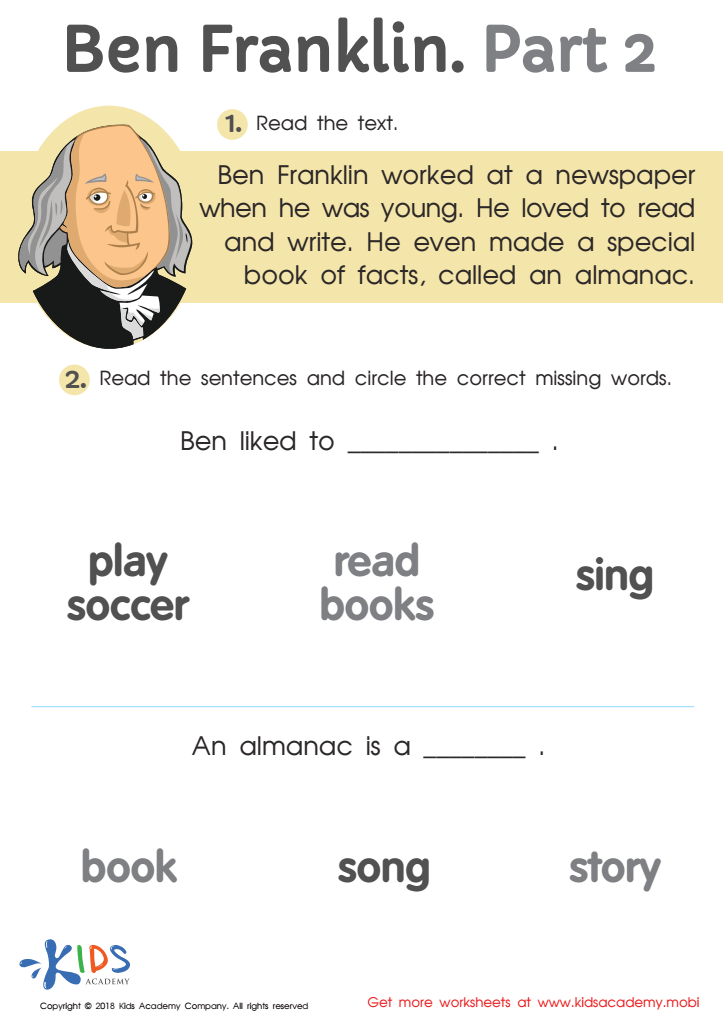
Ben Franklin Part 2 Worksheet
History is filled with great figures, like Benjamin Franklin. Let your kids in on the legacy by introducing them to the founder of the US fire department, diplomat, and inventor. Then, use a worksheet to have them fill in the blanks with the correct word to teach them more. Read the text, then read the sentences and have them circle the missing word.
Ben Franklin Part 2 Worksheet
Worksheet
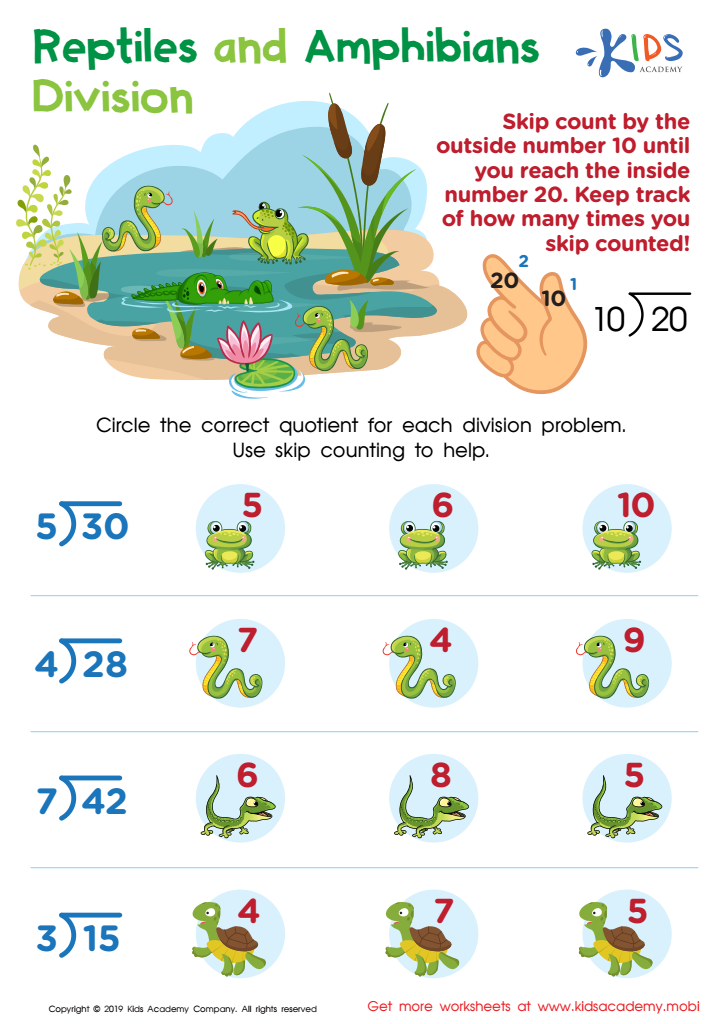
Reptile and Amphibians Division Worksheet
Skip counting is key in division. This PDF worksheet helps children practice this skill with fun reptile and amphibian friends. They must circle the right quotient among the choices given to reinforce their pattern recognition. Perfect for mastering division!
Reptile and Amphibians Division Worksheet
Worksheet
Join Kids Academy for Free
Who is primarily going to use this learning content?







Comprehension skills are fundamental for children ages 6-9, and both parents and teachers play a crucial role in nurturing these abilities. During this developmental stage, children transition from learning to read to reading to learn. Effective comprehension skills enable students to grasp the meaning of text, facilitating better academic performance across subjects. When children comprehend well, they can follow complex instructions, engage in class discussions, and build the foundation for critical thinking and problem-solving.
For parents, fostering good comprehension helps ensure their child can handle increasingly challenging material, enhancing their learning and confidence. Engaged parents who prioritize reading at home create a supportive environment that bolsters their child's ability to interpret stories, understand concepts, and relate to characters and scenarios, making learning a shared, enjoyable experience.
Teachers, on the other hand, benefit from a classroom of students with strong comprehension skills by being able to introduce more complex, enriching material without spending excessive time on basic understanding. This allows for more interactive and in-depth lessons, promoting a stimulating educational atmosphere.
Overall, strong comprehension skills provide children with the tools they need for future academic and life success, making it essential for both parents and teachers to prioritize and nurture these skills during these formative years.








