
Developing counting skills Normal Worksheets for Ages 6-9
3 filtered results
Difficulty Level
Grade
Age
-
From - To
Subject
Activity
Standards
Boost your child's counting abilities with our engaging normal worksheets, designed specifically for ages 6-9! These thoughtfully crafted resources provide a variety of fun activities that make learning numbers enjoyable. From counting objects to solving simple math problems, our worksheets reinforce essential counting skills in a playful manner. Ideal for both classroom settings and homeschooling, each worksheet promotes critical thinking and fosters a love for math through interactive exercises. Enhance your child’s numerical competence and confidence today with our high-quality, printable worksheets, perfect for any learning environment. Start exploring the joy of counting and watch your child flourish in math!
Favorites
With answer key
Interactive
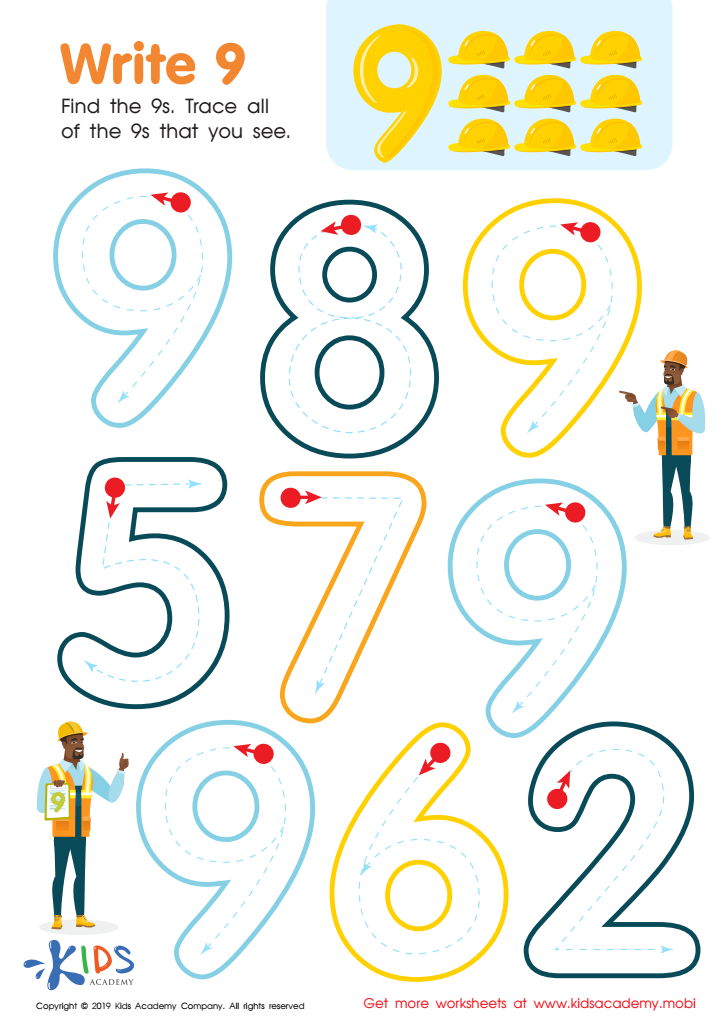
Write 9 Worksheet
Once your kids can count, help them learn to write numbers with your guidance and patience. This worksheet is designed to speed up the process. Help them spot the 9s in the picture, then help them trace them. With your help, your kids will soon be pros at counting and writing numbers.
 Assign to My Students
Write 9 Worksheet
Worksheet
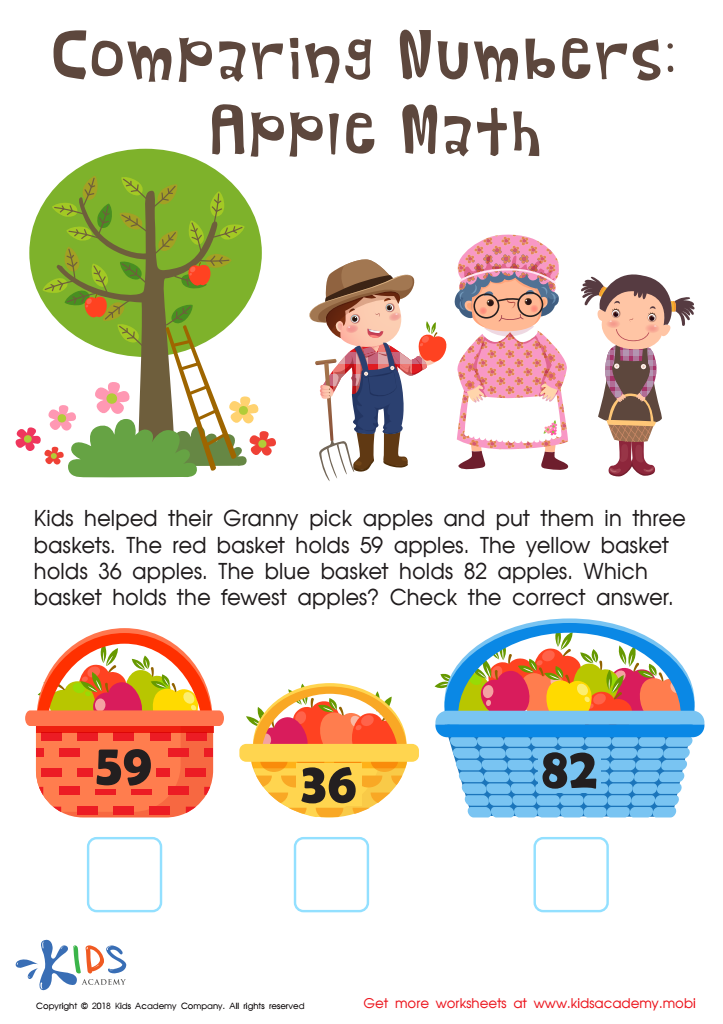
Apple Math Worksheet
Math is more than just counting, adding, subtracting, multiplying, and dividing. Your child may be feeling overwhelmed by all the complexities, like comparing numbers and their differences. But with this worksheet, you can make comparing numbers fun again!
Apple Math Worksheet
Worksheet
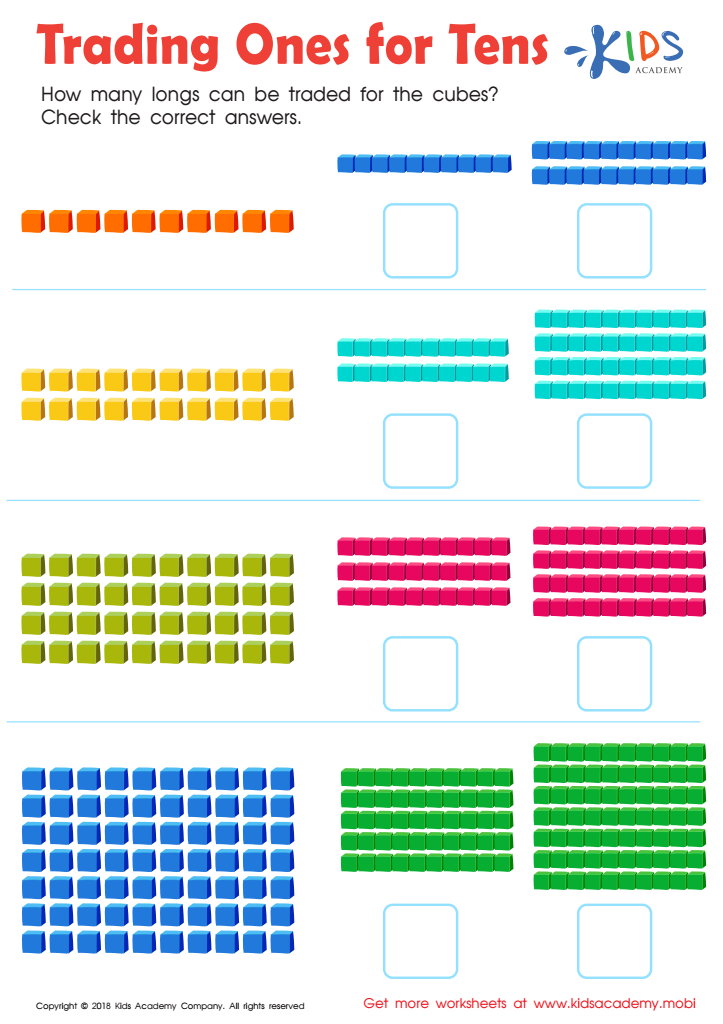
Trading Ones for Tens Worksheet: Part 2
Introduce your early learners to regrouping numbers! Catch their attention with this brightly colored worksheet. See how many 10s can be created from the cubes. Then, check the box with the correct answer to complete the sheet! Download now and get started!
Trading Ones for Tens Worksheet: Part 2
Worksheet
Join Kids Academy for Free
Who is primarily going to use this learning content?


.jpg)





Developing counting skills in children ages 6-9 is essential for their overall academic and cognitive growth. At this stage, children transition from basic understanding to more complex numerical concepts, which serve as a foundational element for math mastery. Counting skills not only enable them to perform arithmetic but also hone their problem-solving abilities, promoting logical thinking, pattern recognition, and spatial awareness.
Parents and teachers should prioritize counting skills as these lay the groundwork for future learning in finance, science, and technology. Mastering counting can foster confidence in young learners, encouraging them to engage in more challenging mathematical concepts. Furthermore, counting serves as a springboard for exploring addition, subtraction, and eventually, multiplication and division.
Encouraging regular practice through games, everyday challenges, and interactive activities enhances children's enthusiasm for math, showing them the real-life applications of their skills. Additionally, strong counting skills lead to fewer learning gaps, ensuring more robust educational development. By focusing on this critical area, parents and teachers can equip children with tools that foster academic success and promote a love for learning, ultimately shaping their lifelong attitude toward mathematics and problem-solving.








