Develops fine motor skills Normal Worksheets for Ages 6-9
4 filtered results
-
From - To
Our worksheets designed for kids aged 6-9 offer engaging activities to help develop fine motor skills. Children will enjoy practicing tasks that enhance their hand-eye coordination, dexterity, and precision, such as drawing, tracing, cutting, and pasting. These worksheets not only support essential motor skill development but also make learning fun and interactive. Our colorful, age-appropriate designs and creative tasks are perfect for building the foundational skills crucial for writing and everyday activities. Give your child the tools they need for success with our expertly crafted motor skills worksheets from Kids Academy!
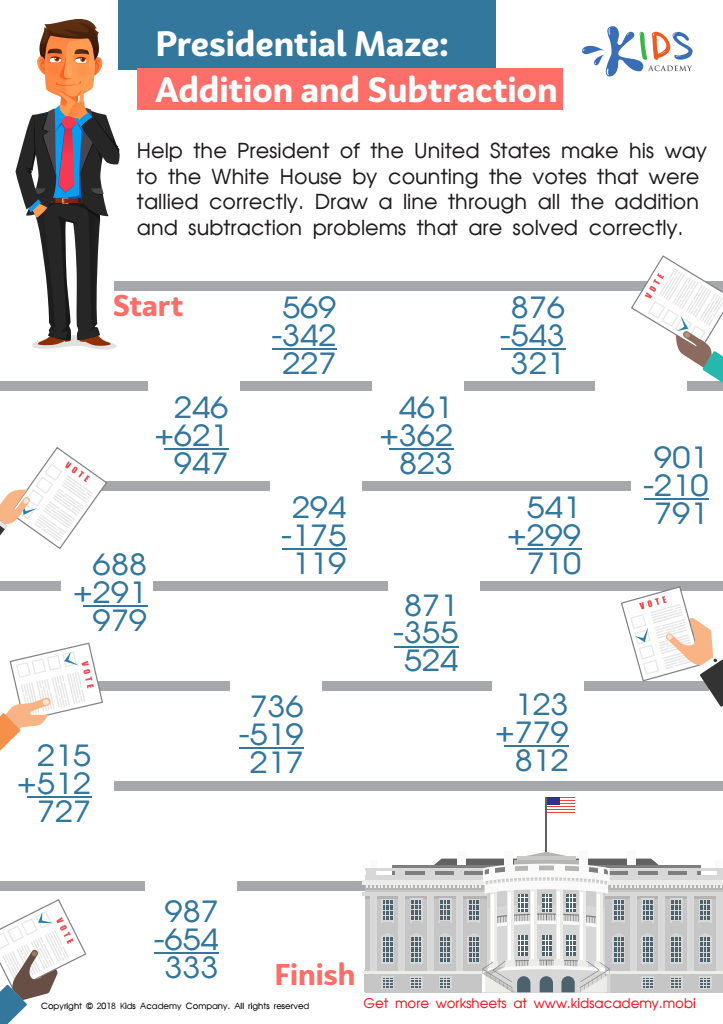
Presidential Maze: Addition and Subtraction Worksheet
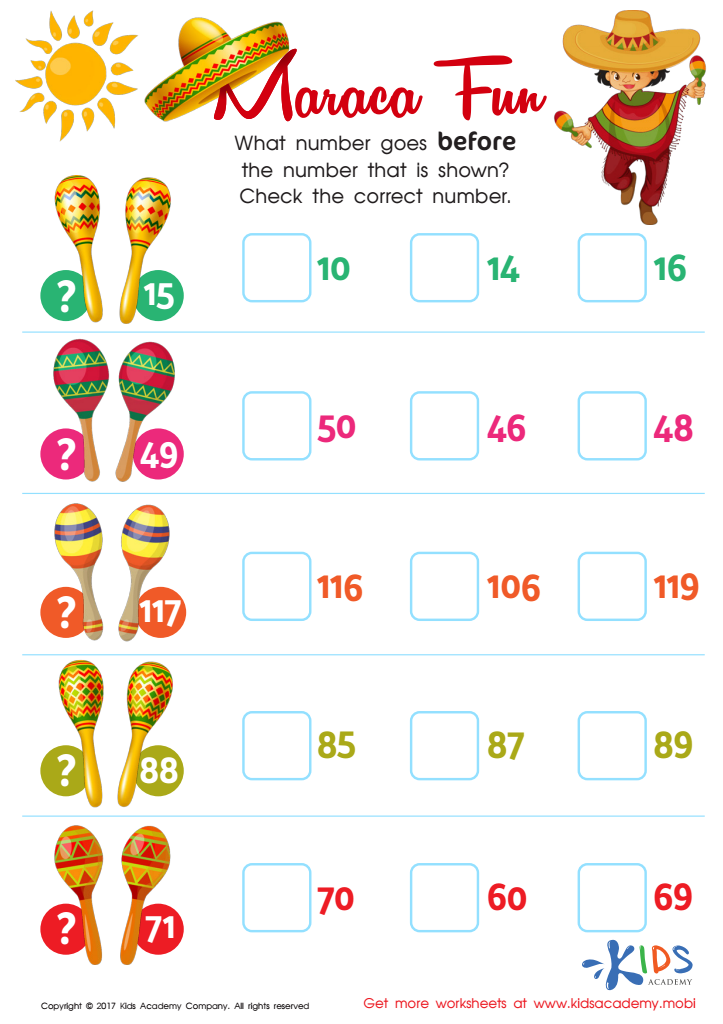
Counting: Maraca Fun Worksheet
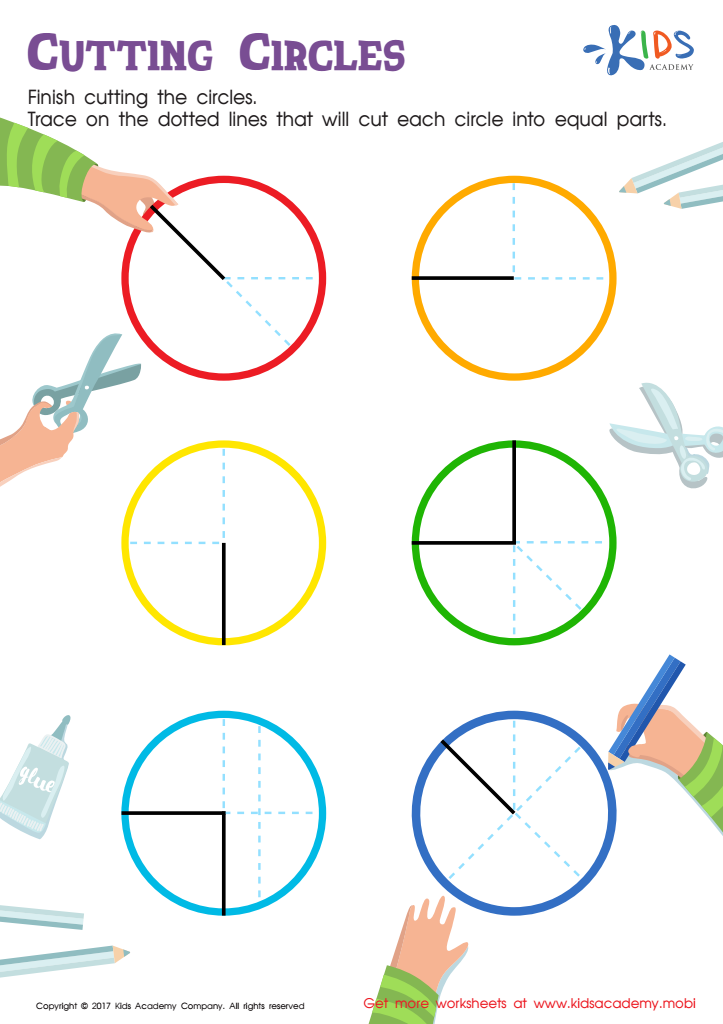
Cutting Circles Worksheet
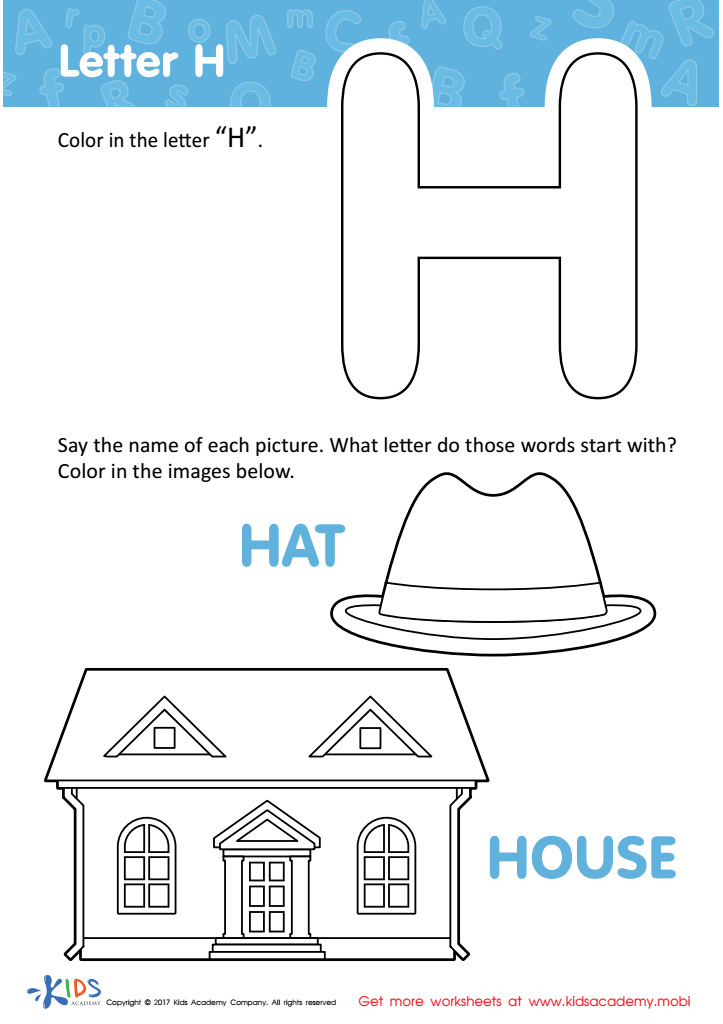
Letter H Coloring Sheet
 Assign to My Students








Fine motor skills development is crucial for children aged 6-9, and parents and teachers should prioritize it for several reasons. First and foremost, these skills are integral for performing everyday tasks such as writing, drawing, and using scissors. Mastering these activities boosts a child's confidence and independence in the classroom and at home.
Fine motor skills also play a significant role in academic success. Proper pencil grip and control are essential for legible writing, which in turn affects a child’s ability to complete assignments accurately and efficiently. Additionally, activities that develop fine motor skills can improve hand-eye coordination, which is important for various aspects of learning, from copying notes to participating in physical education.
Beyond academics, fine motor skills contribute to personal self-care abilities like buttoning shirts, tying shoelaces, and opening lunch containers, fostering a sense of autonomy in children.
Lastly, early development of these skills has long-term benefits, as it lays the foundation for more complex tasks as children grow. Addressing and nurturing these skills not only prepares children for immediate success but also sets them up for future achievements. Encouraging activities, like playing with building blocks, arts and crafts, or musical instruments, can be both fun and beneficial for fine motor skill enhancement. By understanding its importance, parents and teachers can better support children’s growth and development.








