Lowercase identification Normal Worksheets for Ages 6-9
4 filtered results
-
From - To
Discover our engaging Lowercase Identification Normal Worksheets designed specifically for children aged 6-9. These worksheets provide a fun and interactive way for young learners to recognize and differentiate lowercase letters. Through a variety of activities, children will develop essential literacy skills, enhancing their ability to read and write confidently. Each worksheet is tailored to encourage exploration and creativity, making learning a delightful experience. Perfect for classroom use or at-home practice, these worksheets foster independent learning while keeping students motivated. Help your child master lowercase letters today with our thoughtfully designed materials that promote early literacy skills in a playful environment!
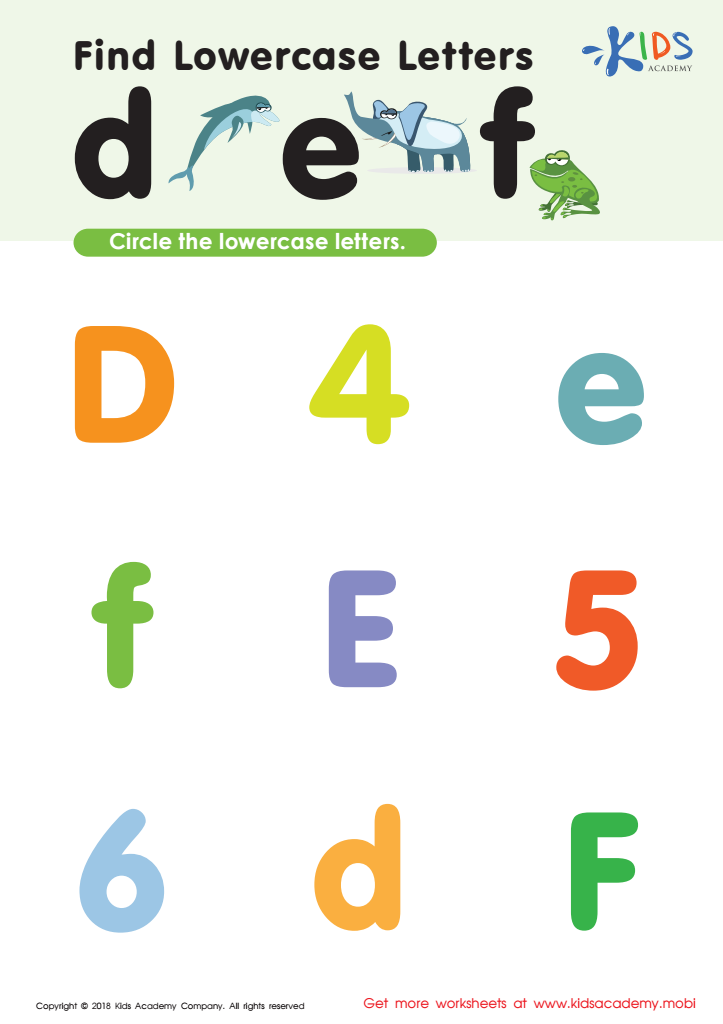
Find Lowercase Letters d e f Worksheet
 Assign to My Students
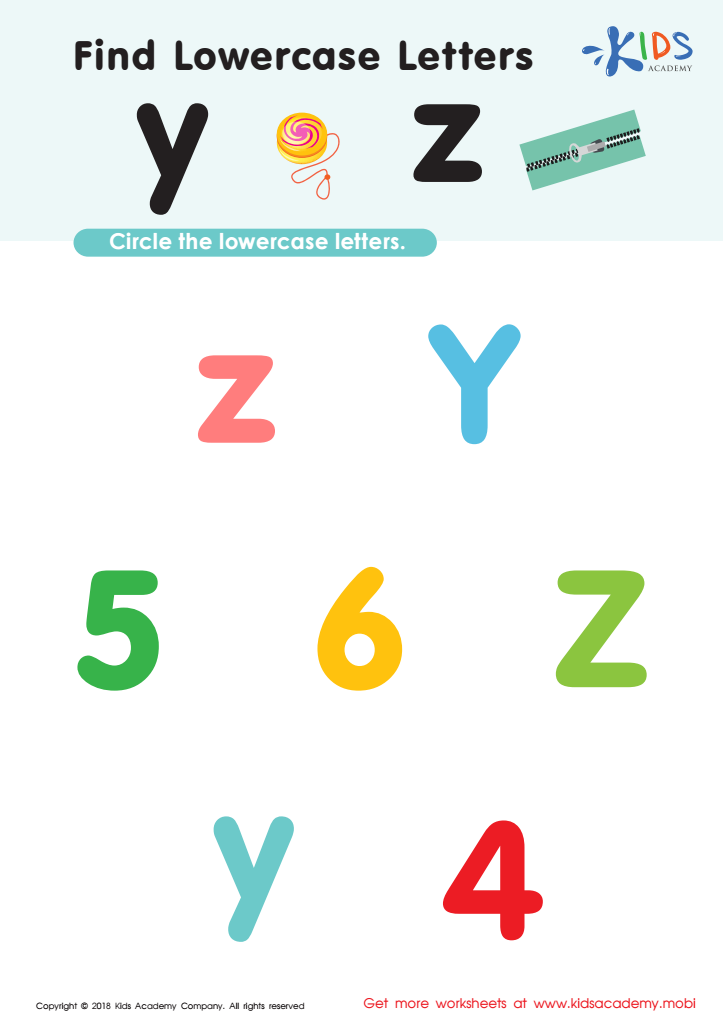
Find Lowercase Letters y z Worksheet

Find lowercase letters a b c Worksheet
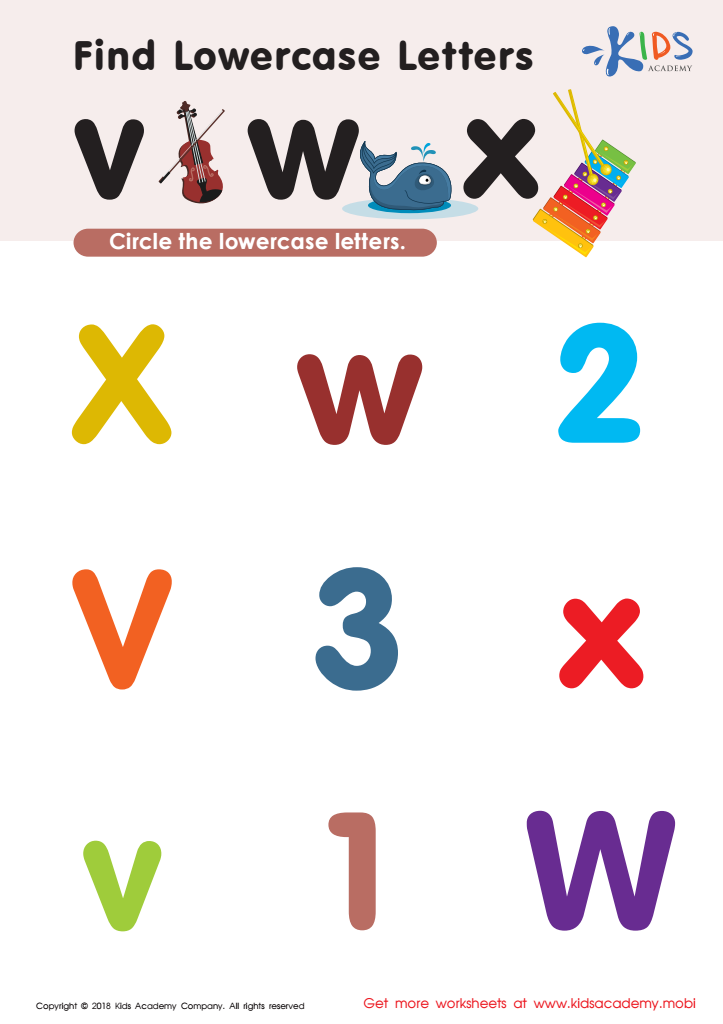
Find Lowercase Letters v w x Worksheet








Lowercase letter identification is a fundamental skill for children aged 6-9 as they transition from learning to read to becoming fluent readers and writers. At this age, students are developing their reading and writing abilities, making it essential for them to recognize and differentiate between lowercase letters quickly and accurately. Proficiency in lowercase letter identification lays the groundwork for mastering spelling, grammar, and vocabulary, crucial components of effective communication.
Parents and teachers should care about this skill because it directly impacts reading comprehension and literacy development. When children struggle with recognizing lowercase letters, it can hinder their ability to read with fluidity and understanding, leading to frustration and decreased confidence in their abilities. Additionally, consistent practice allows for reinforcement of phonetic sounds, helping students connect the sounds of language with the written text.
Furthermore, emphasizing lowercase letter recognition supports overall academic success. As children advance in their education, they will encounter a variety of texts and writing styles, all of which require fundamental knowledge of lowercase letters. Engaging in activities that promote this skill not only prepares children for future learning but fosters a lifelong love for reading and writing, ultimately setting the stage for their academic and personal success.








