Science knowledge Normal Worksheets for Ages 6-9
5 filtered results
-
From - To
Discover our engaging Science Knowledge Normal Worksheets, designed specifically for children ages 6-9 to foster a love for learning. These worksheets cover essential science topics, including plants, animals, weather, and the human body. With vibrant illustrations and age-appropriate content, our resources make science fun and accessible. Each worksheet is expertly crafted to align with educational standards, ensuring a balanced mix of challenge and excitement. Perfect for use at home or in the classroom, these worksheets encourage curiosity, critical thinking, and problem-solving skills. Empower your child’s scientific journey with our top-notch educational tools today!
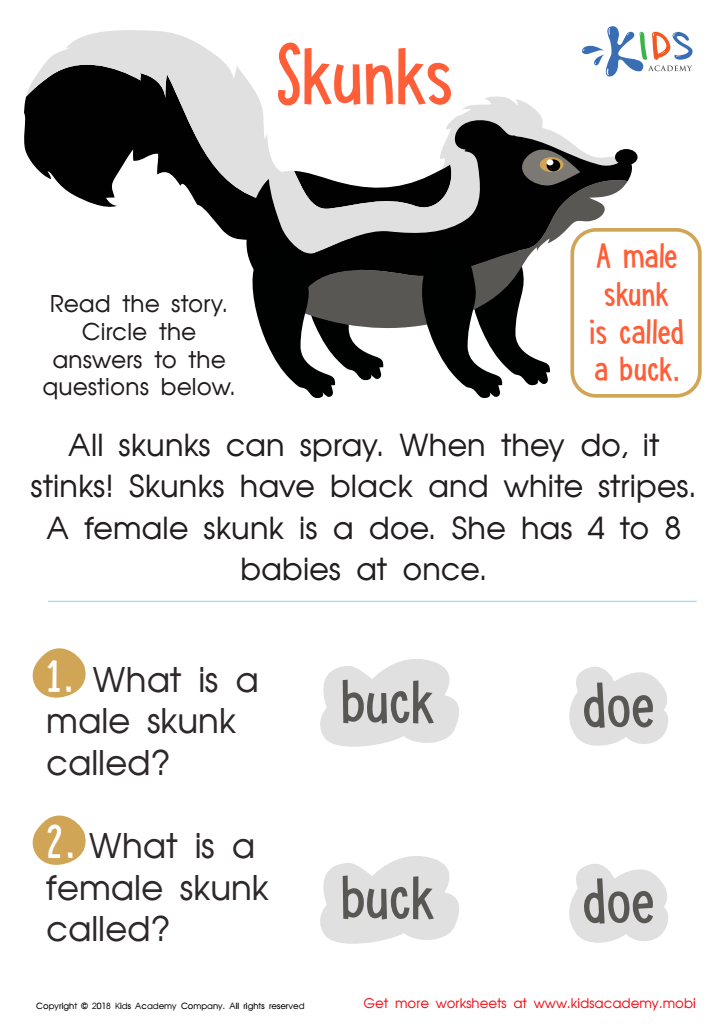
Skunks Worksheet
 Assign to My Students
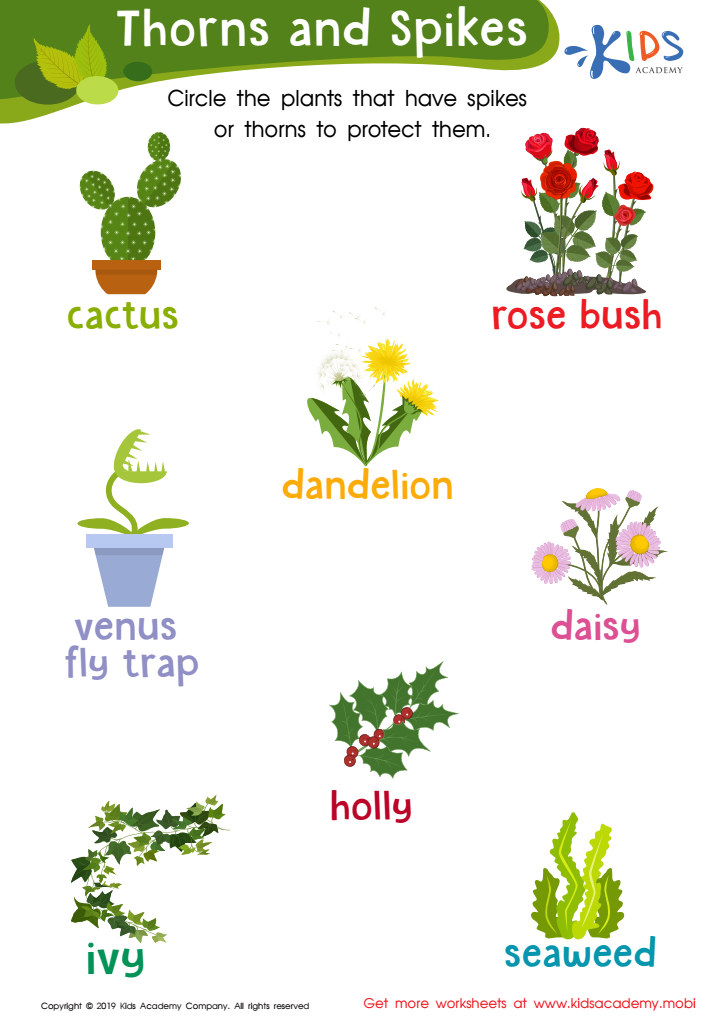
Thorns and Spikes Worksheet
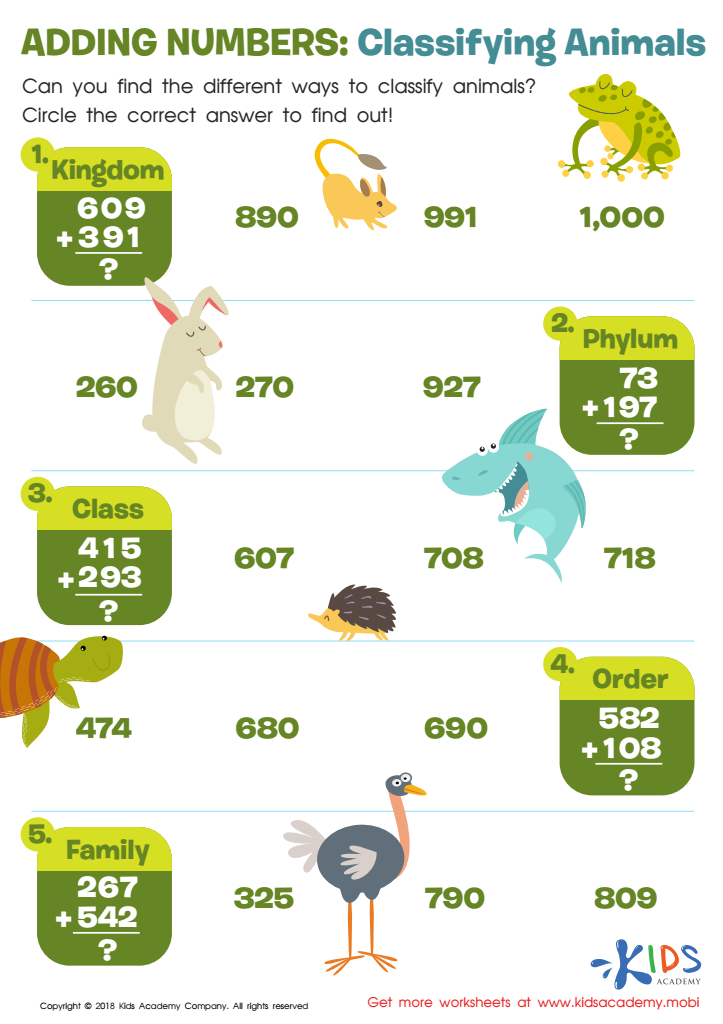
Adding Numbers: Classifying Animals Worksheet
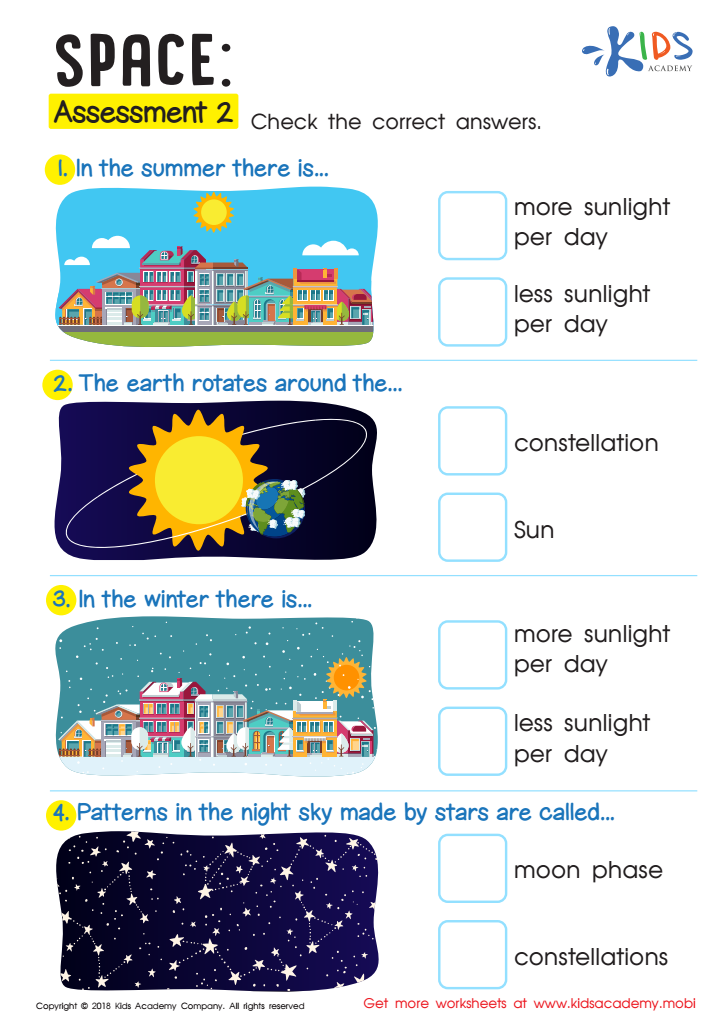
Space: Assessment 2 Worksheet


.jpg)





Parents and teachers should care about science knowledge for children aged 6-9 because it lays a crucial foundation for their lifelong learning and critical thinking skills. At this developmental stage, children are naturally curious, and fostering an interest in science can channel that curiosity into structured learning experiences. Engaging with science helps young minds to explore the world around them, understand natural phenomena, and develop problem-solving skills that are applicable in everyday life.
Introducing basic scientific concepts early can enhance cognitive development and help children grasp more complex ideas as they grow older. Science education at this stage promotes literacy and numeracy by incorporating reading, writing, and measuring as integral components of experiments and observations. This multidisciplinary approach enriches their overall learning experience.
Moreover, encouraging an interest in science can boost confidence and self-esteem as children successfully conduct experiments and make discoveries. Early exposure to science can also inspire future career aspirations in STEM (Science, Technology, Engineering, and Mathematics) fields, helping to address ongoing diversity gaps in these areas.
In summary, fostering science knowledge for ages 6-9 supports intellectual growth, boosts problem-solving abilities, and nurtures a lifelong love for learning, providing a solid foundation for future academic and personal success.








