
Strategic thinking Normal Worksheets for Ages 6-9
3 filtered results
Difficulty Level
Grade
Age
-
From - To
Subject
Activity
Standards
Introducing "Strategic Thinking Normal Worksheets for Ages 6-9" from Kids Academy! Designed to stimulate young minds, these worksheets help children develop crucial strategic thinking skills through engaging and interactive activities. Packed with puzzles, brain teasers, and logic games, these worksheets encourage kids to solve problems, plan ahead, and think critically. Our expertly crafted exercises are perfect for fostering creativity, improving focus, and boosting cognitive development. Ideal for home or classroom use, these printable resources make learning fun and effective, helping children to build a strong foundation in strategic thinking that will benefit them in all areas of life.
Favorites
With answer key
Interactive
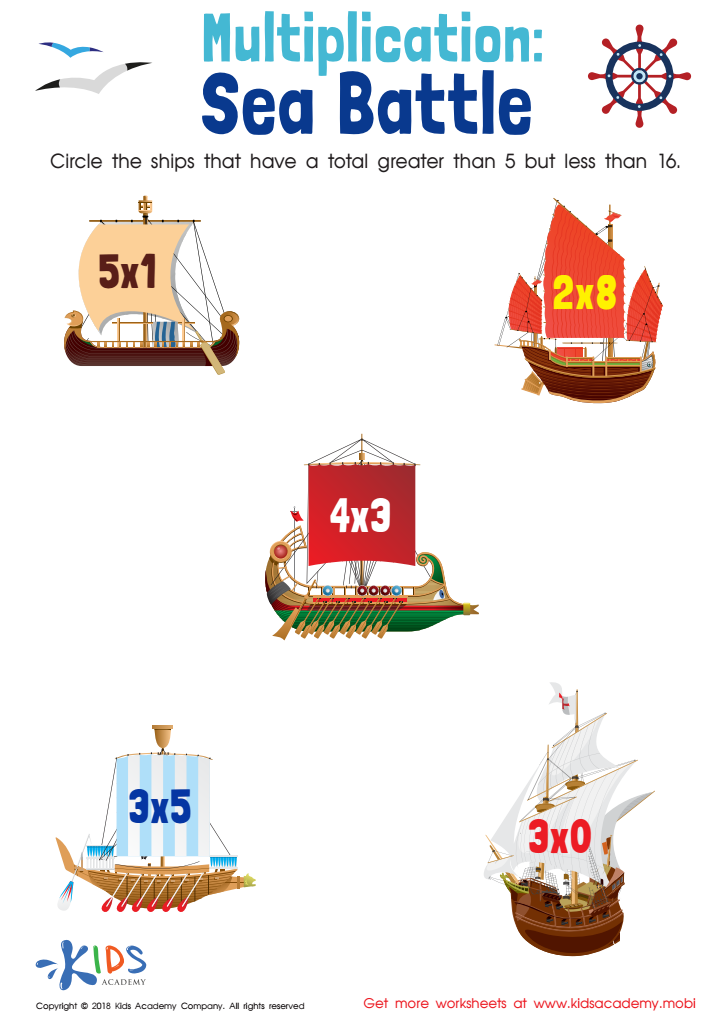
Sea Battle: Multiplication Worksheet
Test your child's math skills and give them an exciting adventure with our Sea Battle: Multiplication Worksheet. Have them solve the multiplication problems on each ship's sail then circle the answers between 5 and 16. An entertaining way to boost their math skills!
 Assign to My Students
Sea Battle: Multiplication Worksheet
Worksheet
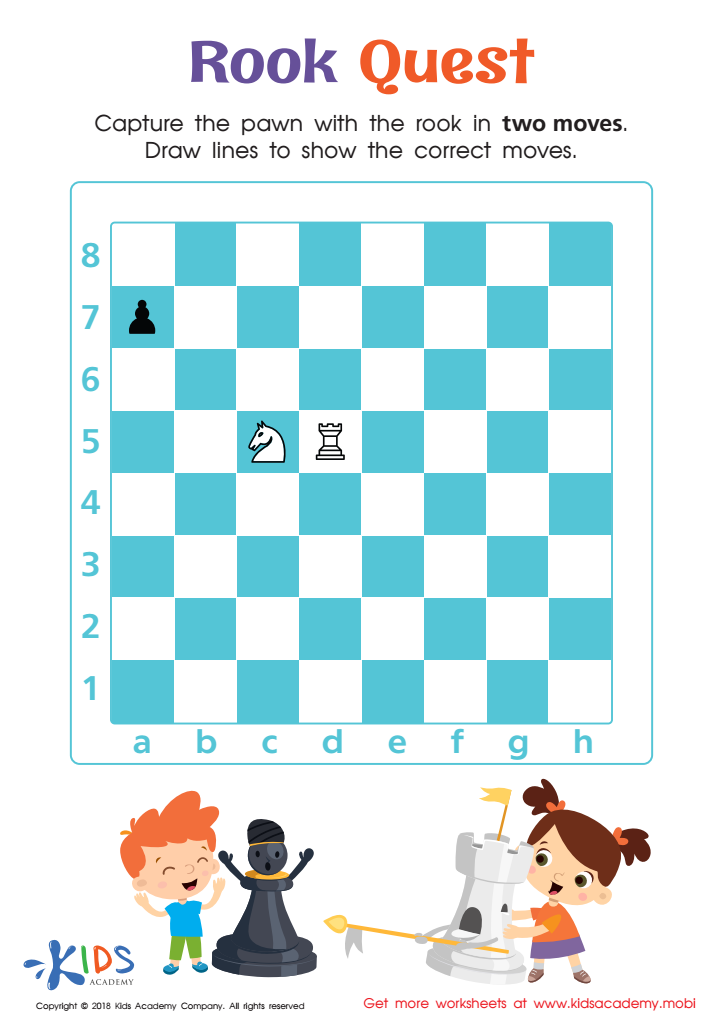
Rook Quest Worksheet
Is your child a chess whiz? Check their progress with this rook quest: get the enemy's pawn piece in just two moves. Have them draw the lines for the moves they'll make. See how quickly they master it!
Rook Quest Worksheet
Worksheet
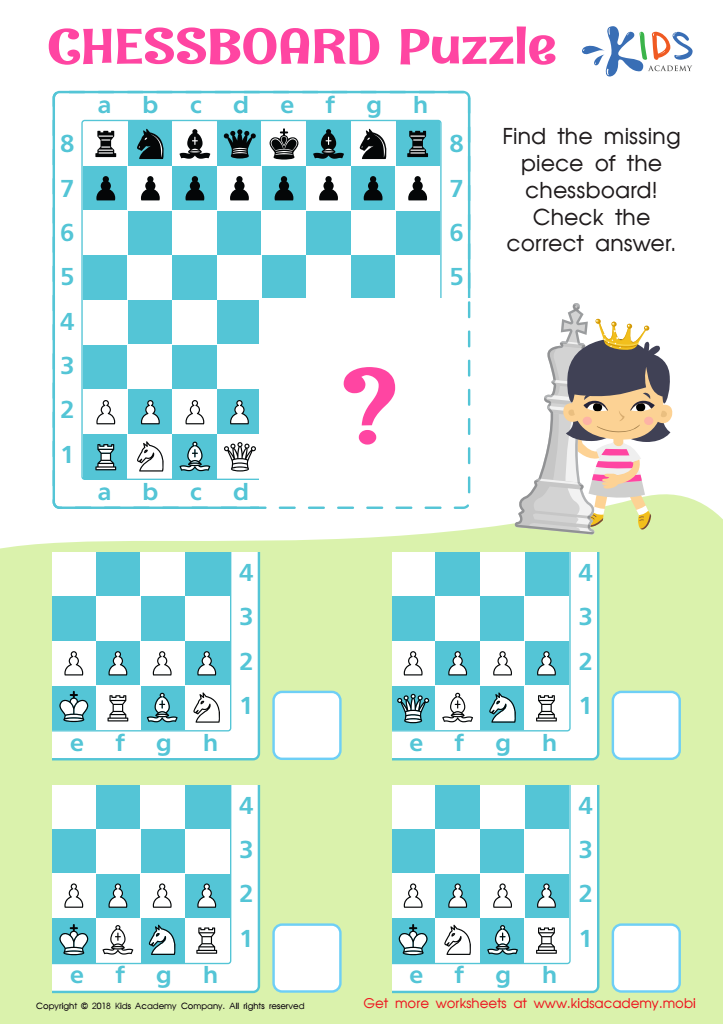
Chessboard Puzzle Worksheet
Test your child's chess prowess with this simple worksheet. They must find the missing pieces to complete the white side of an empty chessboard. The black pieces are already arranged properly on the board. Correct answers are provided so you can see how they did!
Chessboard Puzzle Worksheet
Worksheet
Join Kids Academy for Free
Who is primarily going to use this learning content?








Strategic thinking is a crucial skill for children aged 6-9, as it forms the foundation for problem-solving, critical thinking, and decision-making abilities that are vital throughout life. When parents and teachers focus on fostering strategic thinking, they empower children to think ahead, plan their actions, and anticipate outcomes, skills that are important not just academically but also in everyday life.
At this stage of development, children are naturally curious and keen to explore the world around them. By introducing them to games, puzzles, or activities that require strategic thinking, adults can nurture their ability to consider options and consequences. This kind of cognitive engagement helps improve their attention span, memory, and logical reasoning, which are critical for successful learning in subjects like math and science.
Moreover, strategic thinking encourages children to be more independent and confident in their problem-solving abilities. This confidence can translate into better social skills, as children learn to negotiate, collaborate, and resolve conflicts more effectively. Early exposure to these skills ensures that children are better equipped to manage challenges, both big and small, as they grow older.
In summary, investing in the development of strategic thinking for ages 6-9 has far-reaching benefits that contribute to a child's intellectual growth, emotional maturity, and social competence, making it a key aspect of holistic education.








