Understanding comparisons Normal Worksheets for Ages 6-9
5 filtered results
-
From - To
Enhance your child's learning journey with our "Understanding Comparisons Normal Worksheets" designed for ages 6-9. These engaging worksheets focus on building essential comparison skills, helping young learners distinguish between more and less, larger and smaller, and other key concepts. Through fun and interactive activities, children will practice comparing objects, numbers, and quantities, fostering critical thinking and data interpretation skills. Our worksheets aim to promote confidence and accuracy in understanding comparisons, making learning enjoyable. Perfect for classroom settings or home practice, these printables offer your child the opportunity to grasp important mathematical concepts while having fun. Download and start learning today!
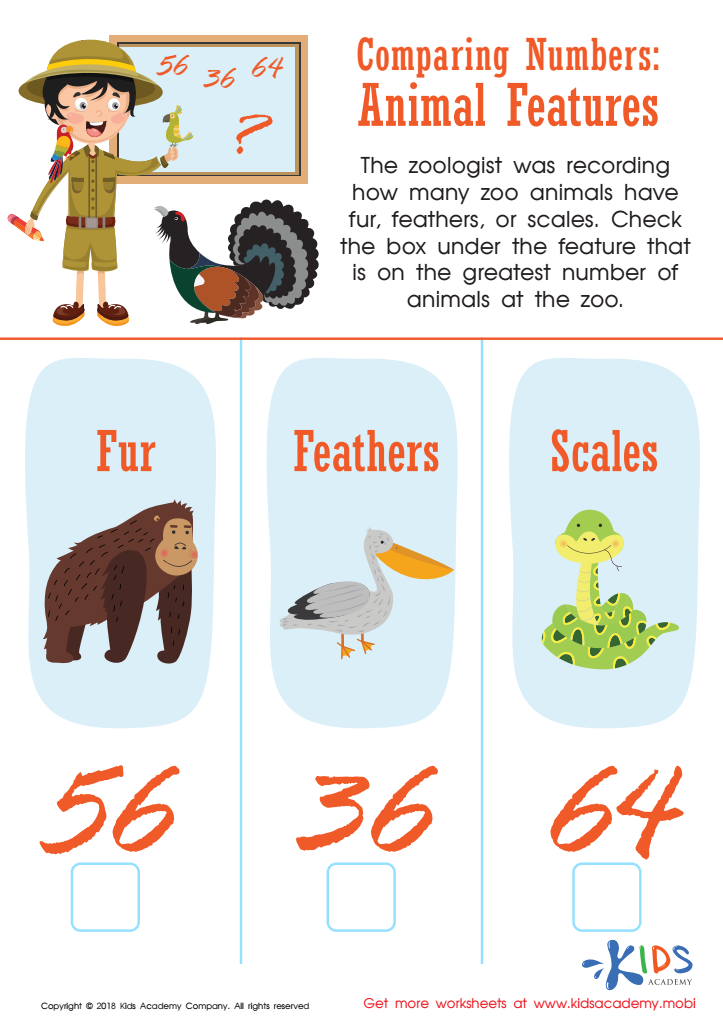
Animal Features Worksheet
 Assign to My Students
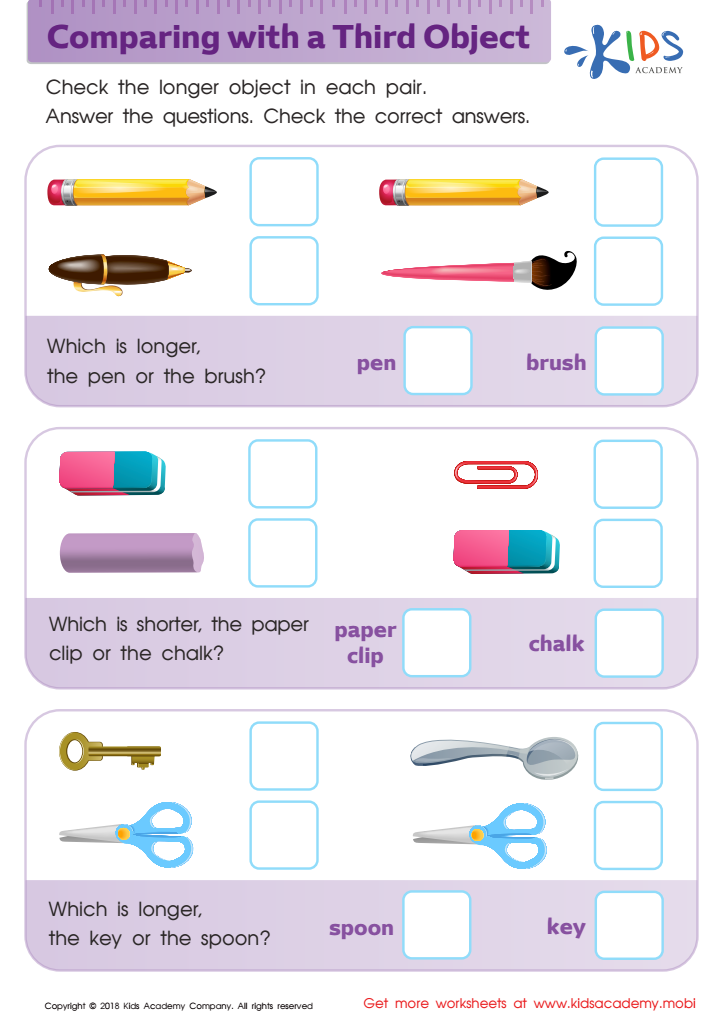
Comparing with a Third Object Worksheet
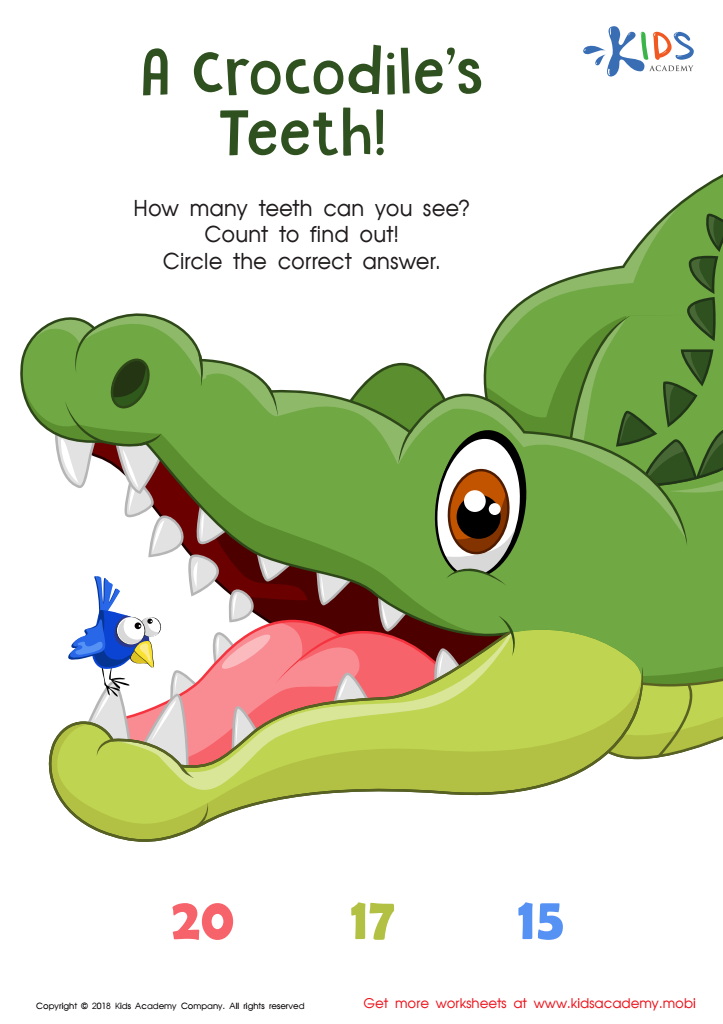
A Crocodile's Teeth Worksheet
Matching: Classifying Toys by Size Worksheet
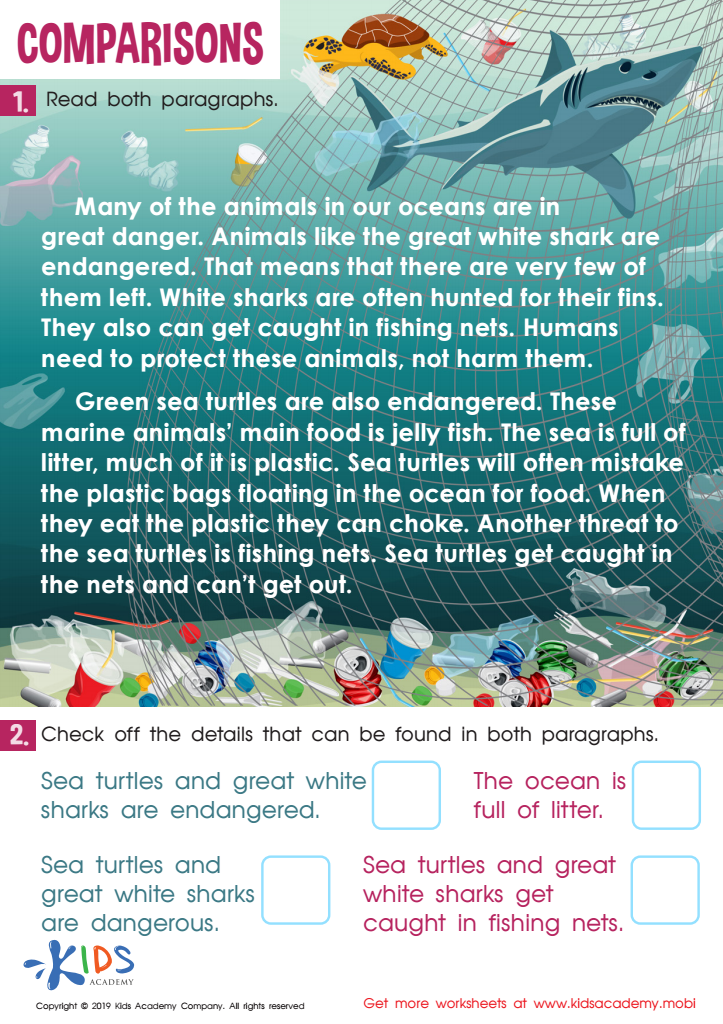
Comparisons Worksheet






Understanding comparisons is essential for children aged 6-9, and both parents and teachers play a crucial role in facilitating this learning. At this age, children are developing foundational math skills, including the ability to recognize and use comparative language. Mastering comparisons fosters critical thinking and enhances their cognitive abilities, enabling them to analyze relationships between different objects or ideas.
Engaging with comparisons helps students build a strong grasp of basic mathematical concepts such as greater than, less than, and equal to. It supports their ability to solve problems and make informed decisions based on the information at hand. This skill transcends math; it also enriches language development, as children learn to express differences and similarities effectively.
Moreover, understanding comparisons promotes social awareness, as kids learn to evaluate and discuss their surroundings, helping them develop empathy and collaboration skills. Lessons that emphasize comparisons can encourage active participation in discussions, making learning more dynamic.
When parents and teachers recognize the importance of teaching comparisons, they collectively create an enriching environment that empowers children. This lifelong skill not only prepares them for more advanced academic pursuits but also equips them to navigate everyday challenges with confidence.








