Understanding syllables Normal Worksheets for Ages 6-9
5 filtered results
-
From - To
Explore our "Understanding Syllables" worksheets designed for children aged 6-9! These engaging, printable resources help young learners grasp the concept of syllables through fun activities that enhance reading and pronunciation skills. Each worksheet encourages practice with breaking words into syllables, identifying vowel sounds, and developing better phonemic awareness. Ideal for both classroom and home use, our worksheets promote interactive learning, allowing children to explore language in a playful yet educational manner. Perfect for parents and teachers alike, these worksheets make mastering syllables enjoyable and effective. Dive into the world of syllables and boost your child's literacy with our comprehensive materials today!
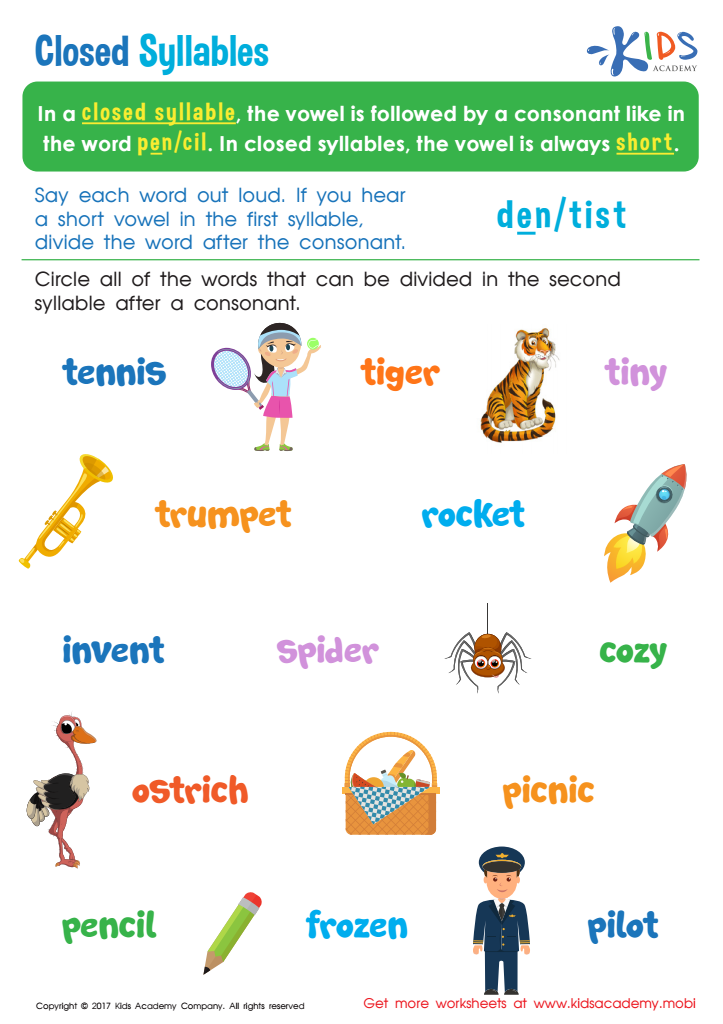
Closed Syllable Spelling Worksheet
 Assign to My Students
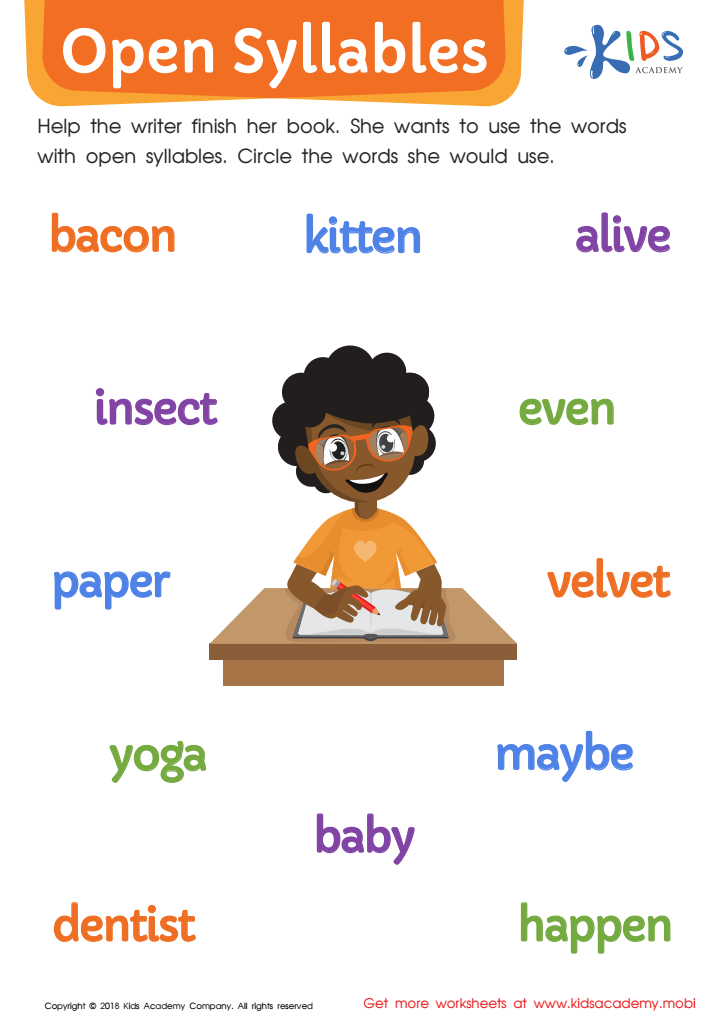
Open Syllables Worksheet
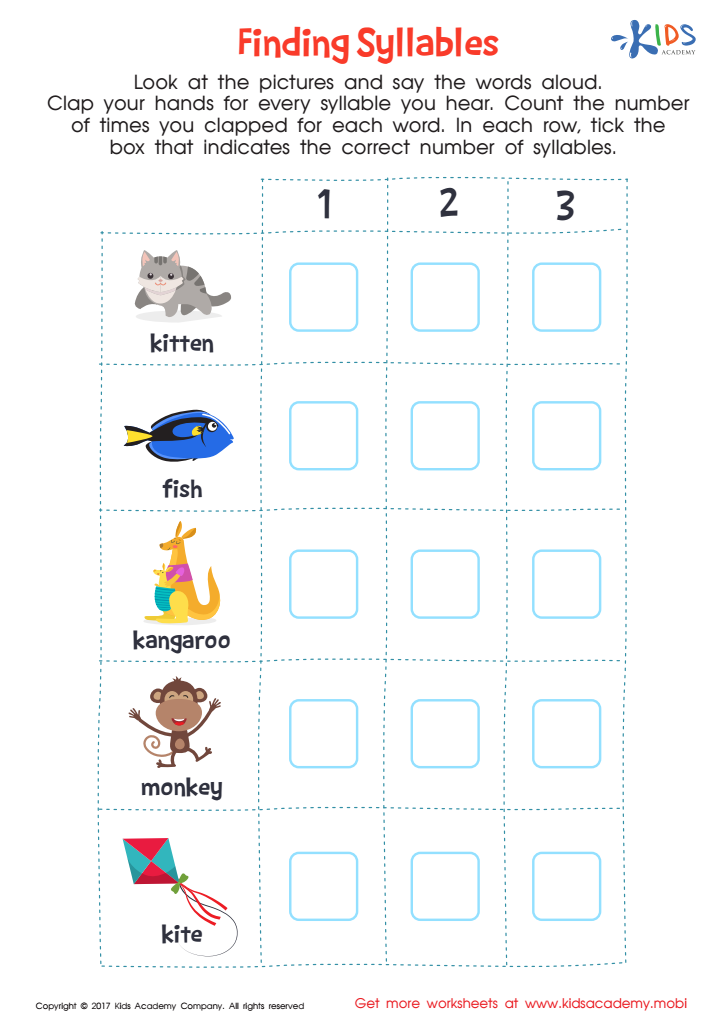
Finding Syllables Word Structure Worksheet
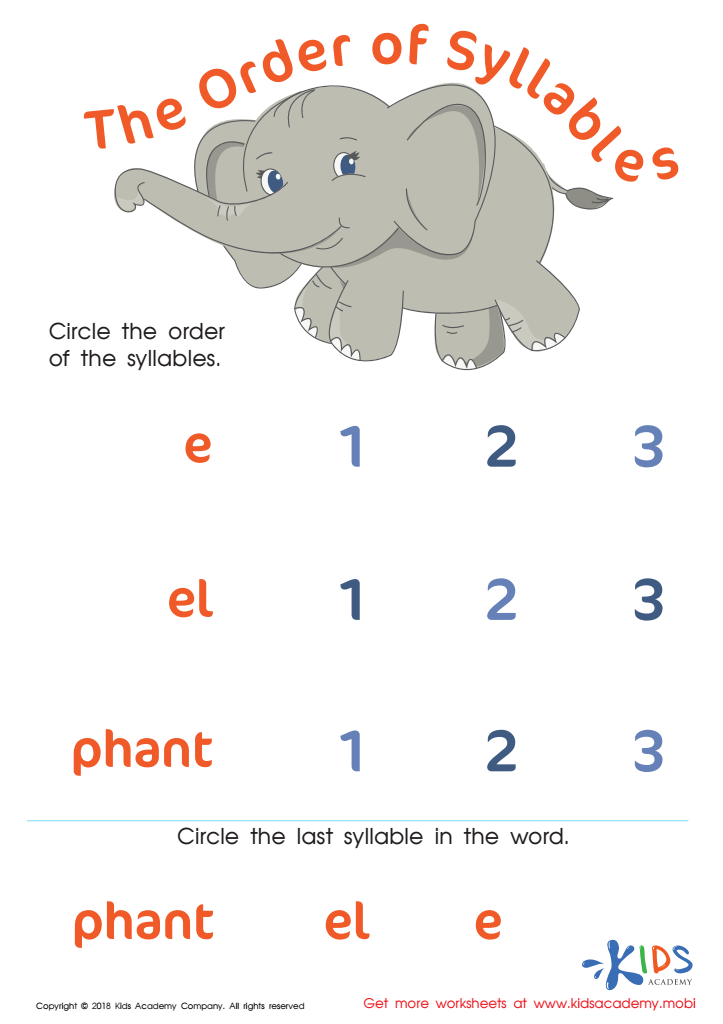
The Order of Syllables Worksheet
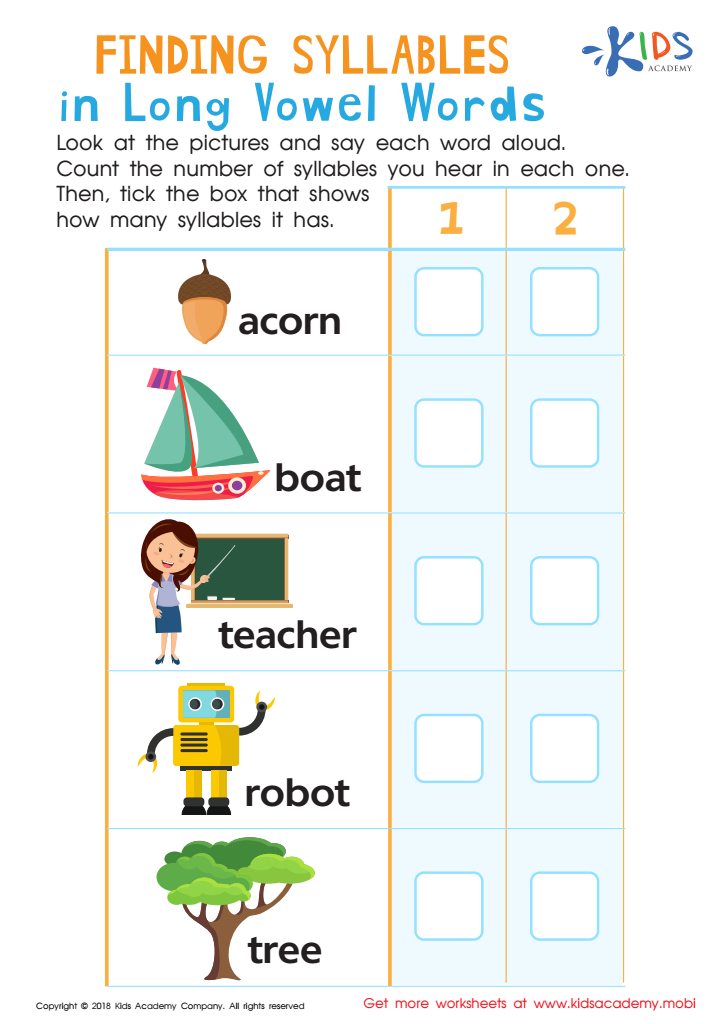
Finding Syllables in Long Vowel Words Worksheet





Understanding syllables is crucial for children aged 6-9, as it forms the foundation for reading and writing skills. Mastery of syllables aids in phonemic awareness, allowing children to break down words into manageable parts. This skill enhances their ability to decode unfamiliar words, facilitating more effective reading. When children can identify syllables, they become more confident in their reading abilities, leading to a greater love for books and learning.
For teachers and parents, recognizing the importance of syllabication means supporting children in developing these essential literacy skills. It opens doors to better pronunciation, spelling, and vocabulary acquisition. When children understand syllables, they can also grasp concepts of rhythm and stress within words, enhancing oral communication and comprehension.
Moreover, syllable awareness contributes to overall cognitive development. It helps reinforce critical thinking as children learn to categorize and manipulate sounds. Engaging in games and activities that promote syllable recognition also makes learning fun, fostering a positive attitude toward education.
By prioritizing understanding syllables, educators and parents can equip children with the tools they need for academic success, while instilling a lifelong love of language and learning. This foundational skill ultimately influences children's confidence and ability to tackle more complex literacy tasks in the future.








