Uppercase identification Normal Worksheets for Ages 6-9
5 filtered results
-
From - To
Explore our engaging Uppercase Identification Normal Worksheets designed for children ages 6-9. These worksheets help young learners recognize and differentiate uppercase letters, a foundational skill in early literacy. Each activity is crafted to make learning enjoyable while reinforcing letter familiarity through fun exercises and vibrant illustrations. Perfect for classroom use or at-home practice, these worksheets encourage independent learning and boost confidence in letter recognition. Ideal for teachers and parents seeking structured and interactive resources, our uppercase identification worksheets set the stage for developing reading and writing skills. Discover a world of learning possibilities that captivate and educate your child!
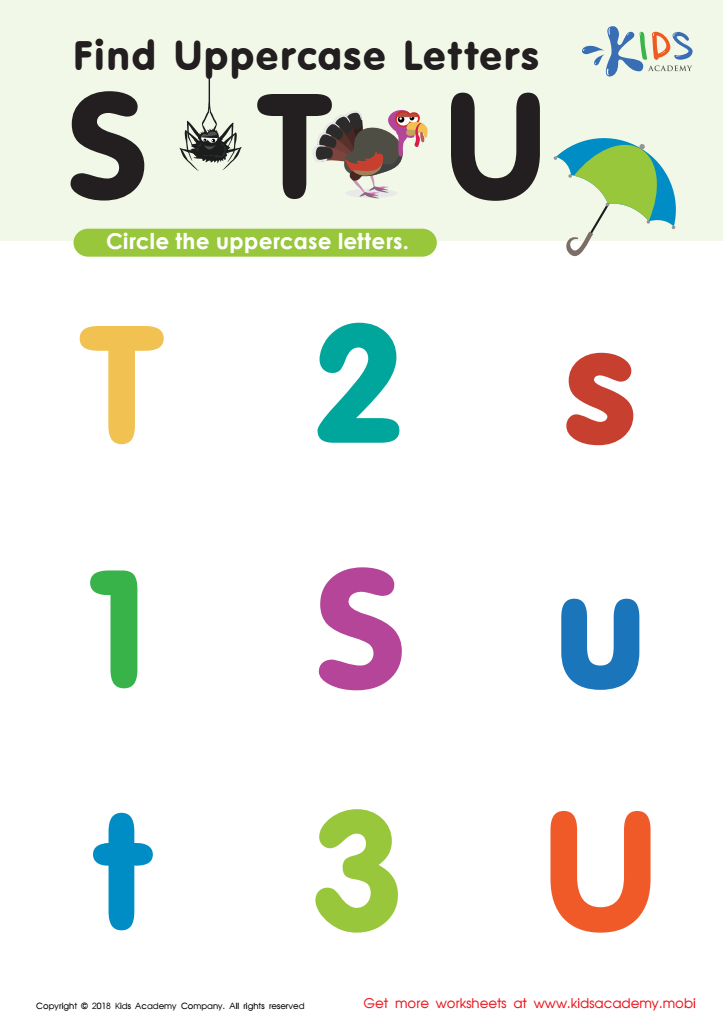
Find Uppercase Letters Worksheet
 Assign to My Students
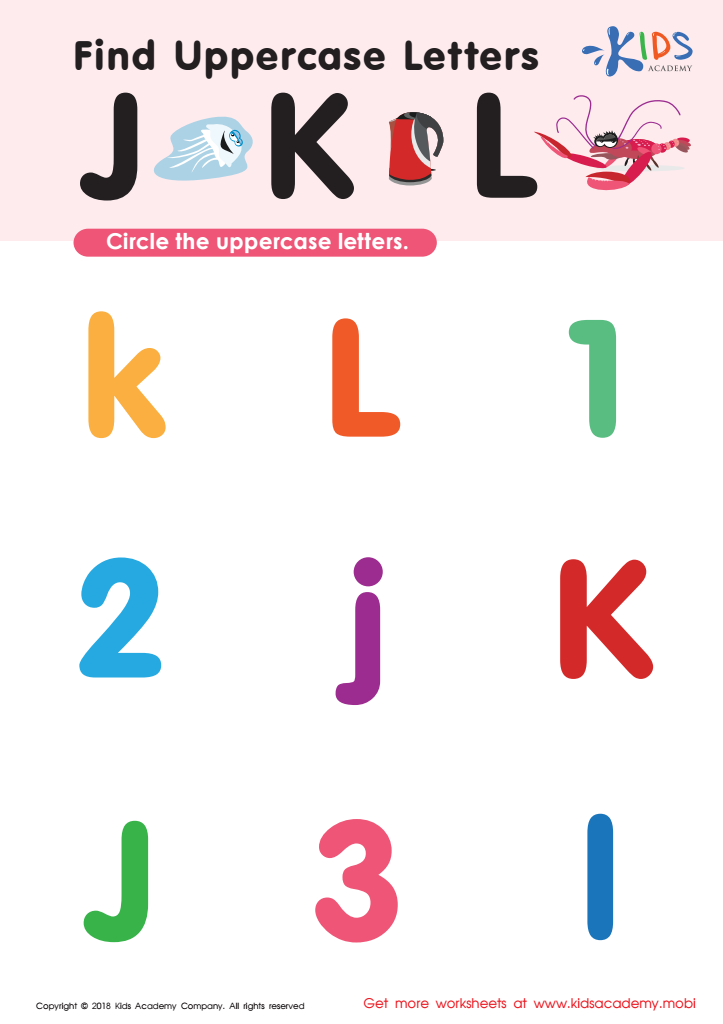
Find Uppercase Letters J, K, and L Worksheet

Find Uppercase Letters A, B, and C Worksheet
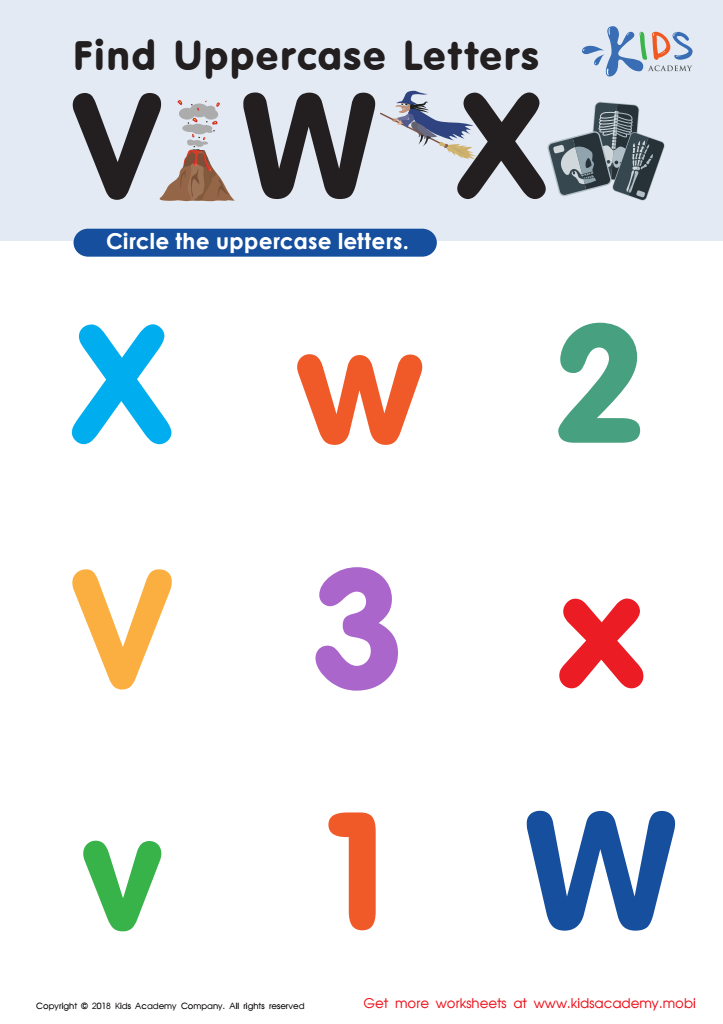
Find Uppercase Letters V, W, X Worksheet
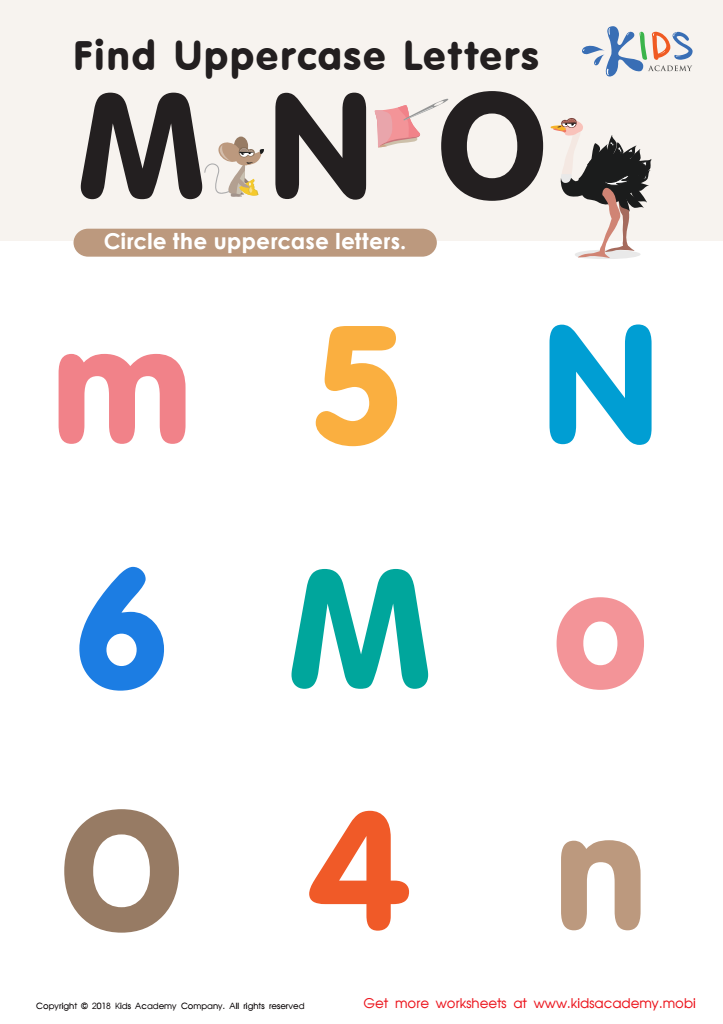
Find Uppercase Letters M, N, and O Worksheet








Uppercase letter identification is crucial for children aged 6-9, as it lays the foundation for literacy development. During this stage, children enhance their reading, writing, and spelling skills, significantly impacting their overall academic success. Recognizing uppercase letters helps them understand the structure of the written language, including sentence beginnings, proper nouns, and acronyms.
This age group often encounters texts that prominently display uppercase letters, such as textbooks, signs, and labels. Strong identification skills bolster children’s confidence as they navigate reading material, encouraging a love for reading and empowering their comprehension abilities. Furthermore, mastering uppercase letters enhances children's ability to communicate effectively through writing, whether in creative projects, school assignments, or personal expression.
Parents and teachers play a pivotal role in supporting children’s practice, providing engaging activities and consistent reinforcement at home and in the classroom. Promoting uppercase identification fosters foundational skills in phonics and vocabulary that facilitate a smoother transition to more advanced literacy tasks. Ultimately, prioritizing uppercase letter identification during these formative years builds not only essential literacy skills but also a lifelong appreciation for language and learning. Engaging with uppercase letters early on is investing in a child's educational future and success.








