Cognitive Development Normal 2D Shapes Worksheets for Ages 6-9
4 filtered results
Difficulty Level
Grade
Age
-
From - To
Subject
Activity
Standards
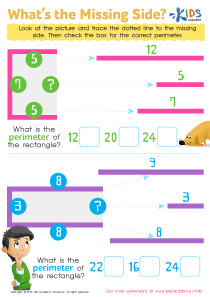
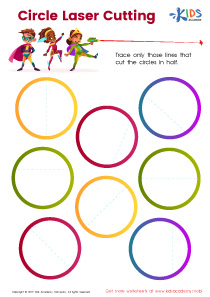
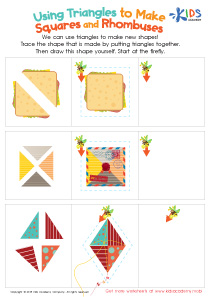
Enhance your child’s cognitive development with our specially designed 2D Shapes Worksheets for ages 6-9. These expertly crafted printable worksheets from Kids Academy make learning fun and engaging, helping young learners develop essential mathematical skills and shape recognition. Each worksheet is tailored to stimulate critical thinking, spatial awareness, and problem-solving abilities in a motivating and playful manner. Perfect for both classroom and home use, these activities ensure a solid foundation in geometry while fostering a love for learning. Download now and watch your child explore the fascinating world of 2D shapes!
Favorites
With answer key
Interactive
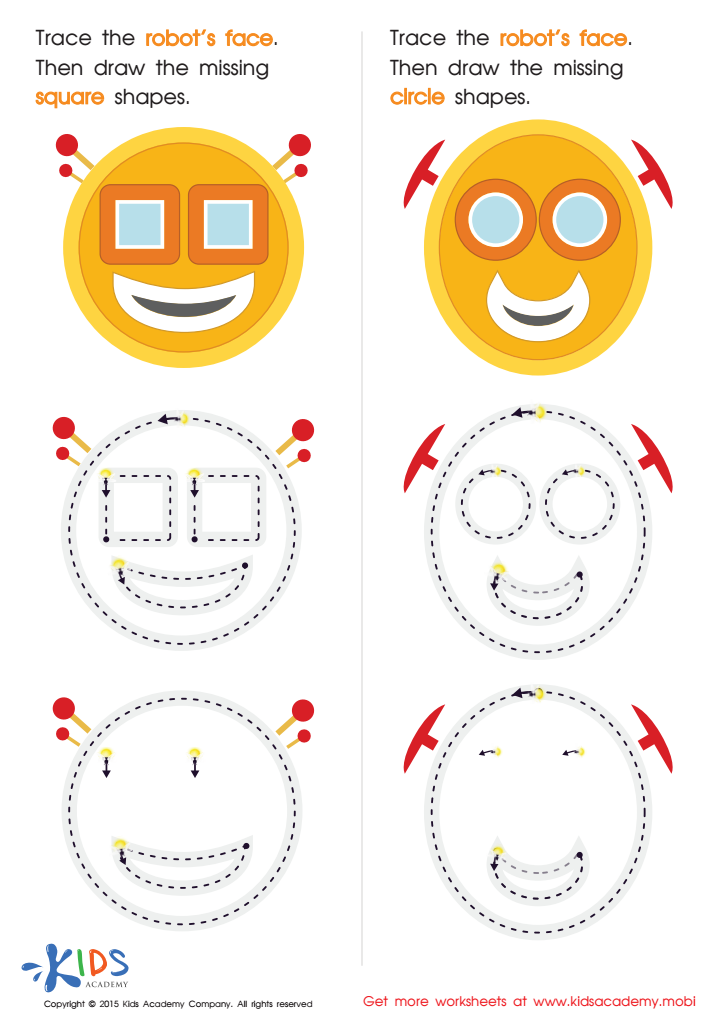
Practicing to Draw Circles And Squares Printable
Download our free printable geometry worksheets to learn shapes with your preschoolers. Trace Robot's face, draw the square parts and round shapes, remember the names for each one. Get more materials for kids at Kids Academy and make learning fun with our free printable geometry worksheets.
 Assign to My Students
Practicing to Draw Circles And Squares Printable
Worksheet











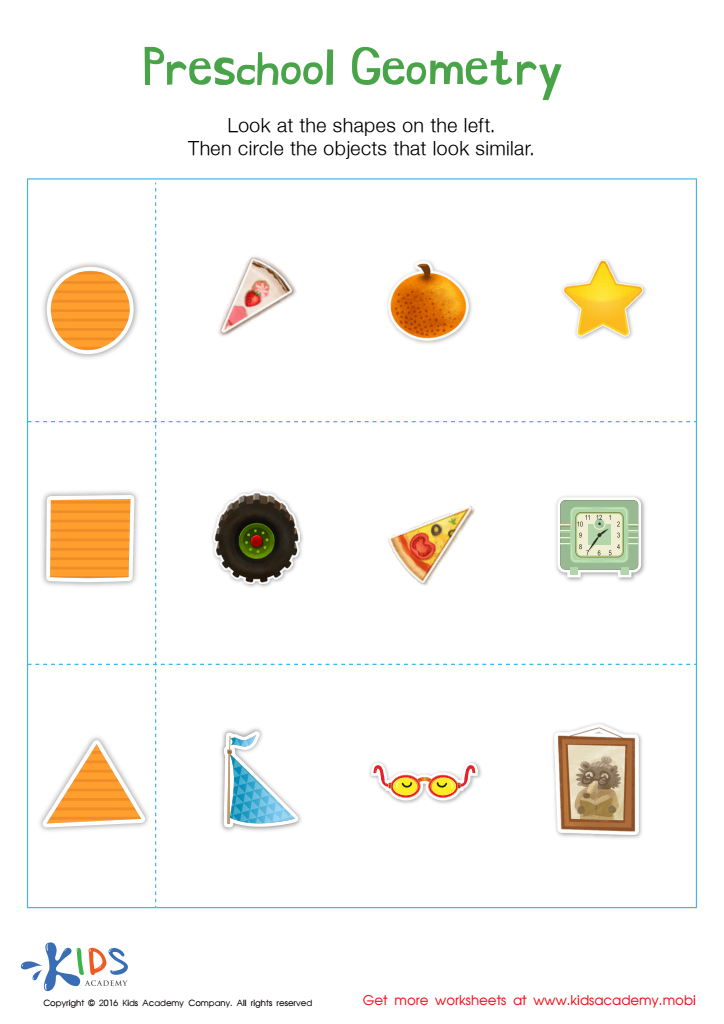
Preschool Geometry Match Up Worksheet
Teach your preschooler geometry using everyday objects. This printable worksheet helps them recognize, match, and follow directions like left and right. Start a conversation to extend their learning and they'll see how shapes appear in the world around them.
Preschool Geometry Match Up Worksheet
Worksheet
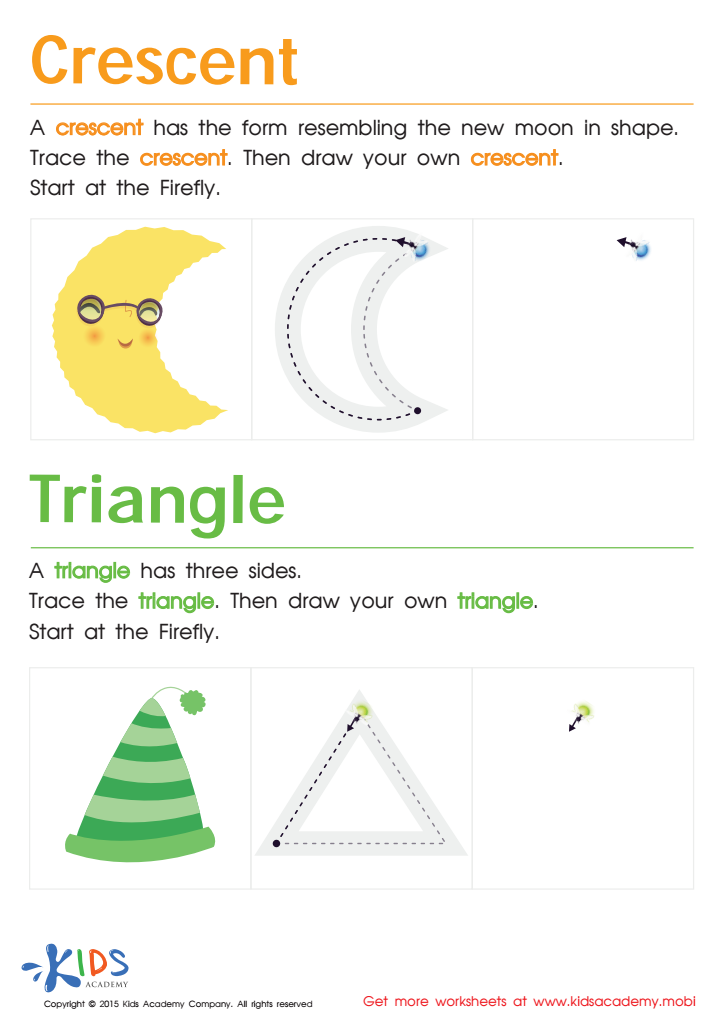
Learning to Draw Crescents And Triangles Worksheet
Help your kids draw a crescent and triangle with this free printable worksheet! Start by tracing a crescent in the form of the new moon, and then teach them that a triangle has three sides and looks like a hat. Find more geometry practice worksheets at Kids Academy!
Learning to Draw Crescents And Triangles Worksheet
Worksheet
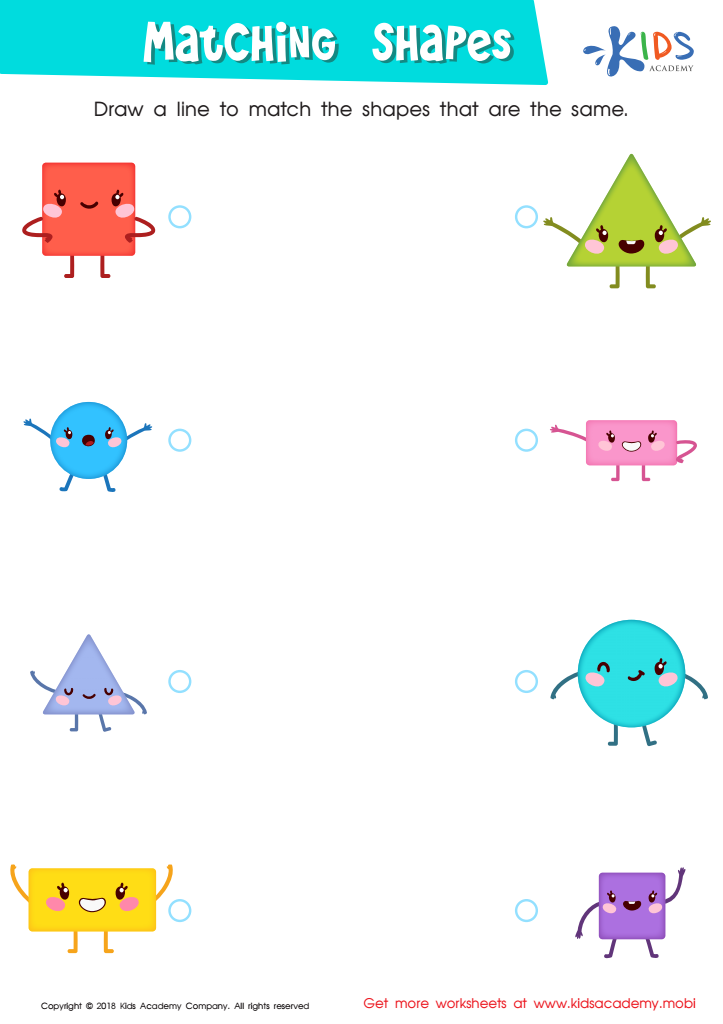
Matching Shapes Worksheet
Introduce your students to the 4 most common shapes: squares, triangles, rectangles and circles. When they progress, show them other shapes like rhombuses and parallelograms. Use this matching shapes worksheet to help them match two identical shapes. Print out the worksheet and instruct them to draw lines connecting them.
Matching Shapes Worksheet
Worksheet
Join Kids Academy for Free
Who is primarily going to use this learning content?








Understanding cognitive development and normal 2D shapes for children ages 6-9 is crucial for both parents and teachers as it lays the foundation for various mathematical and problem-solving skills. At this developmental stage, children’s brains are rapidly growing and capable of complex thought processes. Introducing 2D shapes such as squares, triangles, circles, and rectangles helps them categorize and compare objects, which enhances their analytical skills.
By learning about these shapes, children start to comprehend concepts like symmetry, geometry, and spatial relationships. This forms the basis for more advanced mathematical concepts they will encounter later. Additionally, recognizing and manipulating shapes develop their visual-spatial intelligence and fine motor skills, both essential for tasks like reading and writing.
For parents and teachers, incorporating 2D shapes into daily activities provides engaging, hands-on learning experiences that make abstract concepts tangible. It encourages curiosity and exploration, which are key drivers of cognitive growth. Activities like drawing, cutting out shapes, or playing shape-related games can boost a child's confidence in their abilities and make learning enjoyable.
Moreover, an early grasp of these fundamentals can enhance academic performance and foster a lifelong interest in STEM fields. Hence, focusing on cognitive development and 2D shapes during this formative period is essential for a well-rounded, effective educational journey.