Addition Practice Normal Addition & Subtraction Worksheets for Ages 6-9 - Page 2
29 filtered results
-
From - To
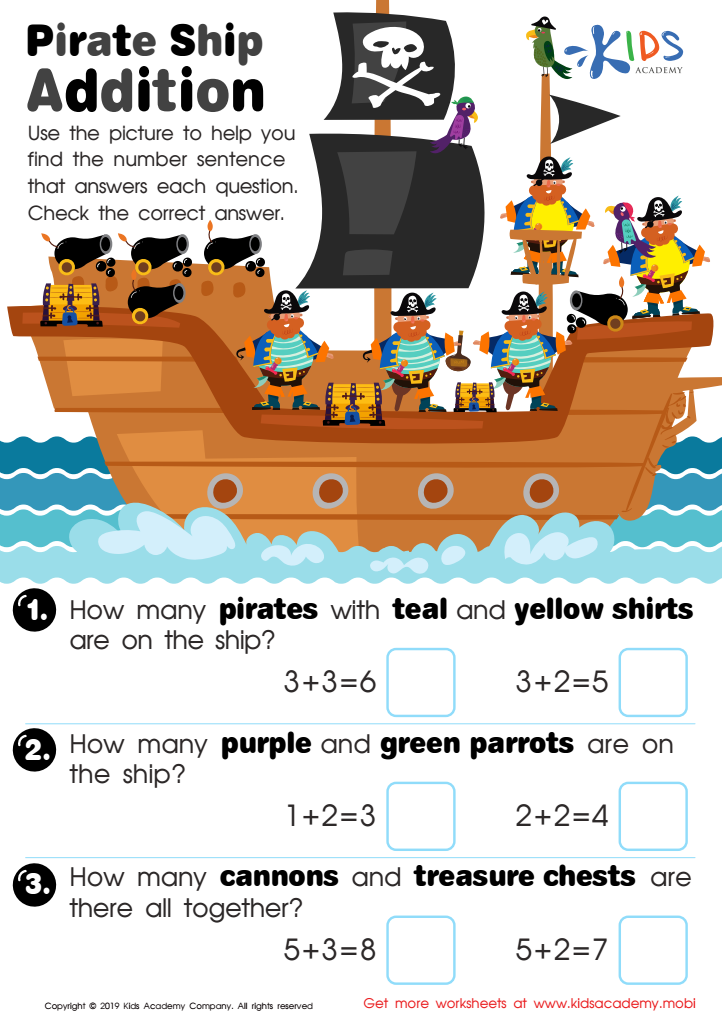
Pirate Ship Addition Worksheet
 Assign to My Students
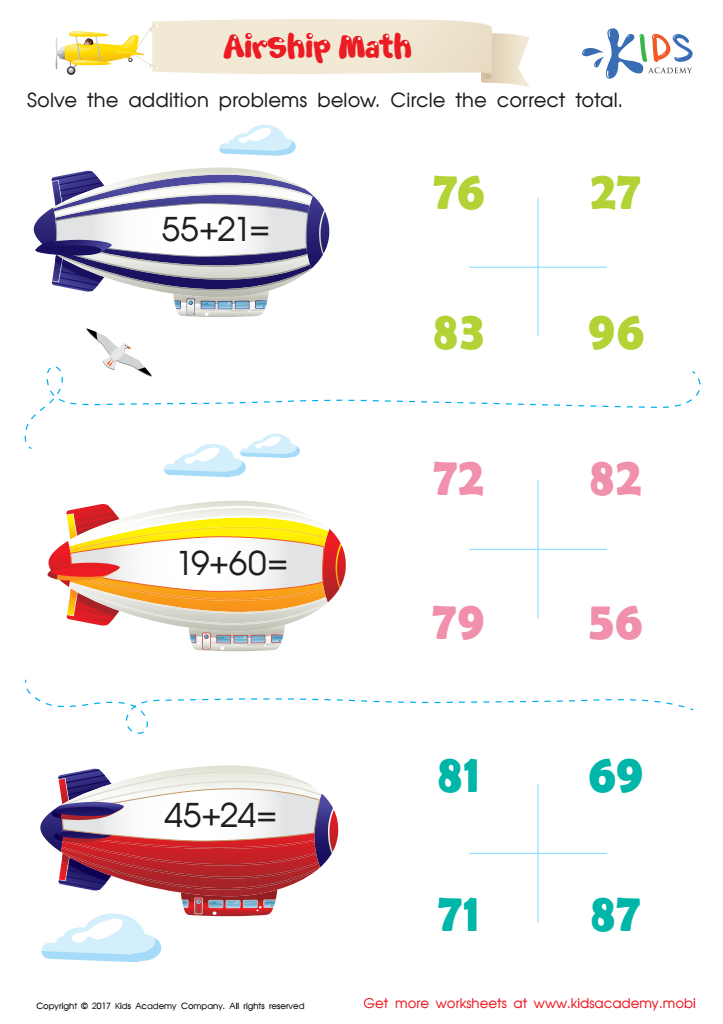
Airship Math Addition Printable
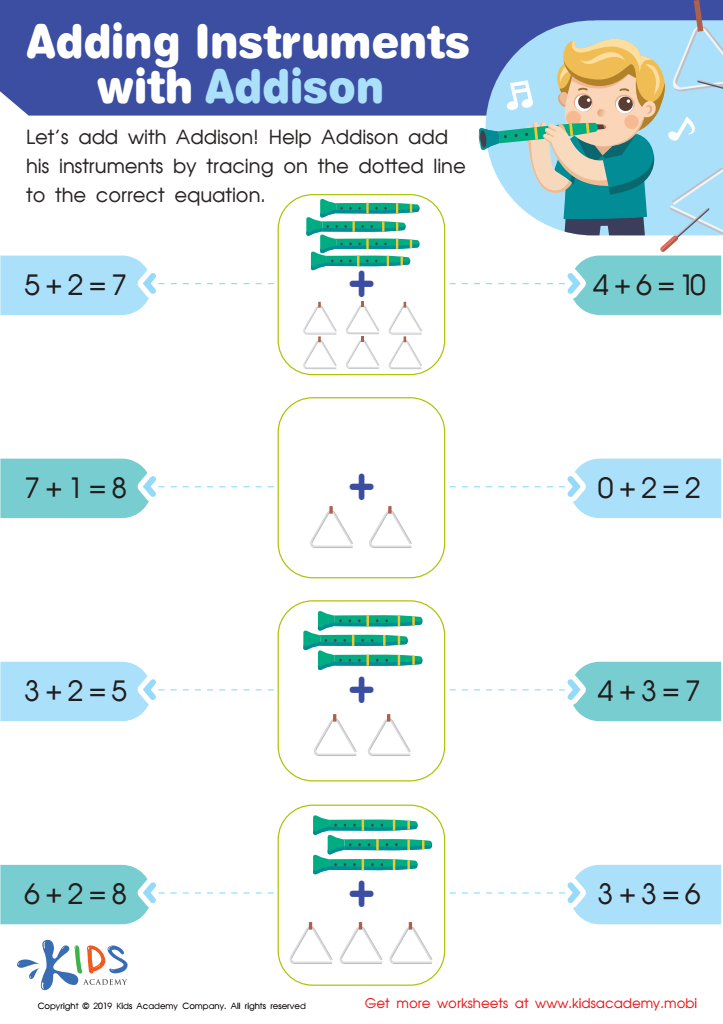
Adding Instruments with Addison Worksheet
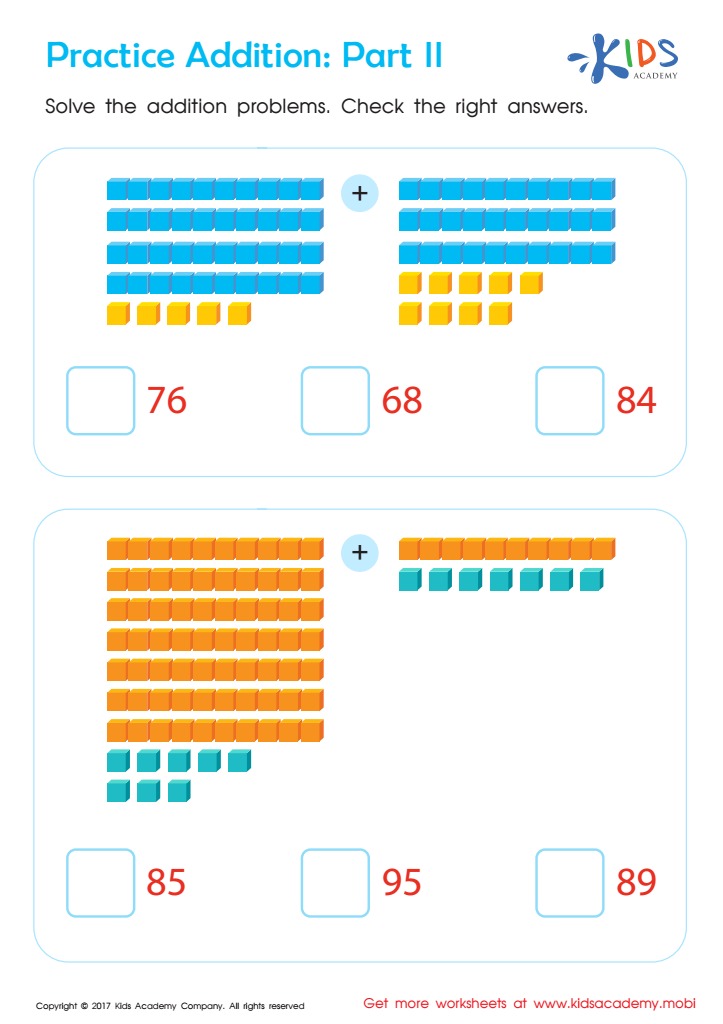
Practice Addition: Part 2 Worksheet
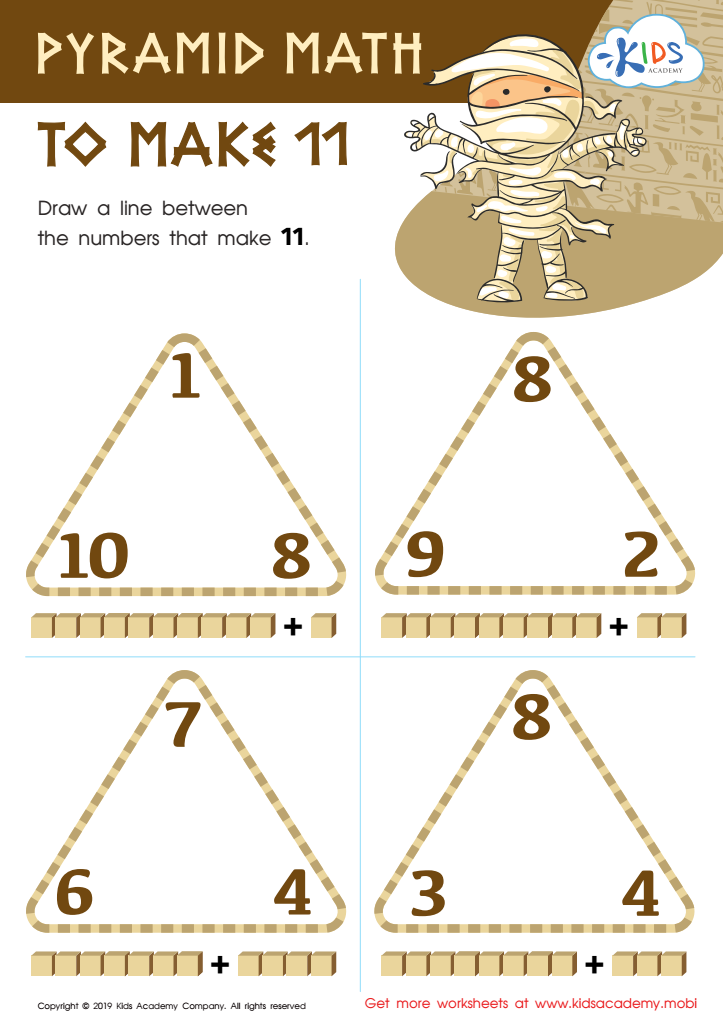
Pyramid Math to Make 11 Worksheet








Parents and teachers should prioritize Addition Practice and Normal Subtraction for children ages 6-9 because these fundamental arithmetic skills form the foundation of more advanced mathematical concepts. At this developmental stage, kids are particularly receptive to learning and solidifying their understanding of basic math, which is critical for their academic success and everyday life skills.
Engaging young learners in consistent addition and subtraction practice enhances their number sense, enabling them to comprehend relationships between numbers and develop problem-solving skills. These exercises improve cognitive abilities, such as memory and logical thinking, promoting overall intellectual growth. Mastery of these skills lays a groundwork for tackling more complex operations like multiplication and division in later grades.
Moreover, proficiency in basic arithmetic boosts children's confidence in their abilities, encouraging a positive attitude towards learning and reducing math anxiety. This confidence is vital for their overall academic performance. By supporting routine practice, parents and teachers not only help children succeed in school but also prepare them for practical tasks, such as managing money and understanding time, that are essential for everyday functioning.
In summary, investing time in Addition and Subtraction practice for young children ensures they gain crucial mathematical foundations necessary for their future educational endeavors and personal development.








