Basic Math Skills Normal Geometry Worksheets for Ages 6-9
5 filtered results
-
From - To
Unlock your child's mathematical potential with our Basic Math Skills Normal Geometry Worksheets, designed for children aged 6-9. These engaging and educational worksheets cover fundamental geometry concepts such as shapes, sizes, and spatial understanding. Perfect for young learners, our worksheets offer colorful illustrations and step-by-step instructions to make learning fun and effective. Enhance your child's problem-solving skills and boost their confidence in math with activities tailored to their developmental stage. Equip your kids with the essential tools they need for academic success through our expertly crafted geometry worksheets. Start exploring today to build a solid math foundation!
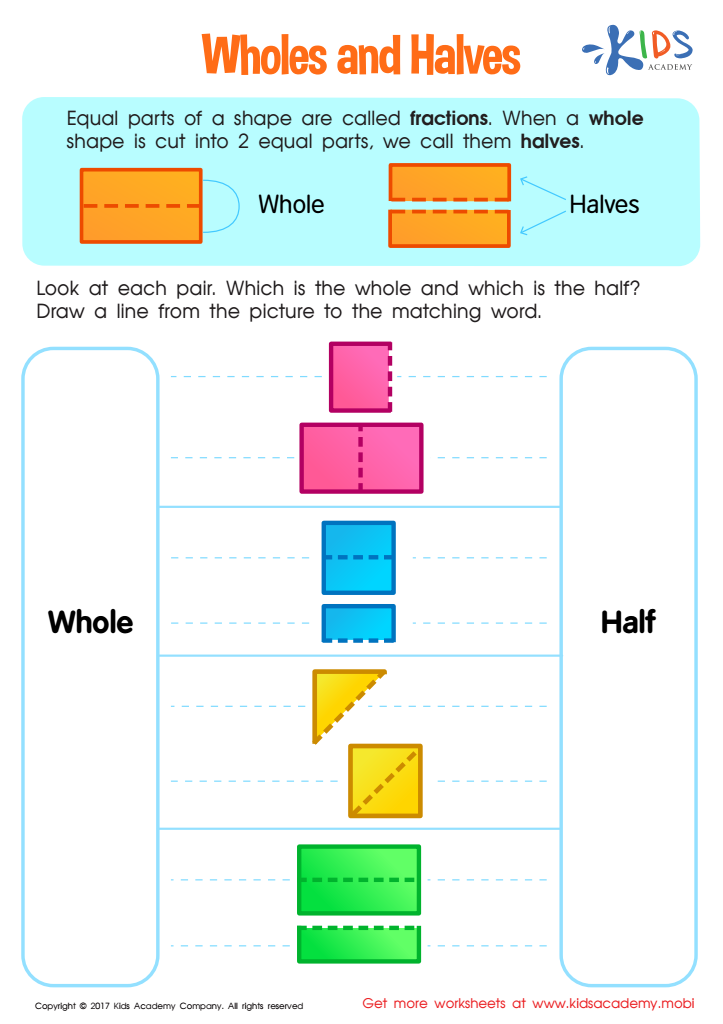
Wholes and Halves Worksheet
 Assign to My Students











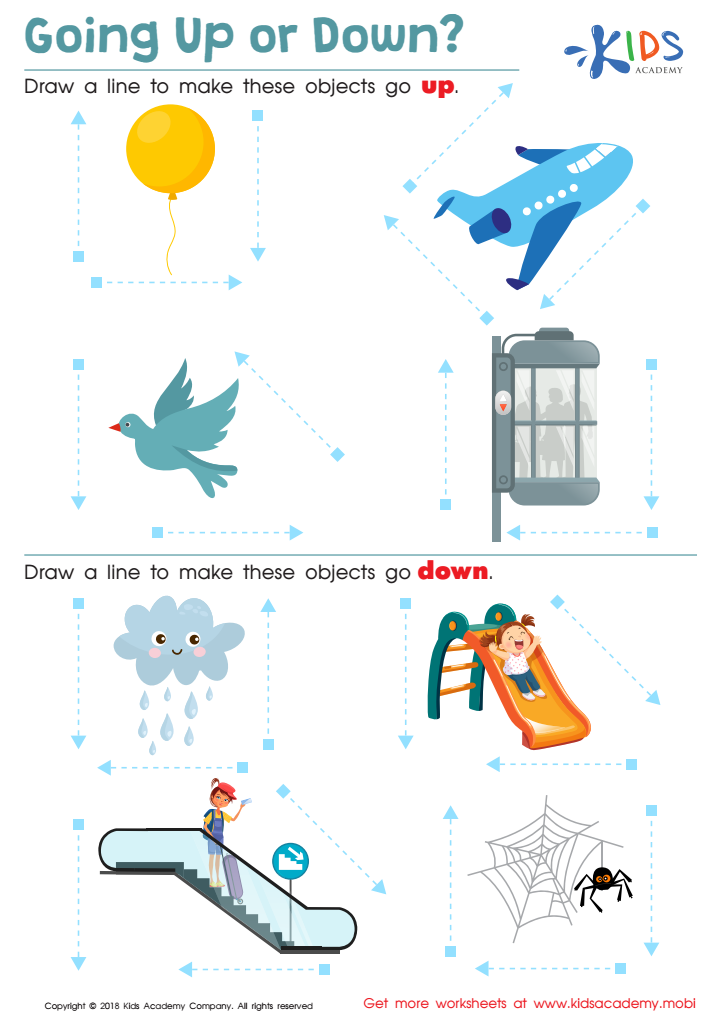
Going up or Down? Worksheet
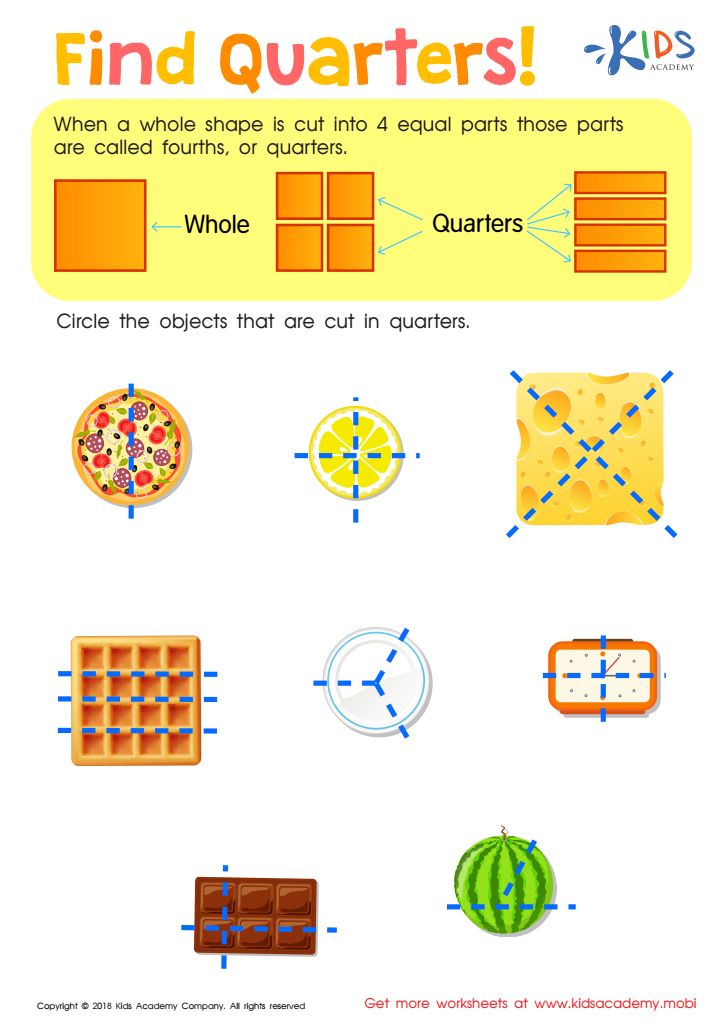
Find Quarters Worksheet
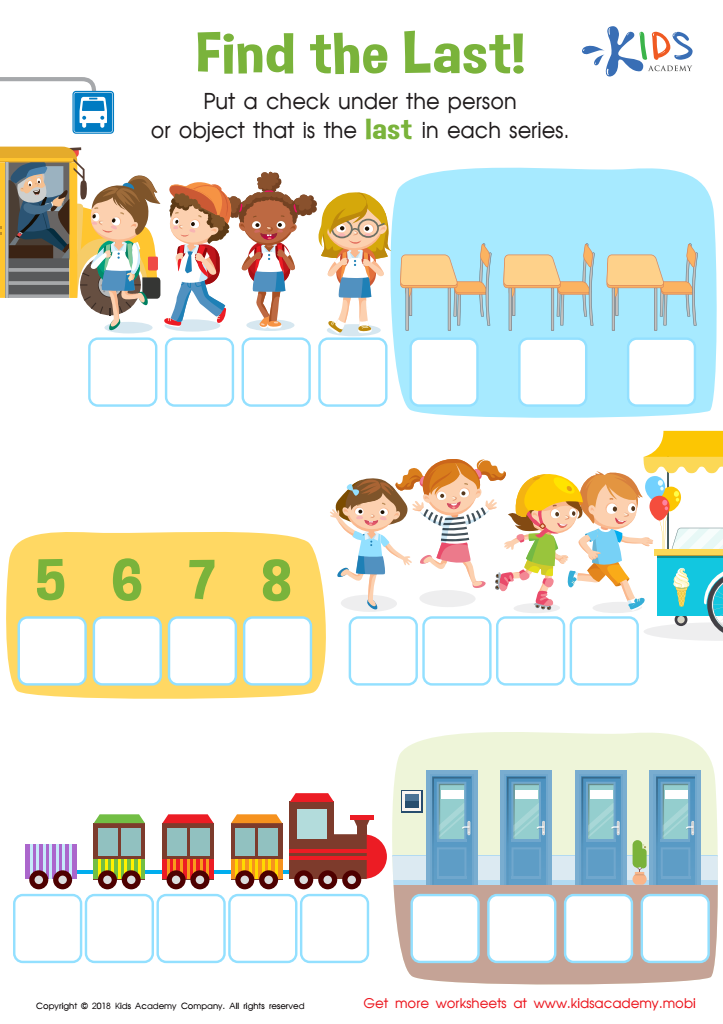
Find the Last! Worksheet
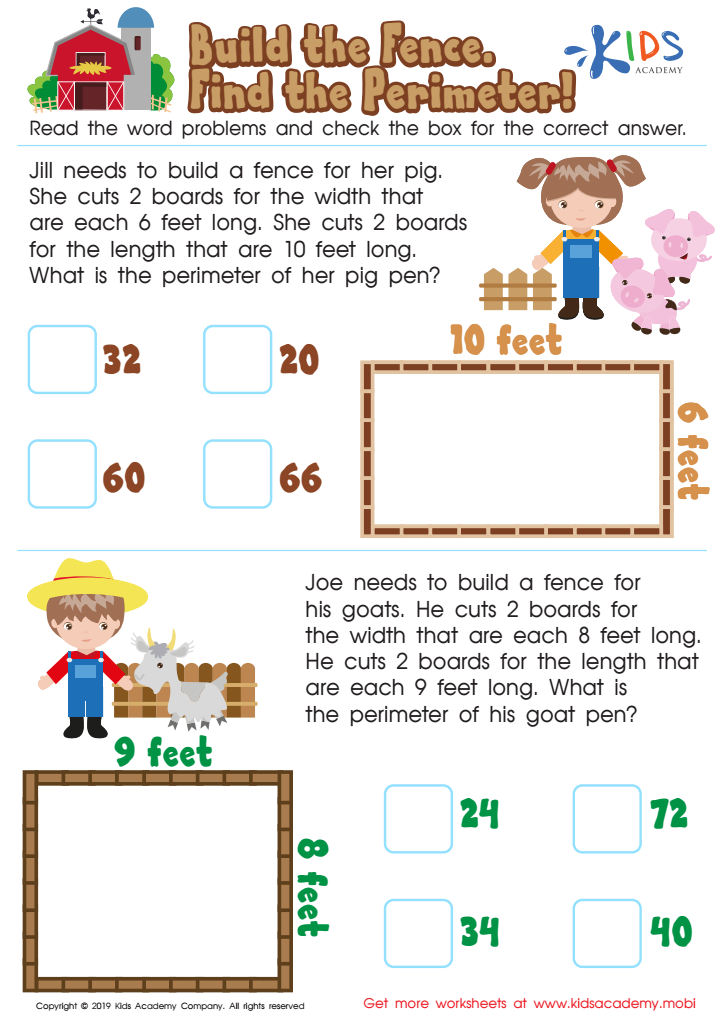
Build the Fence, Find the Perimeter Worksheet








Basic math skills in geometry for children ages 6-9 lay a crucial foundation for future academic success and everyday problem-solving. At this age, children are naturally curious and can absorb information readily, making it the perfect time to introduce essential geometric concepts.
Firstly, understanding shapes, sizes, and spatial relationships helps children navigate their world more safely and effectively. Recognizing geometric shapes like squares, circles, triangles, and rectangles is not just academic—it aids in everyday tasks such as reading signs, packaging objects, and understanding maps.
Furthermore, early geometry learning enhances critical thinking and logical reasoning. Children begin to identify patterns and make predictions based on those patterns, skills integral to both mathematical and real-life problem-solving. Visual-spatial skills, which are honed through geometry, are essential in fields ranging from engineering to art.
Parents and teachers who prioritize these skills help children develop confidence in their mathematical abilities, reducing math anxiety later in life. Interactive activities like building blocks, puzzles, and drawing can make learning geometry fun, ensuring children engage with the material.
In summary, early exposure to basic geometric concepts fosters essential cognitive development, promotes lifelong learning, and equips children with tools to better understand and interact with the world around them.








