Visual Learning Normal Geometry Worksheets for Ages 6-9
3 filtered results
-
From - To
Unlock your child's potential with our Visual Learning Normal Geometry Worksheets, specially crafted for ages 6-9. These engaging printables make understanding shapes, patterns, and spatial relationships a breeze. Through colorful diagrams and interactive activities, young learners develop vital geometry skills while having fun. Perfect for reinforcing classroom lessons or extra practice at home, our worksheets are designed to cater to different learning styles. Foster a strong mathematical foundation and boost confidence in your little learner. Visit Kids Academy to access top-quality educational resources that turn learning into an exciting adventure!
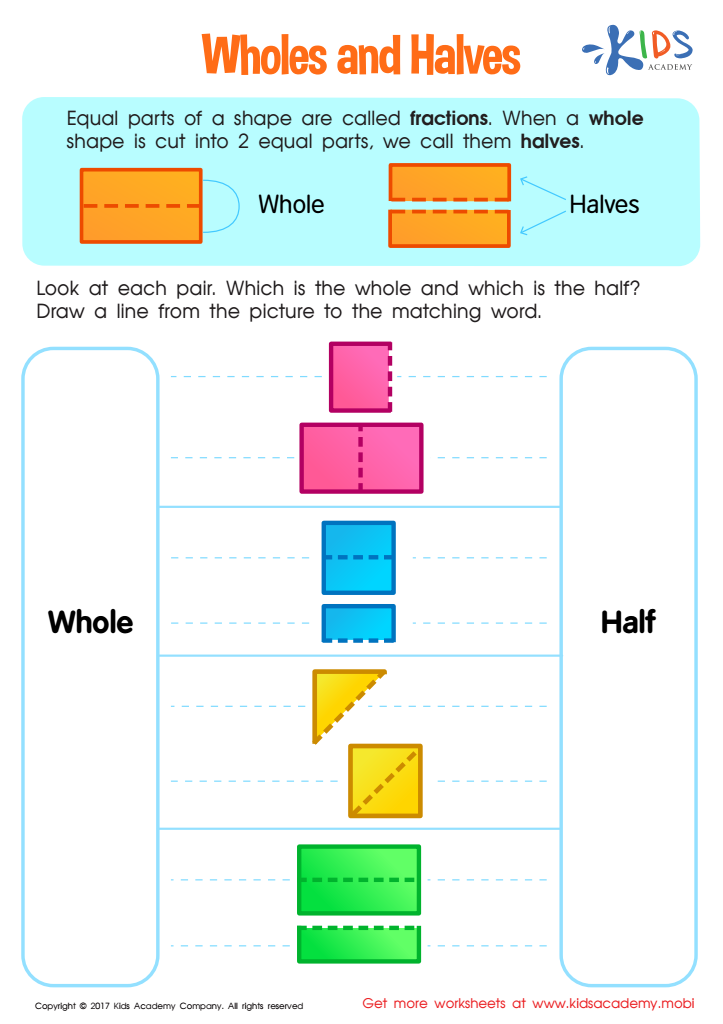
Wholes and Halves Worksheet
 Assign to My Students











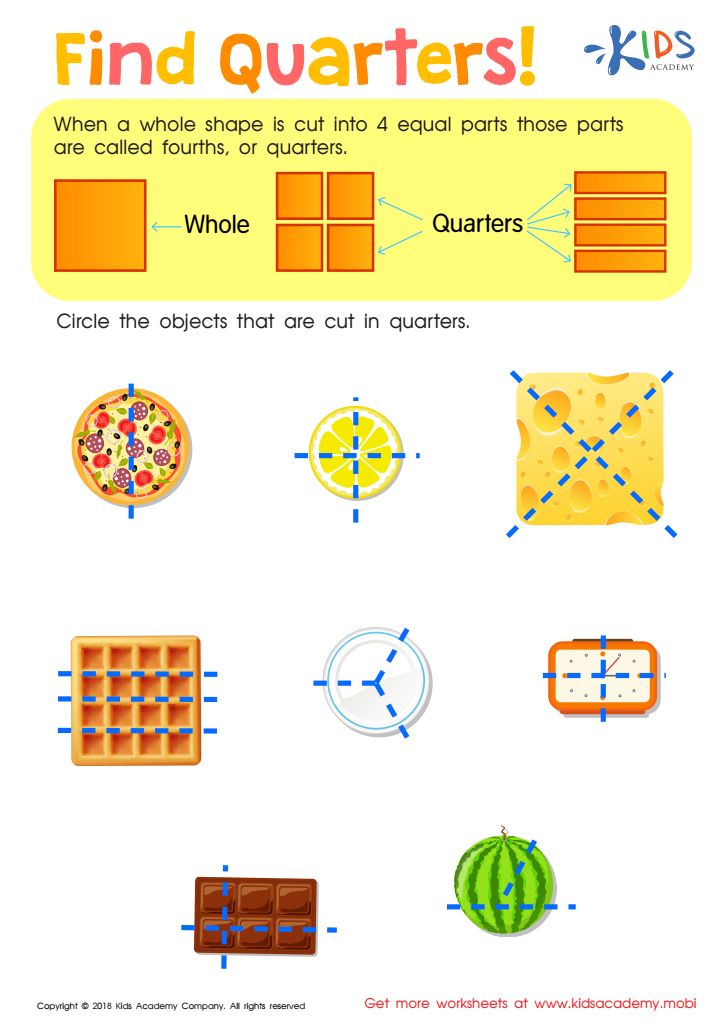
Find Quarters Worksheet
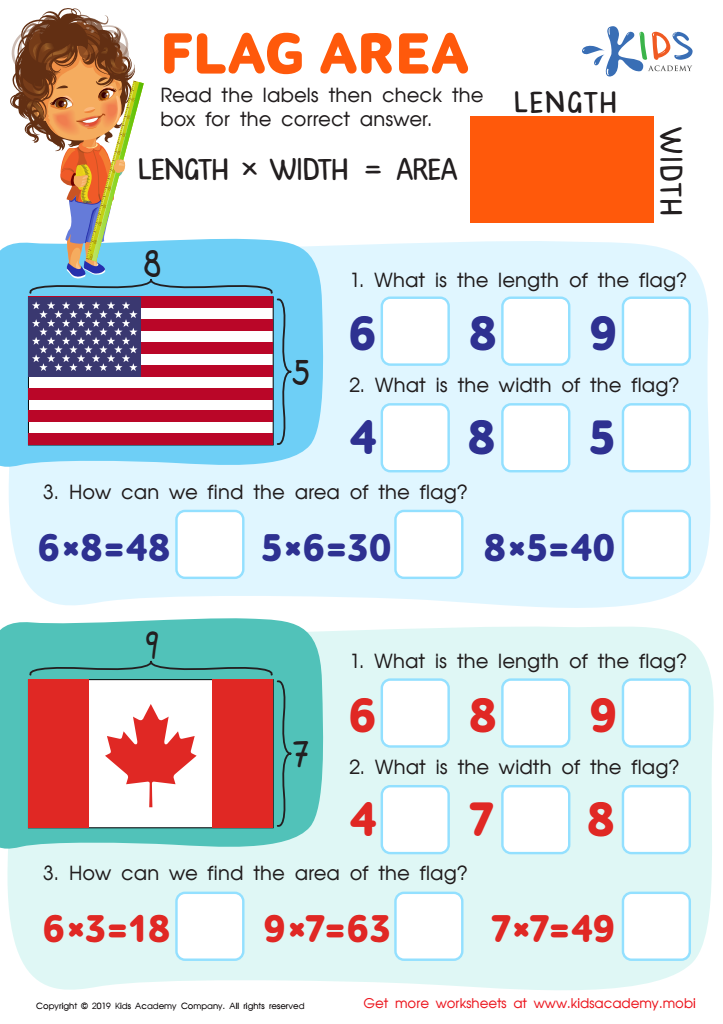
Flag Area Worksheet








Visual learning is a powerful and natural method for young children to grasp complex concepts, and this holds especially true for geometry. For children aged 6-9, visual learning aligns intuitively with their developmental stage, as they are typically more inclined to process information through images and spatial understanding rather than abstract thinking.
Firstly, visual aids in geometry can simplify understanding of shapes and their properties. By using colorful, tangible objects, interactive digital tools, and vivid imagery, children can better recognize and differentiate between various shapes, such as triangles, squares, and circles. This hands-on experience enhances their spatial awareness, which is crucial for their cognitive development.
Secondly, early exposure to visual learning in geometry stimulates problem-solving skills. When children manipulate geometric shapes to solve puzzles or build structures, they are actually applying logical thinking and deduction. These skills not only contribute to mathematical proficiency but also translate into other academic areas, enhancing overall cognitive abilities.
Lastly, engaging with geometry through visual learning can be incredibly motivating and fun. Children who enjoy what they are learning are more likely to retain information and remain curious. By fostering an enriching and visually engaging learning environment, teachers and parents set the foundation for a lifelong interest in mathematics and learning in general.
In summary, investing in visual learning for geometry during early childhood lays a strong groundwork for mathematical skills, critical thinking, and sustained curiosity, benefiting both immediate and long-term educational growth.








