Visual perception improvement Normal Math Worksheets for Ages 6-9
4 filtered results
-
From - To
Enhance your child's visual perception skills with our specially designed Normal Math Worksheets for Ages 6-9. These engaging and educational worksheets from Kids Academy help children improve their ability to recognize visual patterns, shapes, and numbers, laying a solid foundation for math fluency. By incorporating fun exercises and colorful visuals, our worksheets make learning an enjoyable experience. Perfect for practice at home or in the classroom, these tools are crafted to boost confidence and academic performance in young learners. Explore our extensive collection and watch your child's visual perception and math skills flourish!
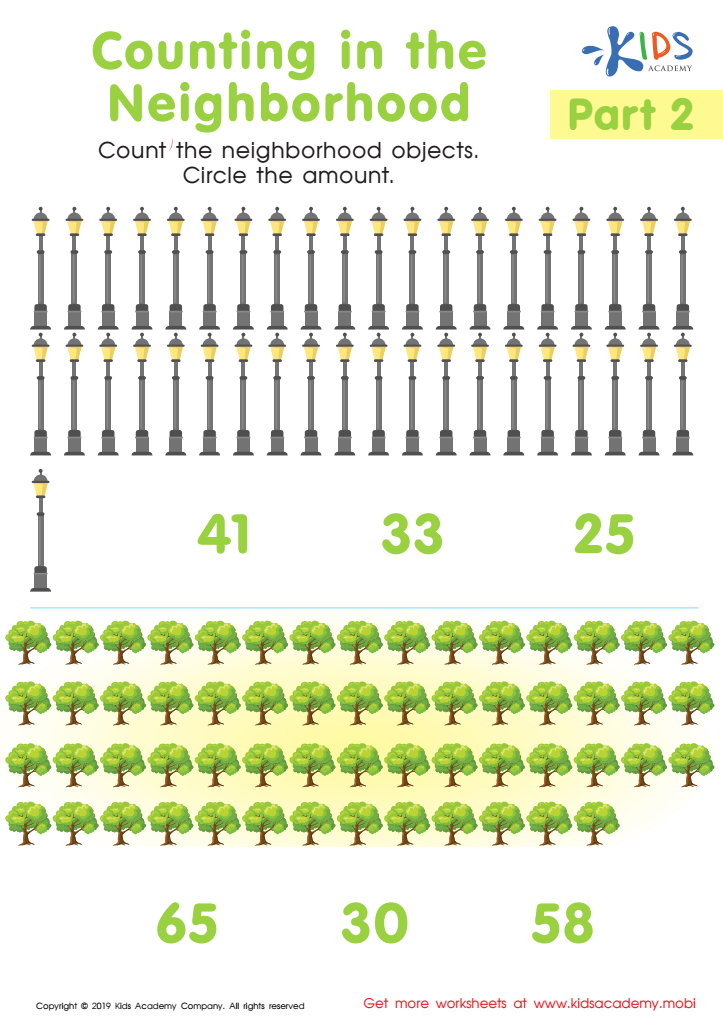
Counting In The Neighborhood Part 2 Worksheet
 Assign to My Students
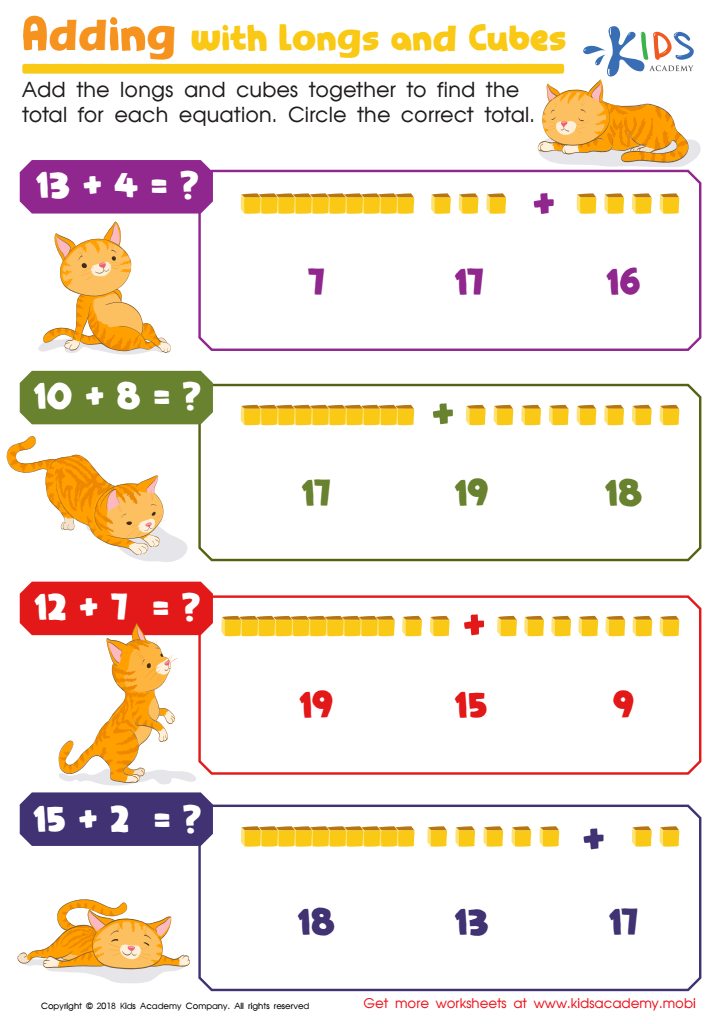
Adding With Longs and Cubes Worksheet
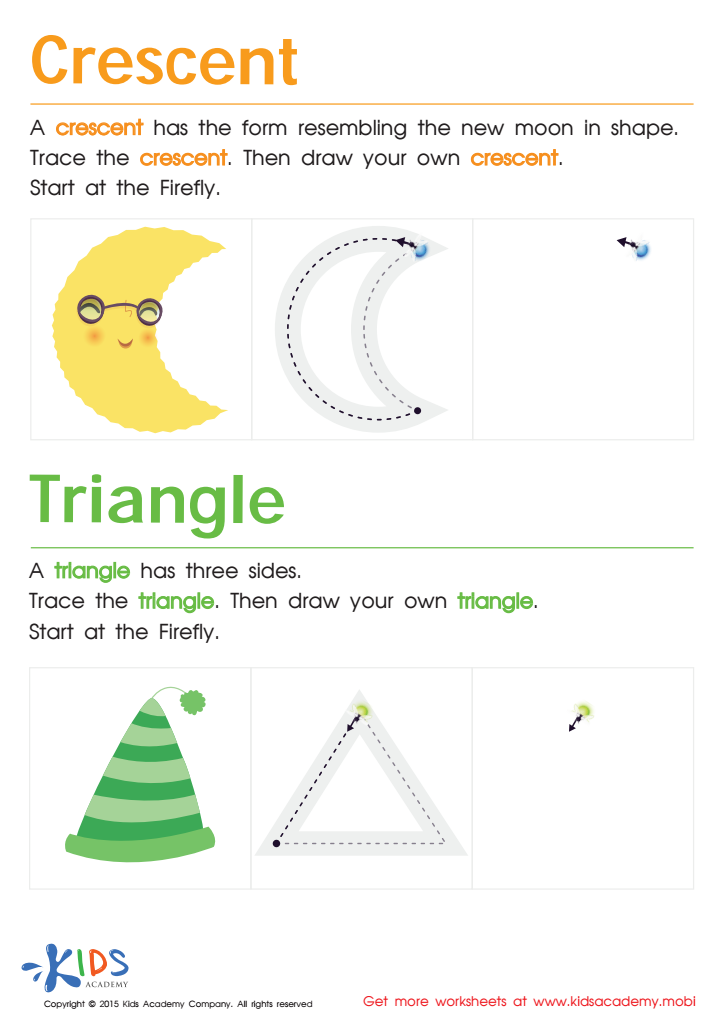
Learning to Draw Crescents And Triangles Worksheet
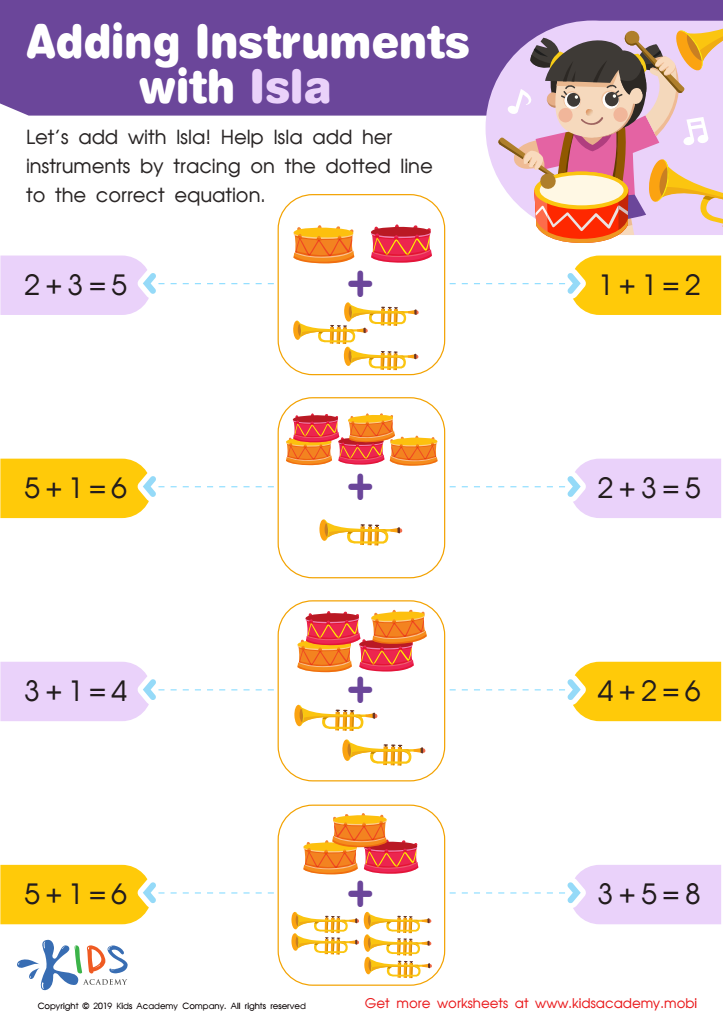
Adding Instruments with Isla Worksheet








Visual perception plays a crucial role in a child’s early development, significantly impacting their learning abilities and academic success. For children aged 6-9, improving visual perception skills can enhance their ability to understand, interpret, and engage with visual information, which is fundamental in subjects such as math.
In math, visual perception skills help children recognize numbers, patterns, shapes, and spatial relationships. Strong visual perceptual abilities enable children to differentiate between similar numbers and symbols, understand geometric concepts, and visualize mathematical problems, all of which are important for problem-solving. When children struggle with these skills, they may find math to be confusing and frustrating, which can lead to a lack of confidence and disinterest in the subject.
Moreover, visual perception is linked to reading and writing. When children develop good visual perception, they are better able to focus on details, follow instructions, and organize their work. This translates to better overall academic performance and a more positive school experience.
Therefore, both parents and teachers should prioritize activities and exercises that improve visual perception skills. Integrating games, puzzles, drawing exercises, and interactive learning tools can make a significant difference. Building these foundation skills early paves the way for academic success and fosters a love for learning in young children.








