Enhancing observation skills Normal Measurement Worksheets for Ages 6-9
3 filtered results
-
From - To
Elevate your child's observation skills with our Normal Measurement Worksheets for Ages 6-9. Specifically crafted for young learners, these printable sheets transform ordinary concepts of measurement into fun and educational adventures. By engaging in a variety of exercises, children can sharpen their ability to notice details, compare elements, and understand measurement basics. Perfect for both classroom and at-home learning, our worksheets build a solid foundation in math while enhancing critical thinking and observation capabilities. Encourage your little ones to discover the world of measurements with activities designed to be both enjoyable and cognitively enriching!
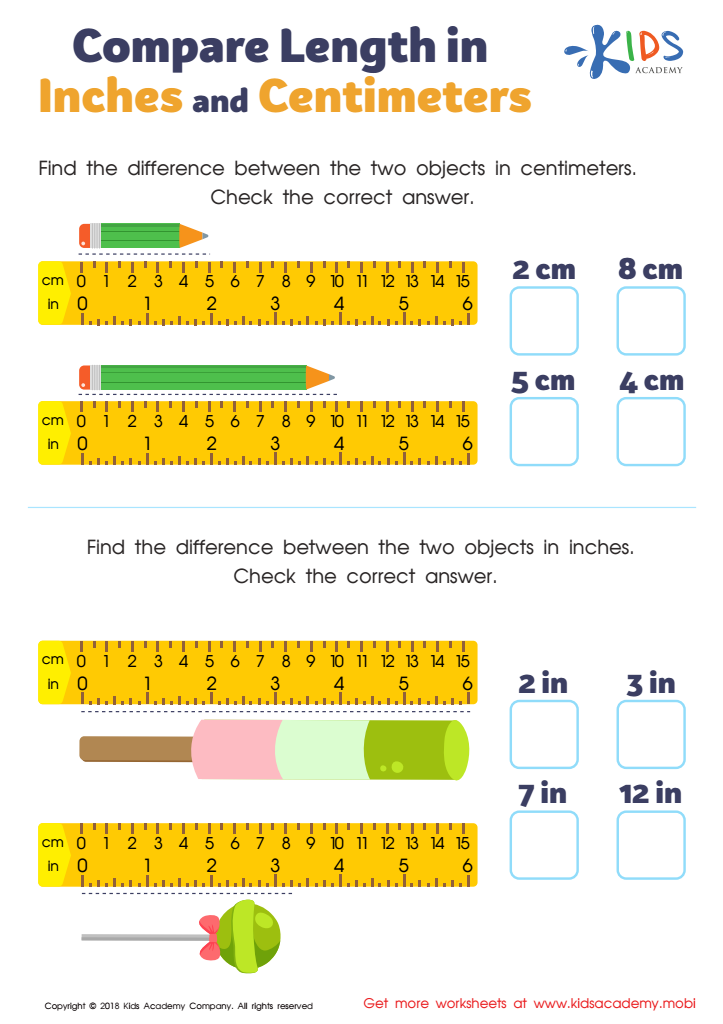
Compare Length in Inches and Centimeters Worksheet
 Assign to My Students
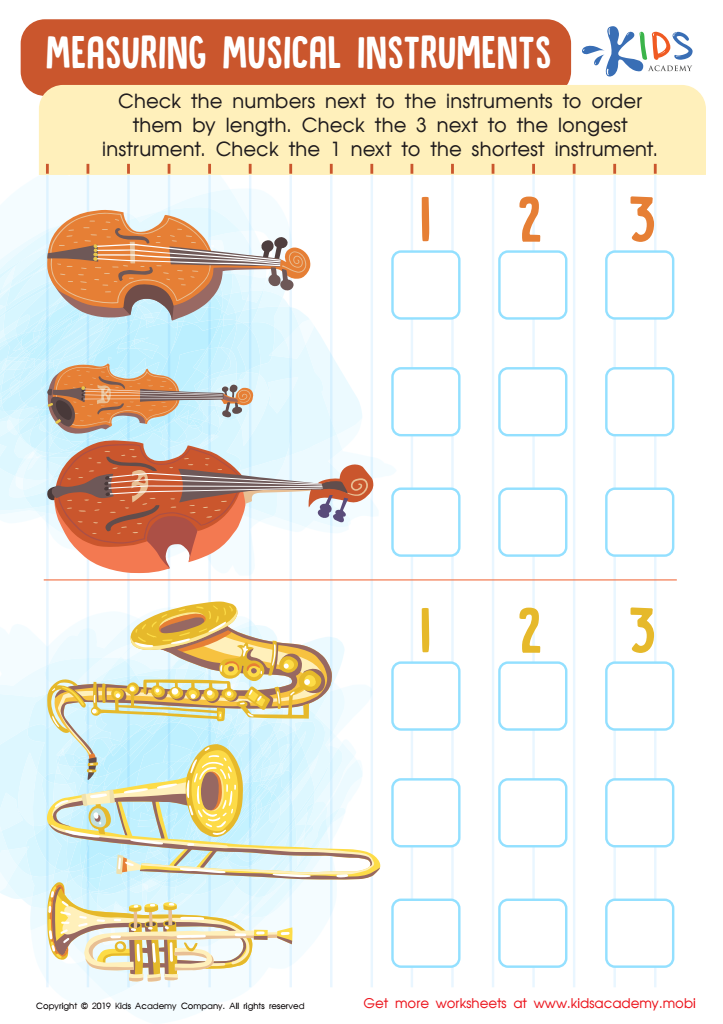
Measuring Musical Instruments Worksheet
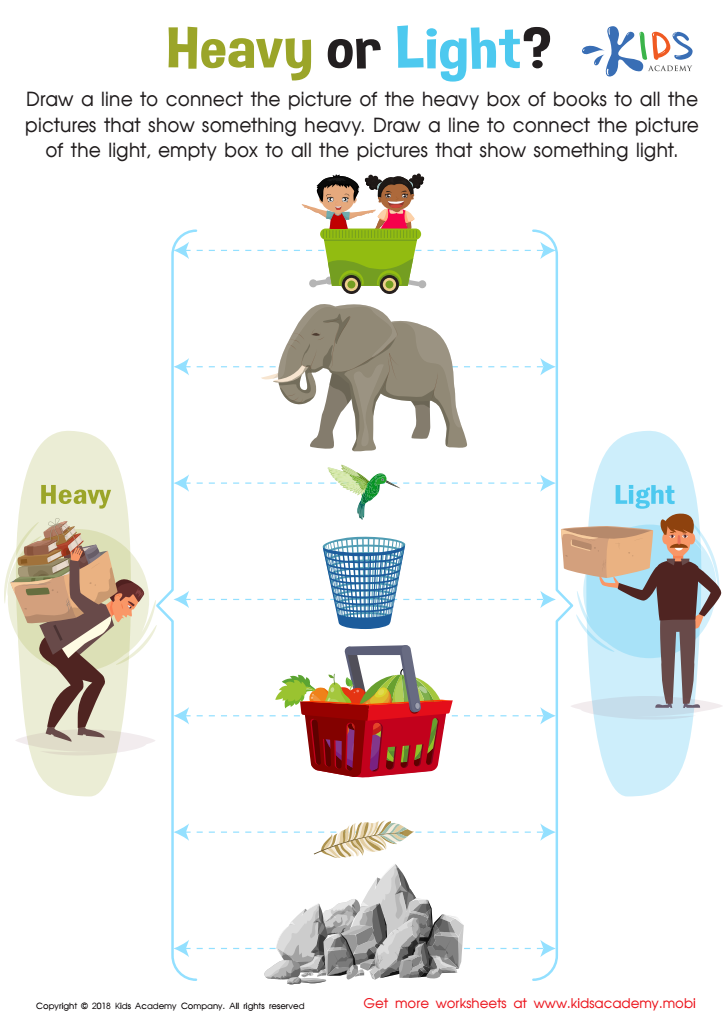
Heavy or Light? Worksheet








Enhancing observation skills in children aged 6-9 is vital for their cognitive and academic development. At this stage, children transition from concrete to more abstract learning, making the ability to notice details crucial. When parents and teachers focus on observation skills, they help children notice patterns, relationships, and discrepancies in their environment. These skills are foundational for success in subjects like science, where careful attention to details during experiments and observations can lead to more accurate conclusions.
Additionally, enhanced observation skills improve reading comprehension and writing. Children learning to read need to notice punctuation, nuances in illustrations, and text details to understand stories fully. In math, paying attention to details allows them to follow multi-step problems accurately.
Developing these skills also has social benefits. Children become more adept at understanding non-verbal cues, such as body language and facial expressions, enhancing empathy and social interactions.
Parents and teachers can work together to cultivate these skills through games, nature walks, and mindfulness exercises that require careful viewing and listening. Enhancing observation skills early on equips children with critical thinking and analytical abilities that are essential throughout their educational journey and beyond.








