Number Recognition Normal Skip Counting Worksheets for Ages 6-9
3 filtered results
-
From - To
Introduce your child to the fun world of math with our engaging "Number Recognition Normal Skip Counting Worksheets" designed for ages 6-9. These worksheets make learning to count by 2s, 5s, and 10s an exciting journey, boosting their confidence in number sequences. Crafted to enhance number recognition skills, each worksheet combines vibrant visuals with interactive exercises. Perfect for young learners, these worksheets cultivate foundational math abilities crucial for future success. Ideal for classroom use or at-home practice, inspire a love of numbers in your child with our expertly designed resources! Numeracy has never been so enjoyable.
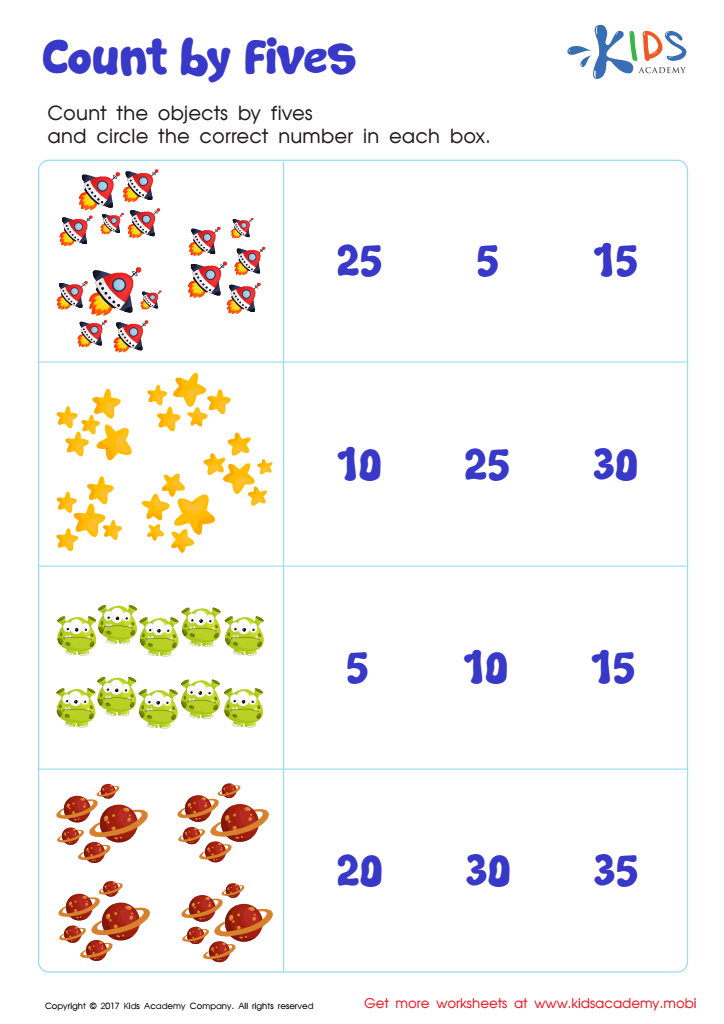
Skip Counting by 5s: Space Math Printable
 Assign to My Students
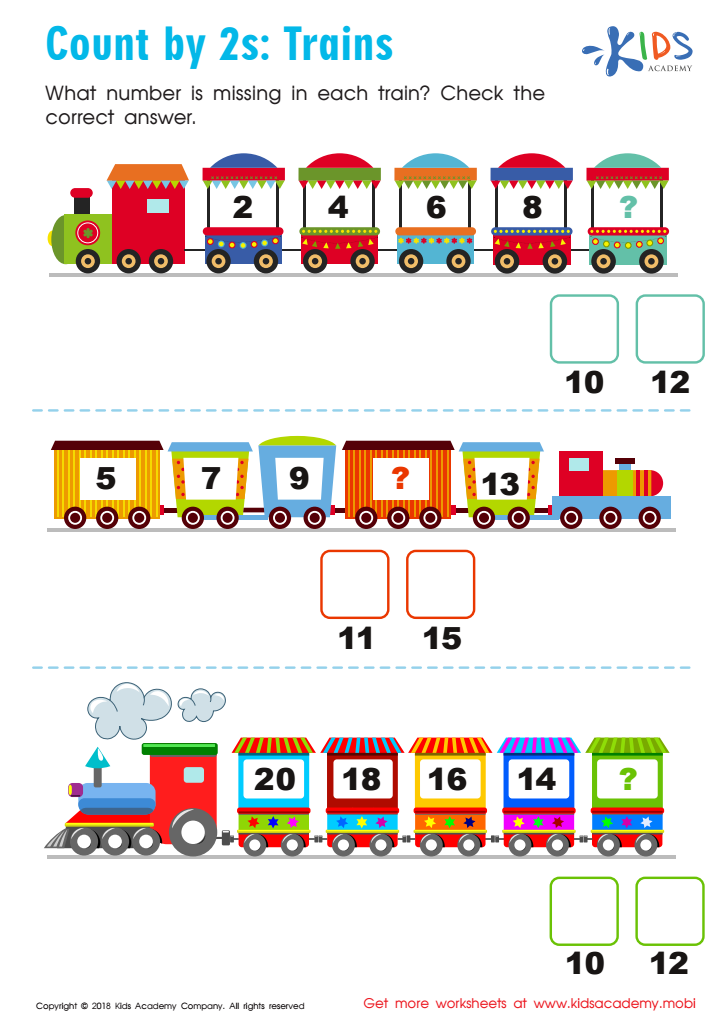
Count by 2's: Trains Worksheet
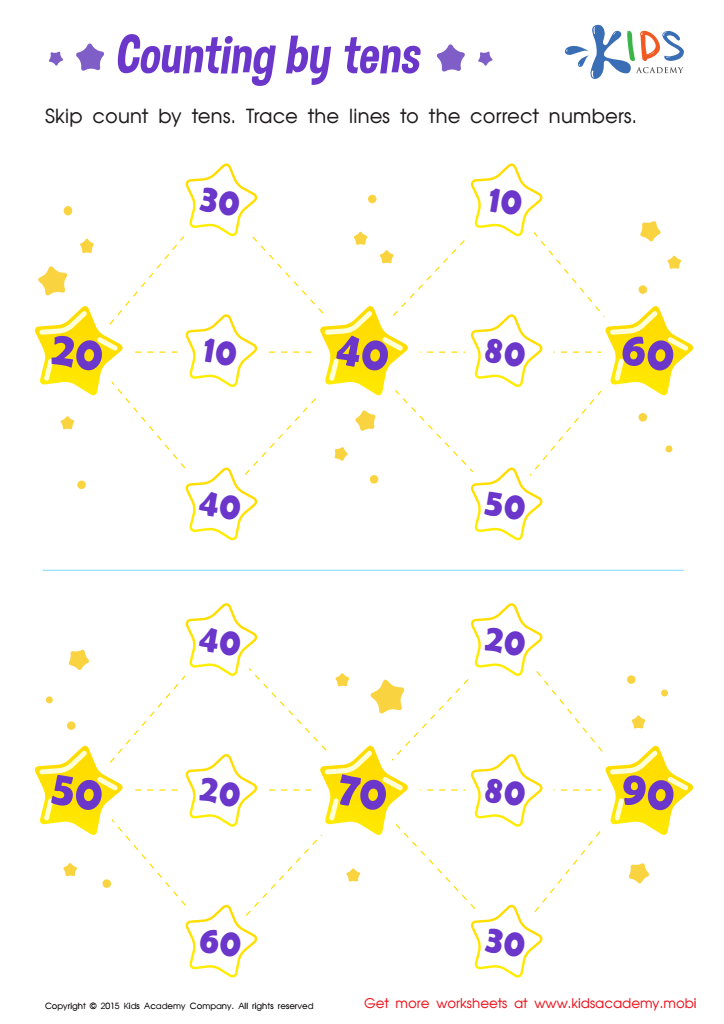
Learn Dozens: Counting by Tens Printable






%20(1).jpg)

Parents and teachers play a crucial role in developing foundational math skills in children aged 6-9, and number recognition and normal skip counting are fundamental components of early math education.
Number recognition refers to the ability to visually identify and name numbers, a skill vital for understanding more complex math concepts. When children can quickly recognize numbers, they are better equipped to perform basic arithmetic, tell time, and understand quantities. This skill is essential for daily activities such as reading prices, following recipes, and playing games that include numerical elements. Moreover, strong number recognition lays the groundwork for constructing number sense—a deep understanding of how numbers work and relate to each other.
Skip counting, which involves counting by numbers other than one (such as by 2s, 5s, or 10s), is equally important. It not only speeds up arithmetic calculations but also introduces patterns and sequences in numbers, fostering logical thinking. Skip counting is a stepping stone to multiplication and division, helping children grasp these concepts more easily.
Therefore, focusing on number recognition and skip counting ensures that children build a solid math foundation. This empowers them academically and equips them with essential life skills, fostering confidence and problem-solving abilities that will benefit them throughout their lives. By emphasizing these skills, parents and teachers are setting their children up for long-term success in both academic and real-world contexts.








