
Phonics recognition Normal Reading Worksheets for Ages 6-9
4 filtered results
Difficulty Level
Grade
Age
-
From - To
Subject
Activity
Standards
Discover our engaging Phonics Recognition Normal Reading Worksheets, specially designed for children aged 6-9 to strengthen their reading skills. Our worksheets offer captivating activities that help young learners identify and understand various phonics patterns and sounds. This comprehensive resource from Kids Academy not only boosts reading confidence but also enhances comprehension by focusing on letter-sound relationships. Perfect for classroom use or home practice, our phonics worksheets make learning enjoyable and effective. Equip your child with the foundation for reading success. Visit Kids Academy to access these valuable preschool educators tool - Phonics Recognition Normal Reading Worksheets now!
Favorites
With answer key
Interactive
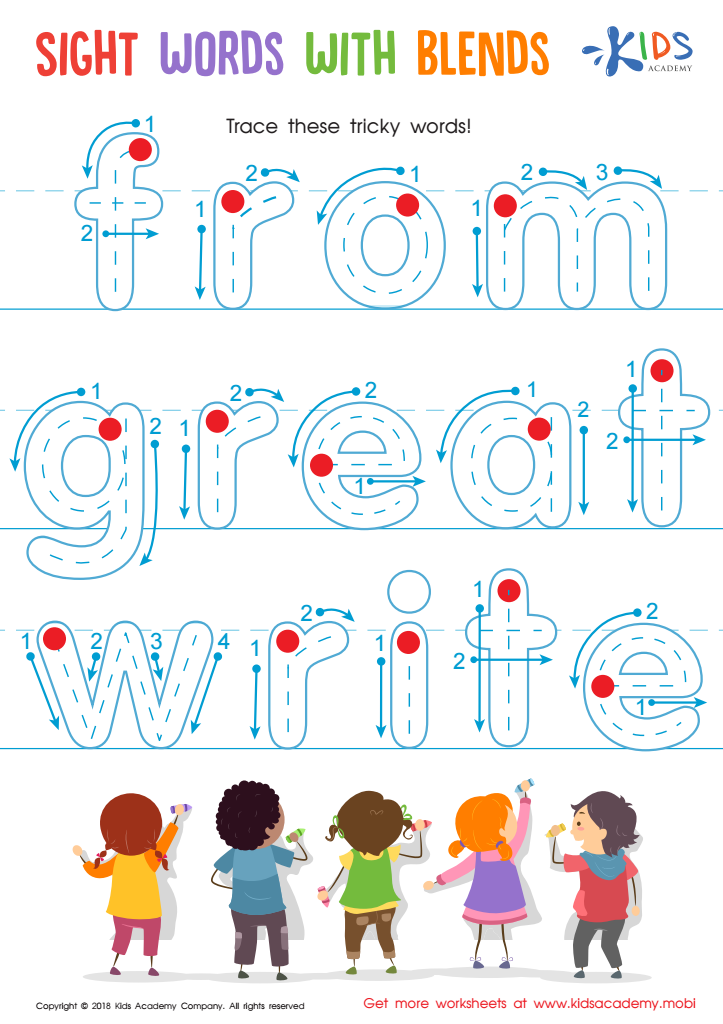
Sight Words with Blends Worksheet
This free PDF lets your children trace and write sight words with tricky blends. The guide numbers help them start from the top, building fine motor skills and enhancing sight word vocab. It's a great way to give your kids a solid foundation for reading!
 Assign to My Students
Sight Words with Blends Worksheet
Worksheet
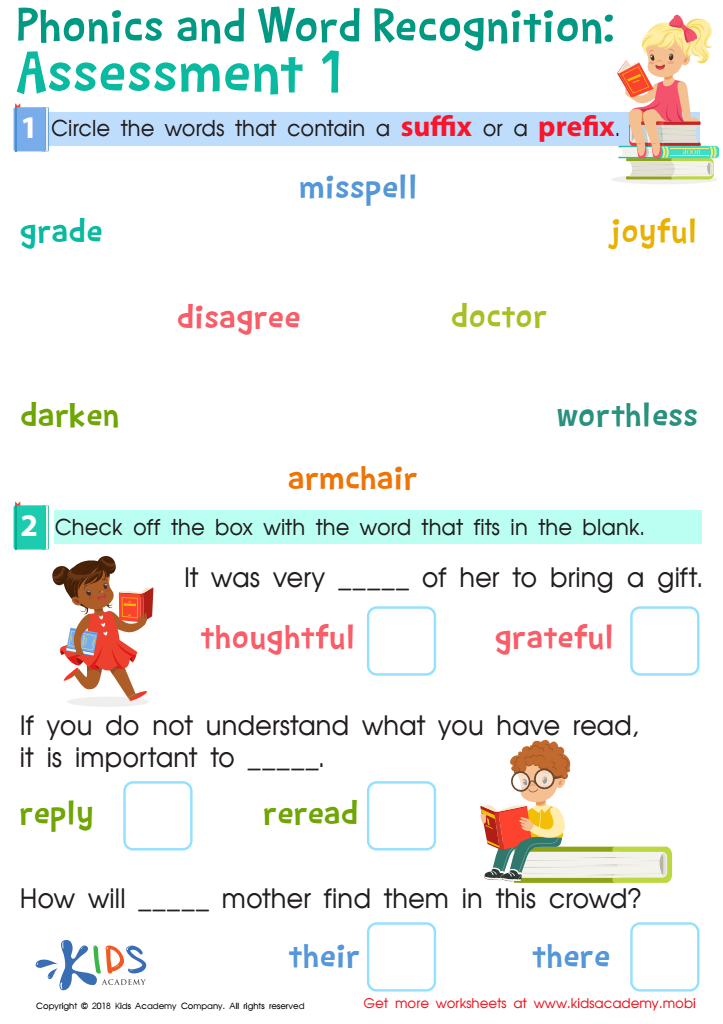
Phonics and Word Recognition: Assessment 1 Worksheet
Explain prefixes (words added to start of another word to give it a new meaning) and suffixes (added to end of word to change its meaning) to your kids with examples like 'unhappy' (prefix) and 'forgetful' (suffix). Now, help your child complete this worksheet, including circling words and checking boxes.
Phonics and Word Recognition: Assessment 1 Worksheet
Worksheet
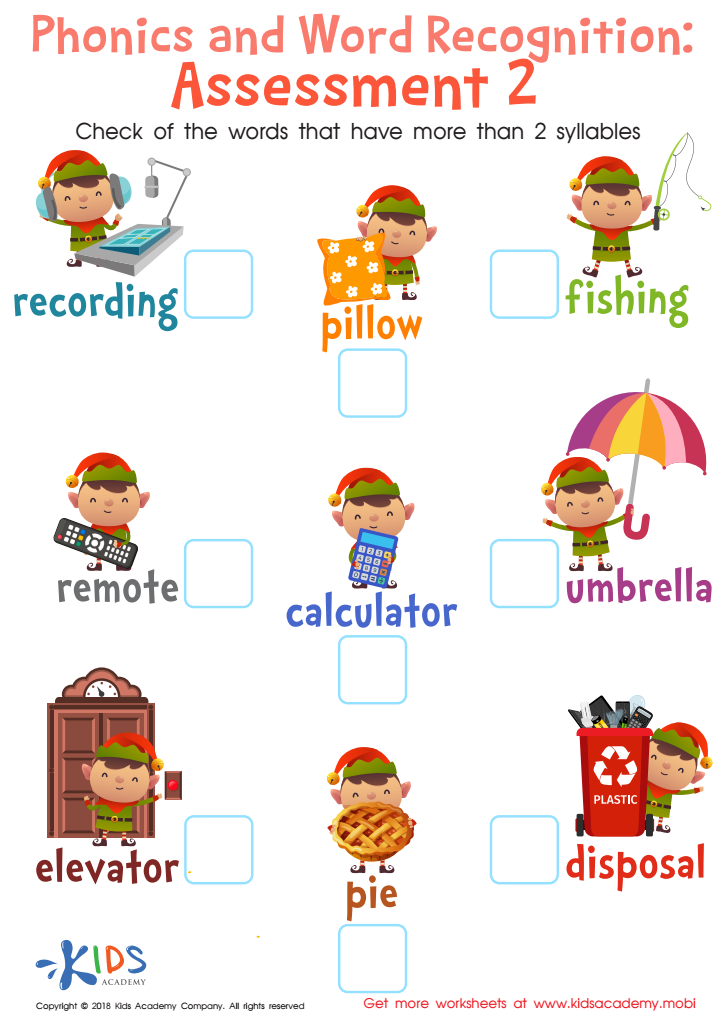
Phonics and Word Recognition: Assessment 2 Worksheet
Help your kids learn proper pronunciation by counting syllables. Most words they'll encounter have 1-3 syllables, making them simple to say. Have them repeat the words in your worksheet after you. Focus on longer words with more than two syllables.
Phonics and Word Recognition: Assessment 2 Worksheet
Worksheet
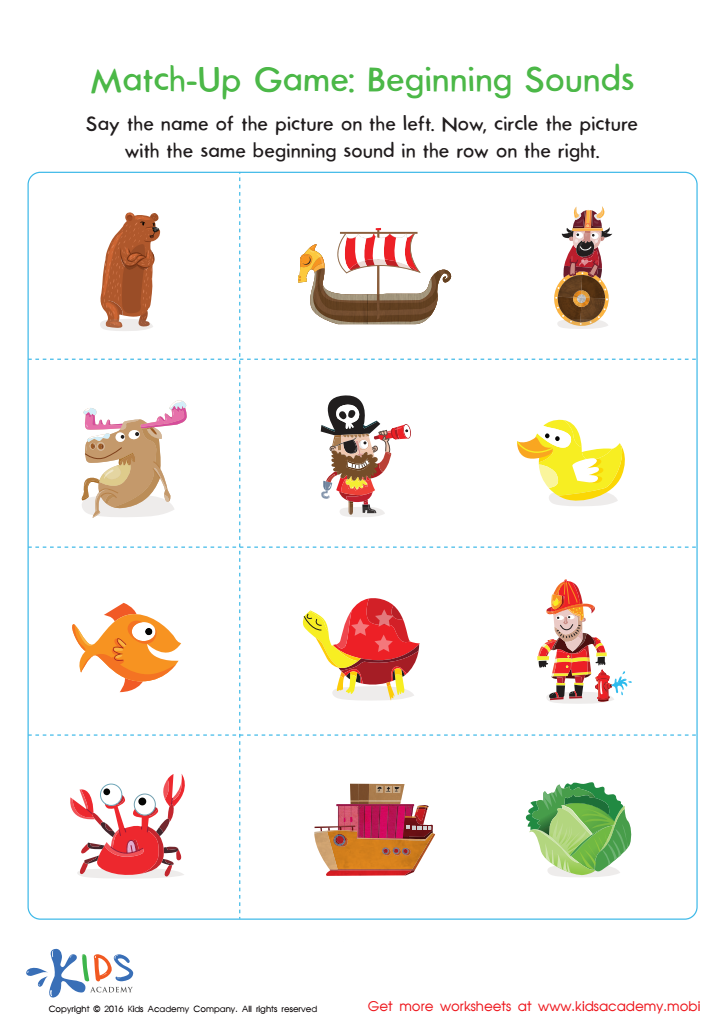
Match–Up Game: Beginning Sounds Worksheet
Start today with this beginning sounds match-up printable!
Teach your child to solve problems mentally with this beginning sounds match-up printable. They'll learn to categorize pictures based on phonics rules, developing mental stamina and focus. It's an important step for recognizing sounds and letters in print, building a foundation for reading and spelling. Start today and take your child's skills to the next level!
Match–Up Game: Beginning Sounds Worksheet
Worksheet
Join Kids Academy for Free
Who is primarily going to use this learning content?






Phonics recognition is crucial in early reading development for children aged 6-9 because it lays the foundation for accurate and fluent reading. During these formative years, young learners are in a critical window of cognitive development where they are most impressionable and able to absorb new information. Understanding the relationship between letters and sounds (phonics) allows children to decode words, which is essential for reading comprehension and overall literacy.
For parents and teachers, prioritizing phonics ensures that children can build strong reading skills from the ground up. Proficiency in phonics enables children to recognize familiar words quickly and accurately, and to apply this knowledge to decode unfamiliar words. This boosts their confidence and encourages a positive attitude towards reading, which is fundamental for their ongoing education.
Moreover, early phonics education helps prevent reading difficulties and dyslexia by providing children with systematic and clear instruction. It helps identify children who may need additional support, enabling timely intervention.
Beyond academic performance, mastering phonics opens doors to a wealth of experiences and information that books provide. It lays a cornerstone for lifelong learning, critical thinking, and access to opportunities. Thus, parents and teachers caring about phonics recognition and normal reading is paramount for children’s present and future success.








