Sound recognition Normal Reading Worksheets for Ages 6-9
4 filtered results
-
From - To
Discover the engaging "Sound Recognition Normal Reading Worksheets" designed specifically for children ages 6-9. These interactive resources will help young learners enhance their phonemic awareness and improve their reading skills through playful activities and exercises. Each worksheet focuses on different sounds, aiding in the development of crucial sound recognition abilities necessary for effective reading. Perfect for home or classroom use, these worksheets blend fun with learning, helping children gain confidence in their reading journey. Spark your child's love for reading and facilitate their growth with our comprehensive sound recognition worksheets, perfectly aligned with their developmental needs. Start exploring today!
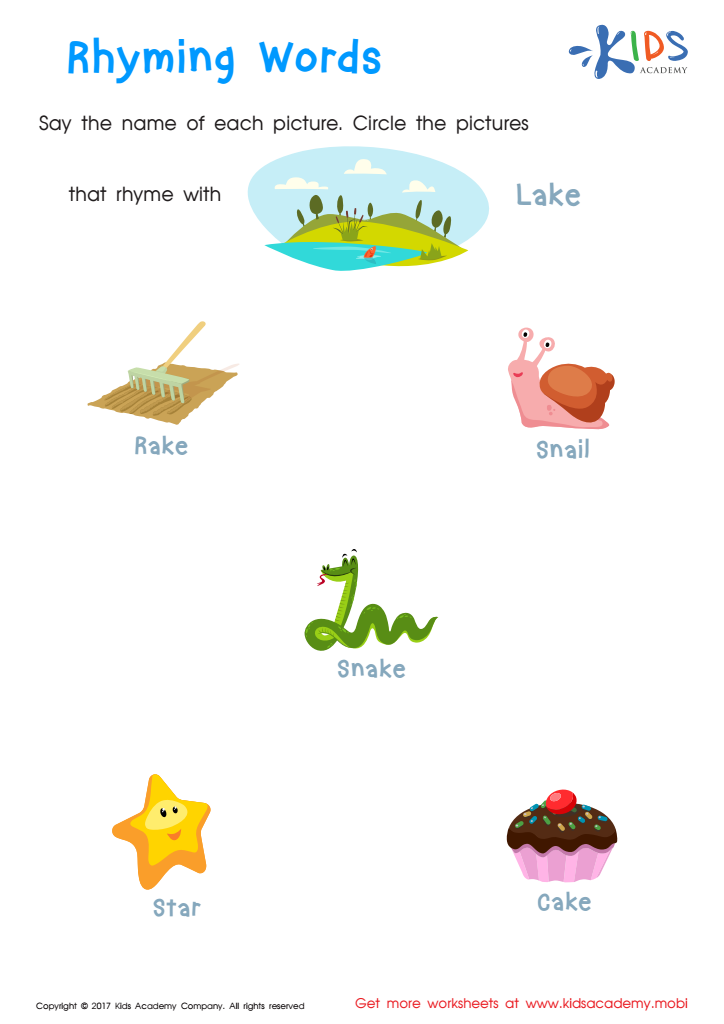
Rhyming Words Rhyming Worksheet

Long and Short U Worksheet
 Assign to My Students
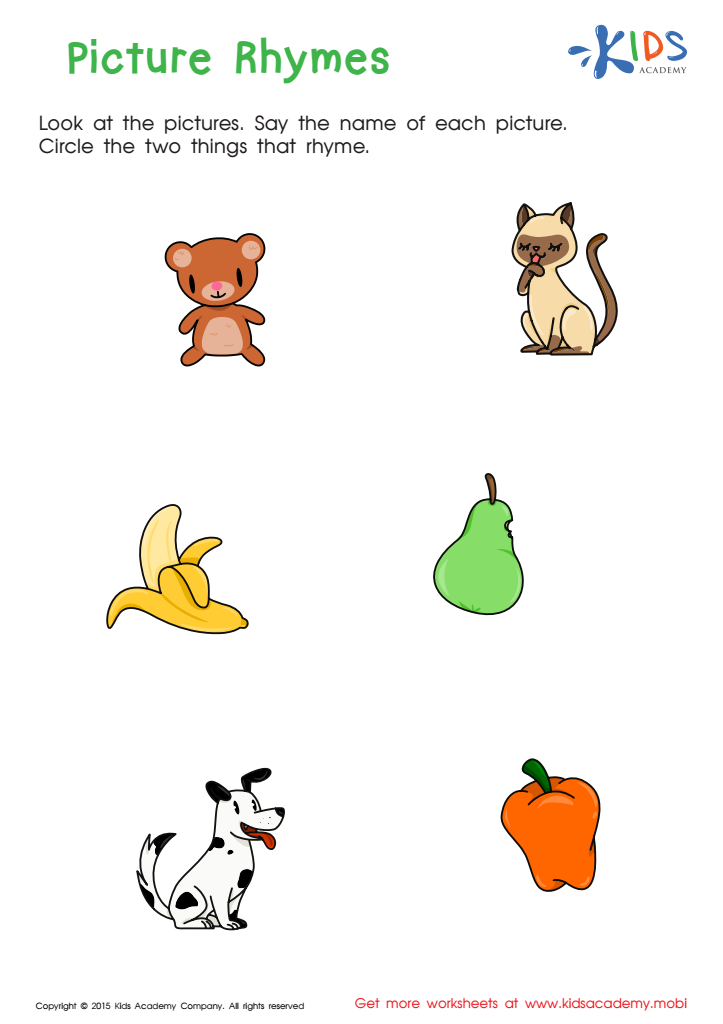
First Words: Picture Rhymes Worksheet
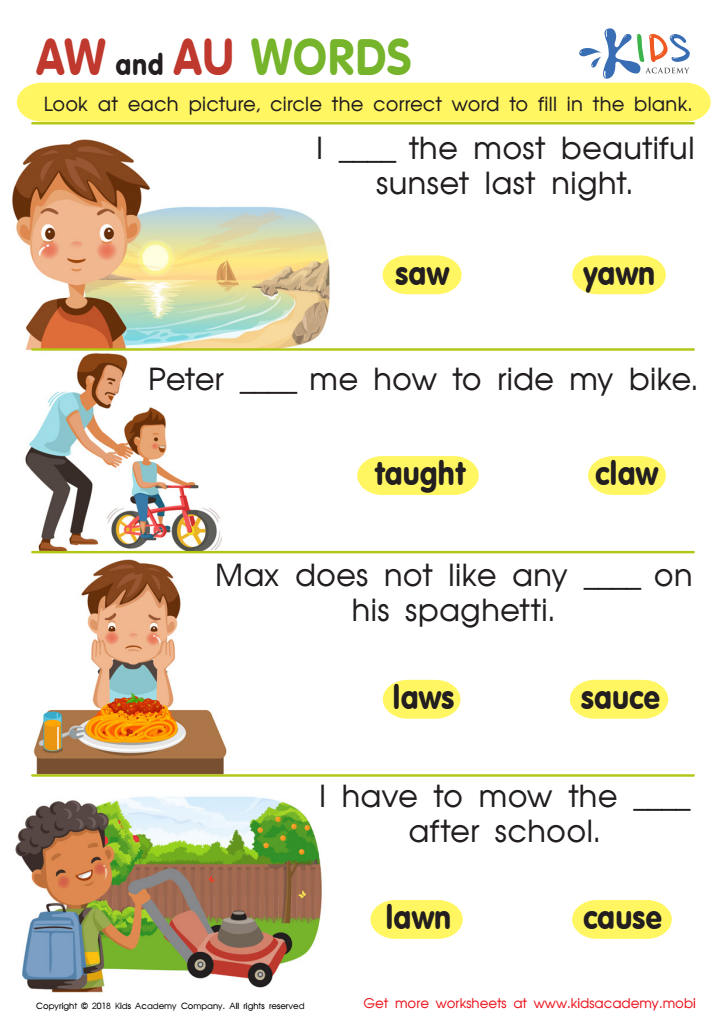
Reading: AW and AU Words Worksheet








Sound recognition is a fundamental skill that significantly impacts a child’s reading development, specifically for ages 6-9, a critical stage in literacy acquisition. At this age, children learn to connect sounds (phonemes) with letters (graphemes), which is essential for decoding words. Mastery of sound recognition helps children progress from recognizing letters and sounds to reading fluently.
Parents and teachers should care about sound recognition because it lays the foundation for effective reading strategies, enabling children to decode unfamiliar words independently. A solid grasp of phonemic awareness also supports spelling and writing skills, allowing students to express themselves clearly.
Furthermore, early intervention in improving sound recognition can prevent future academic struggles. When children build confidence in their reading abilities, they are more likely to engage with books and develop a lasting love of reading. Additionally, strong reading skills correlate with better performance in other subjects, fostering overall academic success.
By prioritizing sound recognition through fun activities, games, and targeted exercises, adults can contribute significantly to a child’s confidence and competence in reading, preparing them for lifelong literacy and learning. Ultimately, fostering these skills at an early age promotes both academic achievement and a genuine enthusiasm for reading.








