
Story sequencing Normal Reading Worksheets for Ages 6-9
15 filtered results
Difficulty Level
Grade
Age
-
From - To
Subject
Activity
Standards
Explore our engaging Story Sequencing Normal Reading Worksheets tailored for children aged 6-9! These carefully crafted worksheets are designed to enhance your child's reading comprehension and critical thinking skills by helping them understand the order of events in a story. Through fun and interactive activities, kids will improve their ability to retell narratives, making connections between plot points, characters, and settings. Each worksheet offers various levels of difficulty to cater to diverse learning needs, ensuring that every child can participate and thrive. Perfect for at-home learning or classroom use, these worksheets make storytelling both educational and enjoyable! Start your child’s reading adventure today!
Favorites
With answer key
Interactive
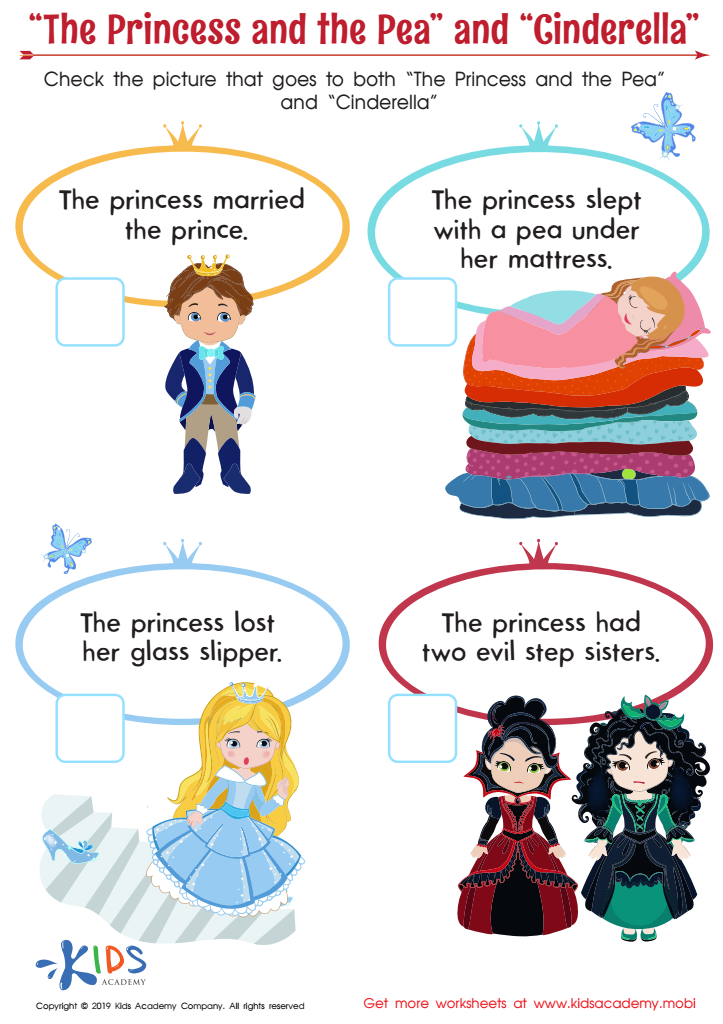
“The Princess and the Pea” and “Cinderella” Worksheet
Read "Cinderella" and "The Princess and the Pea" to your little ones. Ask them what their favorite parts were and what similarities they found in the princesses. This worksheet has four pictures of scenes from the stories. Ask your kids which picture goes with both tales.
 Assign to My Students
“The Princess and the Pea” and “Cinderella” Worksheet
Worksheet
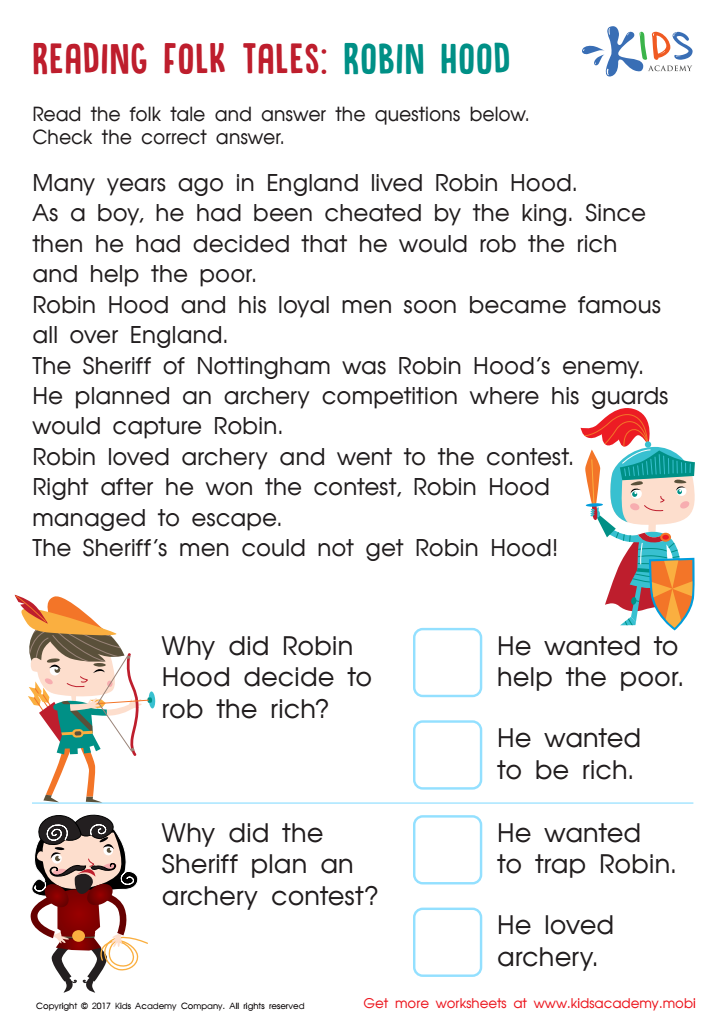
Robin Hood Folktale Worksheet
Have your child practice reading comprehension and inferencing with this Robin Hood folktale worksheet! Get them to read between the lines to find character motivation and answer important questions about the passage. It's a fun way to test their reading skills!
Robin Hood Folktale Worksheet
Worksheet
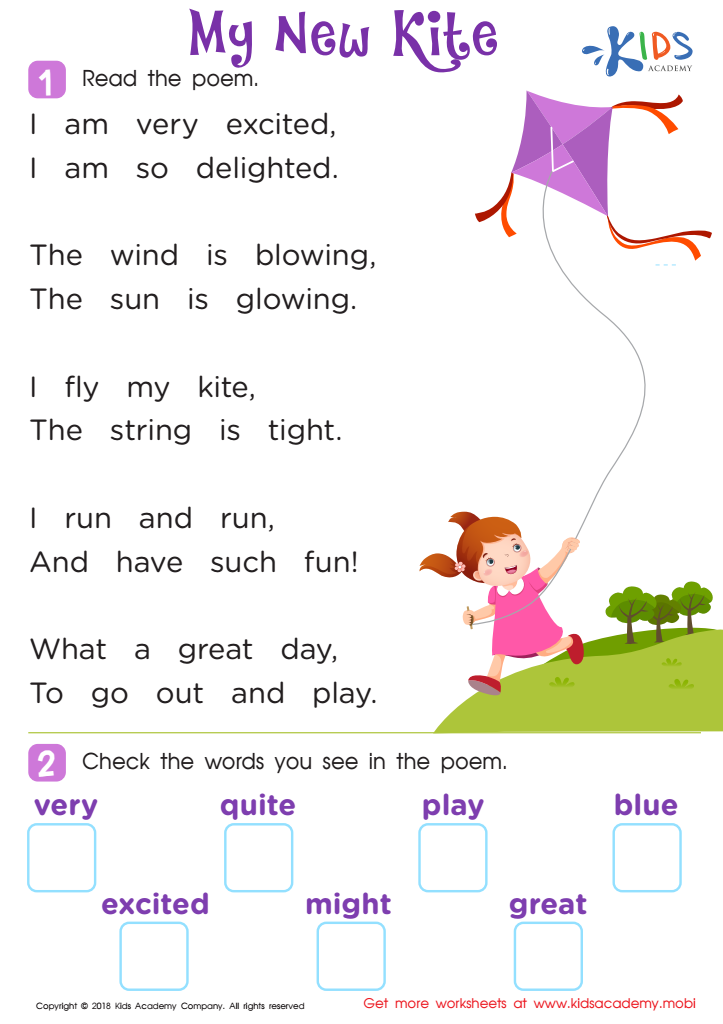
Poem: My New Kite Worksheet
Read a cheerful poem with your child and have them check the boxes next to the words that appear. Then, ask them to identify rhyming words, noting that these won't appear at the bottom of the page. This is a delightful reading activity to help your child remember what they read.
Poem: My New Kite Worksheet
Worksheet
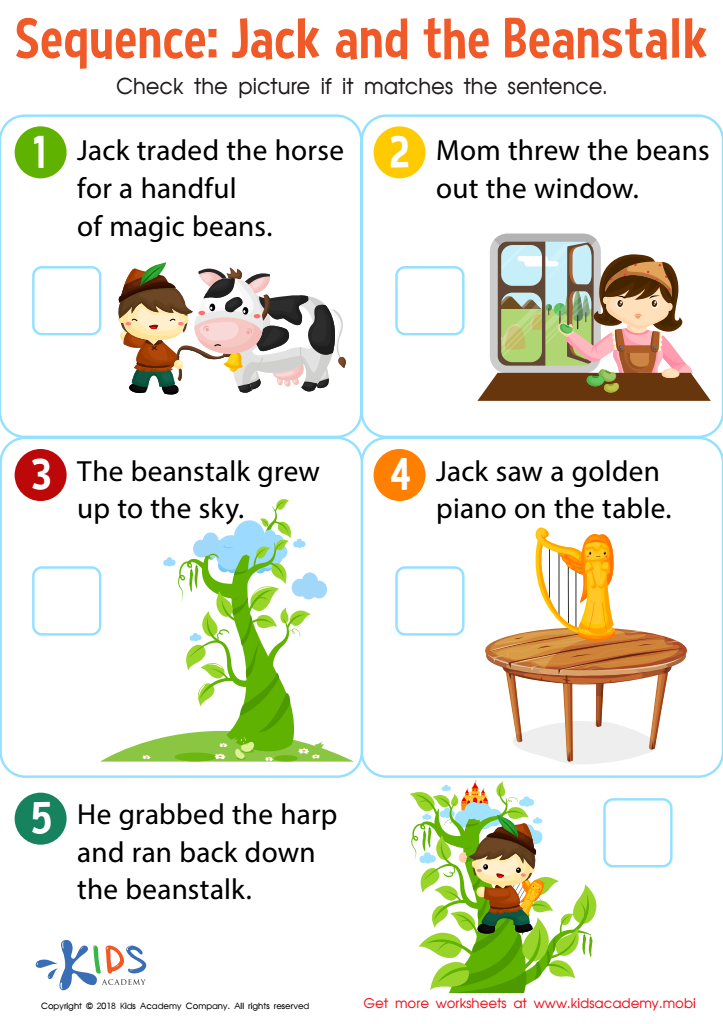
Sequence: Jack and The Beanstalk Worksheet
Ensure your kids are familiar with Jack and the Beanstalk before starting this worksheet. If not, read them the story. In the pdf, there are five pictures with sentences. Read the sentences, ask your kid if it matches the picture, then help them check if it does.
Sequence: Jack and The Beanstalk Worksheet
Worksheet
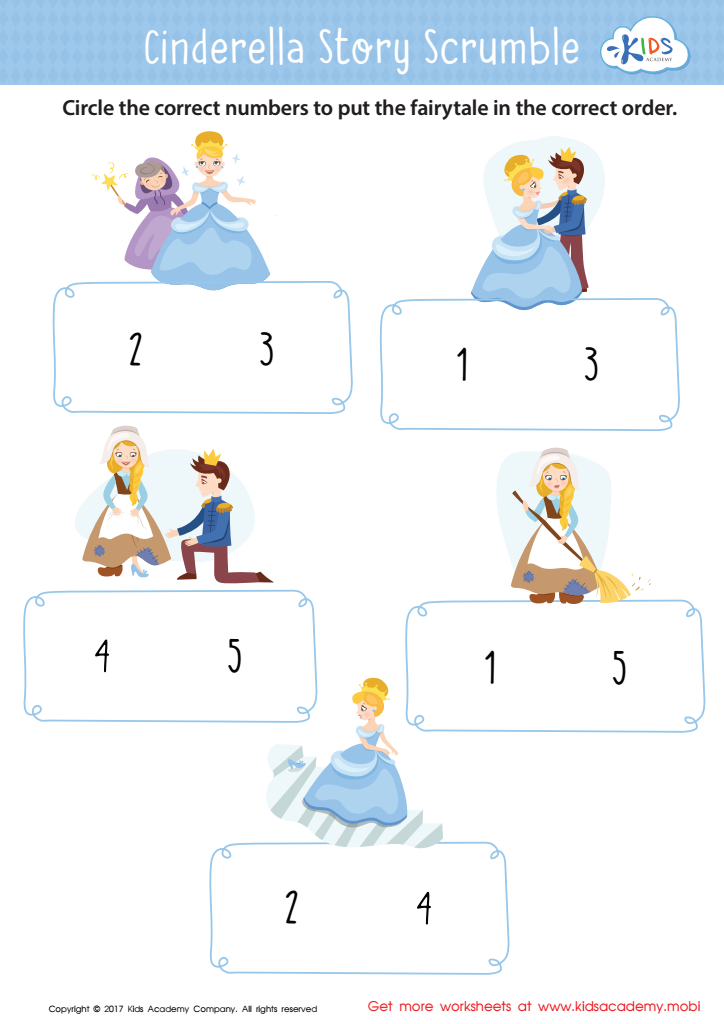
Cinderella Story Sequencing Worksheet
This worksheet helps strengthen reading comprehension skills by getting your child to remember key moments from the Cinderella story. They'll be asked to place pictures in the right order to tell the story.
Cinderella Story Sequencing Worksheet
Worksheet
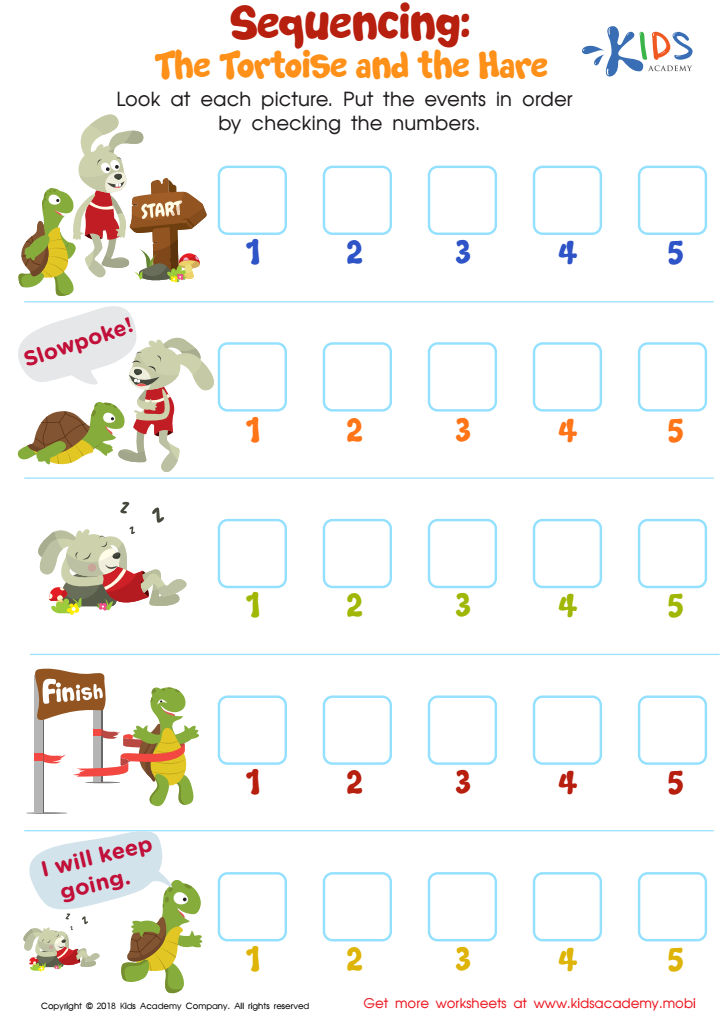
Sequencing: The Tortoise and the Hare Worksheet
Help your child become an independent reader and critical thinker with a sequencing worksheet from Kids Academy! Have them read the classic tale of the tortoise and the hare and use the accompanying worksheet to check their understanding of the story's sequence of events. Have kids identify the correct order of events by selecting the box next to the correct number for each image!
Sequencing: The Tortoise and the Hare Worksheet
Worksheet
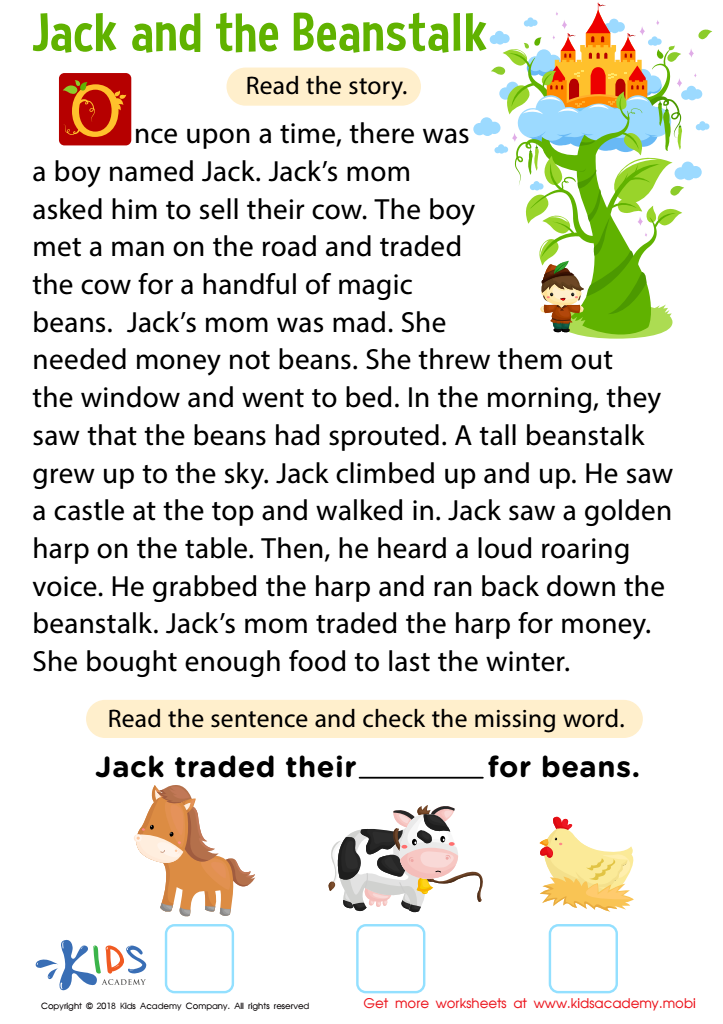
Jack and Beanstalk Worksheet
Story time can be a fun and educational experience for your kids. Read them the classic Jack and the Beanstalk - and even read it twice to help them pay attention. Afterwards, help them fill in the blank on the worksheet to expand their vocabulary and learn more from the story.
Jack and Beanstalk Worksheet
Worksheet
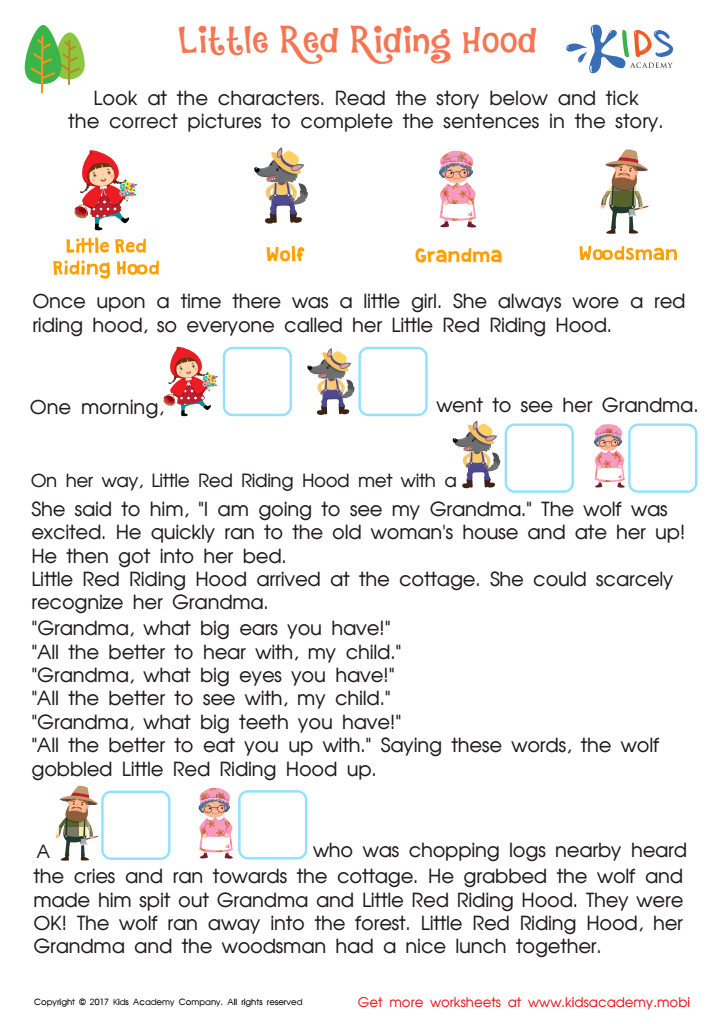
Little Red Riding Hood Printable
Give them this worksheet to practice.
Help your child strengthen their reading skills with this worksheet. It asks them to read Little Red Riding Hood and fill in the missing words using context clues from the text. Encourage your child to look at the surrounding words to determine the answer and get the best results!
Little Red Riding Hood Printable
Worksheet
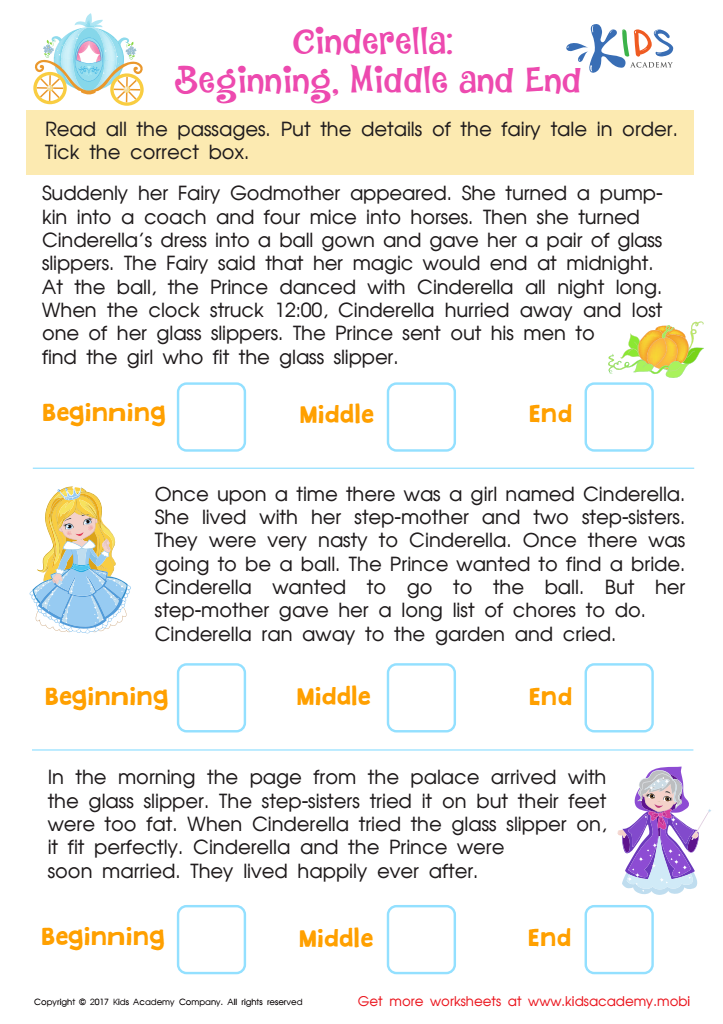
Cinderella: Beginning, Middle and End Worksheet
This Cinderella-themed worksheet provides an excellent opportunity for your child to practice reading comprehension and understanding the basics of story structure.
Help your child learn a key story concept with this Cinderella-themed reading comprehension worksheet. It's an excellent way for them to practice understanding the different parts of a story, from the beginning to the end. Kids will love getting to know the beloved fairy tale of Cinderella!
Cinderella: Beginning, Middle and End Worksheet
Worksheet
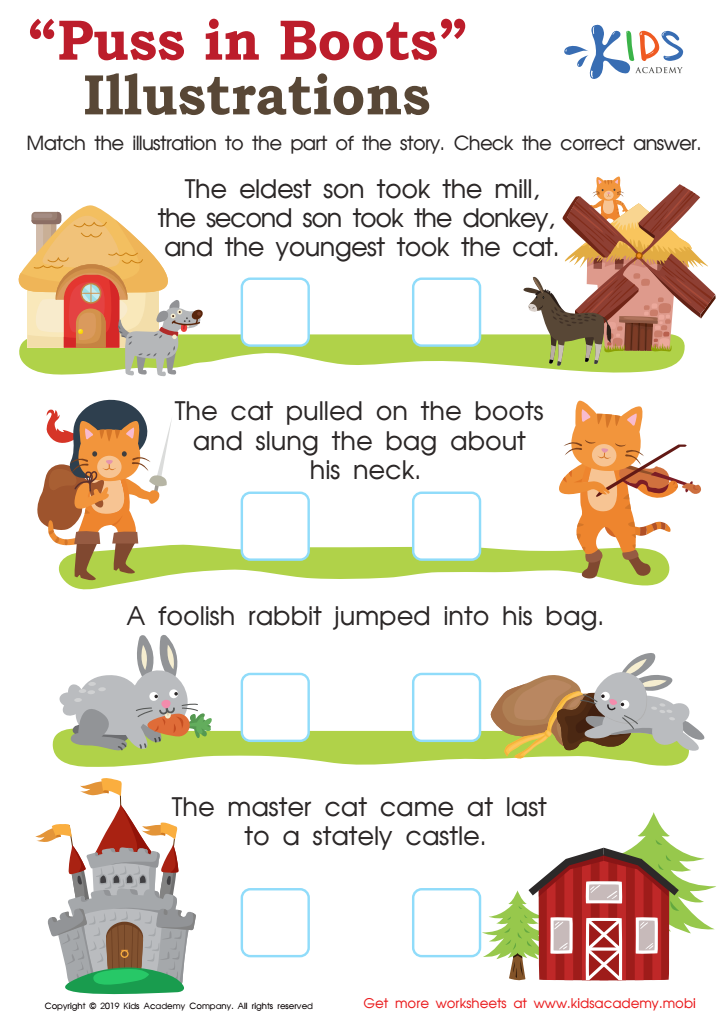
Puss in Boots Illustrations Worksheet
This Puss In Boots Illustrations worksheet is a great way to help kids learn about retelling stories. They'll match images to different parts of the story and check off the correct answer. As they recall events and put them in sequence they'll enjoy this fun and creative activity.
Puss in Boots Illustrations Worksheet
Worksheet
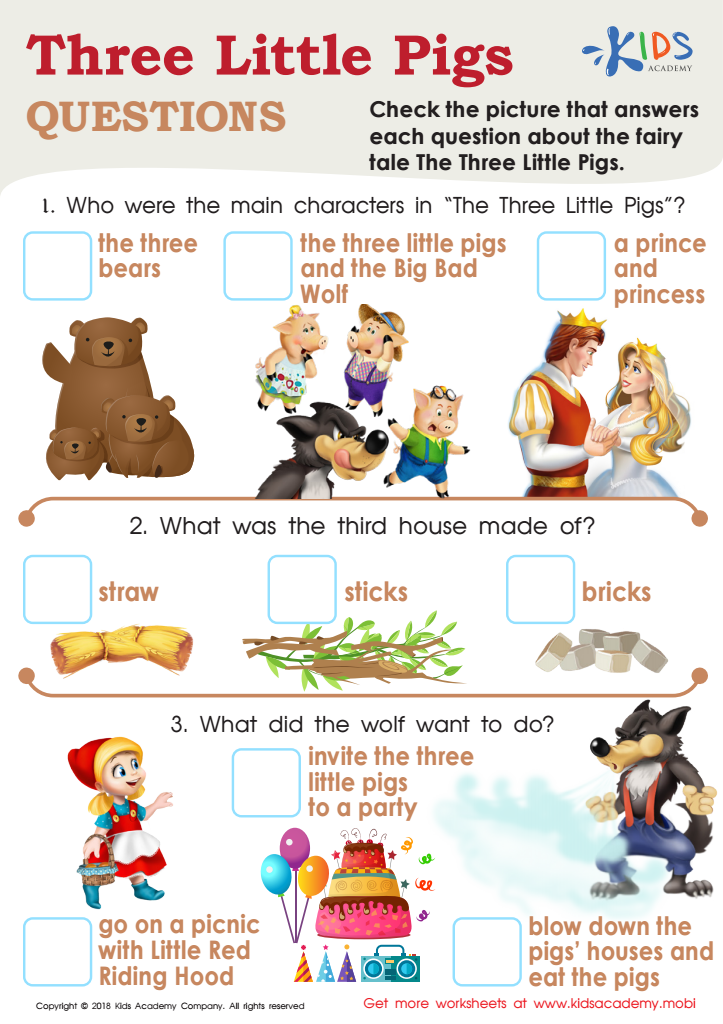
Three Little Pigs Questions Worksheet
Does your kid love bedtime stories? Test their classic fairytale knowledge with this worksheet! If they mention The Three Little Pigs, they're in luck - this pdf has them answering questions based off the classic fairytale. They'll check the picture that answers each question about the story. Is their fairytale knowledge up to scratch?
Three Little Pigs Questions Worksheet
Worksheet
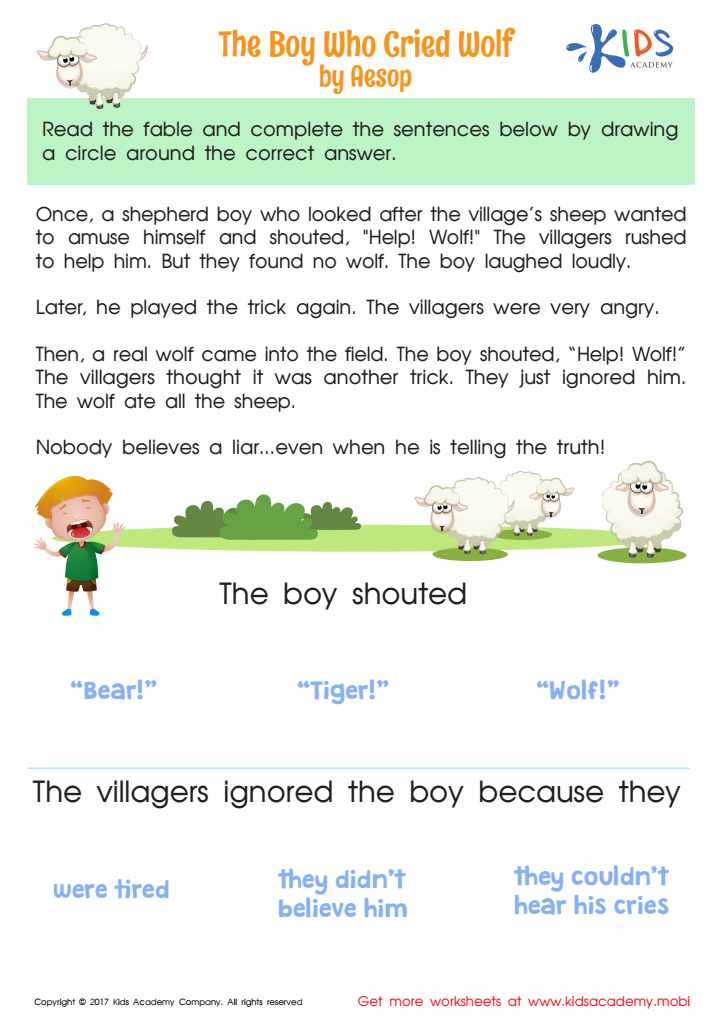
The Boy Who Cried Wolf Worksheet
Test your child's reading comprehension with The Boy Who Cried Wolf worksheet. Read the fable, then answer the questions. Use the text to help your child check their answers are correct. Boost reading skills in a fun, interactive way!
The Boy Who Cried Wolf Worksheet
Worksheet
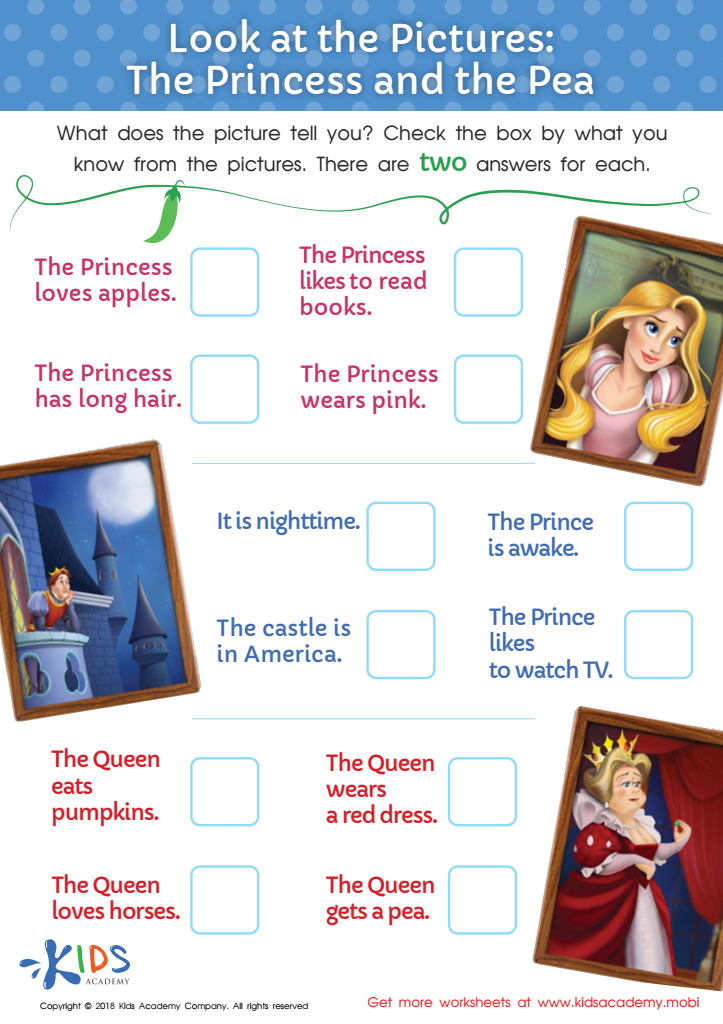
Look at the Pictures: The Princess and the Pea Worksheet
Early readers can benefit from picture clues to understand stories and text. Looking at images helps them learn the meaning of words and comprehend events. Use this worksheet on The Princess and the Pea to let students observe and learn from the pictures. It's a great way to help them comprehend early reading materials.
Look at the Pictures: The Princess and the Pea Worksheet
Worksheet
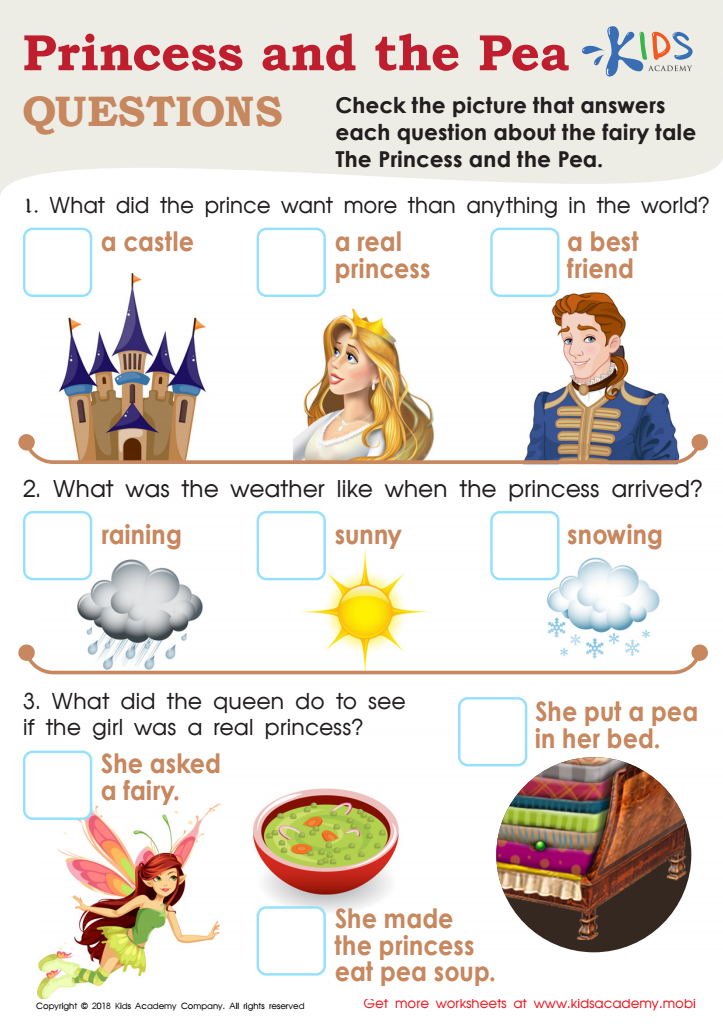
Princess and the Pea Questions Worksheet
Your kid knows The Princess and the Pea inside-out? Test their knowledge with this worksheet. Ask your little one to read the questions and match each one to the picture. It's a fun way to see just how much attention they've paid to their bedtime story.
Princess and the Pea Questions Worksheet
Worksheet
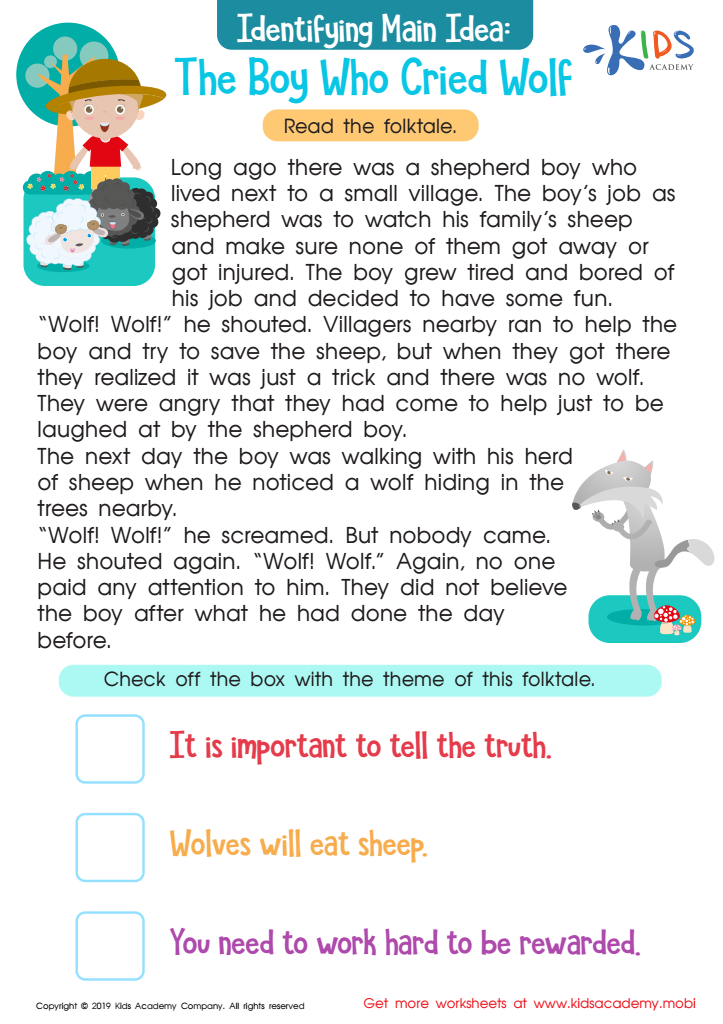
The Boy Who Cried Wolf Part 2 Worksheet
Kids love story time - no doubt they know their favorites! This worksheet tells a story with a theme or main idea. Read it carefully with your kids and ensure they understand every word. Then, help them answer the simple questions at the bottom of the page.
The Boy Who Cried Wolf Part 2 Worksheet
Worksheet
Join Kids Academy for Free
Who is primarily going to use this learning content?








Story sequencing is a critical literacy skill that helps children aged 6-9 understand the structure of narratives, enhancing their reading comprehension and writing abilities. For parents and teachers, fostering this skill is vital for several reasons. Firstly, story sequencing aids in developing cognitive skills; it encourages children to organize thoughts and events logically, which is essential for critical thinking. By identifying the beginning, middle, and end of a story, children learn to grasp the causes and effects within narratives, allowing them to make connections and predictions.
Moreover, mastering sequencing helps boost vocabulary and language skills. As children recount stories or summarize plots in sequence, they practice using new words and phrases in context. This reinforces their understanding of language structure and improves their communication.
In addition, story sequencing promotes engagement with texts. Children become more immersed in stories when they comprehend the flow of events, thereby fostering a lifelong love of reading. For parents, understanding their child’s progress in sequencing can inform reading choices at home, while teachers can design targeted activities to enhance this skill within the classroom.
Overall, supporting story sequencing is crucial for building foundational literacy skills necessary for academic success and personal enjoyment of literature.








