Understanding adjectives Normal Reading Worksheets for Ages 6-9
3 filtered results
-
From - To
Boost your child's reading skills with our 'Understanding Adjectives' worksheets designed for ages 6-9. These engaging printables from Kids Academy offer fun ways for young learners to discover and use adjectives effectively. Brightly illustrated and thoughtfully designed, each worksheet helps kids identify and apply adjectives, enhancing their descriptive writing and comprehension abilities. Perfect for classroom or home learning, our worksheets provide clear examples and exercises that make mastering adjectives an enjoyable experience. Foster a love for reading and language arts with our expertly crafted resources, guiding your child along the path to literary success!
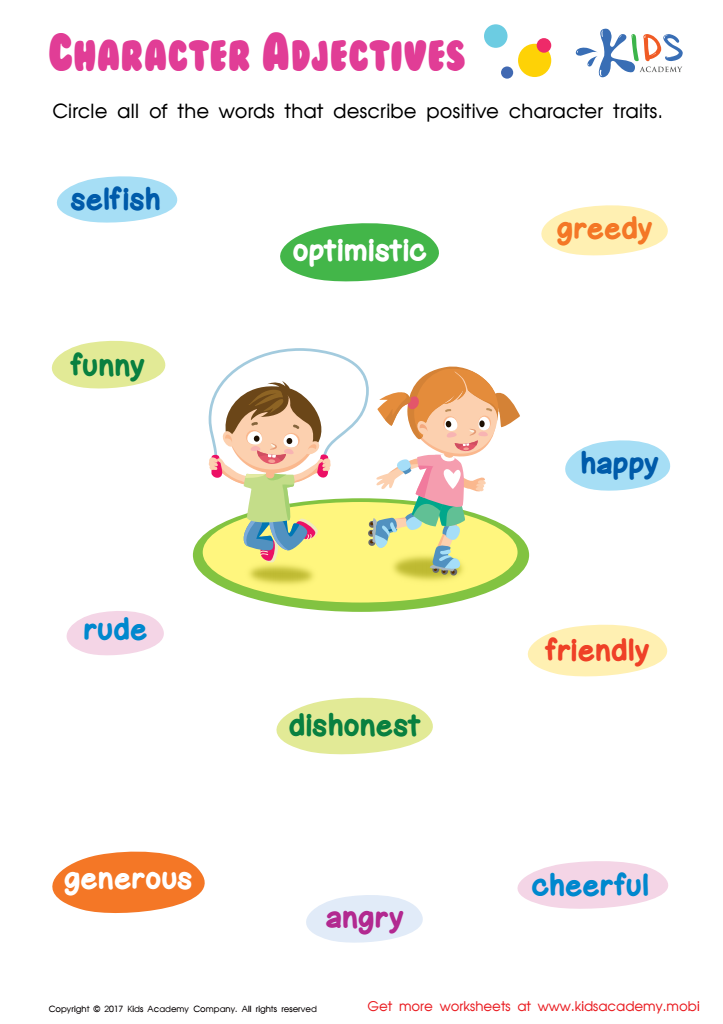
Character Adjectives Worksheet
 Assign to My Students
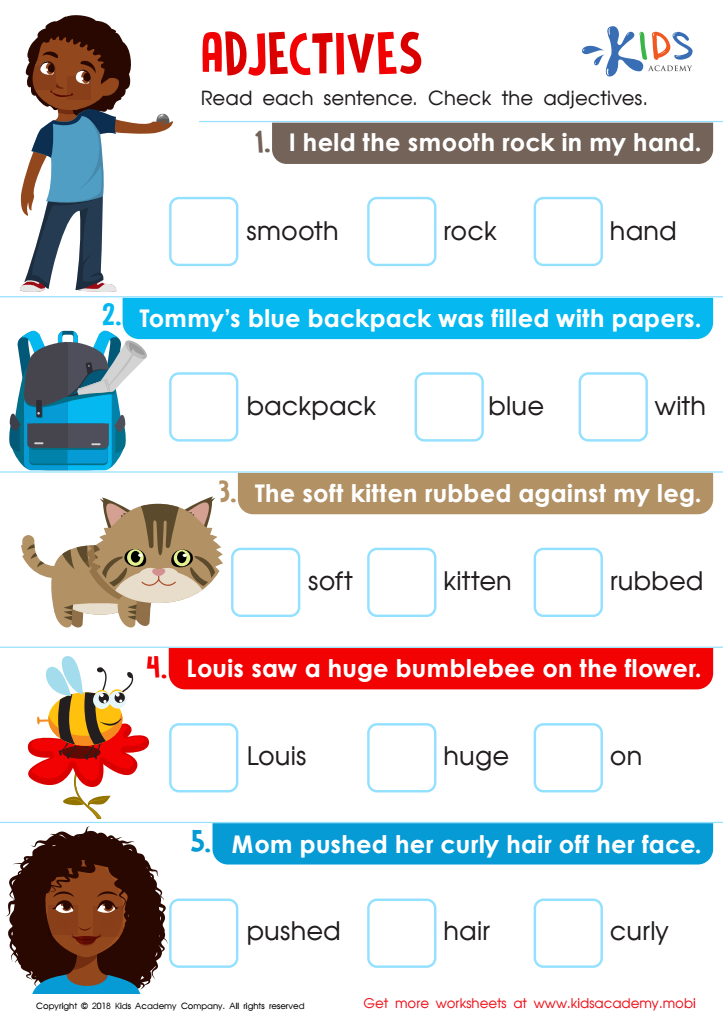
Adjectives Worksheet
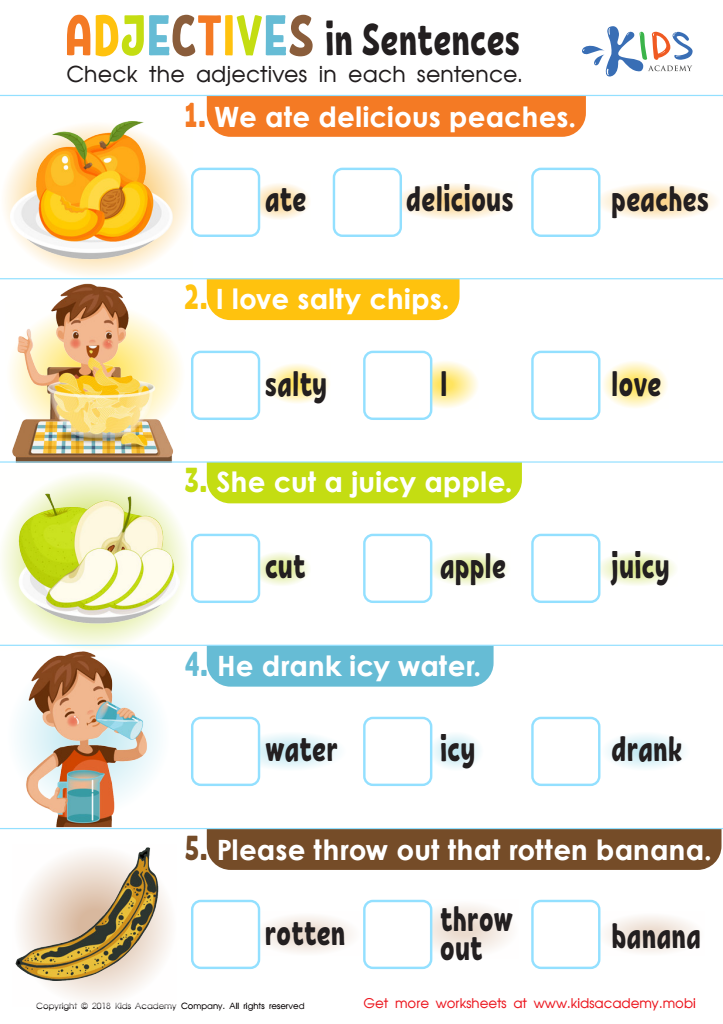
Adjectives in Sentences Worksheet





.jpg)

Understanding adjectives and promoting normal reading habits in children aged 6-9 are crucial for several reasons. Adjectives add rich detail to language, enabling children to describe the world more vividly and expressively. This developmental stage, often coinciding with early elementary grades, is a prime time for vocabulary expansion. By grasping the use of adjectives, children can enhance their storytelling, comprehension, and descriptive writing skills, which are foundational for academic success.
Normal reading habits during these formative years are equally important. Regular reading practice helps children become proficient readers, fosters a lifelong love for reading, and positively impacts their cognitive development. Through exposure to a variety of texts, including those rich in adjectives, children can build their language skills, improve their concentration, and nurture their imagination. Additionally, reading together as a family or in a classroom setting strengthens social bonds and provides a supportive environment for learning.
Parents and teachers should foster an appreciation for adjectives and normal reading habits because these elements contribute to a child's overall language capability, critical thinking, and intellectual curiosity. Encouraging these skills and habits paves the way for continued academic achievement, effective communication, and a better understanding of the world around them.








