Critical Thinking Normal Reading Comprehension Worksheets for Ages 6-9 - Page 2
34 filtered results
-
From - To
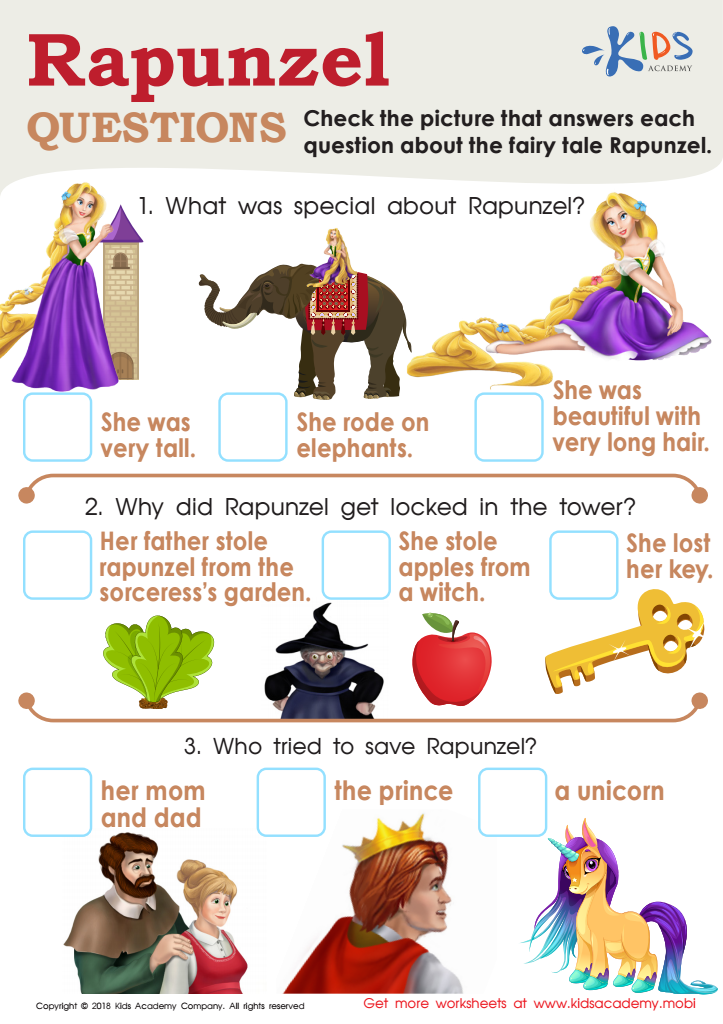
Rapunzel Questions Worksheet
 Assign to My Students
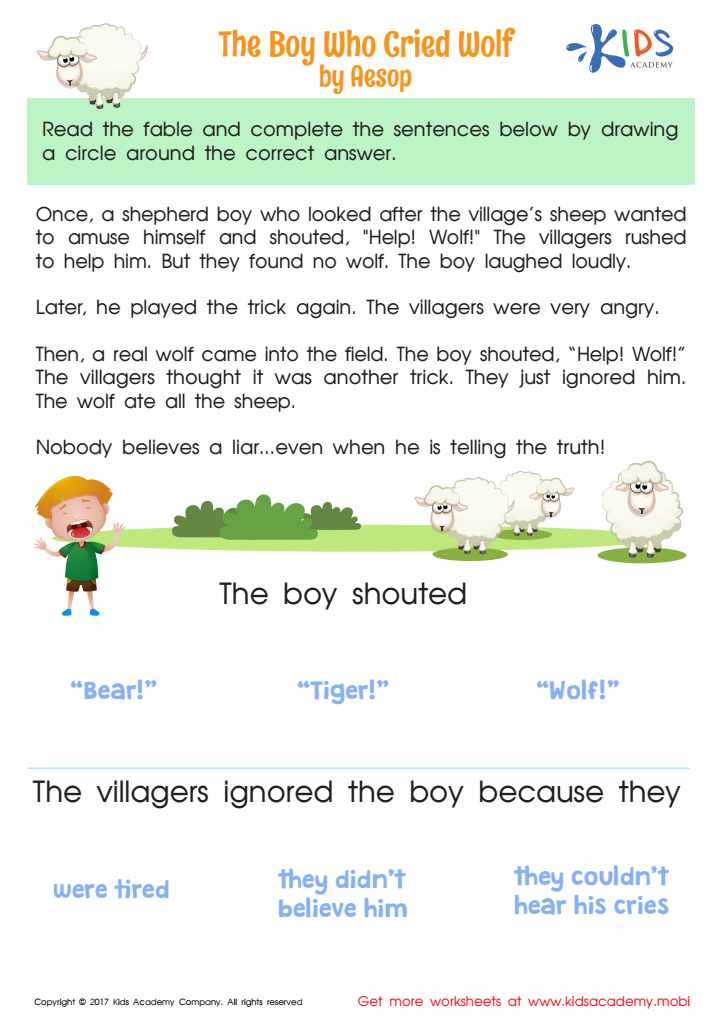
The Boy Who Cried Wolf Worksheet
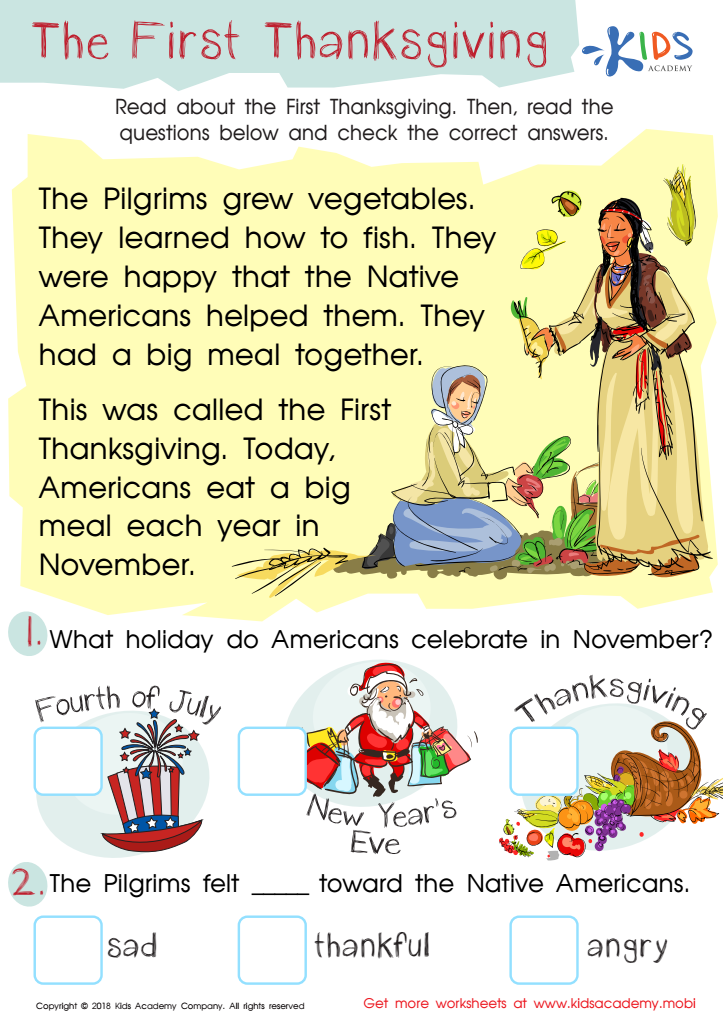
Assessment: First Thanksgiving Worksheet
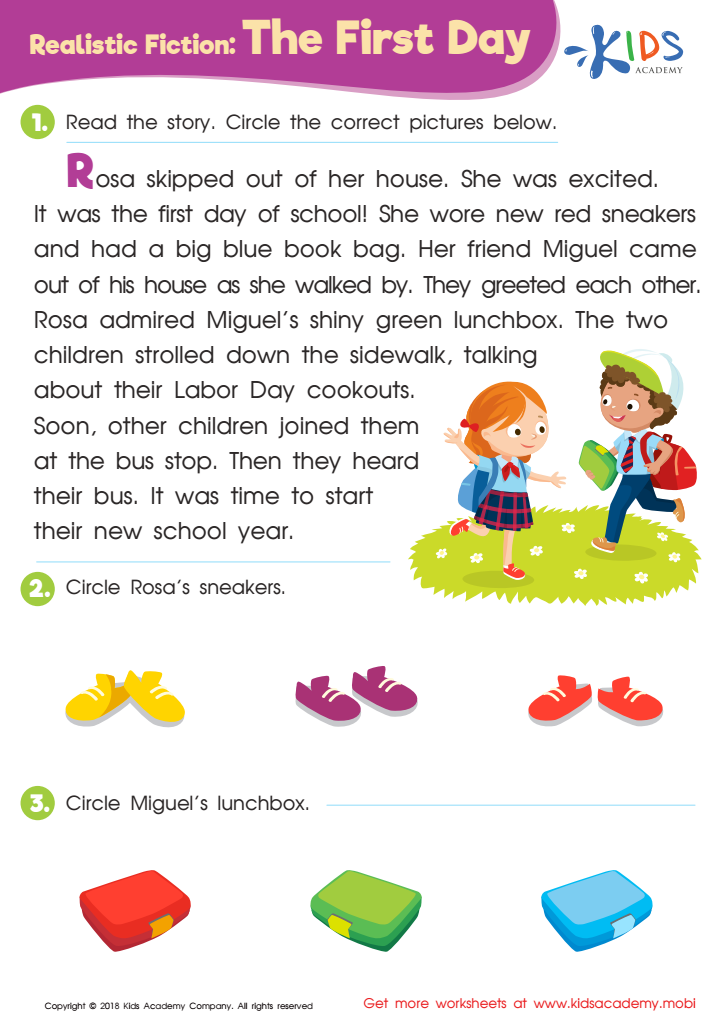
Realistic Fiction: The First Day Worksheet
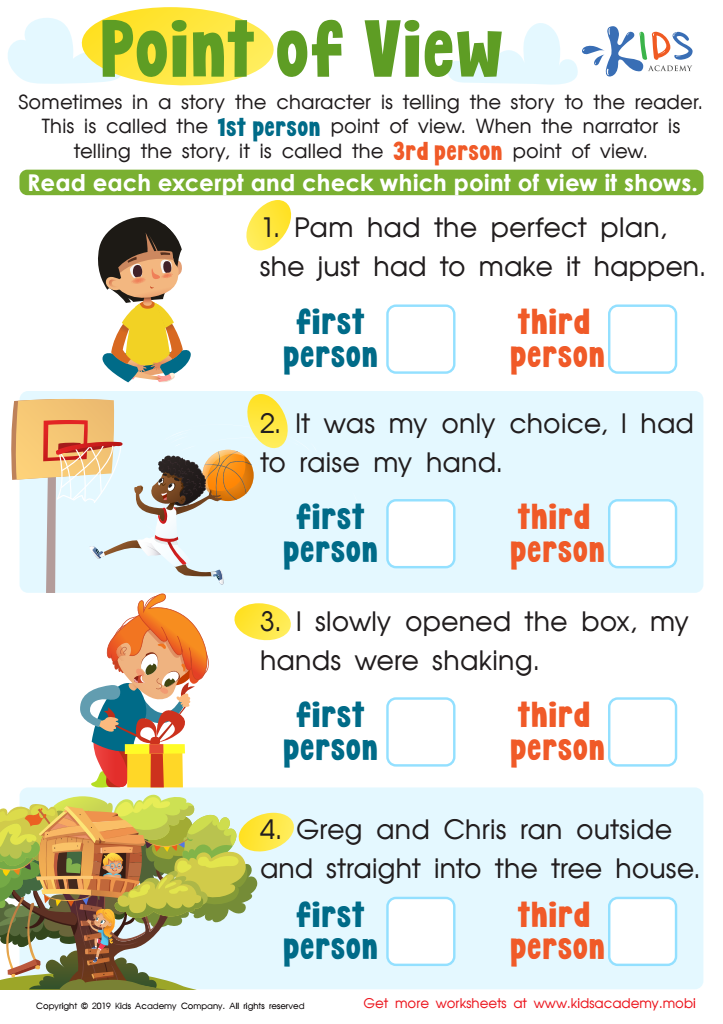
Point of View Printable
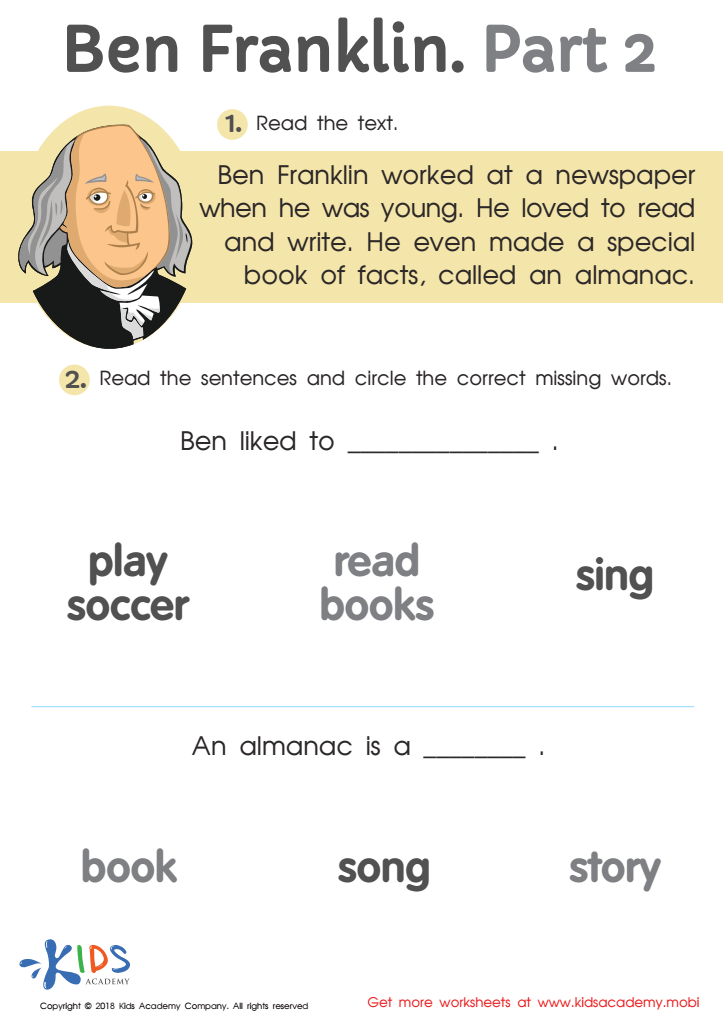
Ben Franklin Part 2 Worksheet
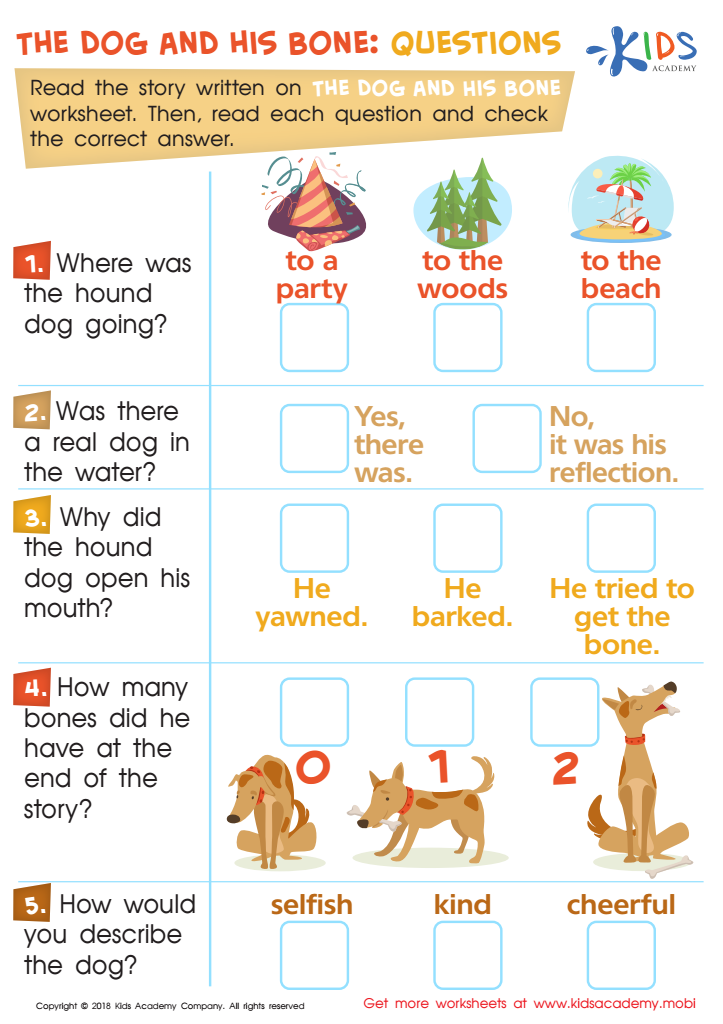
The Dog and His Bone: Questions Worksheet
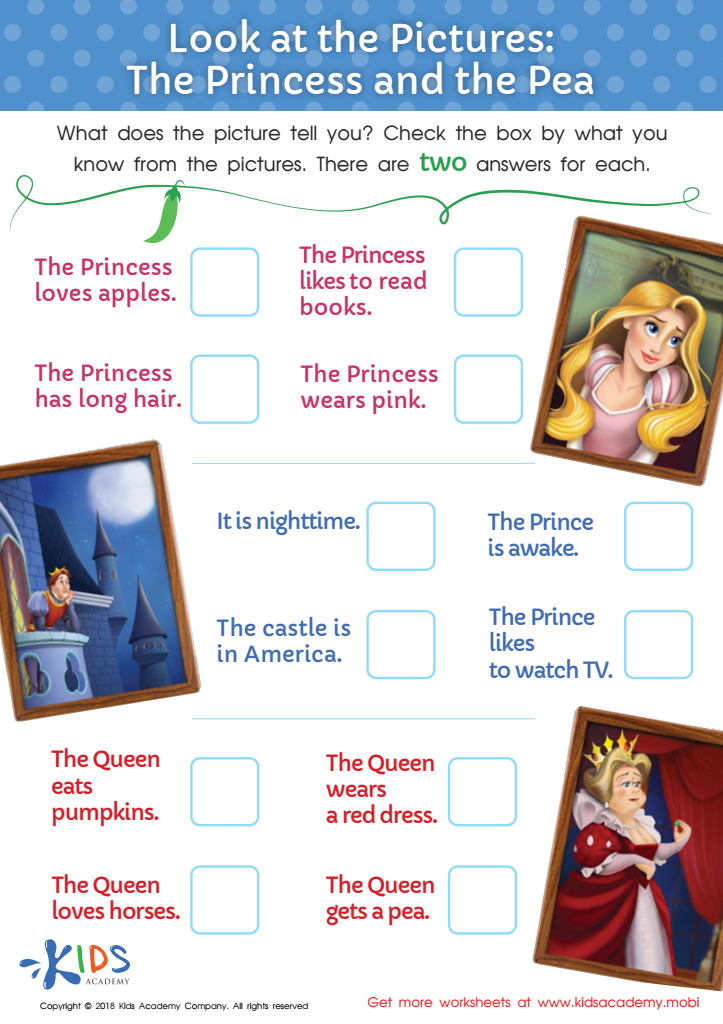
Look at the Pictures: The Princess and the Pea Worksheet
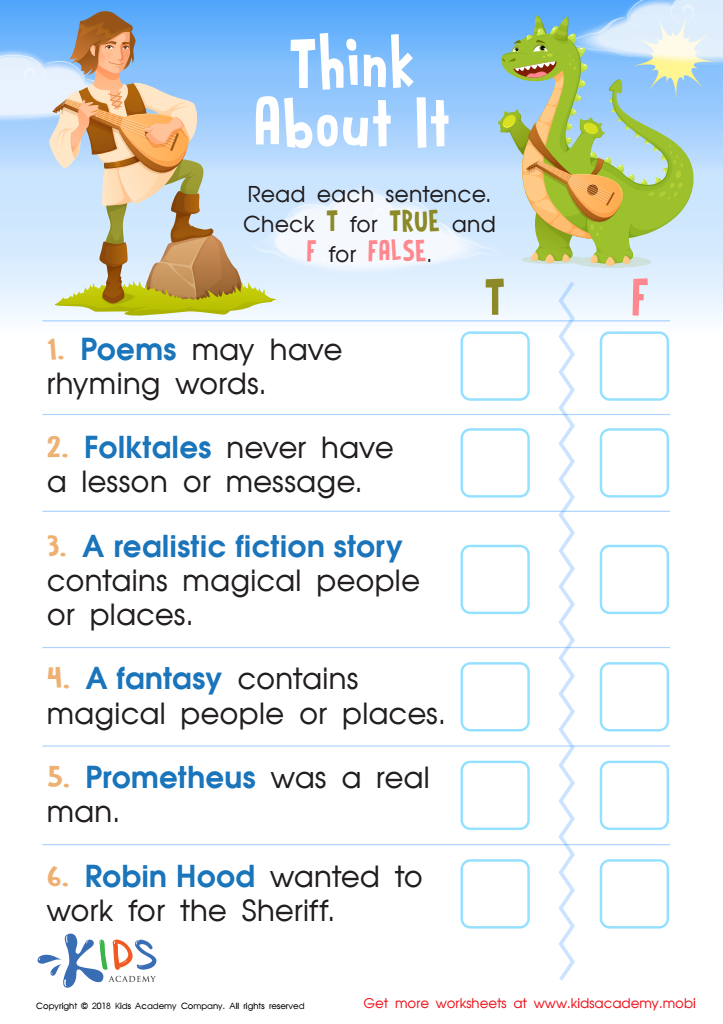
Think About It: Assessment Worksheet
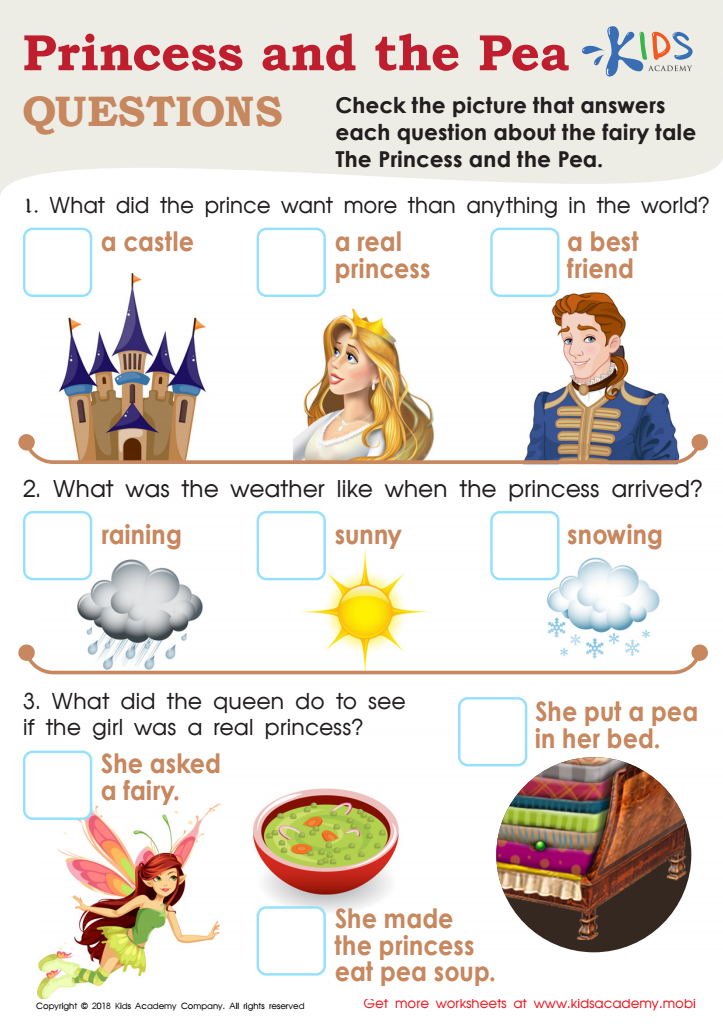
Princess and the Pea Questions Worksheet








Parents and teachers should prioritize critical thinking and reading comprehension in children aged 6-9 because these skills are foundational for lifelong learning and success. At this developmental stage, children are honing their cognitive abilities, and fostering critical thinking encourages them to analyze, evaluate, and synthesize information rather than just memorizing it.
Critical thinking empowers young readers to engage with texts more deeply, enabling them to ask questions, make predictions, and draw connections between ideas. This not only enhances comprehension but also stimulates curiosity and creativity. When children learn to think critically about what they read, they begin to understand varied perspectives and contexts, which is vital in an increasingly complex world.
Furthermore, strong reading comprehension skills equipped with critical thinking can significantly impact academic performance across subjects. Children who can interpret, question, and summarize texts are better prepared for more advanced learning experiences. Also, these competencies contribute to emotional and social development by helping children navigate discussions, collaborate with peers, and express their ideas effectively.
By focusing on critical thinking and reading comprehension, parents and teachers create a solid academic foundation, fostering independent thinkers who are prepared for future challenges.








