
Visual interpretation Normal Reading Comprehension Worksheets for Ages 6-9
5 filtered results
Difficulty Level
Grade
Age
-
From - To
Subject
Activity
Standards
Unlock the power of visual interpretation with our specially crafted reading comprehension worksheets designed for children aged 6 to 9. These engaging activities enhance students' abilities to analyze and understand visual data, such as charts, pictures, and diagrams, while building essential reading skills. Each worksheet encourages critical thinking and improves comprehension by guiding children to connect text with visuals. Perfect for classroom and home use, our worksheets foster creativity and curiosity, making learning fun and effective. Boost your child's confidence and competence in reading with our vibrant and interactive visual interpretation resources! Explore the journey of comprehension today!
Favorites
With answer key
Interactive
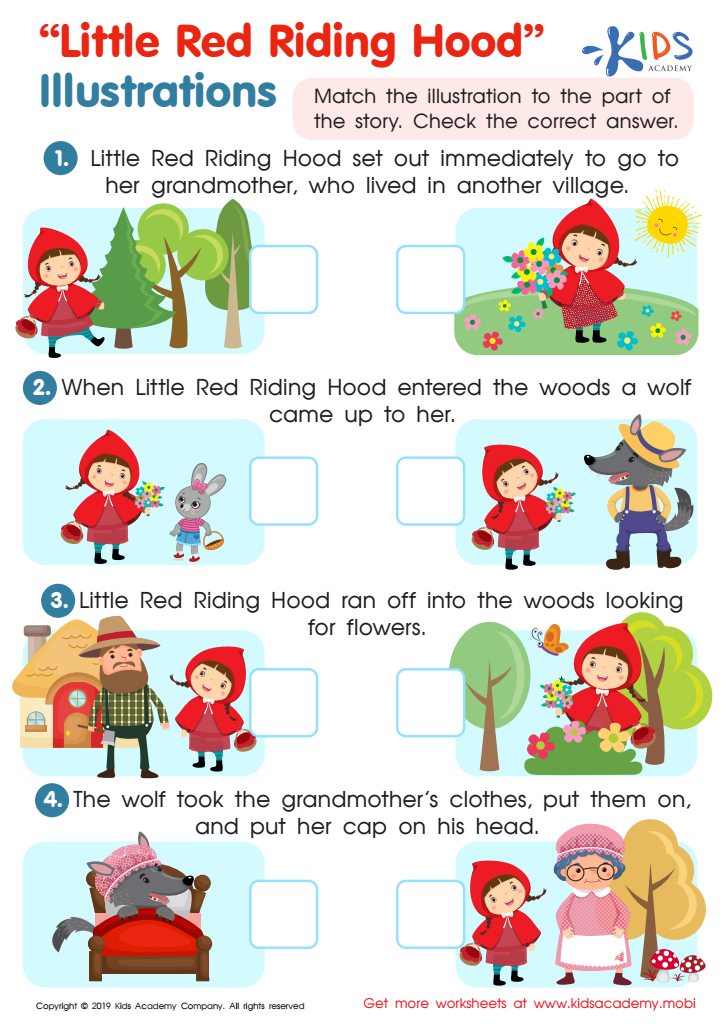
Little Red Riding Hood: Illustrations Worksheet
Comprehension is improved by having young readers recall and retell stories. This worksheet uses colorful illustrations of the fairytale Little Red Riding Hood. Children use their comprehension skills and strategy to match illustrations to the story parts, check off the appropriate boxes and use the pictures as clues.
 Assign to My Students
Little Red Riding Hood: Illustrations Worksheet
Worksheet
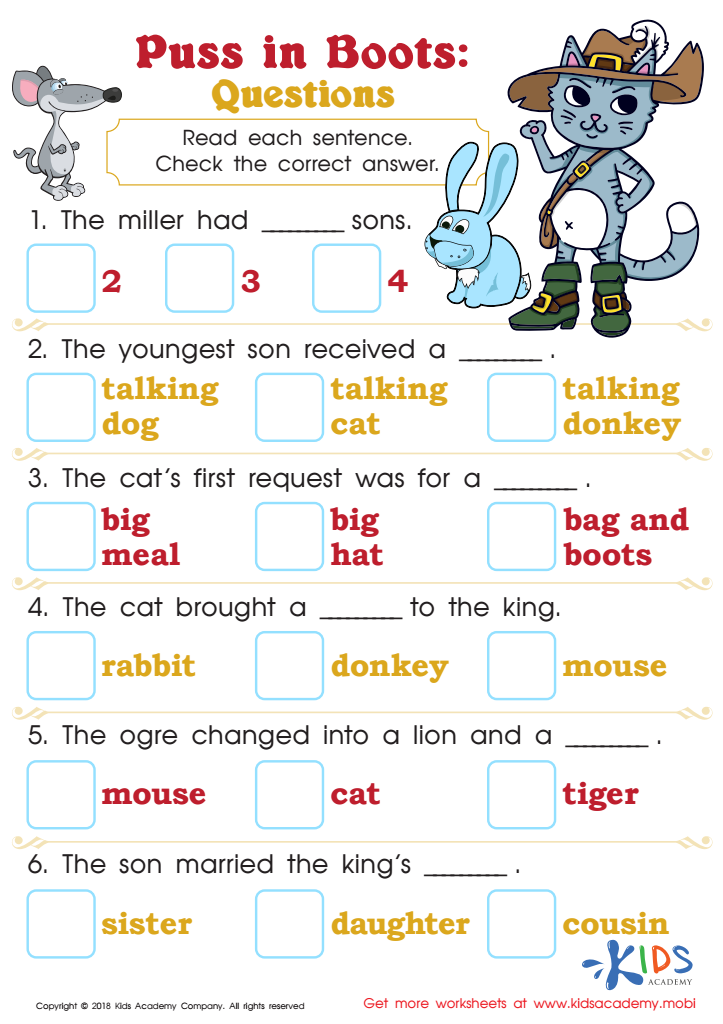
Puss in Boots: Questions Worksheet
This worksheet contains questions to be checked with boxes for the correct answers. It also has pictures of animals; ask kids to identify them, noting the objects with them. Read the questions and have kids provide the answers. Help them check the boxes for the right answer.
Puss in Boots: Questions Worksheet
Worksheet
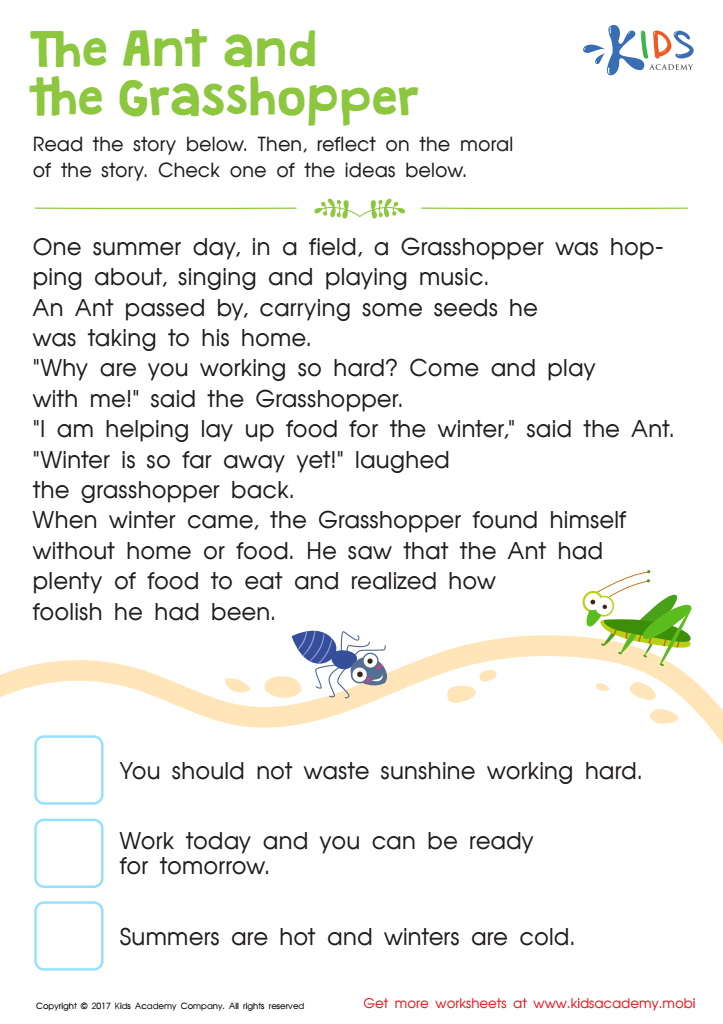
The Ant and The Grasshopper Printable
Aesop's fables have clear messages, which make them memorable and loved by children and adults. Use Kids Academy's ant and grasshopper worksheet to help your child reflect on stories and discover the life lesson.
The Ant and The Grasshopper Printable
Worksheet
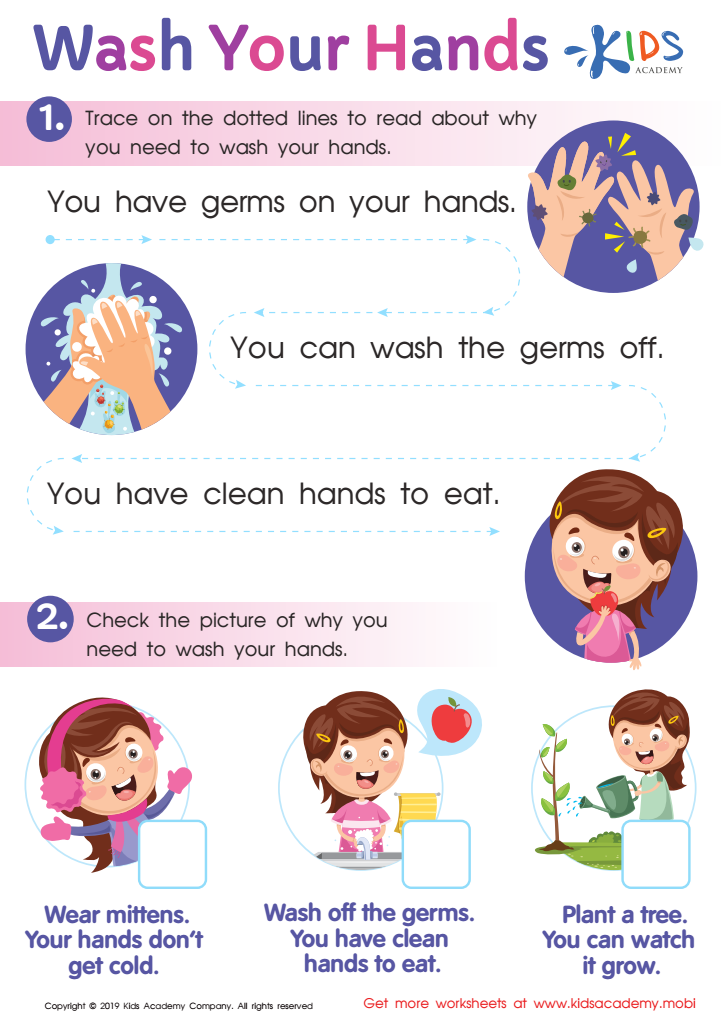
Wash Your Hands Worksheet
Kids learn best when they understand why they need to do something. This free worksheet uses traceable lines and pictures to teach them about germs and why washing hands is important. The child follows a left-to-right sequence and must check the correct picture to show they understand.
Wash Your Hands Worksheet
Worksheet
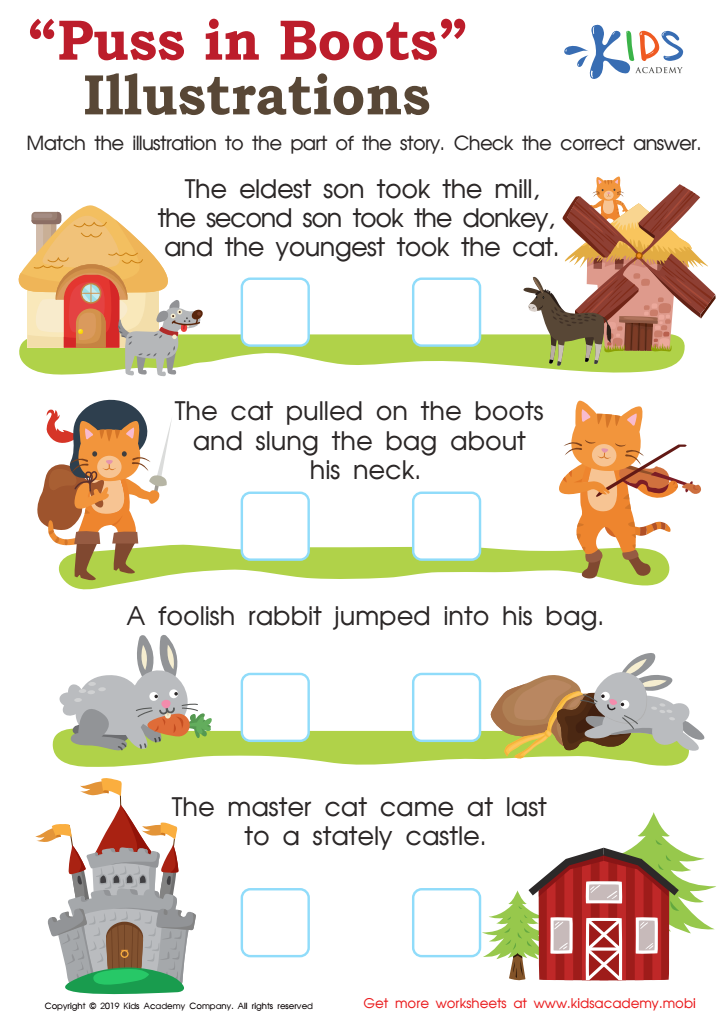
Puss in Boots Illustrations Worksheet
This Puss In Boots Illustrations worksheet is a great way to help kids learn about retelling stories. They'll match images to different parts of the story and check off the correct answer. As they recall events and put them in sequence they'll enjoy this fun and creative activity.
Puss in Boots Illustrations Worksheet
Worksheet
Join Kids Academy for Free
Who is primarily going to use this learning content?







Visual interpretation is a crucial component of reading comprehension for children aged 6-9. At this developmental stage, children begin to develop the ability to extract meaning not only through words but also through visual cues such as illustrations, graphs, and charts. By enhancing visual interpretation skills, children can improve their overall comprehension, making connections between text and images, which deepens their understanding of the material.
Parents and teachers should prioritize visual interpretation because it bolsters critical thinking and analytical skills. When children learn to analyze pictures alongside written content, they cultivate the ability to infer, predict, and summarize information more effectively. Additionally, visual literacy fosters creativity, encourages engagement with texts, and enhances retention, making learning more enjoyable and effective.
Moreover, strong visual interpretation skills can support struggling readers and bridge gaps in literacy. When children can interpret visual elements, they gain confidence and motivation, which leads to a more positive attitude towards reading. In an increasingly visual world—where information is often presented through various media—fostering these skills early on equips children with the tools they need for both academic success and everyday life. Ultimately, prioritizing visual interpretation is an investment in their future learning experiences.








