Vocabulary improvement Normal Reading Comprehension Worksheets for Ages 6-9
3 filtered results
-
From - To
Enhance your child’s vocabulary with our engaging Normal Reading Comprehension Worksheets designed for ages 6-9! These thoughtfully crafted worksheets focus on boosting word knowledge while ensuring enjoyable and interactive reading experiences. Children will explore new vocabulary through relatable texts, helpful visuals, and relevant exercises that reinforce comprehension skills. Perfect for classroom use or at-home learning, our resources encourage critical thinking and nurture a love for reading. Help your little ones develop essential language skills and prepare them for academic success! Explore our collection today and watch their confidence grow as they master vocabulary and reading comprehension.
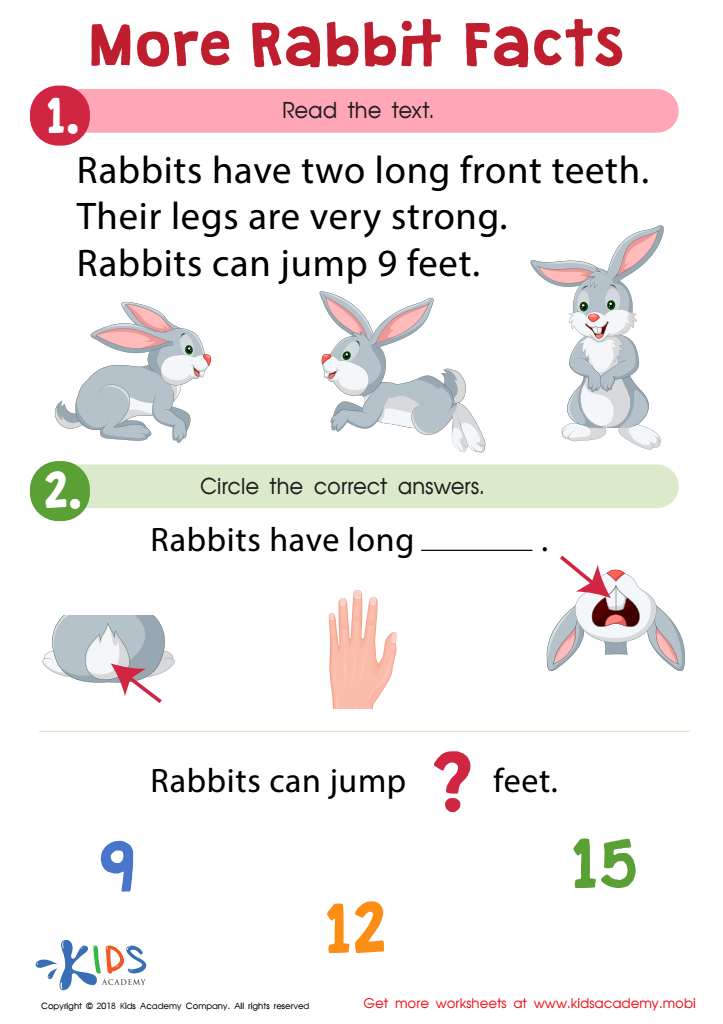
More Rabbit Facts Worksheet
 Assign to My Students
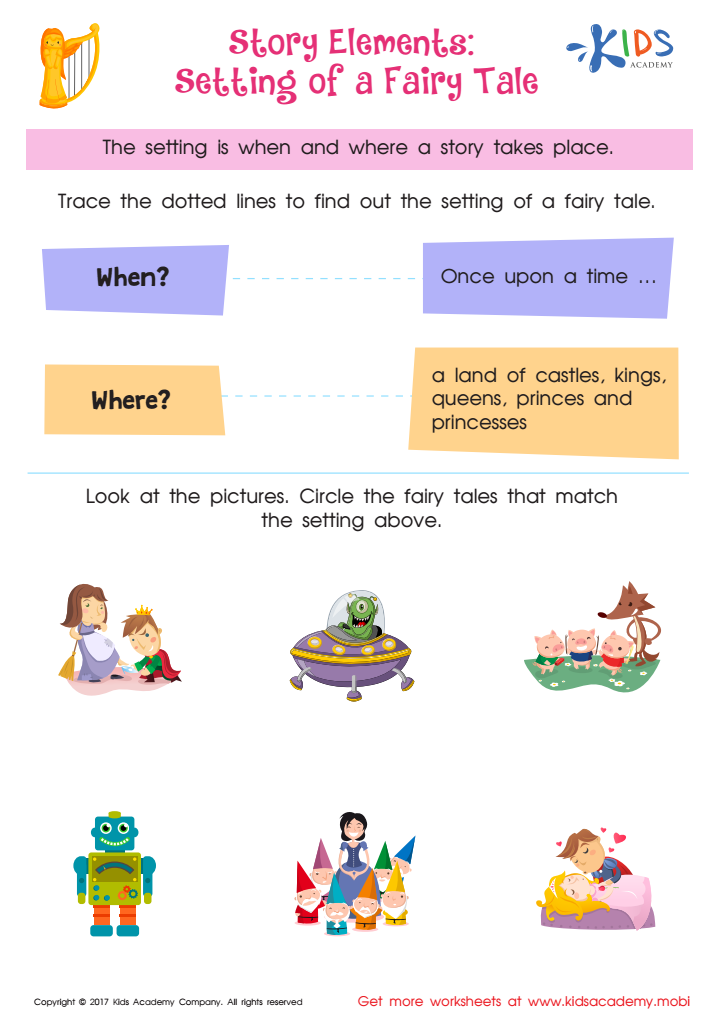
Story Elements: Setting of a Fairy Tale Printable
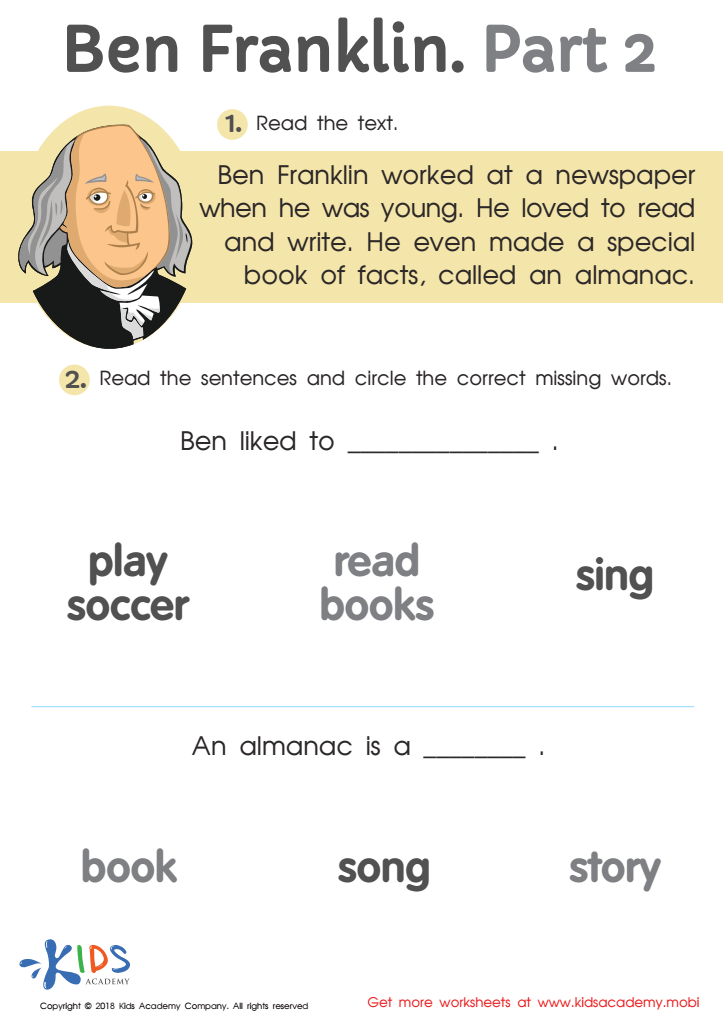
Ben Franklin Part 2 Worksheet








Vocabulary improvement is crucial for children aged 6-9 as it directly impacts their reading comprehension and overall academic success. At this age, children are transitioning from learning to read to reading to learn. Enhanced vocabulary allows them to understand texts more deeply, making connections to their experiences, emotions, and knowledge.
When children possess a robust vocabulary, they are more likely to grasp the meaning of words in context, which reduces frustration and boosts their confidence in reading. This engagement leads to increased motivation, promoting a love for reading and learning. Furthermore, a rich vocabulary helps in developing critical thinking and writing skills, as children learn to express themselves more effectively.
Teachers and parents play a pivotal role in this development by incorporating vocabulary-building activities in their teaching and conversational practices. Engaging children in discussions about their reading materials, encouraging them to use new words in their daily conversations, and introducing them to diverse literature fosters a nurturing environment for vocabulary expansion. Overall, prioritizing vocabulary improvement sets the foundation for a lifetime of effective communication, enhanced academic performance, and a broader understanding of the world.