Moral understanding Normal Reading Fiction Worksheets for Ages 6-9
5 filtered results
-
From - To
Unlock your child’s potential with our “Moral Understanding Normal Reading Fiction Worksheets” designed specifically for ages 6-9. These engaging worksheets encourage young readers to explore important moral lessons embedded in fiction, enhancing both comprehension and critical thinking skills. Each activity promotes discussions about right and wrong, empathy, and the consequences of actions, helping children develop a solid moral foundation. By blending creativity with structured learning, our resources provide an enjoyable way for kids to connect with stories and internalize valuable life lessons. Perfect for home or classroom use, these worksheets strive to make reading a meaningful and impactful experience for early learners.
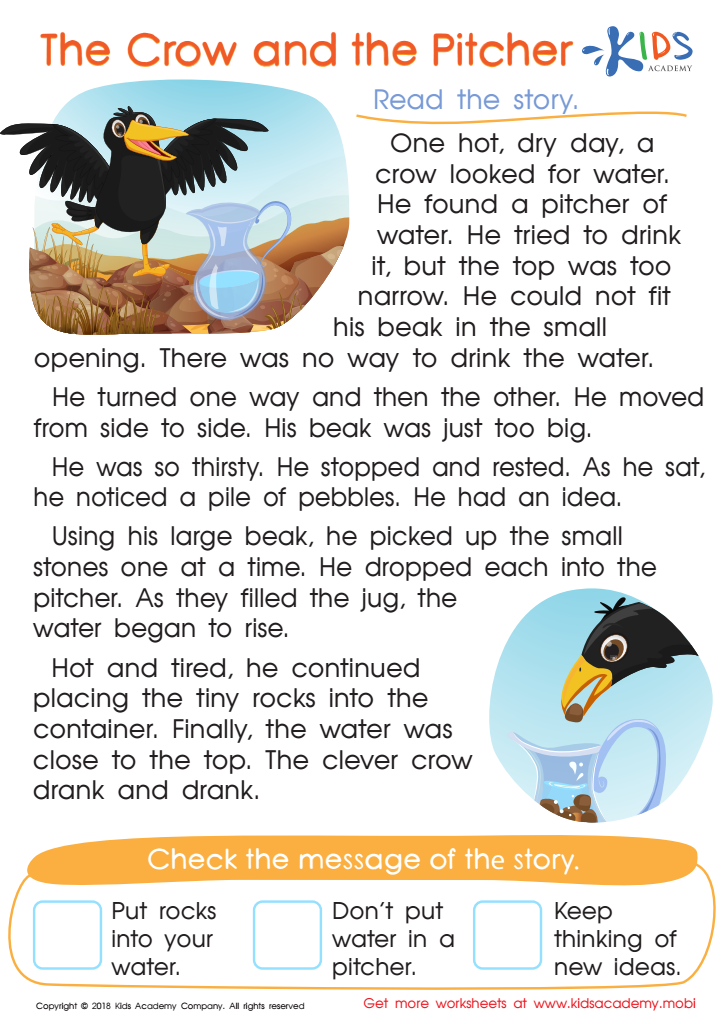
The Crow and the Pitcher Worksheet
 Assign to My Students
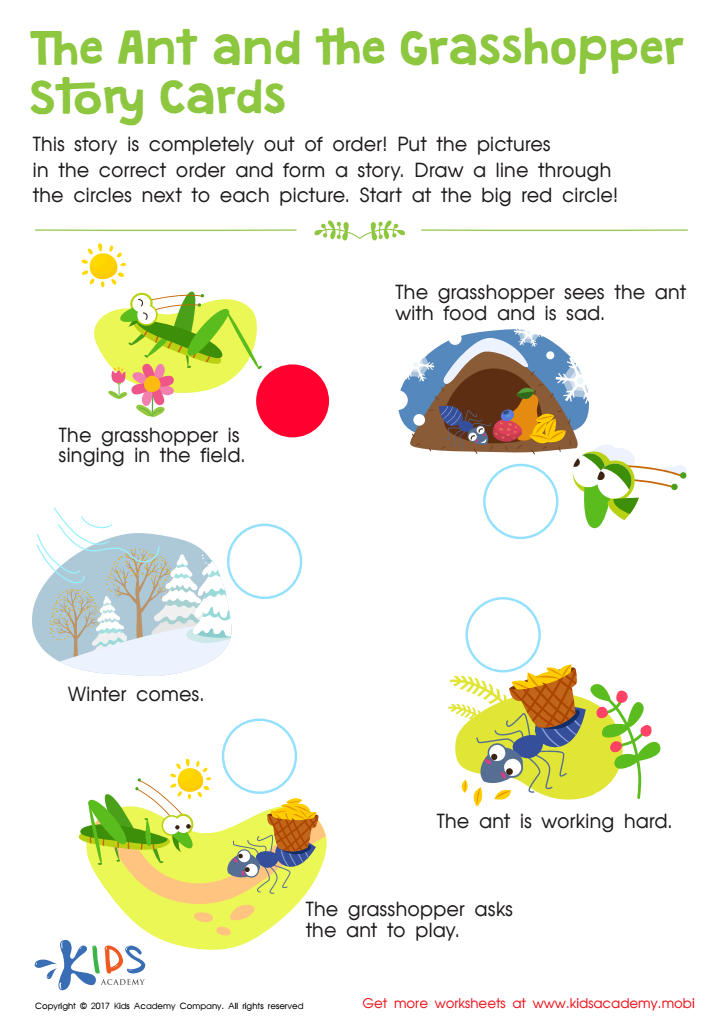
The Ant and The Grasshopper Worksheet
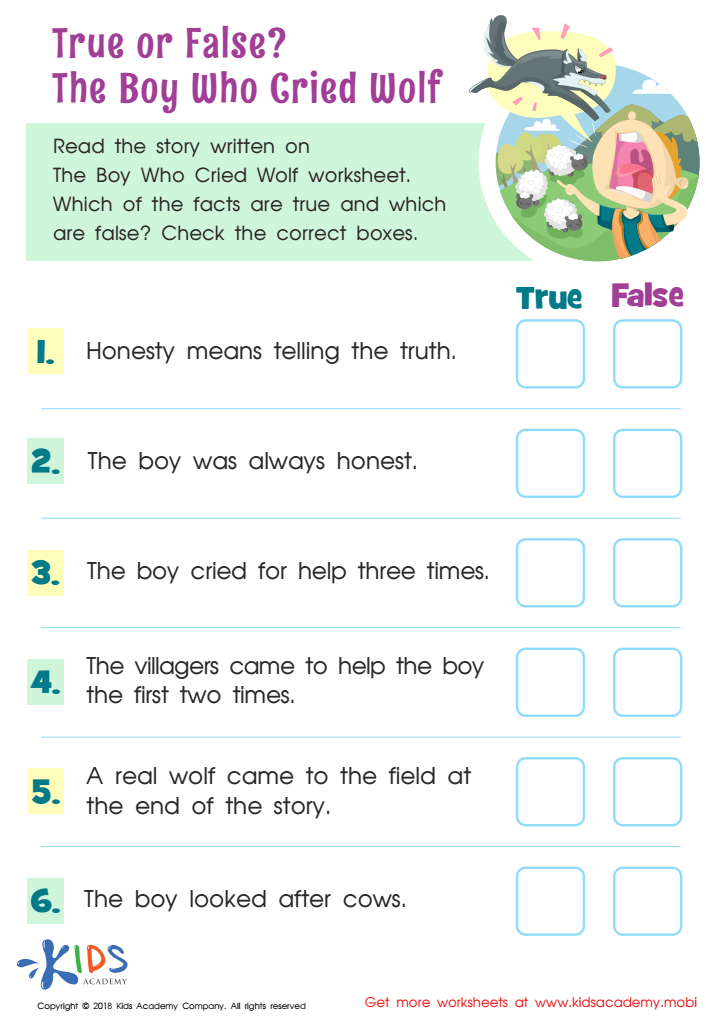
True or False? The Boy Who Cried Wolf Worksheet
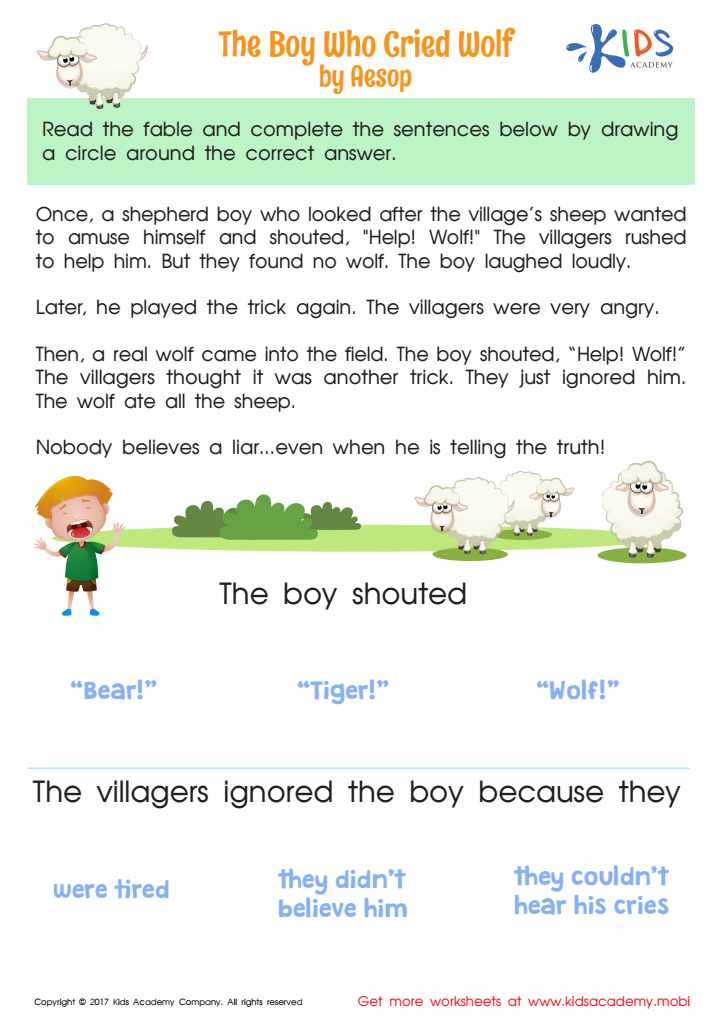
The Boy Who Cried Wolf Worksheet
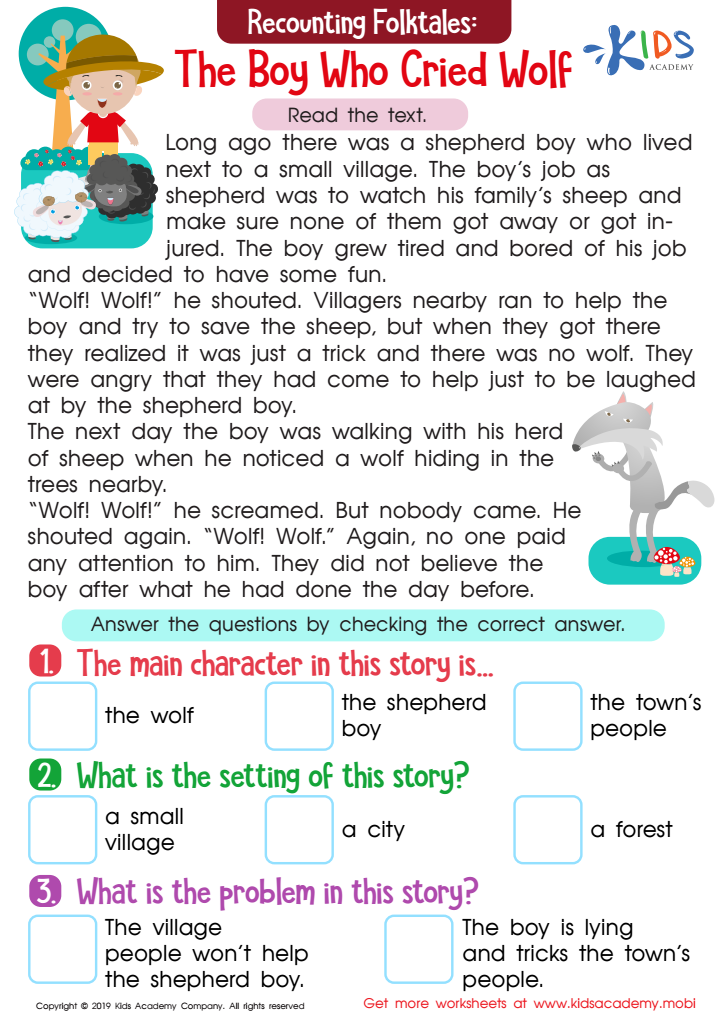
The Boy Who Cried Wolf Part 1 Worksheet





.jpg)

Parents and teachers should prioritize moral understanding through reading fiction for ages 6-9, as story-driven exploration is essential for children's emotional and social development. Engaging with fiction allows children to encounter diverse characters, situations, and moral dilemmas. This interaction fosters empathy, critical thinking, and the ability to distinguish right from wrong, foundational skills as children navigate their social environments.
Moreover, stories present relatable contexts that foster discussions about values such as kindness, honesty, and fairness. Reading about characters’ choices teaches kids how their actions affect others, thus reinforcing social responsibility. As they reflect on the consequences faced by characters, children become more adept at understanding different perspectives and the nuances of interpersonal relationships.
Additionally, this age group is at a critical stage of cognitive growth; incorporating moral themes in literature encourages them to question and connect with complex ideas, laying the groundwork for wise decision-making.
By nurturing moral understanding through engaging fiction, parents and teachers not only enrich children's reading experiences but also help them develop into compassionate, thoughtful individuals who value ethical behavior—a cornerstone for building a stronger, more considerate community.







