Reading comprehension Normal Rhyming Words Worksheets for Ages 6-9
5 filtered results
-
From - To
Our Reading Comprehension Normal Rhyming Words Worksheets for ages 6-9 are designed to make learning fun and effective. These engaging worksheets not only enhance reading skills but also help children identify and enjoy rhyming words. With a focus on improving comprehension, each activity is thoughtfully crafted to ensure students recognize rhyming patterns, boost their vocabulary, and understand context. Perfect for young learners, these resources make reading an interactive and joyful experience, setting a strong foundation for future reading success. Join Kids Academy today to discover a world where reading and rhyming go hand in hand.
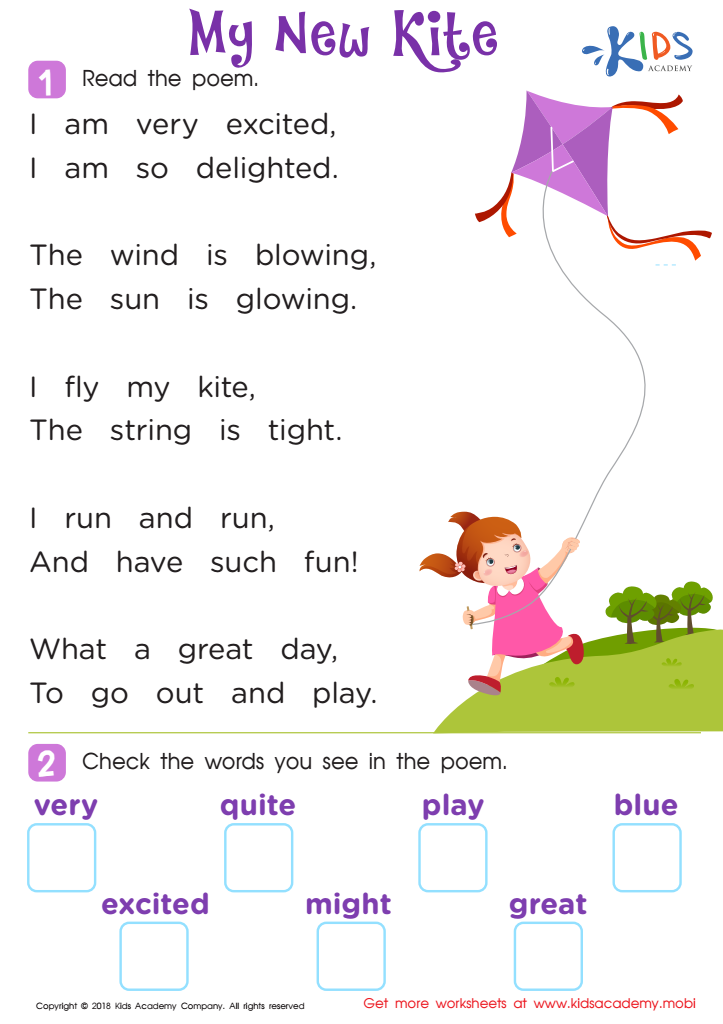
Poem: My New Kite Worksheet
 Assign to My Students
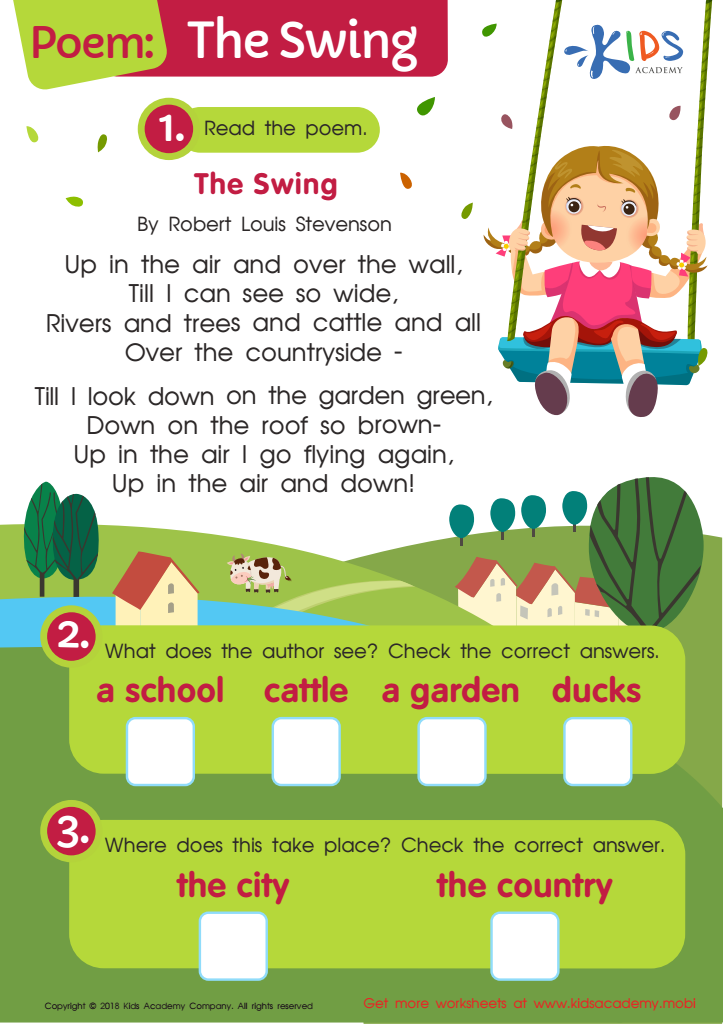
Poem: The Swing Worksheet
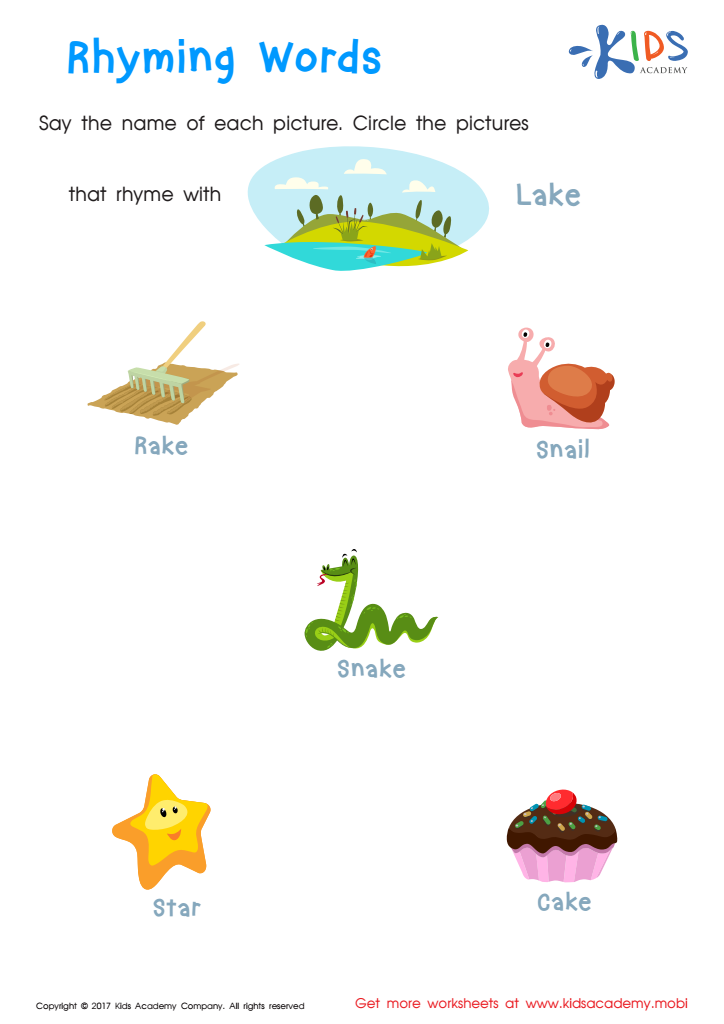
Rhyming Words Rhyming Worksheet
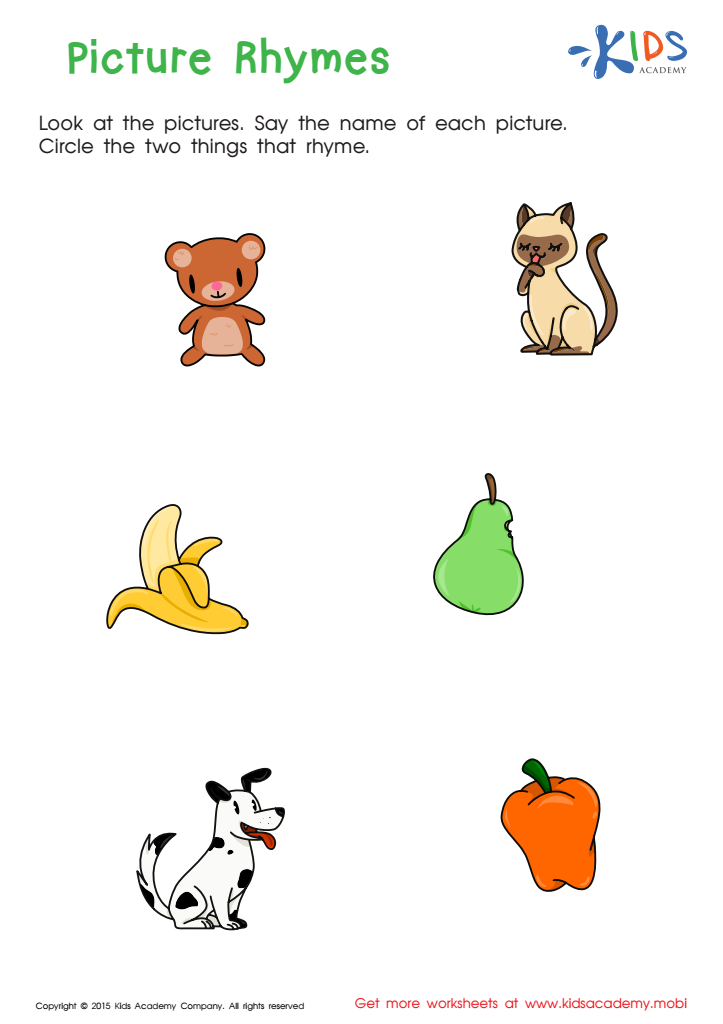
First Words: Picture Rhymes Worksheet
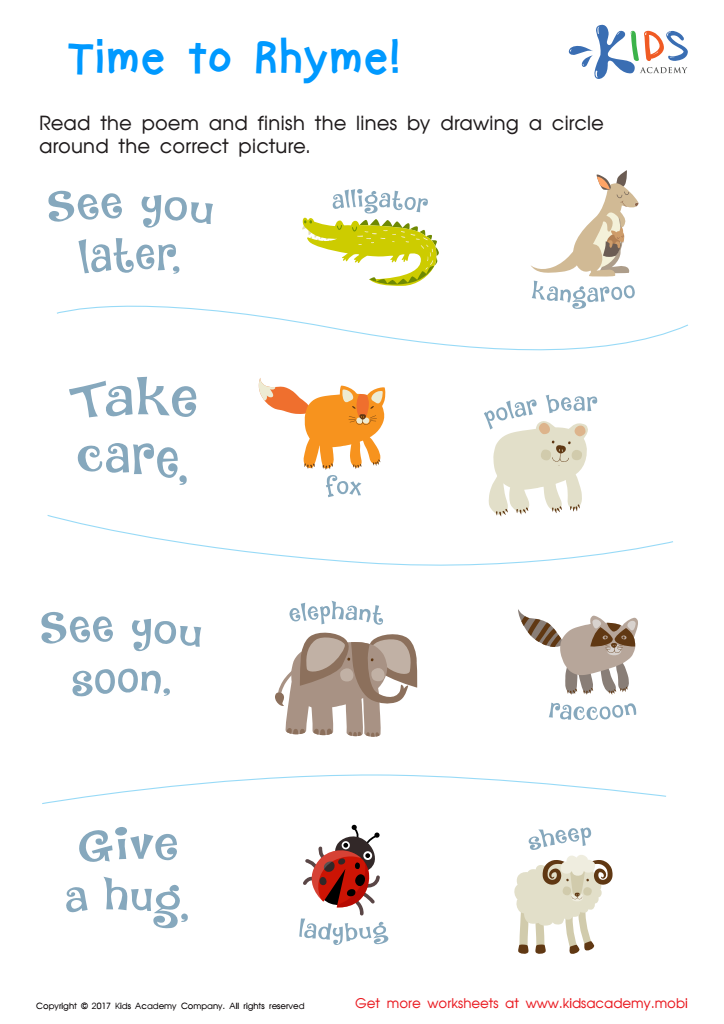
Time to Rhyme Rhyming Worksheet








Reading comprehension is a vital skill for children, especially between the ages of 6 and 9, as it lays the foundation for their academic and personal growth. During this stage, children transition from "learning to read" to "reading to learn." Understanding rhyming words is particularly important in this process.
Firstly, rhyming aids phonemic awareness, a critical component of reading skills. By recognizing and producing rhymes, children become more attuned to the sounds within words, improving their ability to decode new words and enhancing their fluency.
Secondly, rhyming enriches vocabulary. Rhyming words often belong to thematic groups (like "cat," "hat," and "bat"), helping children to learn and remember new words more easily. This expanded vocabulary allows for better comprehension when encountering unfamiliar texts.
Thirdly, rhyming fosters enjoyment and engagement. Catchy, rhyming stories and poems make reading enjoyable, encouraging children to read more often. This repeated exposure to language improves overall reading competence.
Lastly, understanding rhyming patterns can enhance spelling and writing skills. When children understand the relationships between rhyming consonant-vowel-consonant patterns, they can apply this knowledge to spell new words accurately.
In summary, parents and teachers should prioritize reading comprehension with normal rhyming words for young learners as it builds foundational skills in literacy, enriches vocabulary, enhances engagement, and supports spelling proficiency.








