Vocabulary development Normal Community Worksheets for Ages 6-9
5 filtered results
-
From - To
Discover our engaging vocabulary development worksheets specially designed for children aged 6-9. These Normal Community-themed resources from Kids Academy help young learners enhance their language skills while exploring the world around them. Through fun and interactive exercises, kids will build a strong vocabulary, improve reading comprehension, and develop a love for learning about their community. Perfect for both classroom and at-home use, our worksheets offer a blend of educational activities that keep kids interested and motivated. Give your child the tools they need for successful vocabulary development with our expertly created resources.

Let's Go to the Library! Worksheet
 Assign to My Students
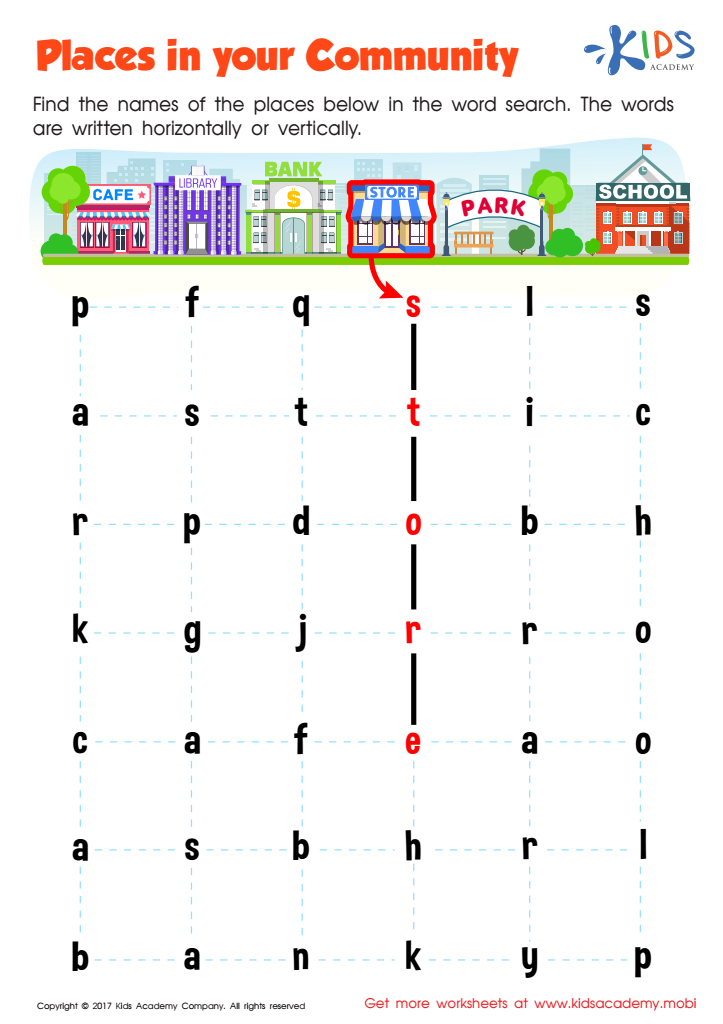
Places in Your Community Worksheet
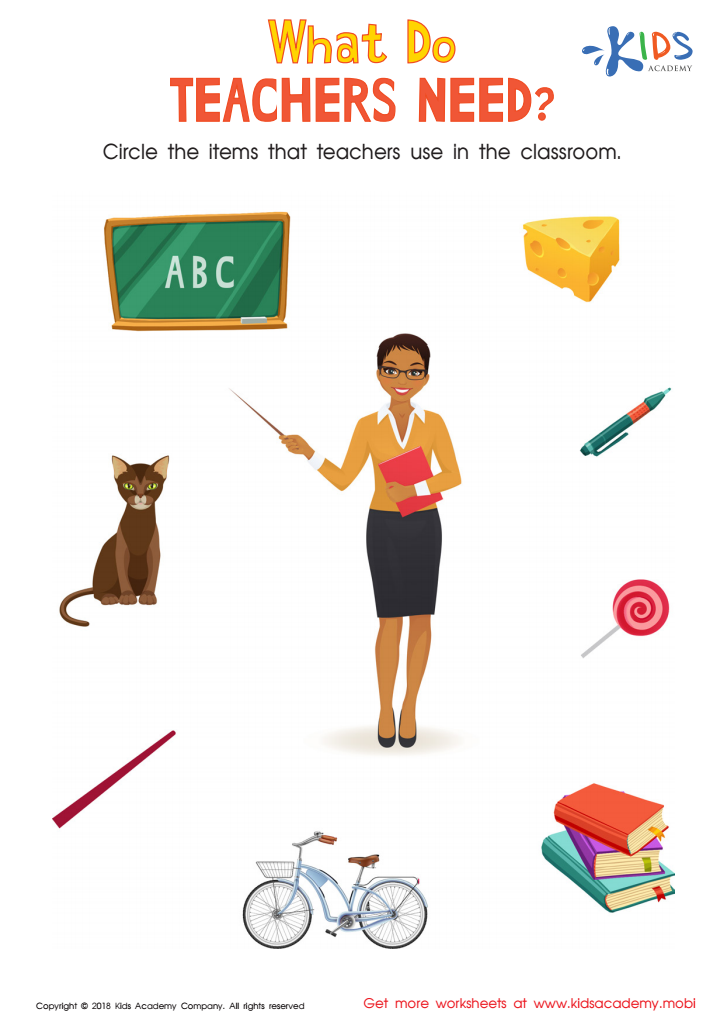
What Do Teachers Need Worksheet
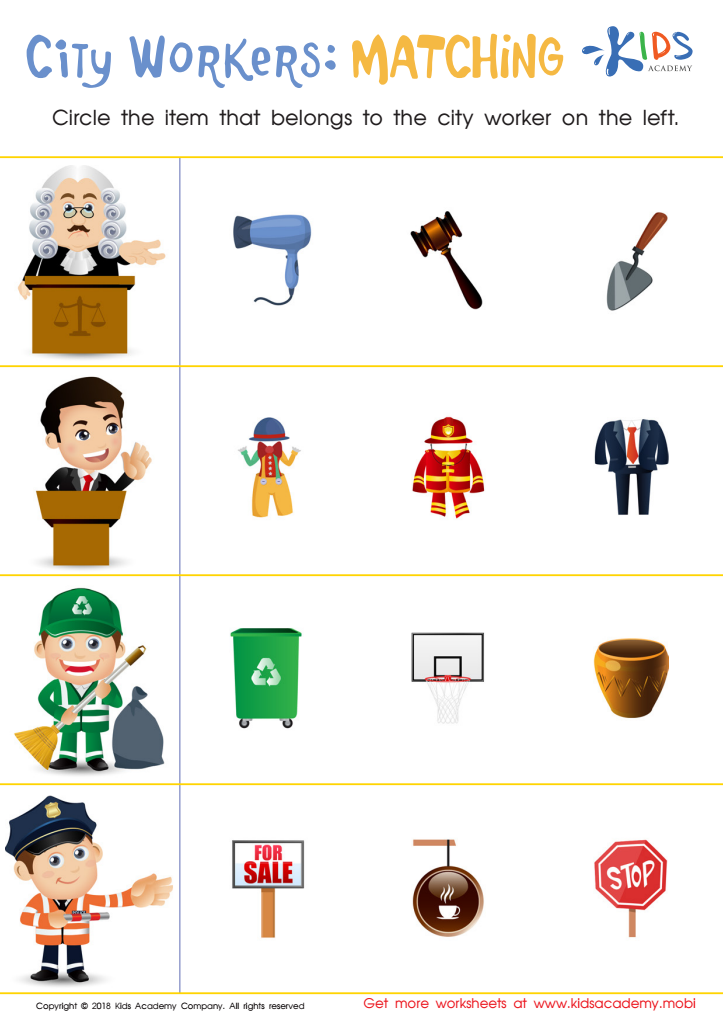
City Workers: Matching Worksheet
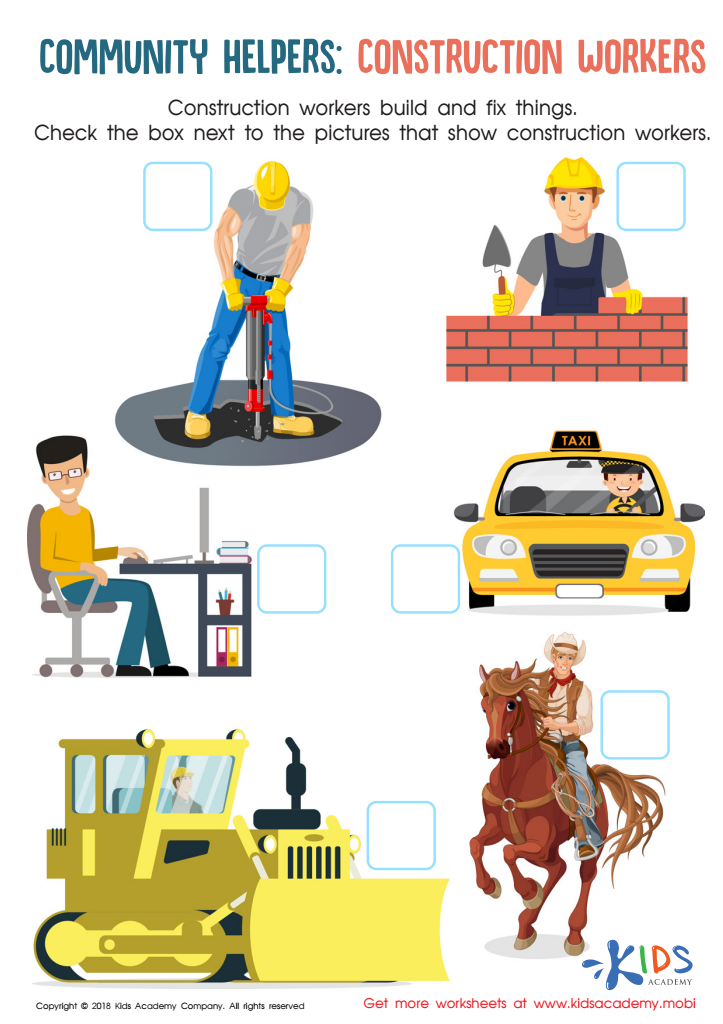
Construction Workers Community Helpers Worksheet








Vocabulary development is a foundational component of early childhood education that has far-reaching implications. For children aged 6-9, this period is critical as new words and language structures shape their cognitive development, reading skills, and overall academic success. At this age, children transition from learning to read to reading to learn, making vocabulary crucial for comprehending more complex texts and instructions across all subjects.
Parents and teachers should place significant emphasis on vocabulary development because strong language skills enable children to express themselves clearly and confidently. This scaffolds their ability to socialize, form relationships, and navigate their environment effectively. A robust vocabulary fosters critical thinking skills, enabling children to describe experiences, ask questions, and engage in problem-solving more effectively.
Moreover, vocabulary is closely linked to long-term educational outcomes. Studies consistently show that children with rich vocabularies tend to perform better in literacy-related tasks, remain more engaged in school, and subsequently achieve higher academic success. For communities, this shared focus on vocabulary enhances collective learning, supporting an environment where educational equity becomes more feasible. Through enriched vocabulary instruction, educators contribute to reducing learning gaps and nurturing lifelong learners capable of adaptation and growth. Thus, investing in vocabulary development for children aged 6-9 lays a crucial cornerstone for their future academic achievements and overall well-being.