Normal The 5 Senses Worksheets for Ages 6-9
3 filtered results
-
From - To
Discover our "5 Senses Worksheets" designed for children ages 6-9 at Kids Academy. These engaging worksheets will help your child learn about sight, hearing, taste, smell, and touch through fun activities and exercises. Enhance sensory exploration while meeting educational standards. Each worksheet fosters critical thinking and helps children connect their senses to the world around them, making learning interactive and exciting. Perfect for use in the classroom or at home, our printable resources are easily accessible and tailored to support young learners’ developmental stages. Boost your child's sensory awareness and academic skills with these comprehensive learning tools!
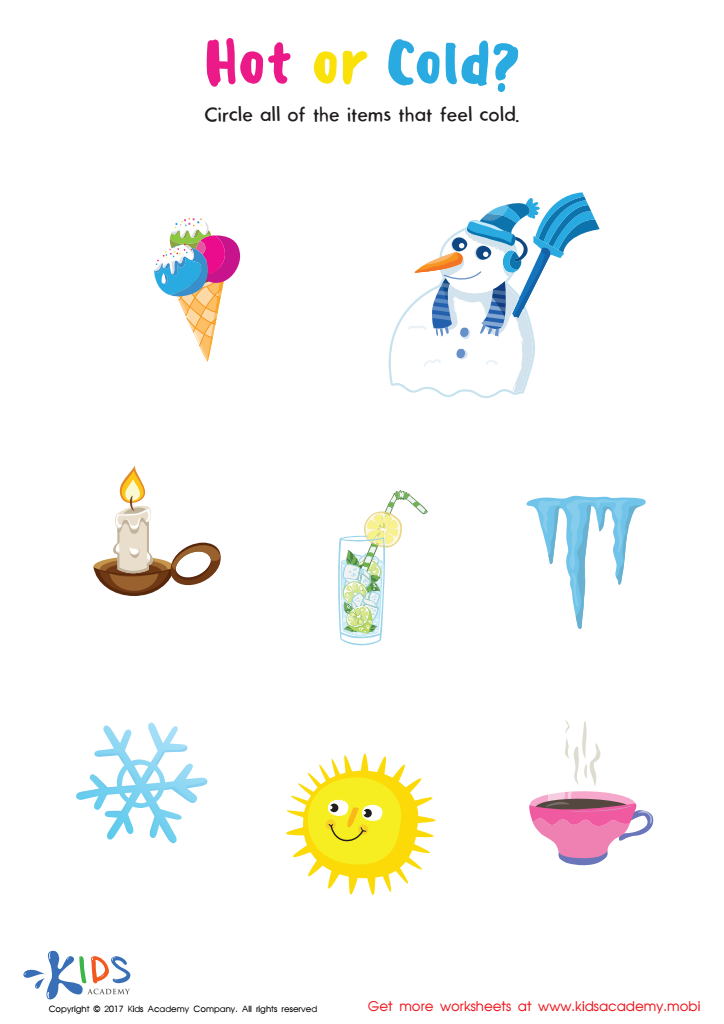
Hot or Cold Printable
 Assign to My Students
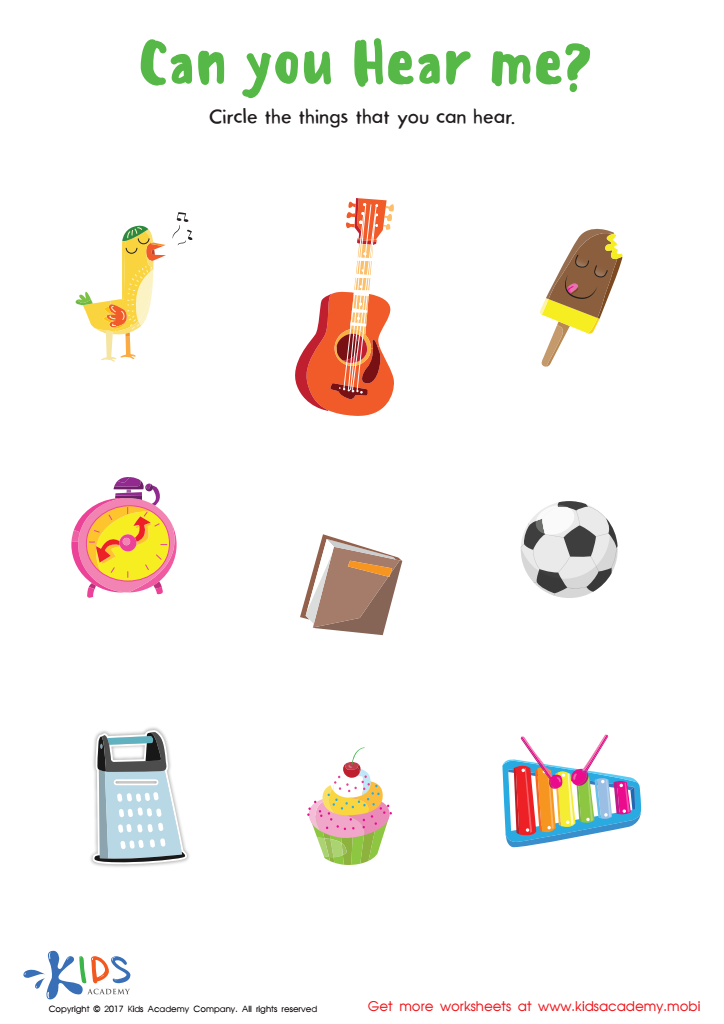
Can You Hear Me Worksheet
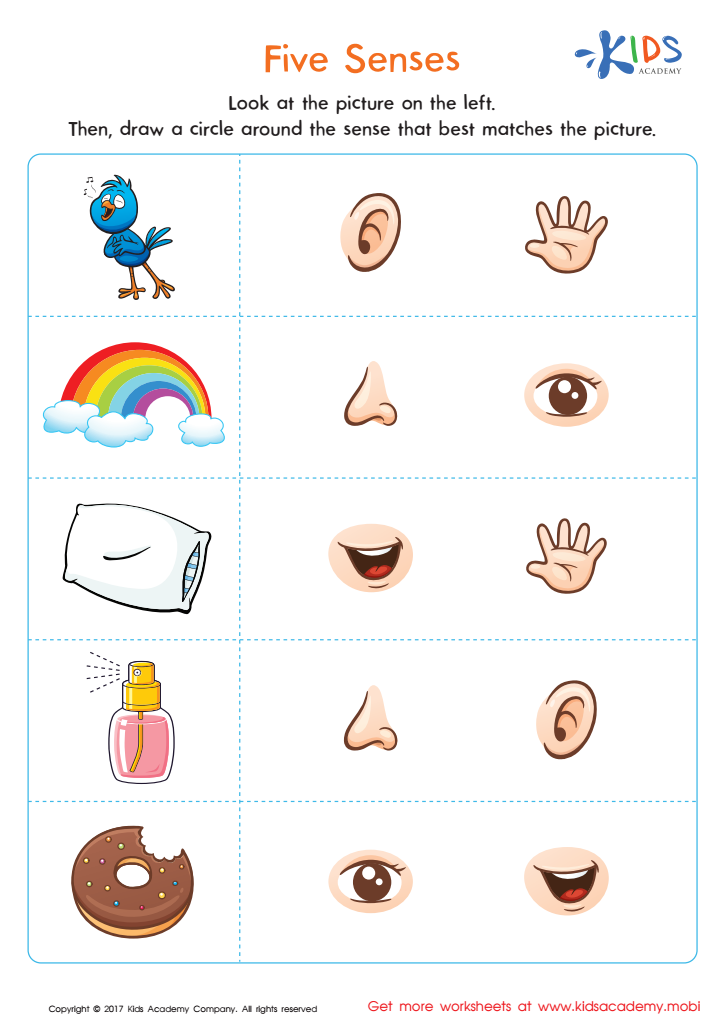
Five Senses Printable




Children between the ages of 6-9 experience rapid intellectual and physical growth, making it crucial for parents and teachers to understand and foster the development of their five senses: sight, hearing, touch, taste, and smell. These senses are foundational for learning and interacting with the world.
For sight, clear vision ensures that children can easily read text, observe their surroundings, and engage with visual learning materials. Regular eye check-ups are essential to identify and correct issues like myopia. Hearing is vital for effective communication, understanding instructions, and social interaction. Early detection of hearing problems can prevent academic delays and social difficulties.
The sense of touch supports fine motor skills through activities like writing, crafting, and playing, which in turn enhances cognitive functions. Encouraging hands-on activities helps solidify their understanding of different textures and shapes. Taste and smell contribute to a child’s eating habits and food preferences. Introducing a variety of flavors and aromas can develop healthy eating habits and enhance enjoyment of meals.
An emphasis on sensory experiences enriches a child's learning environment, making education a multi-sensory process. Understanding and supporting the development of their five senses ensures children can engage fully in both educational settings and their everyday lives, promoting overall well-being and academic success.