Verb identification Normal Grammar Worksheets for Ages 6-9
6 filtered results
-
From - To
Explore our engaging Verb Identification Normal Grammar Worksheets, specially designed for children aged 6-9. These worksheets provide fun and interactive activities that help young learners recognize and understand verbs, enhancing their writing skills and grammar knowledge. Each worksheet offers colorful illustrations and age-appropriate exercises that encourage children to identify verbs in sentences, promoting literacy and comprehension. Perfect for classroom or home learning, these resources support your child's educational journey while making grammar enjoyable. Boost your child's confidence in language skills and unlock their potential with our carefully crafted worksheets. Start cultivating their love for learning today!
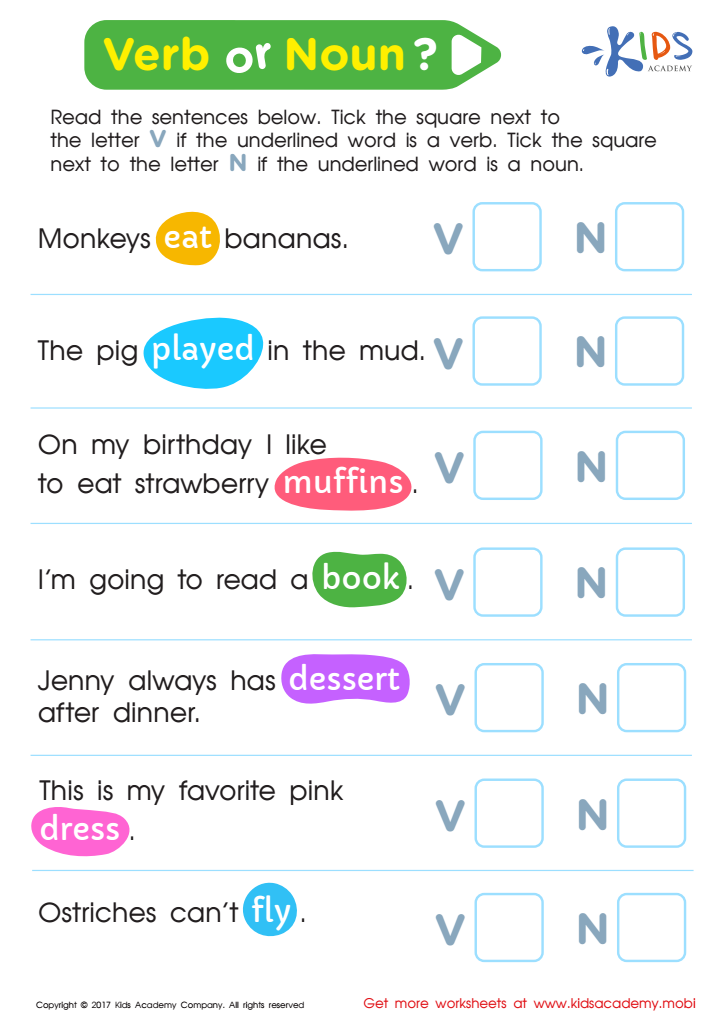
Verb or Noun Worksheet
 Assign to My Students
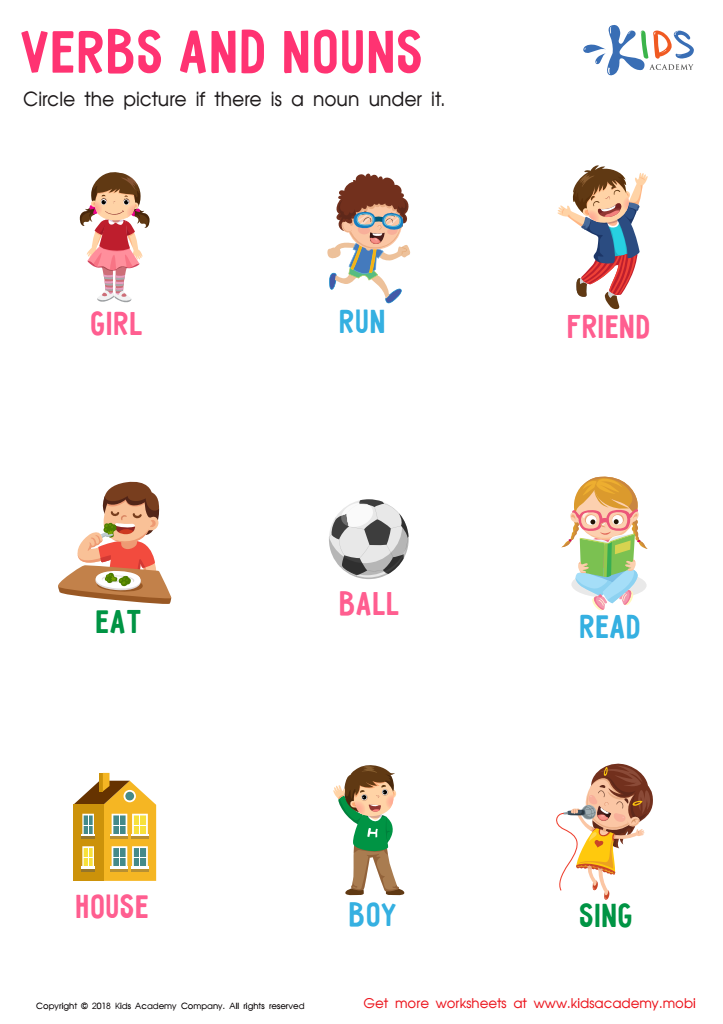
Verbs and Nouns Worksheet
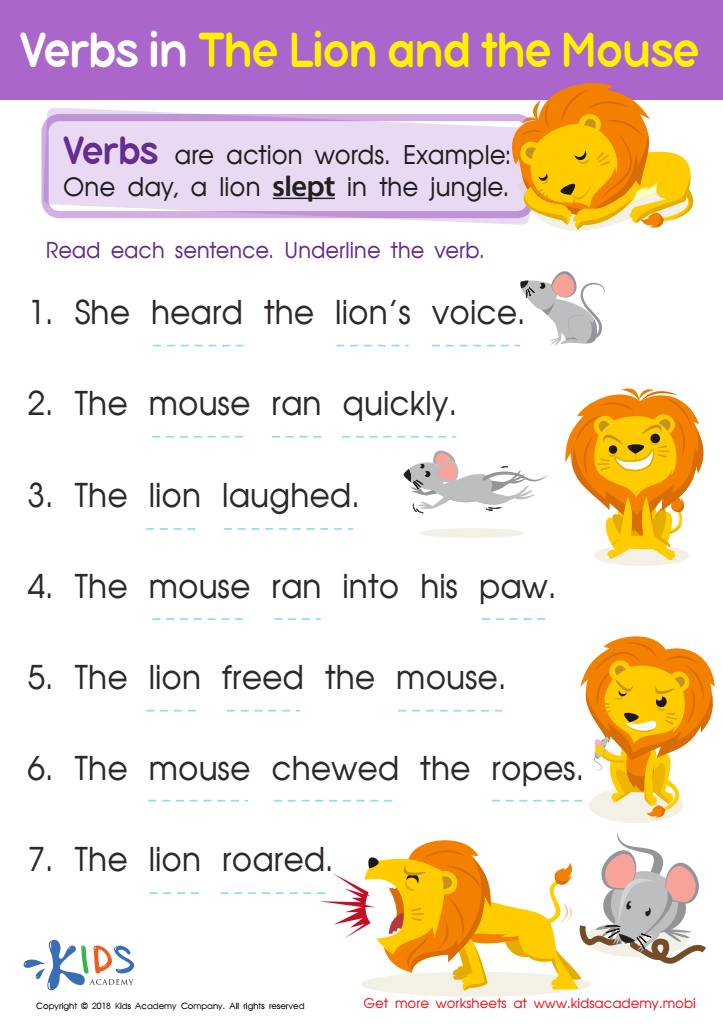
Verbs in The Lion and the Mouse Worksheet
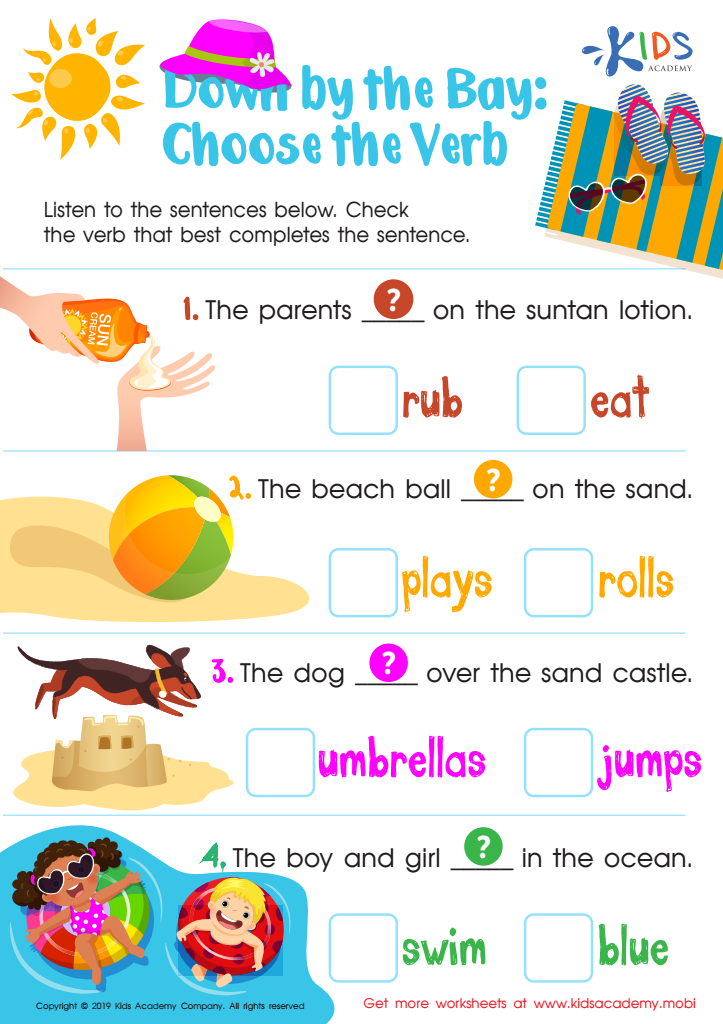
Down by the Bay: Choose the Verb Worksheet
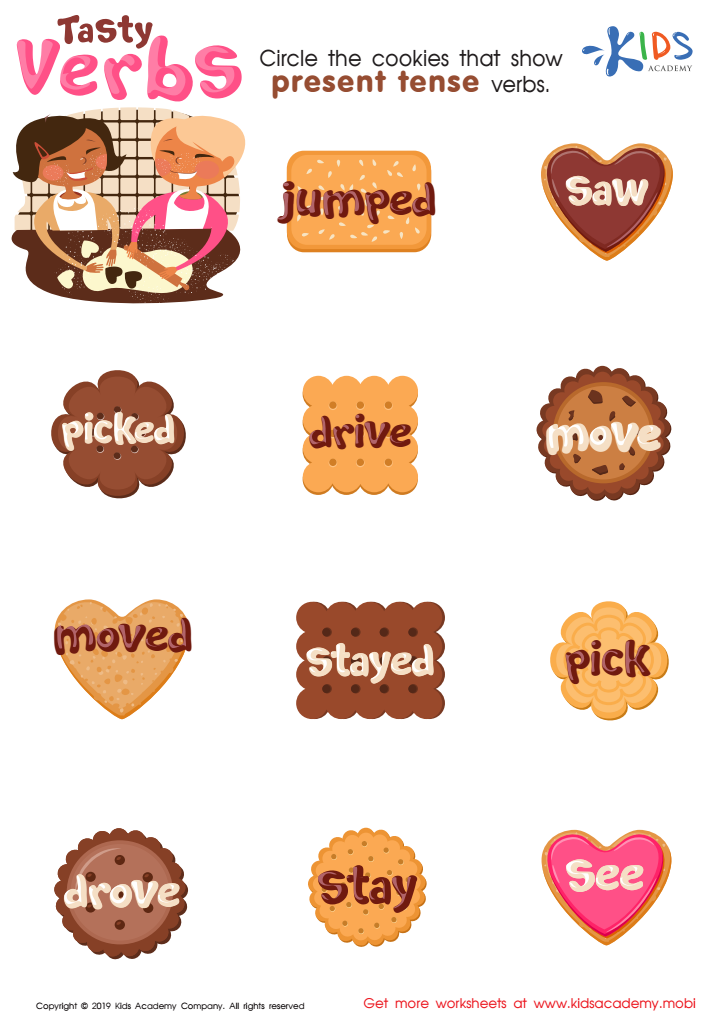
Tasty Verbs Worksheet
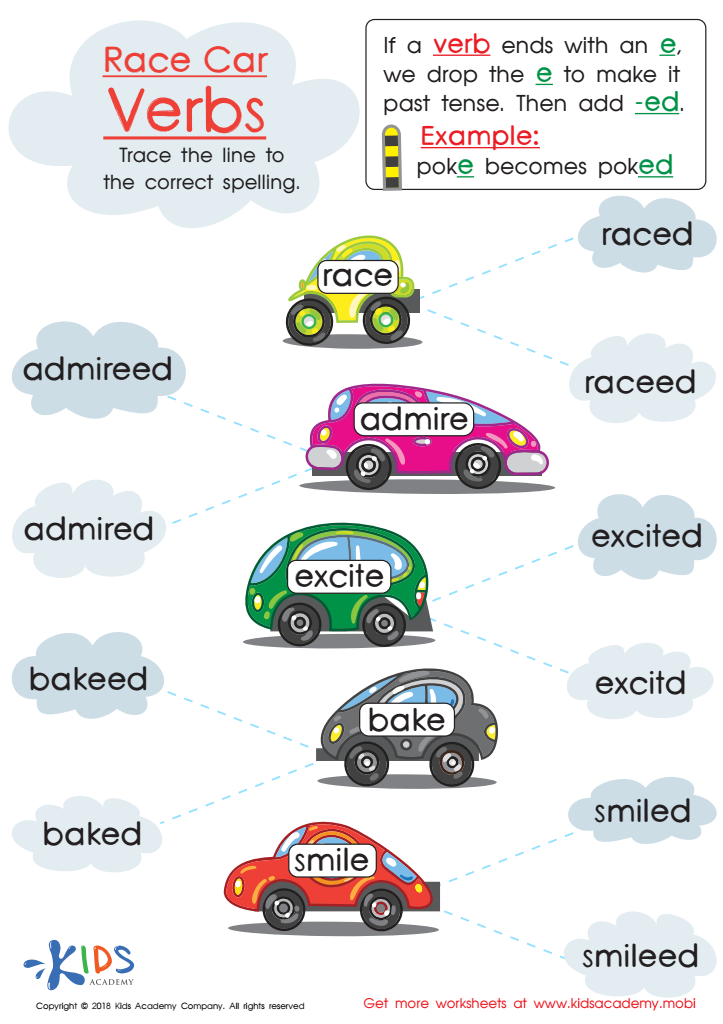
Race Car Verbs Worksheet






Verb identification is a crucial aspect of grammar that significantly impacts children's language development, particularly for ages 6-9. At this stage, children are learning to express themselves more clearly and effectively. Understanding verbs allows them to construct sentences that convey their thoughts, actions, and emotions accurately.
When parents and teachers emphasize verb identification, they help children build a strong foundation in both written and spoken communication. This not only enhances their language skills but also boosts confidence in expressing themselves. Engaging children in activities involving verb identification—such as games, storytelling, or sentence-building exercises—makes learning interactive and enjoyable, ensuring they remain motivated.
Moreover, verbs are the action words in sentences, making them essential for comprehension. Proficient identification of verbs helps children grasp sentence structure, improving their reading comprehension and writing abilities.
Ultimately, mastering verbs aids in cognitive development, allowing children to think critically and understand the relationship between actions and subjects. By investing time and effort into teaching verb identification, parents and teachers play a paramount role in preparing children for academic success and effective communication, which are essential skills for their future endeavors.