Basic arithmetic practice Normal Worksheets for 6-Year-Olds
3 filtered results
-
From - To
Discover our engaging Basic Arithmetic Practice Worksheets designed specifically for 6-year-olds. These worksheets are perfect for young learners to build a strong arithmetic foundation, covering essential skills like addition, subtraction, and number recognition. Through vibrant, kid-friendly designs and fun exercises, children will develop their math abilities while enjoying the process. Each worksheet is thoughtfully crafted to promote interactive learning and boost confidence in solving basic math problems. Start your child’s educational journey with our expertly designed arithmetic practice worksheets and watch their skills grow with every activity! Visit Kids Academy Online to explore and download today.
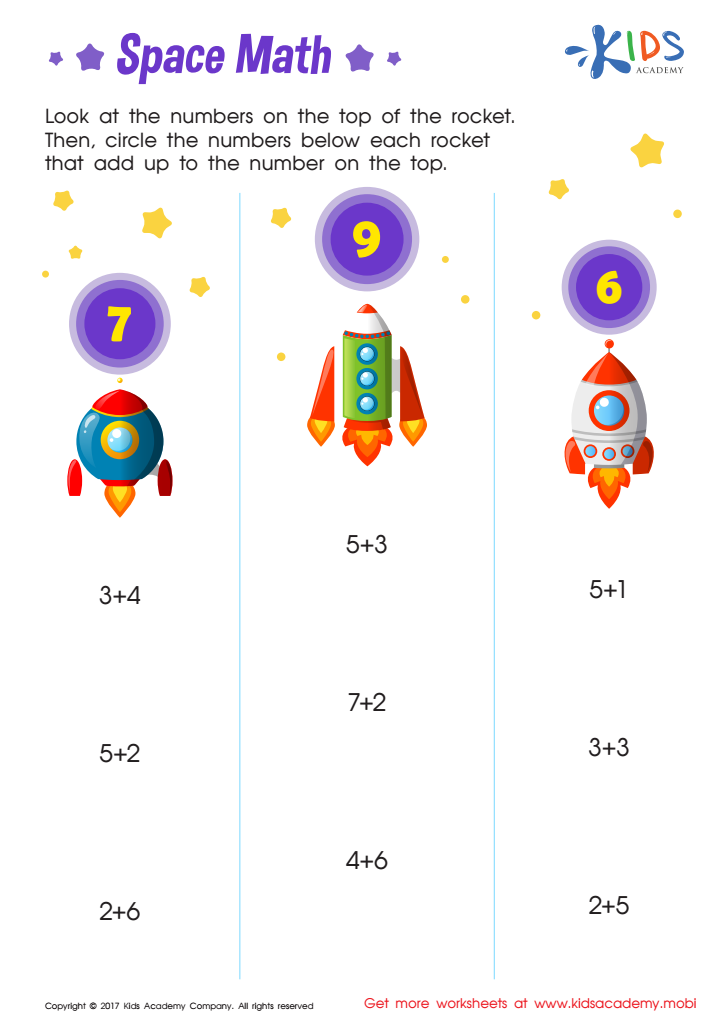
Addition: Space Math Worksheet
 Assign to My Students
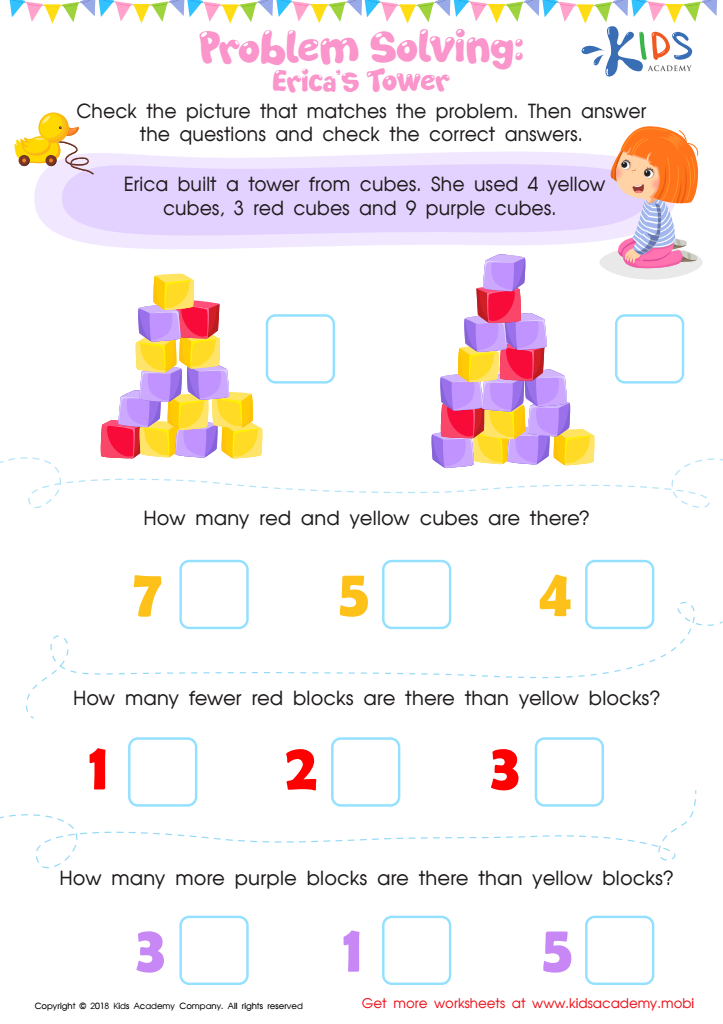
Problem Solving: Erica's Tower Worksheet
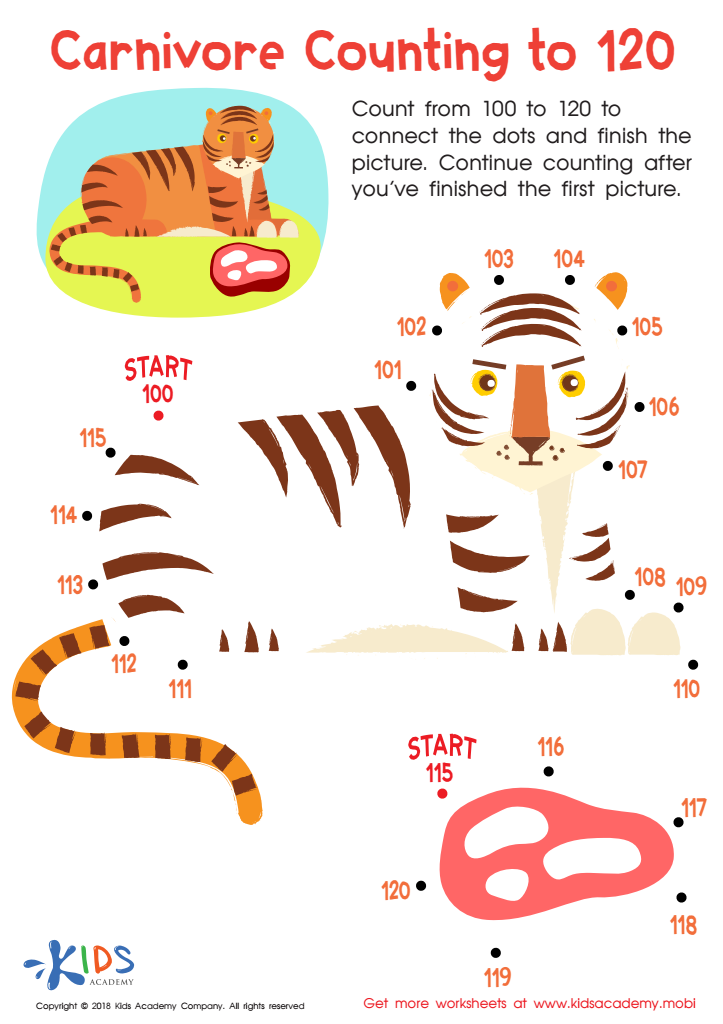
Carnivore Counting to 120 Worksheet



.jpg)


Basic arithmetic practice is crucial for 6-year-olds as it forms the foundation for their future mathematical understanding and success. At this developmental stage, children's brains are highly receptive to learning new concepts, and engaging them in basic arithmetic helps hone their cognitive skills, such as problem-solving, critical thinking, and logical reasoning.
Parents and teachers play a vital role in cultivating a positive attitude towards math by making learning enjoyable and relatable. Simple activities like counting objects, playing math-related games, or using everyday situations to practice addition and subtraction reinforce these skills in a way that feels natural and fun. This early exposure helps children develop number sense, which is the ability to understand and work with numbers comfortably, a critical skill for their academic journey.
Moreover, proficiency in basic arithmetic can boost a child’s confidence in their ability to solve problems, not only academically but also in real-life situations. This self-confidence often translates to a willingness to tackle more complex mathematical challenges as they grow.
Ensuring regular practice in basic arithmetic equips children with essential tools they will use throughout their education and daily life, making it imperative for parents and teachers to prioritize and support this aspect of learning.








