
Chess strategy understanding Normal Worksheets for 6-Year-Olds
3 filtered results
Difficulty Level
Grade
Age
-
From - To
Subject
Activity
Standards
Welcome to our Chess Strategy Understanding Worksheets for 6-Year-Olds! Designed to provide young learners with a solid foundation in chess strategies, these engaging and interactive worksheets make learning fun. Through colorful activities and age-appropriate exercises, children will explore essential concepts such as piece movement, basic tactics, and thinking ahead. Our worksheets foster critical thinking and problem-solving skills while sparking a love for the game of chess. Ideal for classroom learning or at-home practice, these resources ensure that your child develops both strategic understanding and confidence in their chess abilities. Get started today and watch your young chess player thrive!
Favorites
With answer key
Interactive
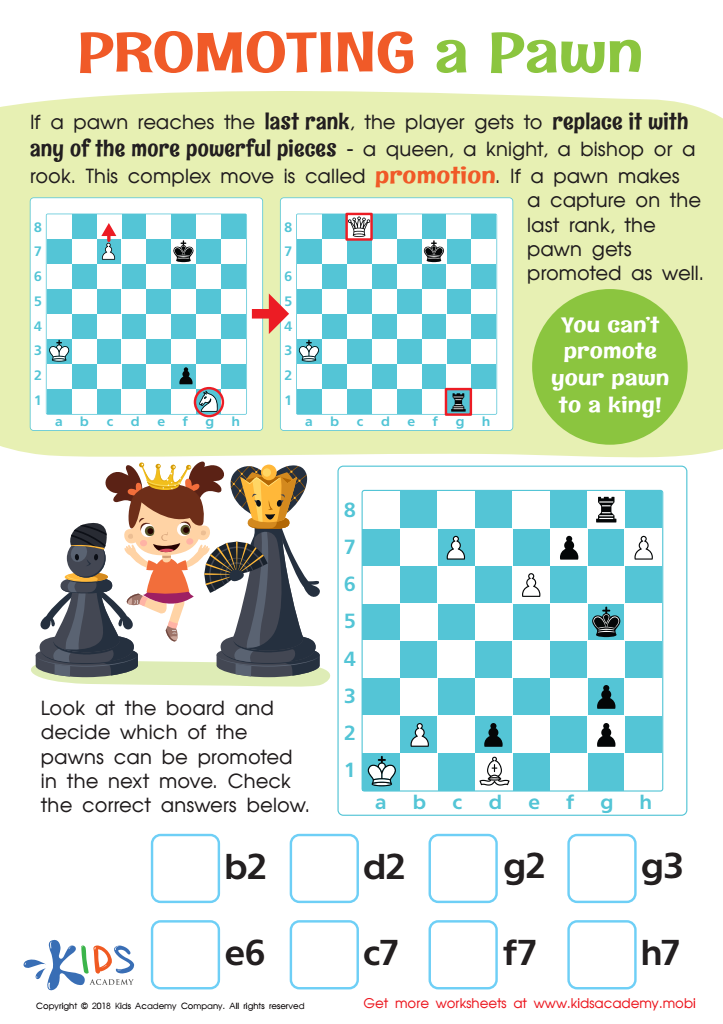
Promoting a Pawn Worksheet
Teach your kids all about pawns with this fun worksheet! Pawns may seem restricted, but experienced players can guide them across the board. If a pawn reaches the last rank, the player can upgrade it to a more powerful piece (e.g. queen, knight), or promote it if it captures an enemy piece. Give them the tools to master the game!
 Assign to My Students
Promoting a Pawn Worksheet
Worksheet
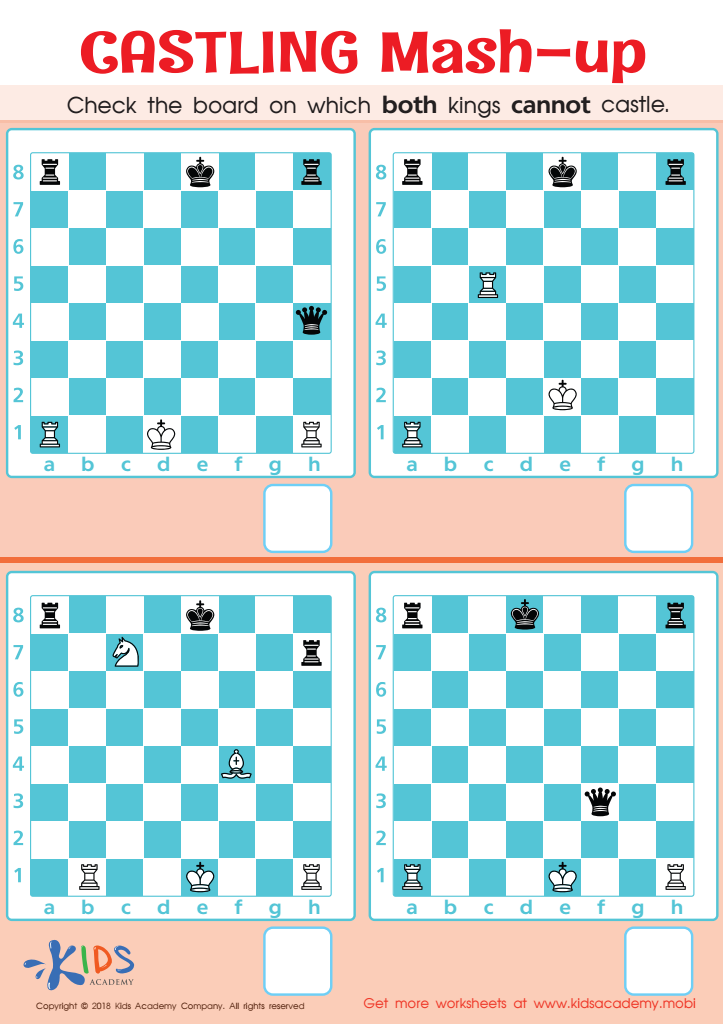
Castling Mash–up Worksheet
Before starting the worksheet, ensure your child understands castling in chess. If not, take time to explain it. Once they have a clear grasp of the rules, help them complete the exercise. Check the board to ensure that neither king can castle.
Castling Mash–up Worksheet
Worksheet
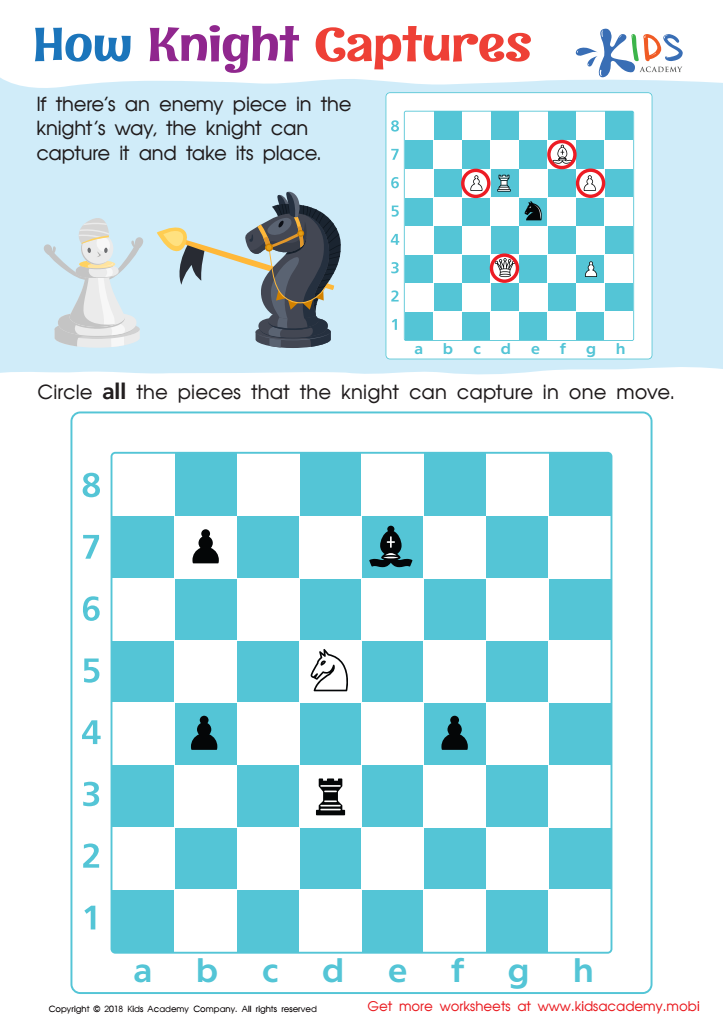
How Knight Captures Worksheet
Test your child's knowledge of chess pieces by asking them to identify the knight. It is shaped like a horse and its goal is to capture the enemy king in order to win the game. The knight has the advantage of being able to jump over other pieces, taking them out and taking their place. See how many pieces the knight can capture in one move with this worksheet.
How Knight Captures Worksheet
Worksheet
Join Kids Academy for Free
Who is primarily going to use this learning content?





.jpg)

Introducing chess strategy to 6-year-olds offers an array of benefits for both parents and teachers. Understanding chess at a young age enhances cognitive skills, such as critical thinking, problem-solving, and the ability to anticipate consequences. As children learn to navigate the chessboard, they develop strategic planning skills that are applicable beyond the game, fostering a mindset geared toward foresight and analytical reasoning.
Additionally, chess promotes discipline and patience, essential traits for any learner. Children learn that each move can significantly impact the game's outcome, reinforcing the idea of thoughtful decision-making. Playing chess also enhances memory and concentration, as children must remember strategies and the positions of various pieces on the board.
Moreover, chess can serve as a valuable social tool, encouraging kids to engage with their peers and learn how to compete respectfully. By fostering an appreciation for sportsmanship and fair play, chess can positively influence a child’s emotional and social development.
Incorporating chess into educational settings enriches the learning experience and can even be a fun way to improve academic performance in subjects like math and reading, reinforcing the idea that learning can be enjoyable. Thus, both parents and teachers should advocate for the inclusion of chess in early education.








