Comparing sizes Normal Worksheets for 6-Year-Olds
3 filtered results
-
From - To
Discover our engaging "Comparing Sizes Normal Worksheets" designed specifically for 6-year-olds! These interactive worksheets help young learners grasp the essential concept of size comparison through fun activities and visual examples. Students will explore big vs. small, tall vs. short, and much more, fostering their critical thinking and observational skills. Our easy-to-follow format keeps children motivated while reinforcing their understanding of size relationships in a playful context. Perfect for home or classroom use, these worksheets cater to diverse learning styles and ensure a solid foundation in basic math concepts. Download them now and watch your child’s confidence soar as they master size comparisons!
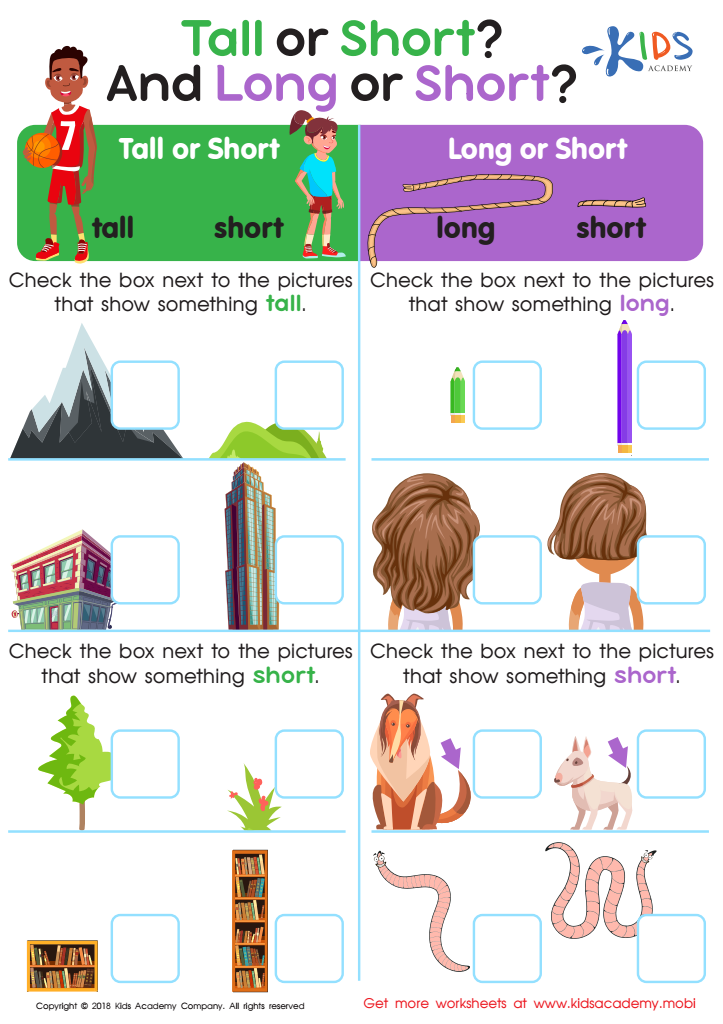
Tall or Short and Long or Short? Worksheet
 Assign to My Students
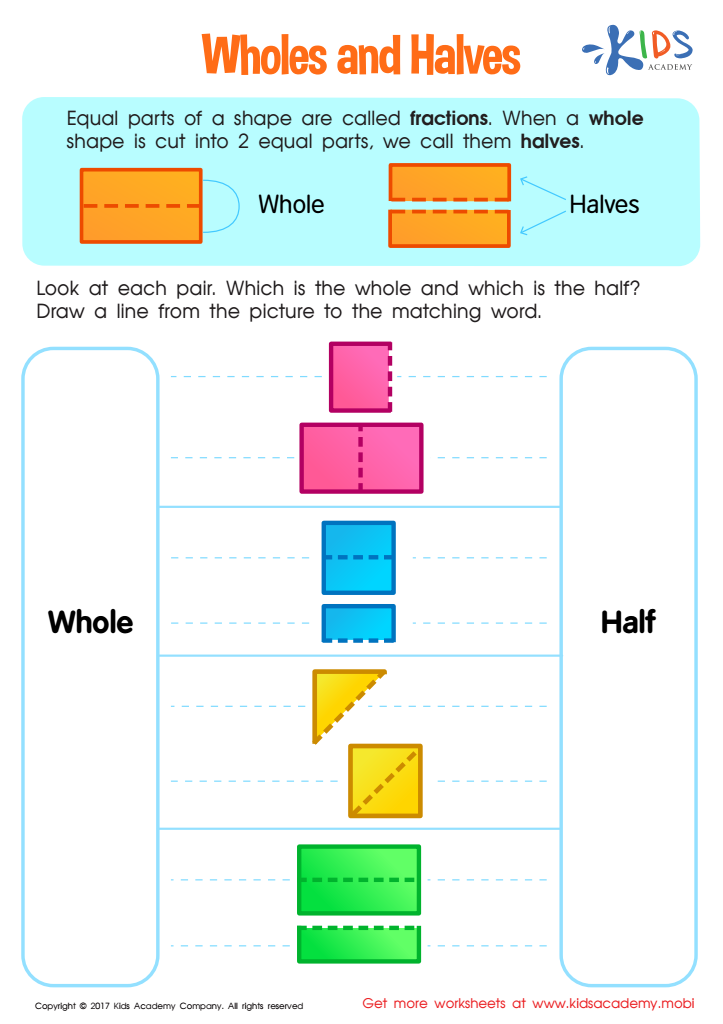
Wholes and Halves Worksheet
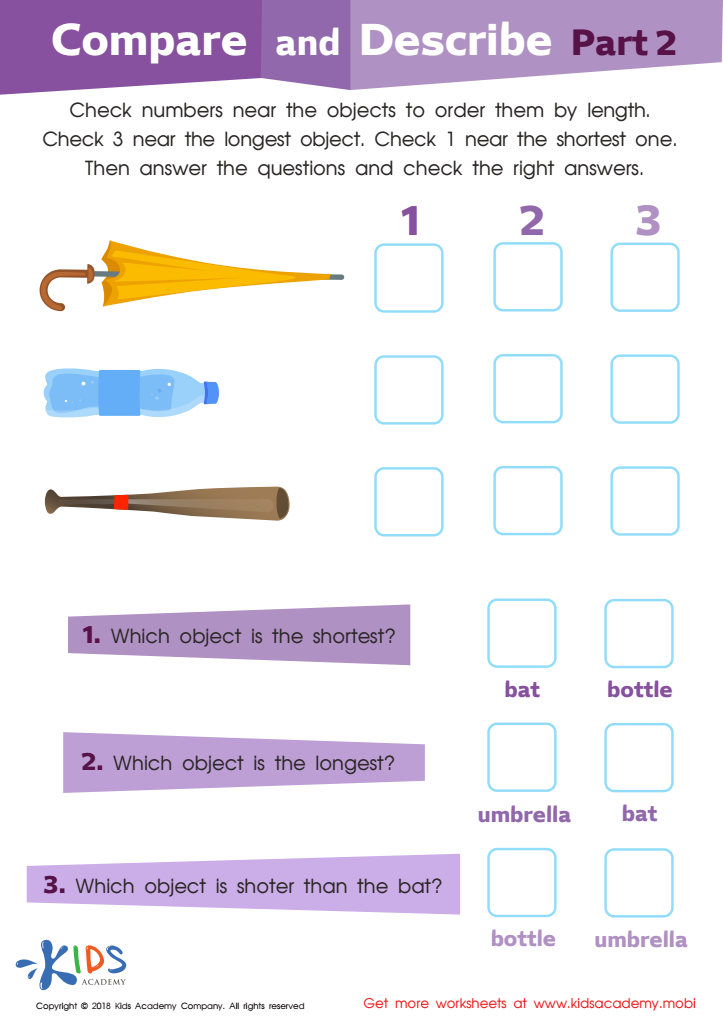
Compare and Describe: Part 2 Worksheet



.jpg)




Comparing sizes is a fundamental skill that plays a crucial role in a child's cognitive development, particularly for 6-year-olds. This stage marks a key transition in learning; children begin to grasp more complex concepts, including measurement and comparison. Understanding size not only fosters mathematical abilities but also enhances critical thinking skills. When children learn to compare sizes, they develop an awareness of the world around them, leading to better problem-solving abilities.
Moreover, size comparison fosters language development, as children learn descriptive vocabulary and concepts such as "bigger," "smaller," "taller," and "shorter." Engaging with these terms helps children articulate their observations, enhancing communication skills.
These skills are also vital in everyday life, helping children navigate their environment - from playing with toys to participating in group activities. Parents and teachers play a pivotal role in reinforcing these concepts through hands-on activities and playful learning. By showing interest and providing opportunities for size comparison, adults nurture children's curiosity and encourage tactile learning, making the process both enjoyable and educational. Ultimately, early proficiency in comparing sizes sets the groundwork for future mathematical understanding and develops a lifelong appreciation for learning.








