Letter-sound recognition Normal Worksheets for 6-Year-Olds
3 filtered results
-
From - To
Nurture your child's reading journey with our engaging "Letter-sound Recognition Normal Worksheets" designed for 6-year-olds. These carefully crafted worksheets are tailored to enhance phonics skills by helping young learners identify and correlate letters with their sounds. Each worksheet is filled with fun activities, including letter tracing, matching games, and beginner reading exercises that promote confident and clear pronunciation. Perfect for at-home practice or classroom use, our resources aim to build essential early literacy foundations, making learning interactive and enjoyable. Prepare your child for reading success with Kids Academy's trusted educational worksheets.
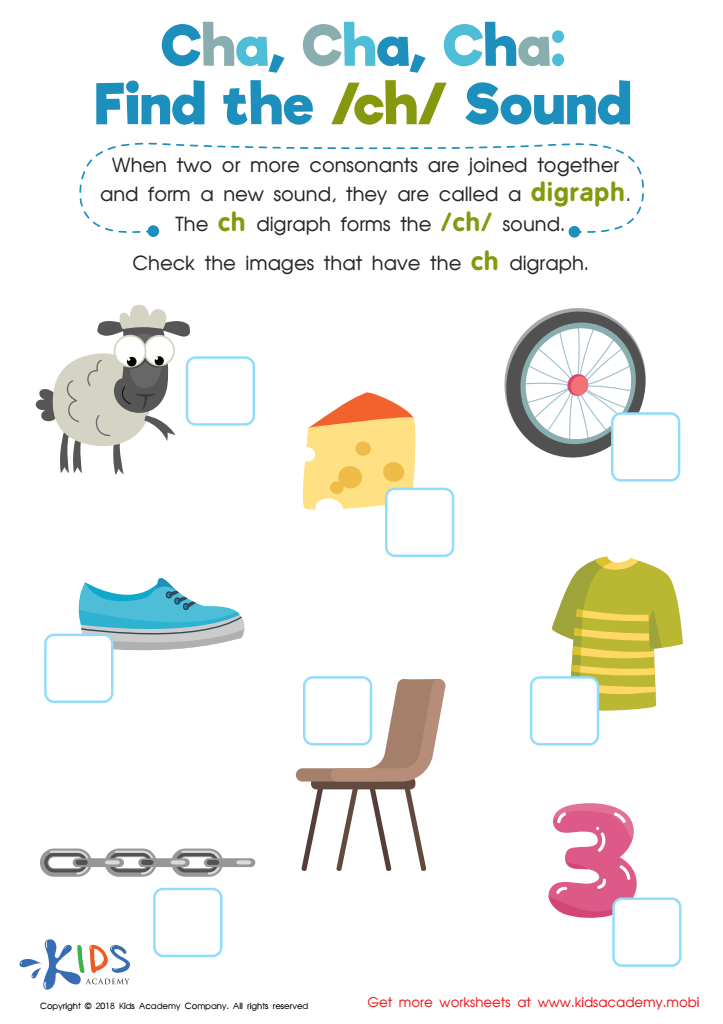
Cha, Cha, Cha: Find the /Ch/ Sound Worksheet
 Assign to My Students
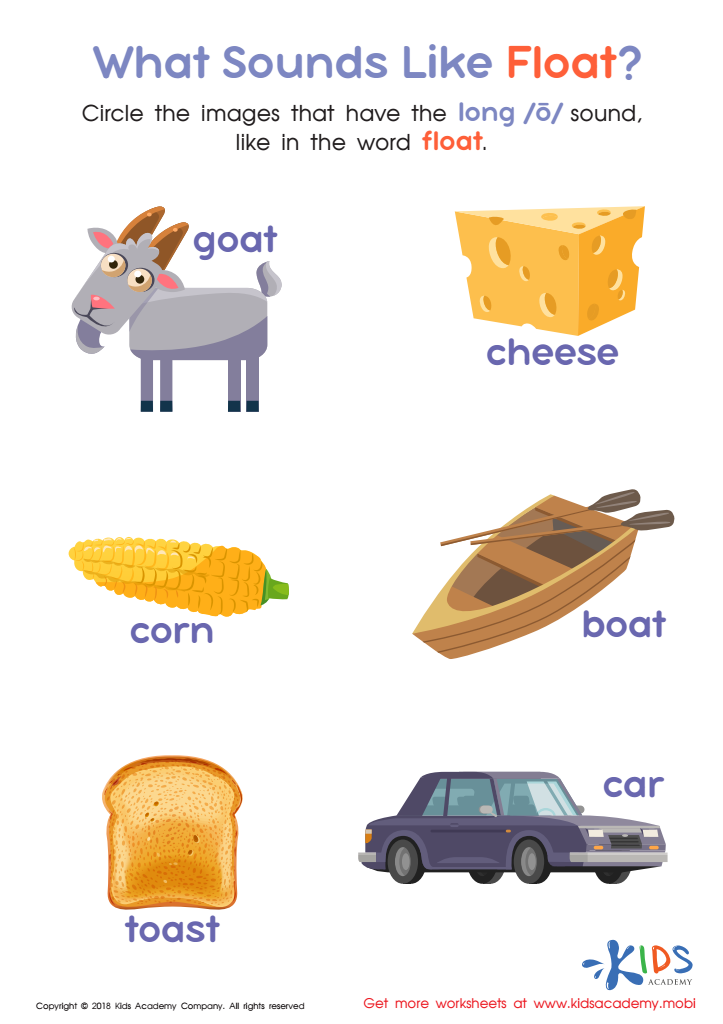
What Sounds Like Float? Worksheet
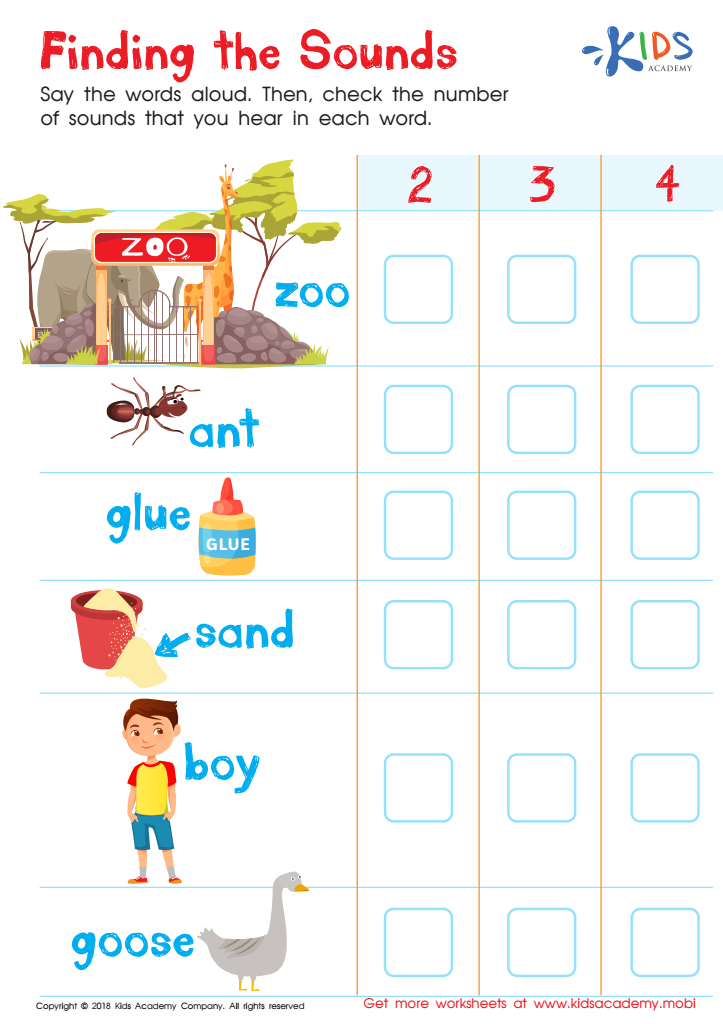
Finding the Sounds Worksheet







Letter-sound recognition is a foundational skill crucial for 6-year-olds as it serves as the building block for reading and writing. At this age, children are in a critical period of cognitive and language development, and mastering letter-sound relationships, also known as phonemic awareness, lays the groundwork for successful literacy skills.
When children recognize letters and their corresponding sounds, they can begin to decode words, enabling them to read independently. This early literacy skill is directly linked to later academic achievement because proficient readers are better equipped to understand other subjects that require reading comprehension.
Parents and teachers should prioritize letter-sound recognition because early mastery can significantly reduce frustration associated with learning to read. Struggling readers often experience lower self-esteem and a lack of motivation in school, which can have long-term negative effects. Conversely, children who master letter-sound recognition usually exhibit more confidence and enthusiasm towards learning.
Moreover, early intervention in letter-sound recognition can identify and support children who may have dyslexia or other reading difficulties, leading to targeted and more effective instructional methods. By investing time in this foundational skill, parents and teachers can help ensure that children become successful, lifelong readers and learners.








