Letter tracing skills Normal Worksheets for 6-Year-Olds
6 filtered results
-
From - To
Help your 6-year-old master essential letter tracing skills with our engaging worksheets. Designed to enhance fine motor skills and handwriting, these resources provide clear, guided practice for each letter of the alphabet. Your child will enjoy tracing and writing letters while developing confidence in their abilities. Perfect for at-home learning or classroom use, these printable worksheets offer a structured approach to learning, ensuring each letter is practiced in multiple forms. Invest in your child's educational foundation with our effective letter tracing worksheets and watch their writing skills soar! Visit Kids Academy for fun and interactive resources.
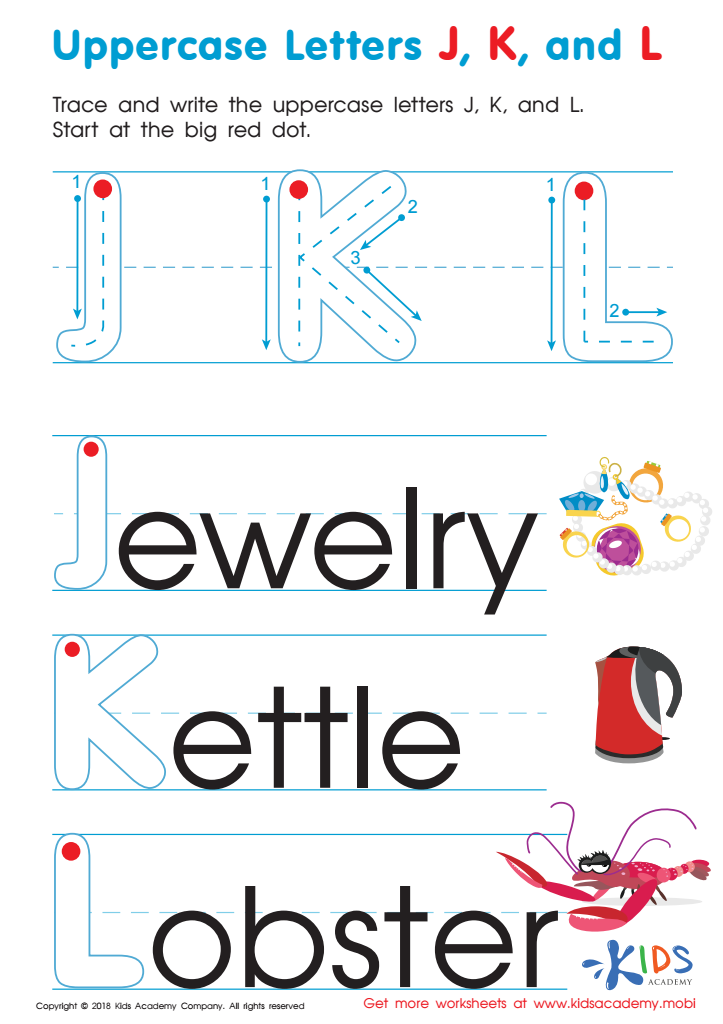
Uppercase Letters J, K, and L Worksheet
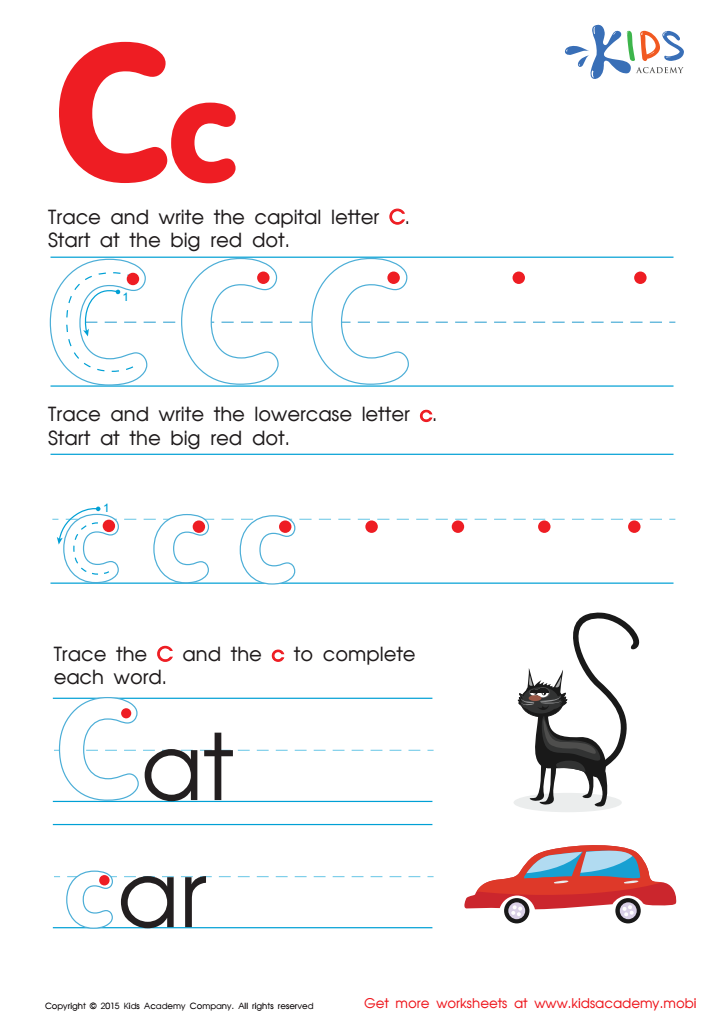
Letter C Tracing Page
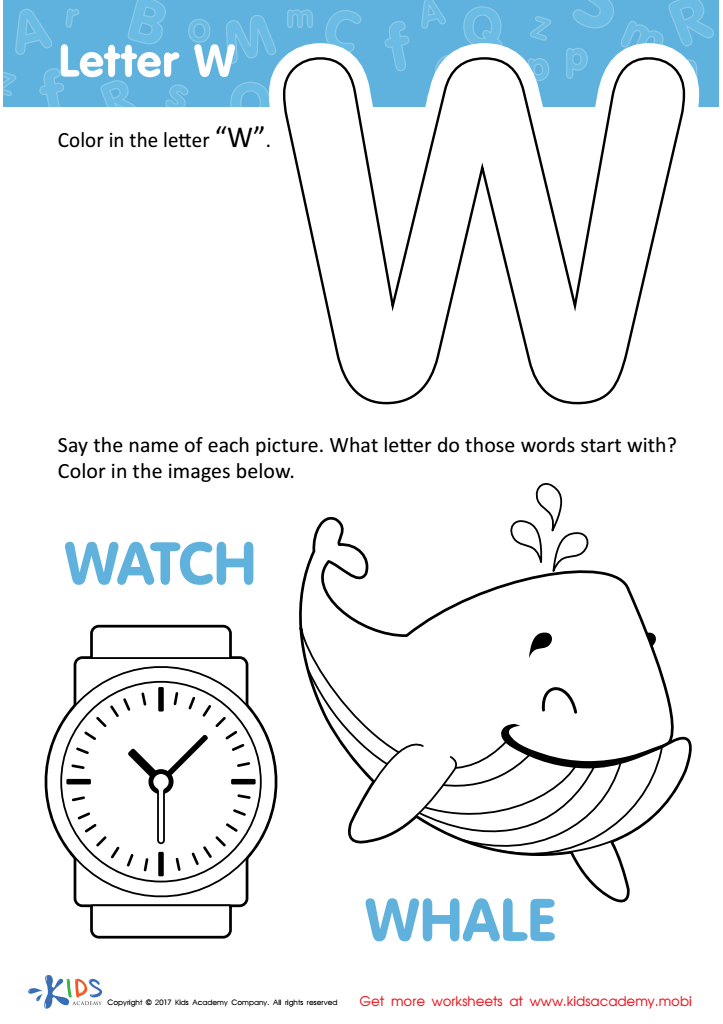
Letter W Coloring Sheet
 Assign to My Students
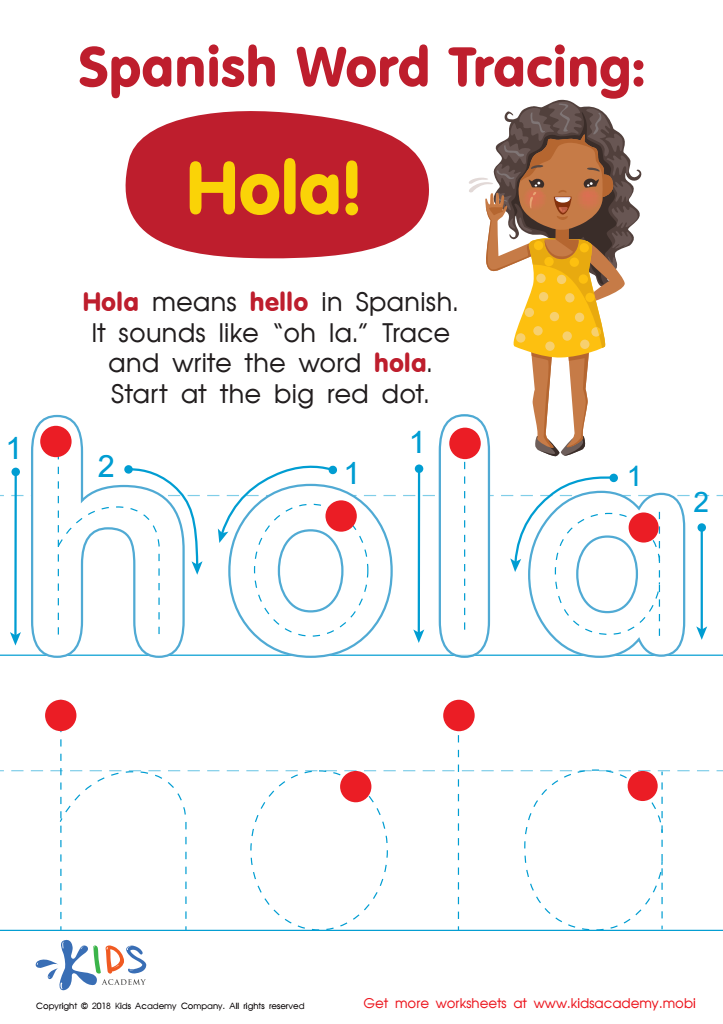
Spanish Word Tracing: Hola Worksheet
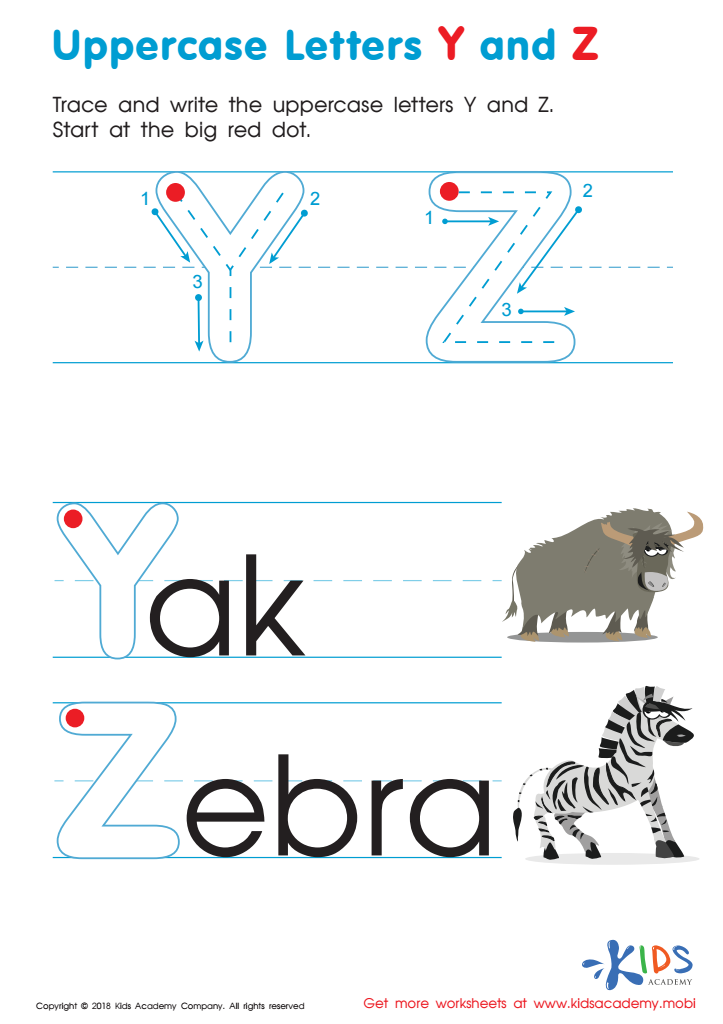
Uppercase Letters Y Z Worksheet
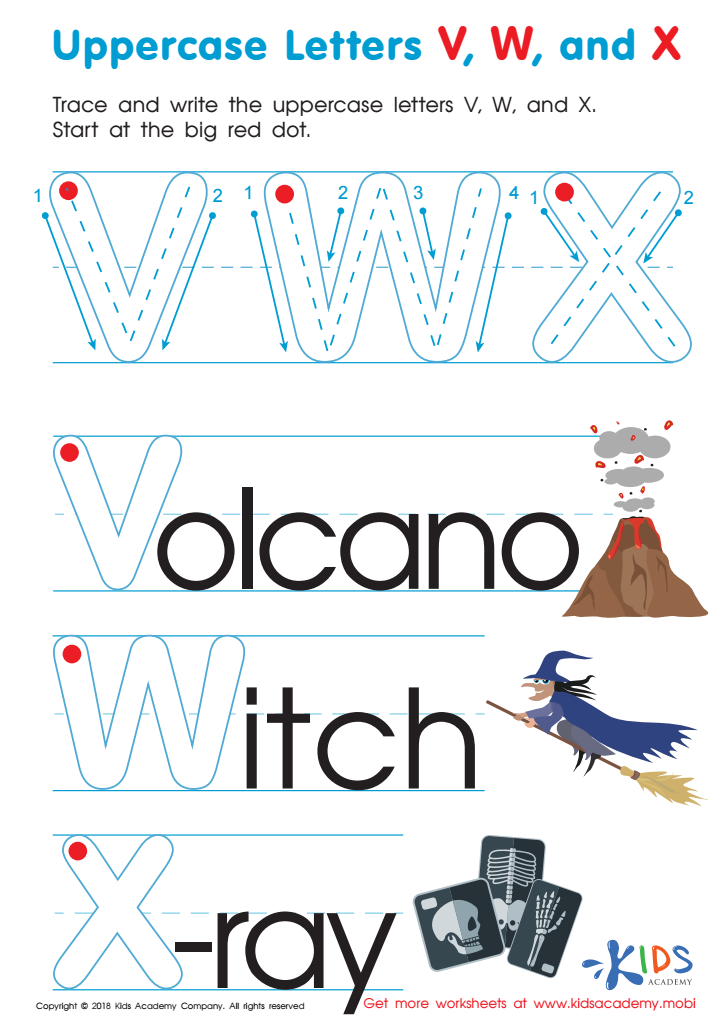
Uppercase Letters V, W, and X Worksheet








Letter tracing is a foundational skill that plays a crucial role in the early development of a child’s writing and motor skills. For 6-year-olds, mastering this skill is particularly important as it lays the groundwork for successful handwriting.
Parents and teachers should care about letter tracing because it helps young children develop fine motor skills and hand-eye coordination, essential for writing. Through regular tracing practice, children learn to control the movement of their hands and fingers, which is necessary for forming letters correctly.
Moreover, letter tracing reinforces letter recognition and familiarity. As children trace each letter multiple times, they start associating the shapes and lines with the corresponding letters, enhancing their reading readiness. This recognition is critical for future literacy success, paving the way for reading and spelling.
In addition, letter tracing encourages attention to detail and focus. Tracing within lines involves precision, which improves a child’s ability to concentrate on tasks, resulting in better academic performance across subjects.
Investing time in letter tracing also fosters a sense of accomplishment and boosts confidence. When children see their progress, they feel proud, cultivating a positive attitude toward learning.
In essence, supporting letter tracing skills in 6-year-olds provides a solid foundation for academic success, motor skill development, and self-confidence, making it a key area of early childhood education.








