Visual discrimination skills Normal Worksheets for 6-Year-Olds
5 filtered results
-
From - To
Our Visual Discrimination Skills worksheets for 6-year-olds are designed to enhance children's ability to identify differences and similarities in shapes, patterns, and objects. These engaging activities are essential for developing crucial cognitive skills that support reading, writing, and problem-solving. With colorful, kid-friendly graphics, these worksheets make learning fun while sharpening observation and attention to detail. Whether your child is preparing for school or seeking extra practice, these tools provide a strong foundation in visual discrimination skills. Perfect for parents and educators, our resources promote successful learning outcomes through interactive and entertaining exercises.
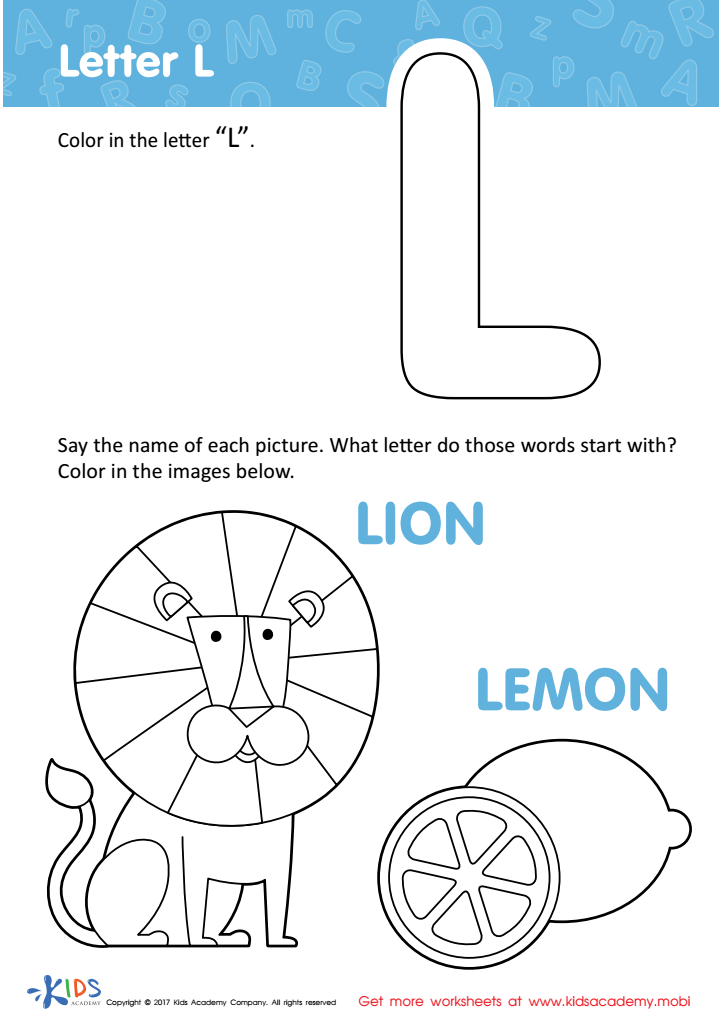
Letter L Coloring Sheet
 Assign to My Students
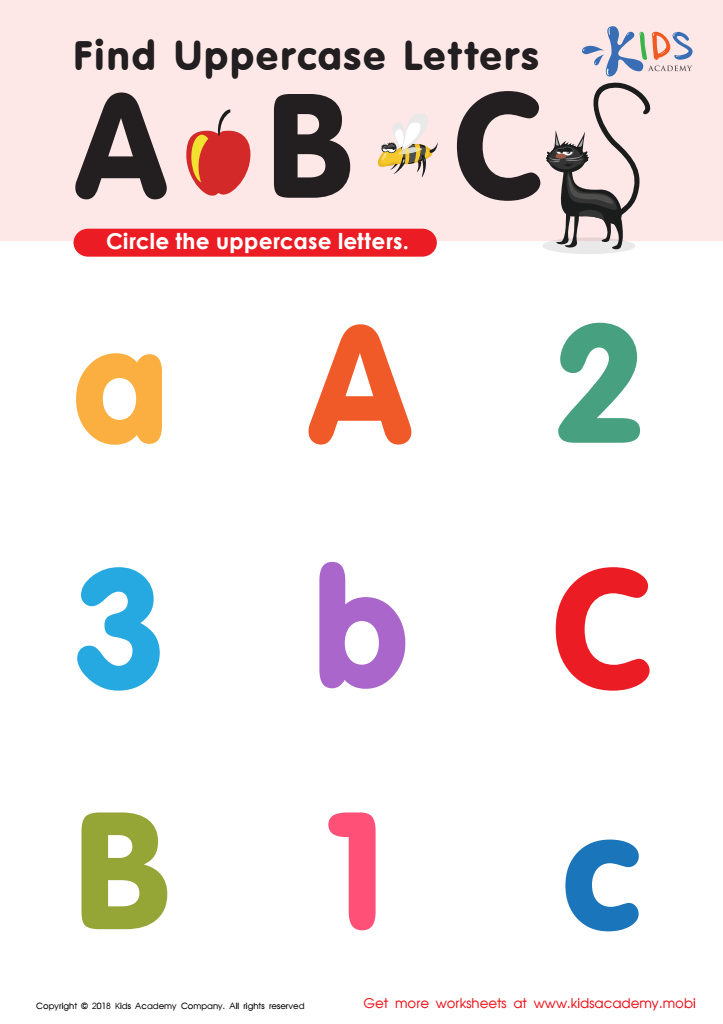
Find Uppercase Letters A, B, and C Worksheet
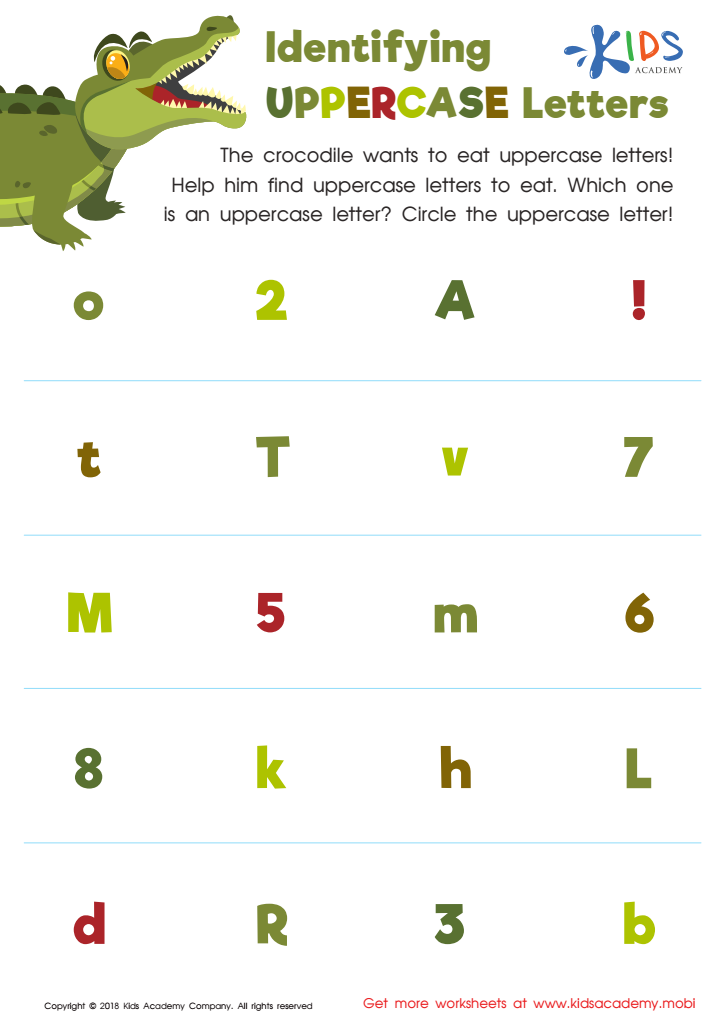
Identifying Uppercase Letters Worksheet
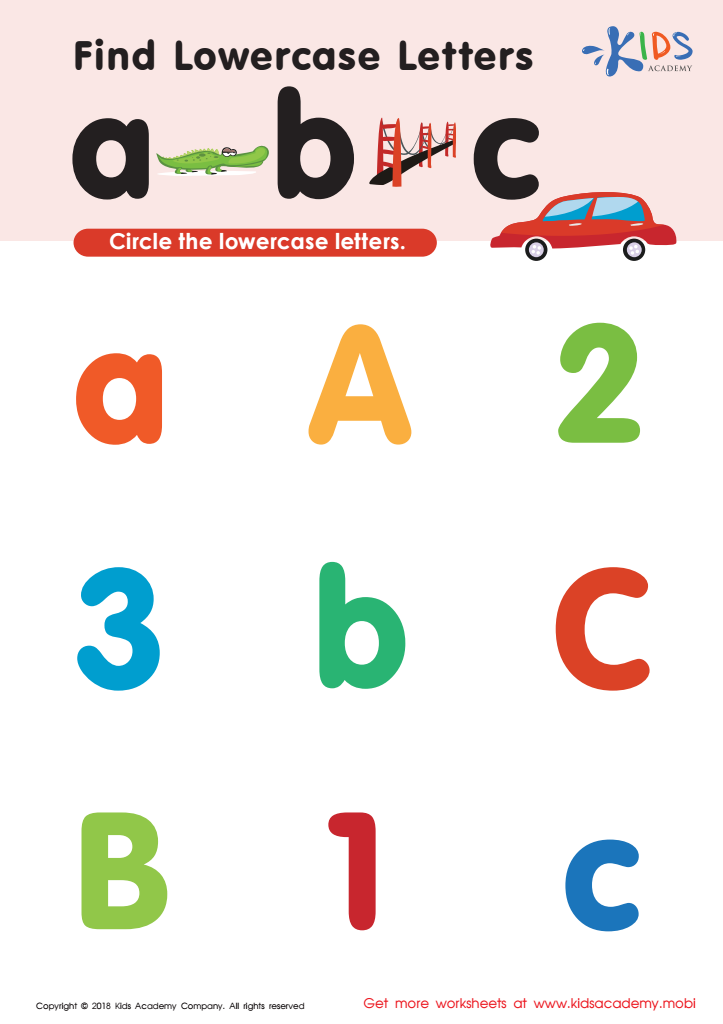
Find lowercase letters a b c Worksheet
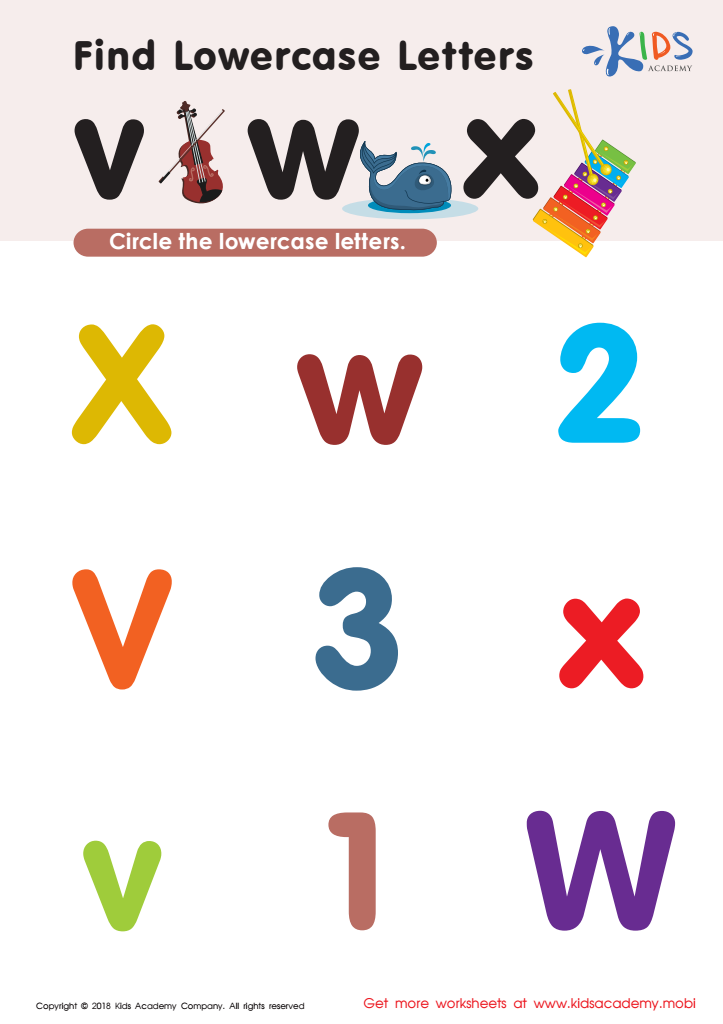
Find Lowercase Letters v w x Worksheet








Visual discrimination skills involve the ability to see and interpret differences between objects, symbols, or shapes. These skills are fundamental for a 6-year-old child's overall development and success in various learning activities. Parents and teachers should prioritize the nurturing of visual discrimination for several crucial reasons.
Firstly, visual discrimination is vital for reading and writing proficiency. Children who can easily distinguish between letters, such as 'b' and 'd' or 'p' and 'q,' are less likely to encounter difficulties when learning to read. This capability directly influences their ability to understand texts and follow written instructions.
Secondly, mathematics also relies heavily on visual discrimination skills. Recognizing the difference between numbers and mathematical symbols aids in the child's ability to solve problems accurately. Mistaking a "6" for a "9" or a "+" for a "x" can fundamentally alter their computations and results.
Additionally, these skills support daily activities such as distinguishing between different objects, people, and symbols, fostering greater independence and confidence. Proficient visual discrimination conduces better motor coordination, impacting activities like dressing, playing sports, or doing crafts.
Therefore, parents and teachers must pay close attention to theses skills, and engage children in exercises and games to strengthen them, ultimately setting a strong foundation for literacy, numeracy, and daily life competencies.








