Counting skills Normal Geometry Worksheets for 6-Year-Olds
5 filtered results
-
From - To
Boost your 6-year-old's math skills with our engaging Counting Skills Normal Geometry Worksheets! Specially designed for young learners, these worksheets make math fun and accessible. Kids will explore shapes, patterns, and basic geometric concepts while enhancing their counting abilities. Our vibrant and interactive activities encourage hands-on learning and help children develop a strong foundation in geometry. Perfect for classroom use or at-home practice, these worksheets ignite curiosity and foster confidence in math. Watch your child's skills grow as they identify shapes and practice counting with our expertly crafted educational materials. Start the journey to math success today!
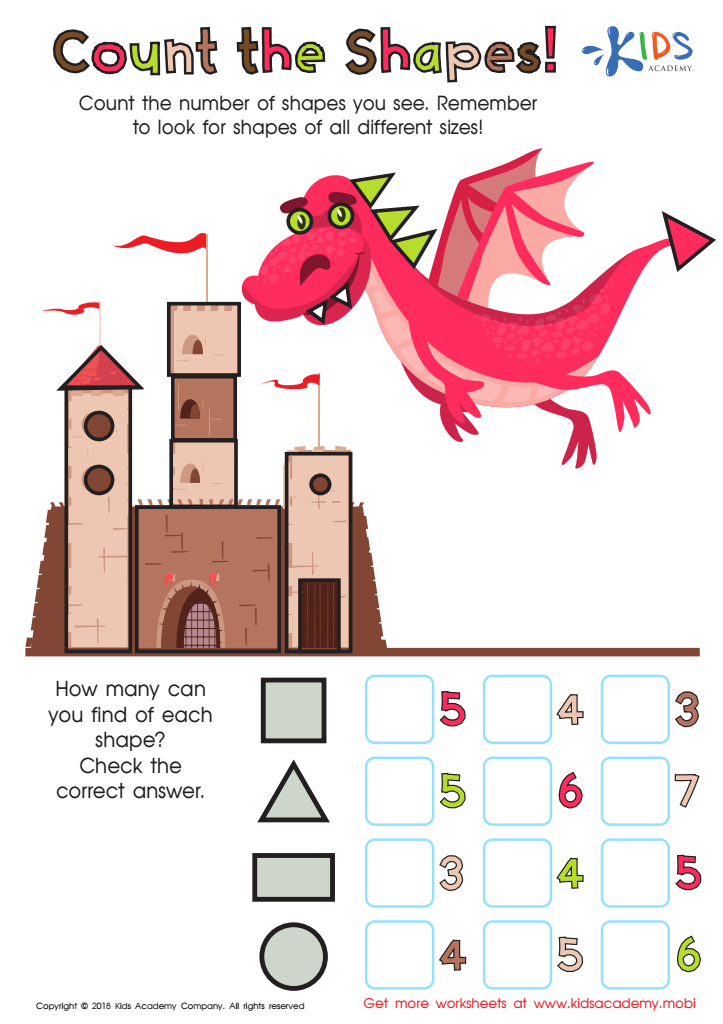
Count the Shapes Worksheet
 Assign to My Students











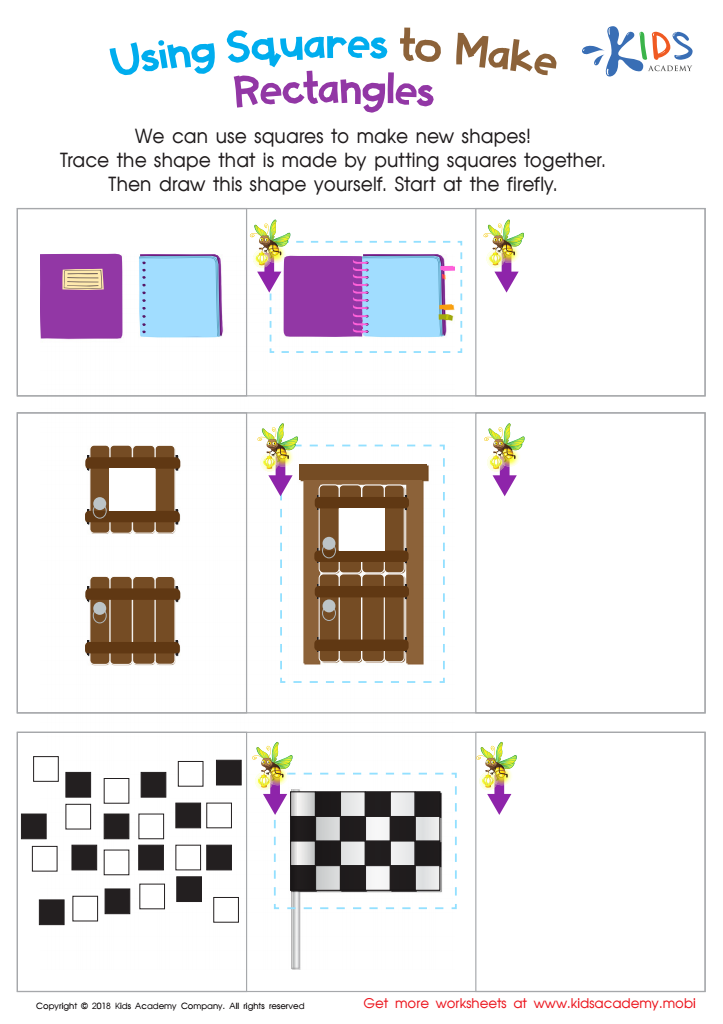
Using Squares to Make Rectangles Worksheet
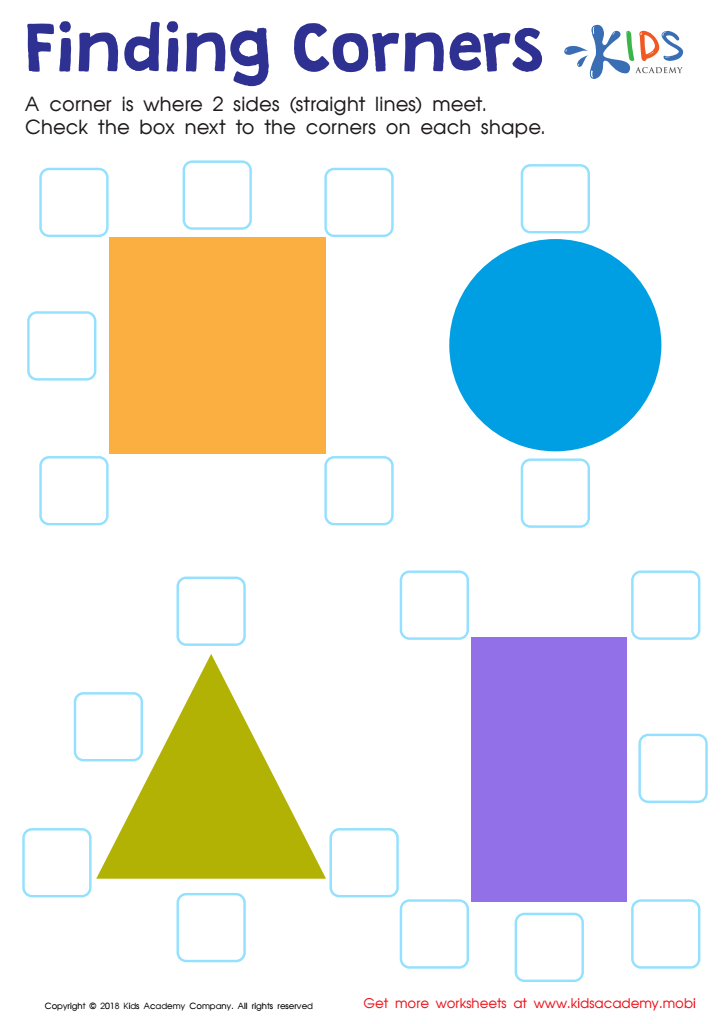
Finding Corners Worksheet
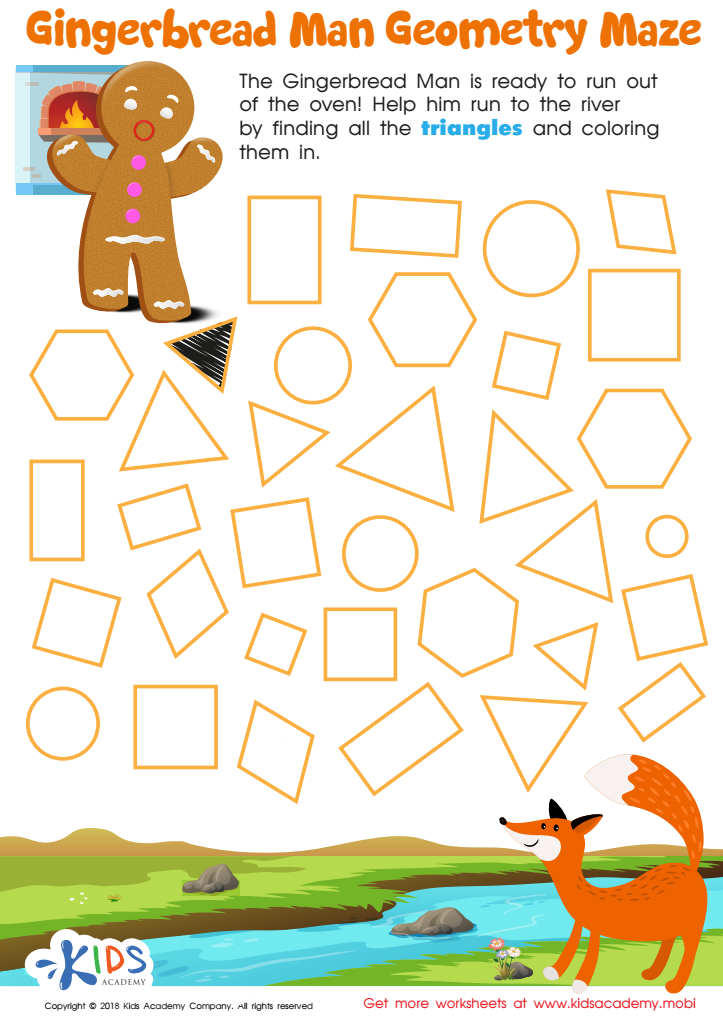
Gingerbread Man Geometry Maze Worksheet








Counting skills and a basic understanding of geometry lay a crucial foundation for a child's future mathematical abilities and overall cognitive development. At the age of six, children's brains are highly receptive to new concepts, making it an ideal time to introduce these fundamental topics.
Firstly, counting skills are essential for developing numerical literacy. They help children recognize and understand numbers, making it easier for them to grasp more advanced mathematical concepts later on, such as addition and subtraction. Counting exercises also enhance memory, attention to detail, and logical reasoning, all of which are critical cognitive skills.
Normal geometry, meanwhile, introduces children to shapes, spatial relationships, and the properties of different objects. Understanding shapes and spatial orientation aids in problem-solving and situational awareness. For instance, recognizing patterns and the relationships between shapes can improve a child's ability to organize information and tackle complex problems methodically.
Moreover, these skills are interconnected with other areas of learning, such as reading and physical education. For example, understanding directions and spatial awareness can improve a child's ability to follow instructions and navigate physical environments.
In summary, parents and teachers should prioritize counting and geometry skills for six-year-olds as they foster a comprehensive suite of cognitive skills necessary for academic success and everyday functioning.








