Vocabulary enhancement Normal Geometry Worksheets for 6-Year-Olds
5 filtered results
-
From - To
Discover our Vocabulary Enhancement Normal Geometry Worksheets specifically designed for 6-year-olds! These engaging worksheets help young learners improve their understanding of fundamental geometric concepts while expanding their vocabulary. Children will explore shapes, spatial awareness, and geometric terminology through fun activities that foster creativity and critical thinking. Perfect for classroom settings or at-home learning, our worksheets encourage interactive learning and make geometry exciting for young minds. Support your child's educational journey with resources tailored to enhance both language and mathematical skills. Dive into the world of geometry and watch as your child develops confidence and proficiency in this essential area of math!
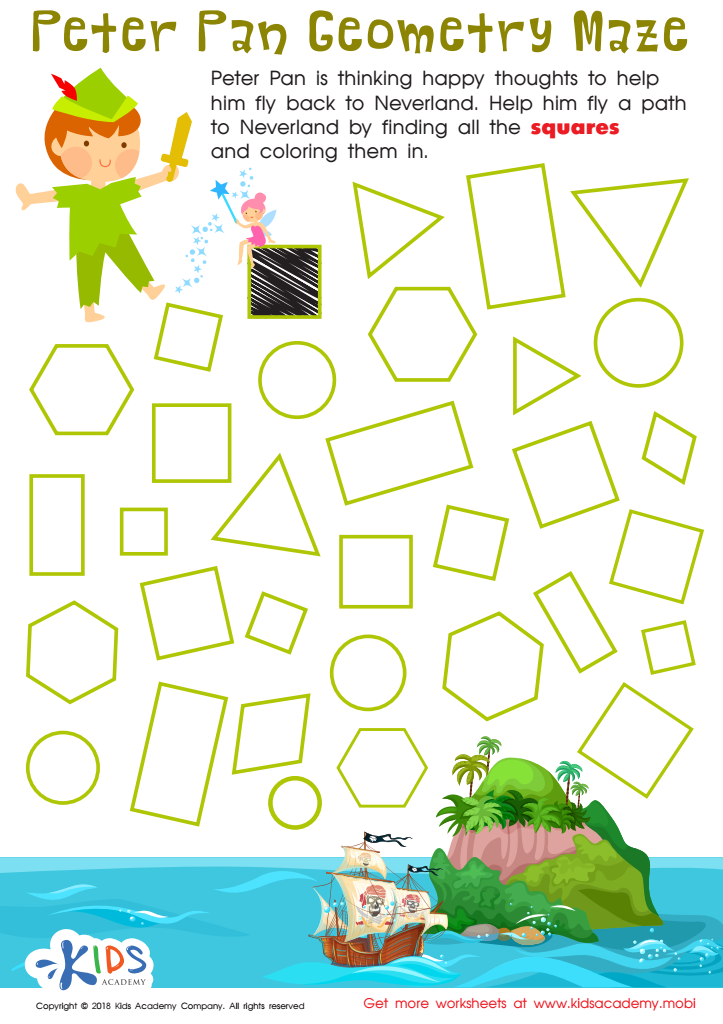
Peter Pan Worksheet
 Assign to My Students











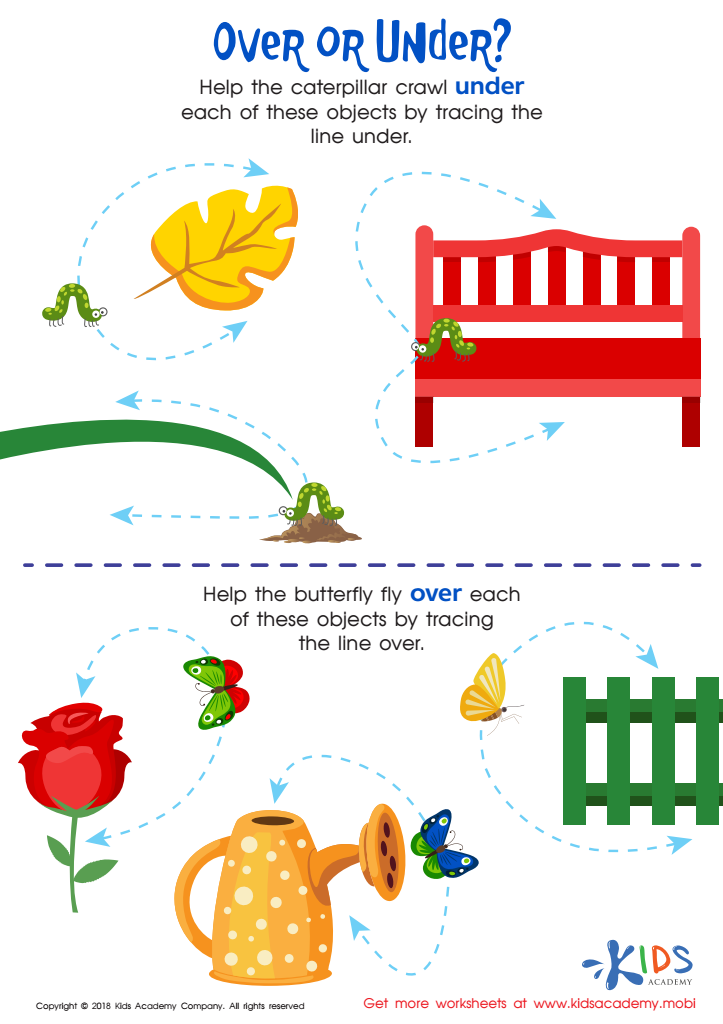
Over or Under? Worksheet
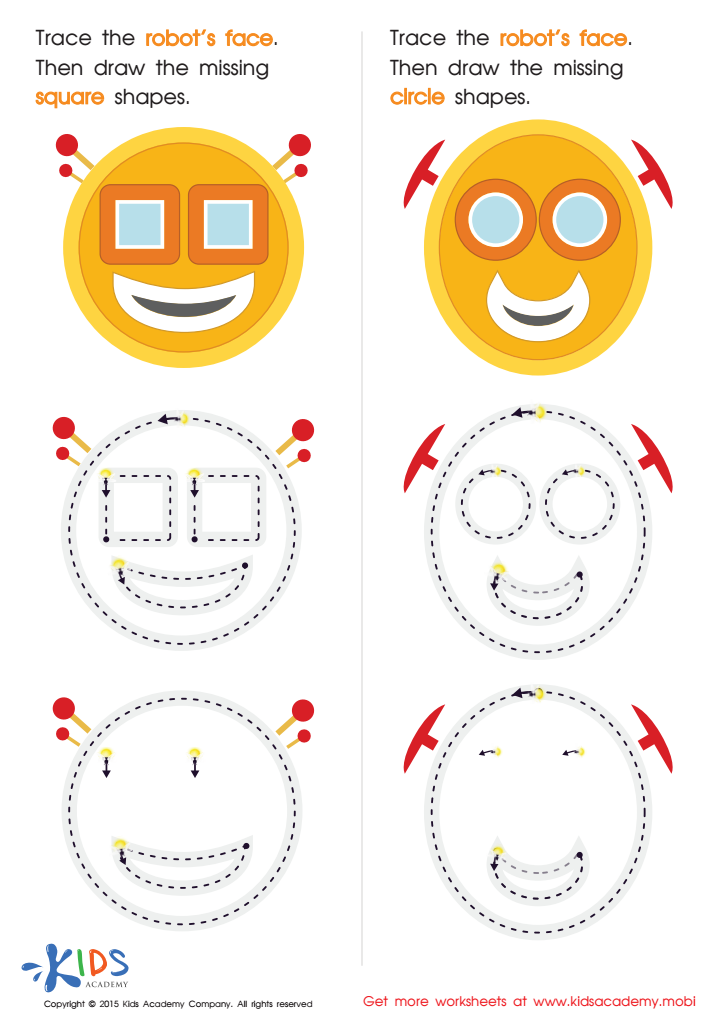
Practicing to Draw Circles And Squares Printable
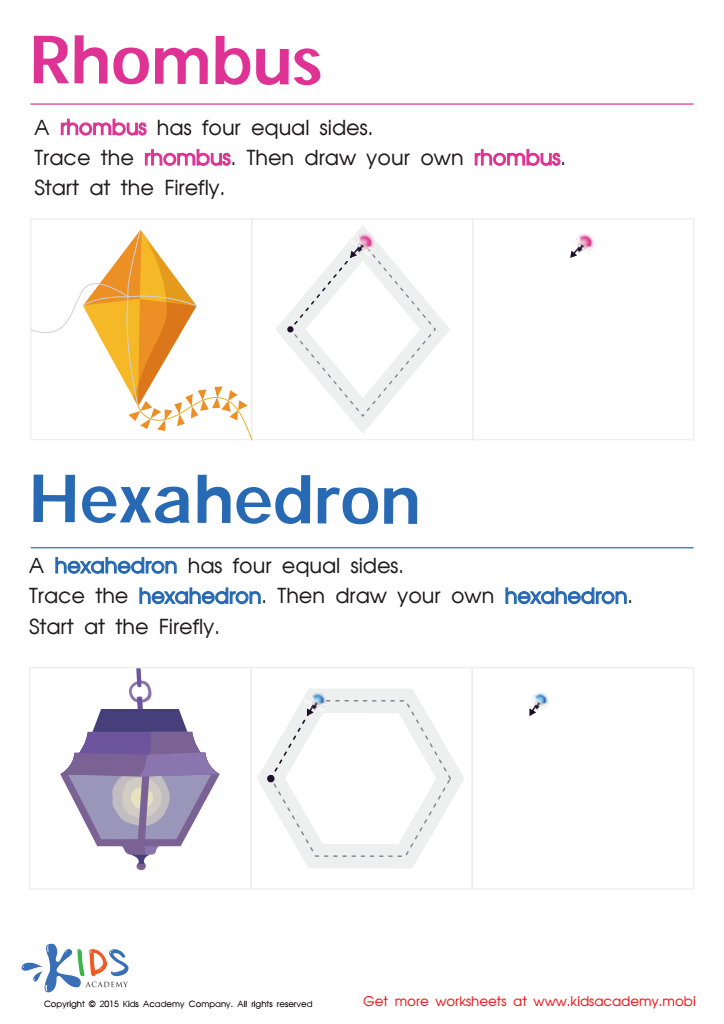
Draw a Rhombus And a Hexahedron Printable
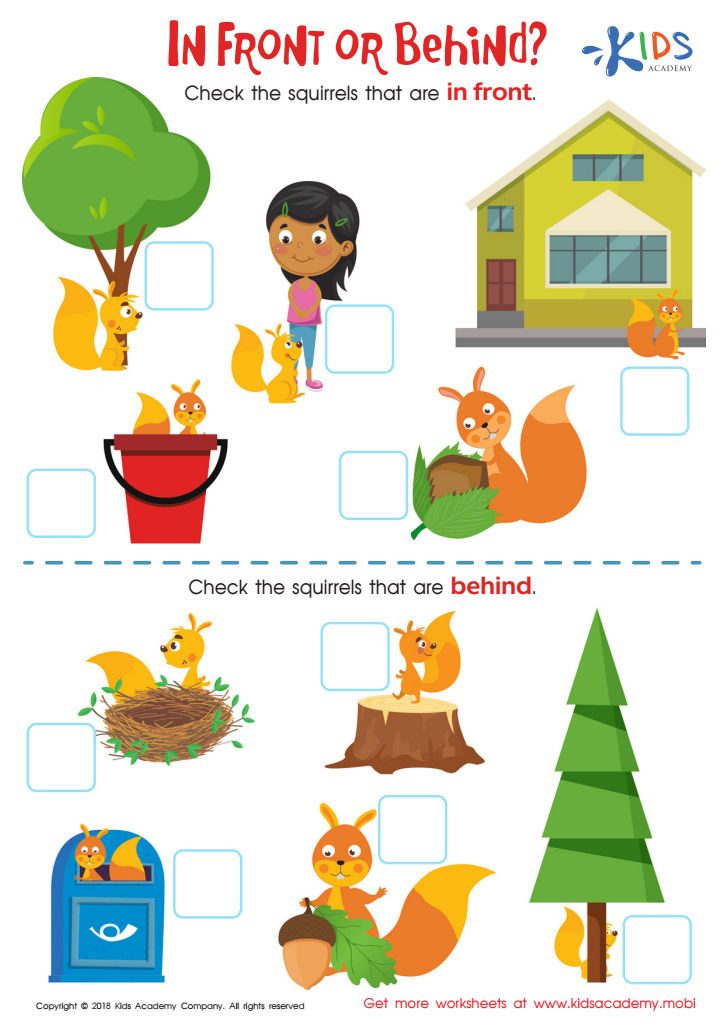
In Front or Behind: Part 2 Worksheet








Vocabulary enhancement in the context of normal geometry for 6-year-olds is crucial because it lays the foundation for mathematical understanding and communication. At this age, children are beginning to grasp basic geometric concepts such as shapes, sizes, positions, and dimensions. By enriching their vocabulary around these ideas, parents and teachers help children articulate their thoughts and understand instructions more effectively.
A strong vocabulary not only aids in recognizing shapes like square, triangle, and circle, but it also helps children describe their properties and relationships. For example, understanding terms such as "congruent," "symmetry," and "angle" allows them to engage in higher-level discussions and problem-solving. Furthermore, enhanced vocabulary in geometric contexts connects math to everyday life, making learning more relevant and enjoyable.
By prioritizing vocabulary development in geometry, educators and parents ensure that children build confidence and competence in mathematics. This skill not only supports academic success but also fosters critical thinking and analytical skills. Ultimately, a robust vocabulary empowers young learners to navigate the world of math with ease, setting a positive trajectory for their future educational endeavors. By investing time in this area, they are equipping children with tools they will use throughout their lives.








