Addition Practice Normal Math Worksheets for 6-Year-Olds - Page 2
27 filtered results
-
From - To
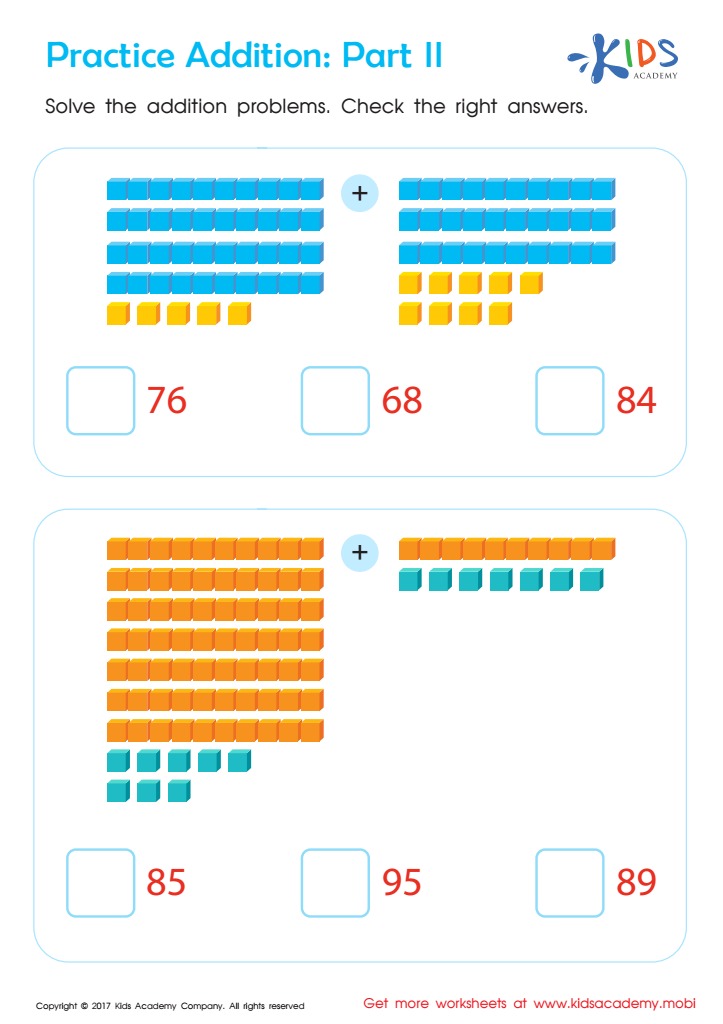
Practice Addition: Part 2 Worksheet
 Assign to My Students
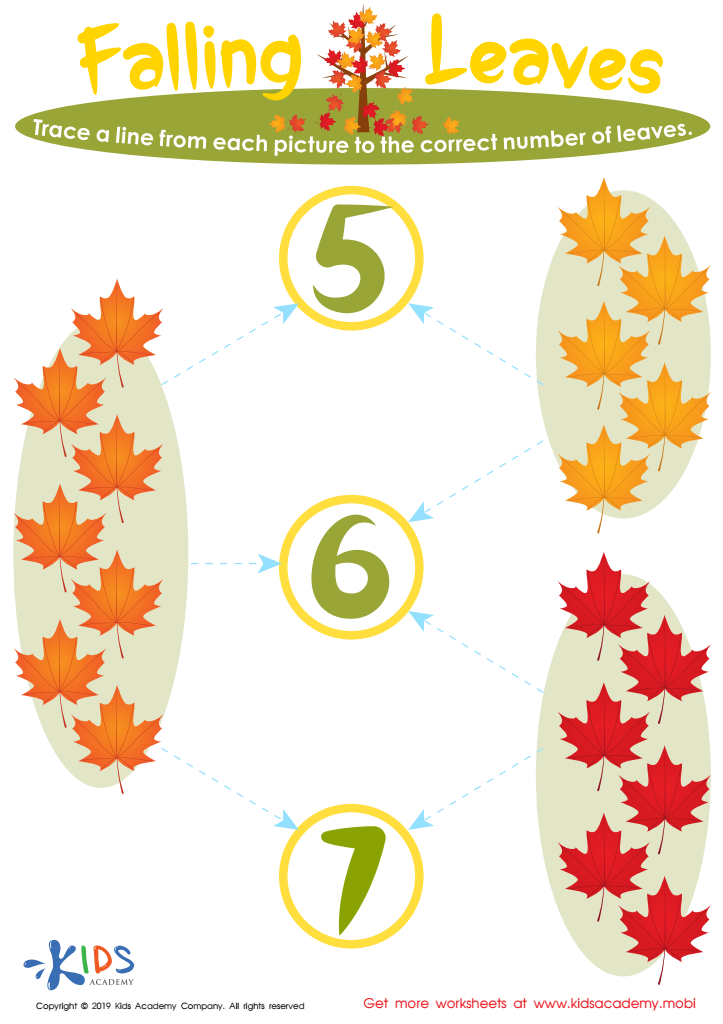
Falling Leaves Worksheet
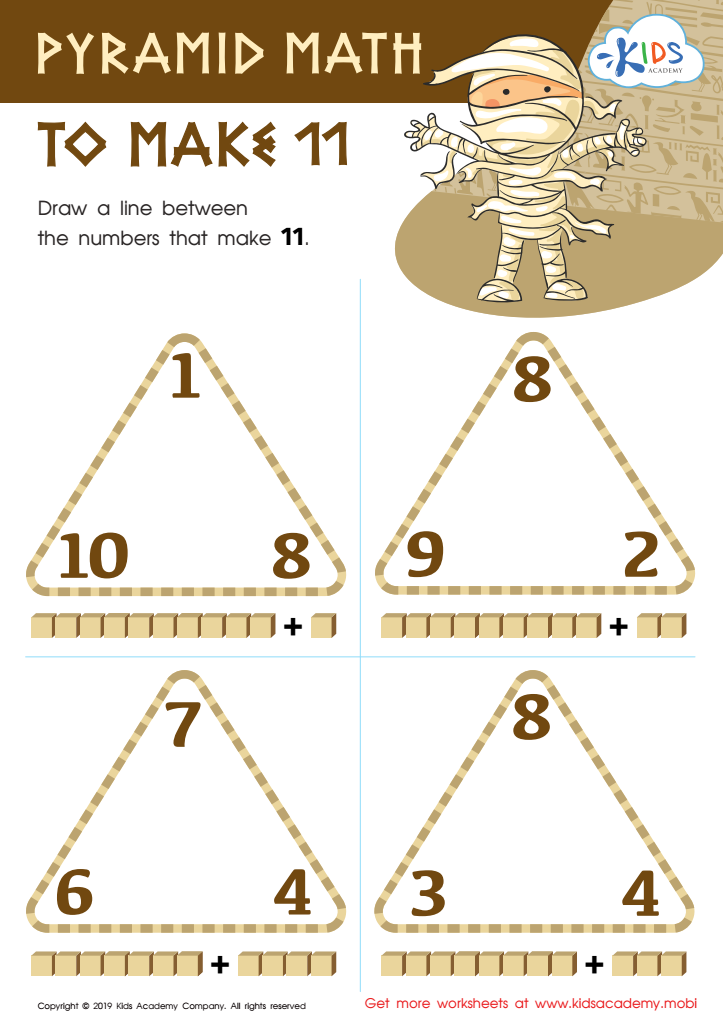
Pyramid Math to Make 11 Worksheet








Parents and teachers should care significantly about addition practice for 6-year-olds because fundamental arithmetic skills form the bedrock of future mathematical understanding. At this crucial developmental stage, children's brains are highly receptive to new information and learning patterns. Daily practice of basic addition helps to solidify number sense, which includes understanding the value of numbers, recognizing numerical patterns, and comprehending mathematical symbols and procedures.
For young learners, early success in math fosters a positive attitude toward the subject. This, in turn, builds confidence, encourages curiosity, and reduces anxiety about math tasks, which are critical for academic progress. Practicing addition also supports the development of cognitive skills such as problem-solving, logical reasoning, and critical thinking. When children notice that math can be both practical and enjoyable through engaging activities, they are more likely to develop a lifelong interest in the subject.
Regular addition exercises serve as the groundwork for future topics like subtraction, multiplication, and division. They also lend themselves to real-life applications, such as counting objects, sharing items equally, or even making change during playtime activities. Parents and teachers, therefore, play an essential role in integrating these practices into daily routines, ensuring that children build a robust mathematical foundation that will support all future learning endeavors.








