
Observational skills Normal Science Worksheets for 6-Year-Olds
11 filtered results
Difficulty Level
Grade
Age
-
From - To
Subject
Activity
Standards
Explore our engaging "Observational Skills Normal Science Worksheets" designed specifically for 6-year-olds! These worksheets help young learners enhance their observation skills through fun and interactive activities. Children will engage with colorful visuals and thought-provoking prompts that encourage them to analyze their surroundings, recognize patterns, and describe their observations in detail. Our carefully crafted worksheets promote critical thinking and foster a love for science by making learning enjoyable. Ideal for classroom use or at-home practice, these resources will empower your child to sharpen their observational abilities, laying a strong foundation for future scientific exploration. Start observing the world with excitement today!
Favorites
With answer key
Interactive
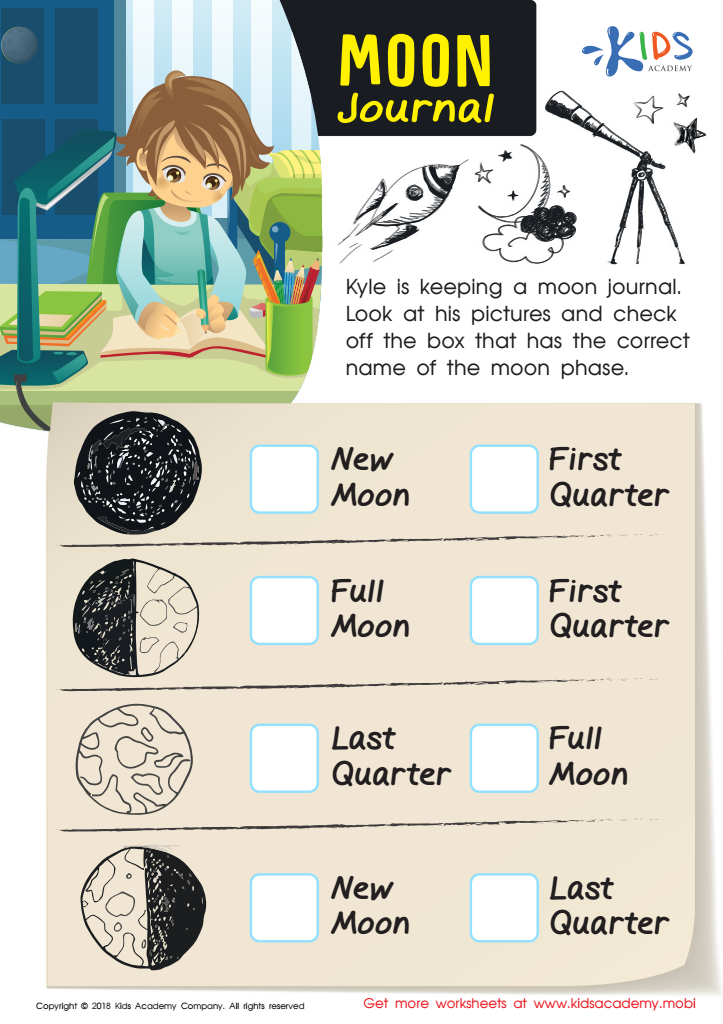
Moon Journal Worksheet
Observe the moon and its 8 phases with your child by downloading this free PDF worksheet from Kids Academy! Review the moon phases with them then help them label Kyle's moon journal. Select the right moon phase for each picture to complete the page!
 Assign to My Students
Moon Journal Worksheet
Worksheet
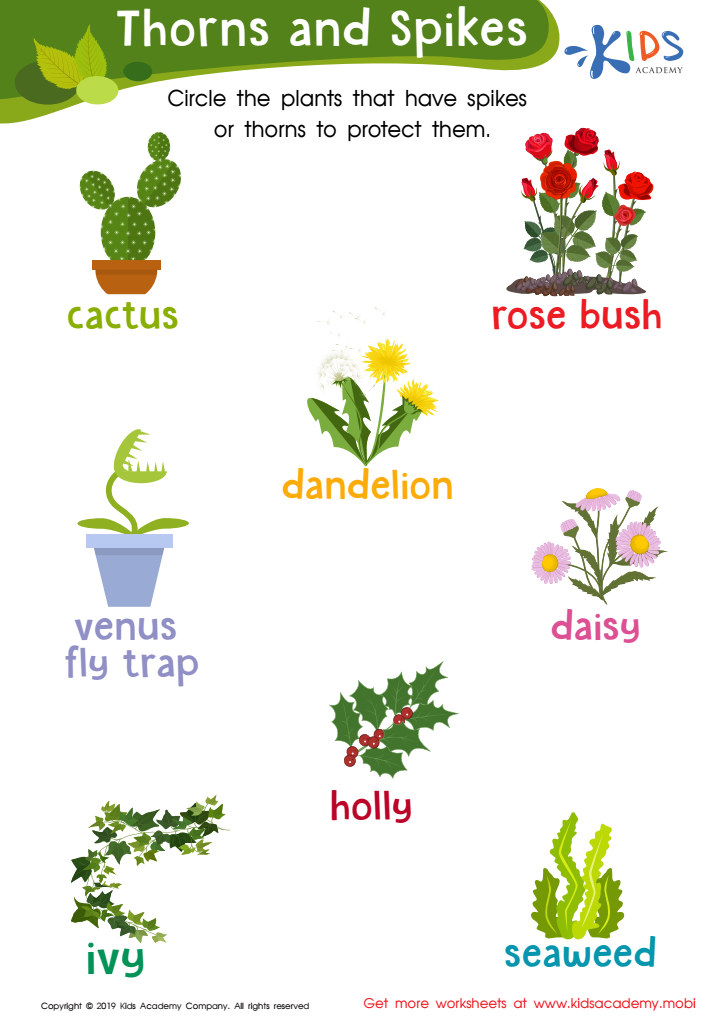
Thorns and Spikes Worksheet
Can your students name and identify the plants and flowers in this worksheet? Ask them to read out the names and circle the ones with spikes or thorns. Help them appreciate nature's beauty and understand how plants protect themselves.
Thorns and Spikes Worksheet
Worksheet
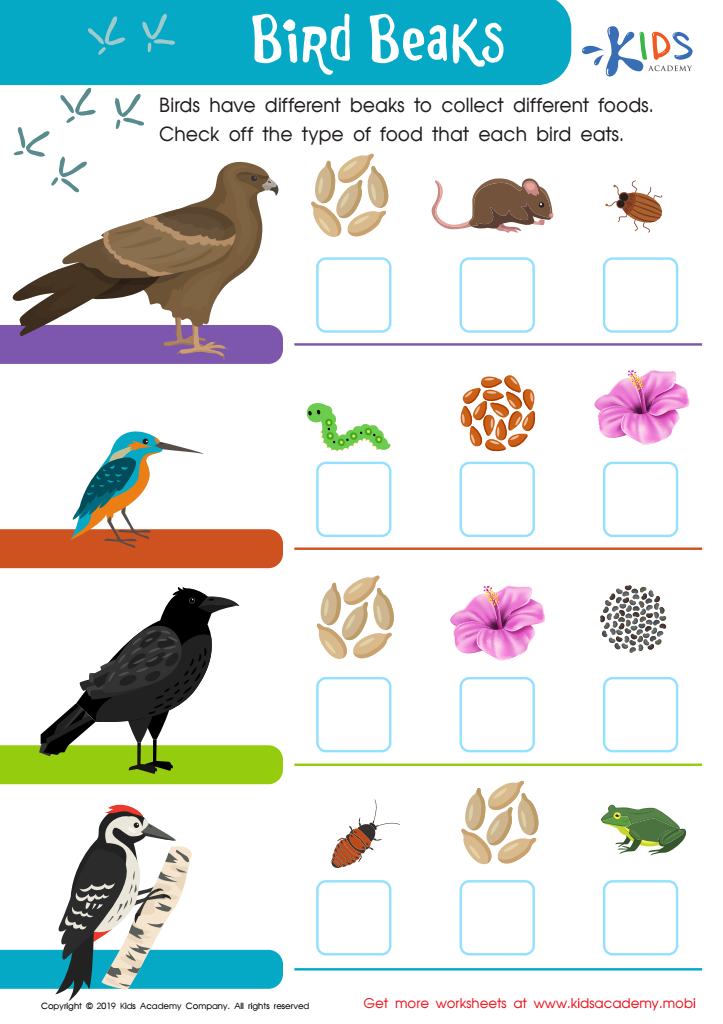
Bird Beaks Worksheet
Birds have beaks to eat different types of food. Let your little nature lover explore why with this free worksheet! They'll learn about different beak shapes and match them to the food that's best for them. Be an adorable bird watcher together!
Bird Beaks Worksheet
Worksheet
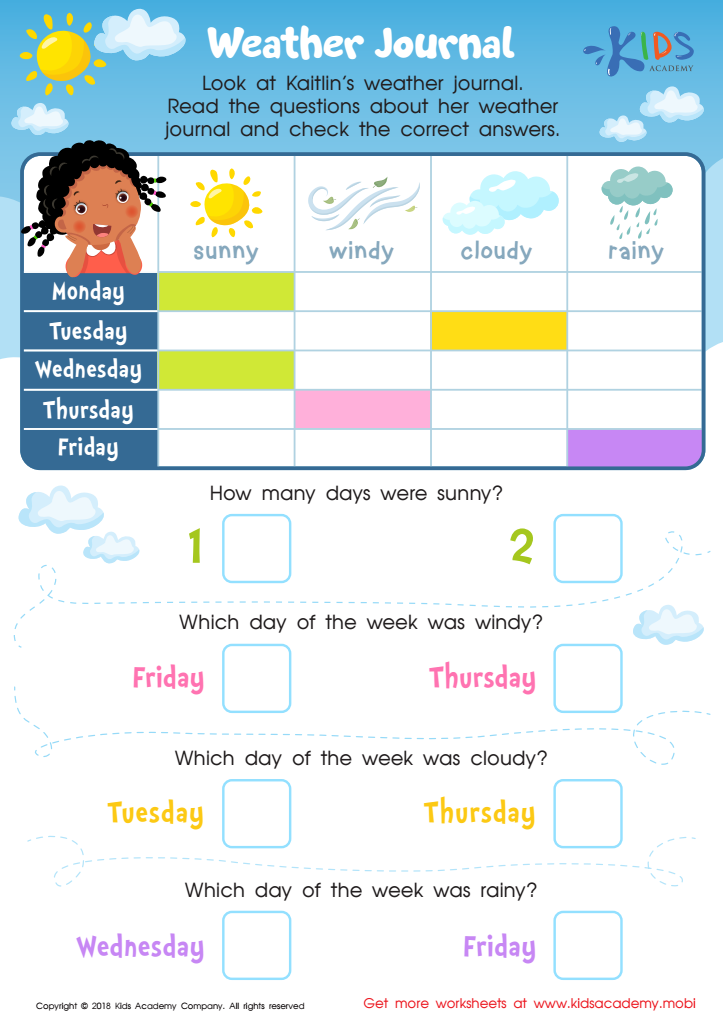
Weather Journal Worksheet
Kaitlin keeps a weather journal. Encourage your child to do the same! Look at Kaitlin's journal with them, and have them note the weather for each day. Read aloud the questions and check the correct answers.
Weather Journal Worksheet
Worksheet
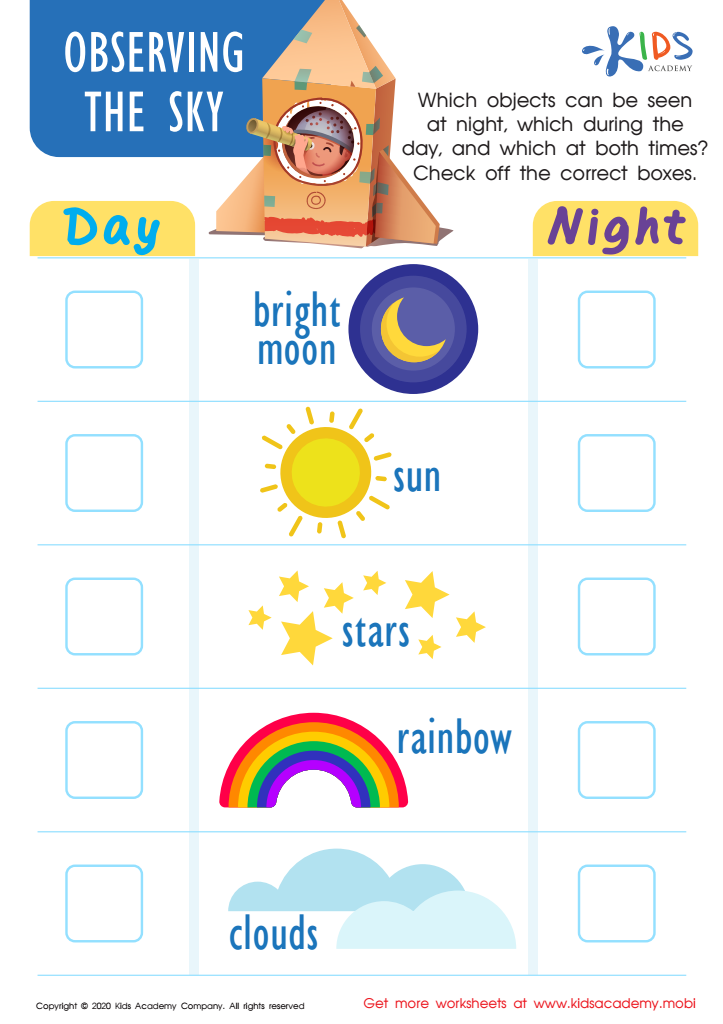
Observing the Sky Worksheet
Look up to the sky and observe day and night objects! See a rainbow or some clouds by day and stars and the moon at night. Help your little learner review this science concept with Kids Academy's fun and colorful worksheet. Have them sort and check off the objects seen by day or night, going down the column in the center.
Observing the Sky Worksheet
Worksheet
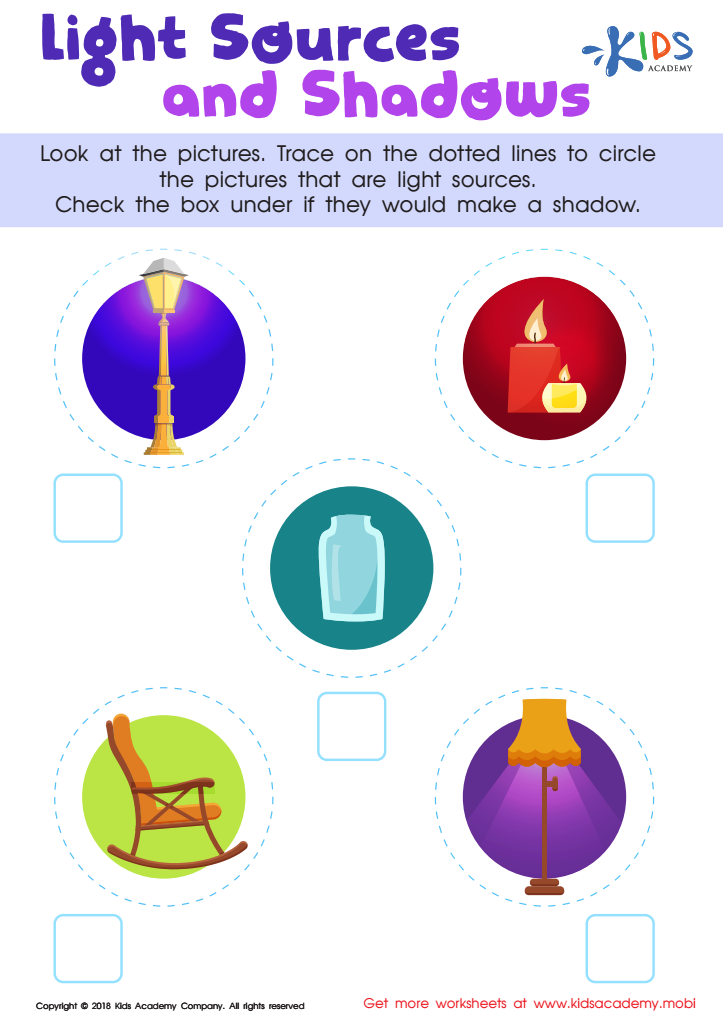
Light Sources and Shadows Worksheet
During the day, the sun radiates bright light. At night, when it's time for bed, the sun sets and darkness takes over. To light our way, we use other sources of light. With your students, trace the dotted lines around the pictures of light sources and check the boxes under the objects that will cast shadows.
Light Sources and Shadows Worksheet
Worksheet
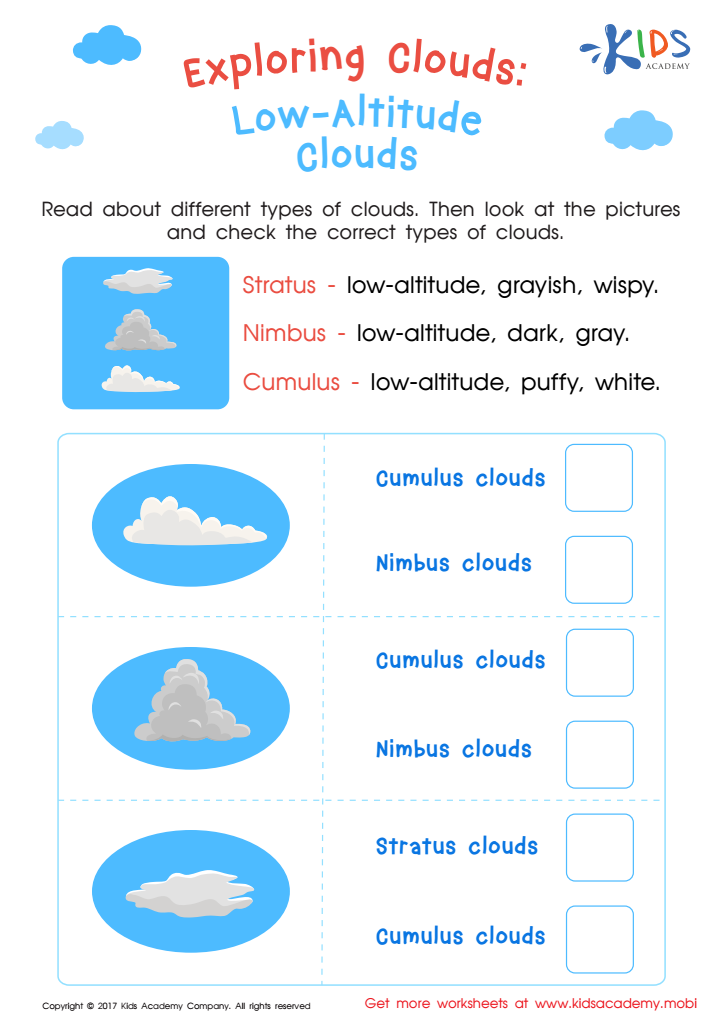
Exploring Clouds: Low Altitude Clouds Printable
Use this fun worksheet to teach them about the different types of low altitude clouds like cirrocumulus, stratocumulus, and cumulonimbus. 80 words.
When a storm clouds up the sky, have your child identify the different types of clouds! This worksheet can help them learn about the nimbus, cirrocumulus, stratocumulus, and cumulonimbus clouds. It's a great way to teach them about the various low altitude clouds and have fun at the same time!
Exploring Clouds: Low Altitude Clouds Printable
Worksheet
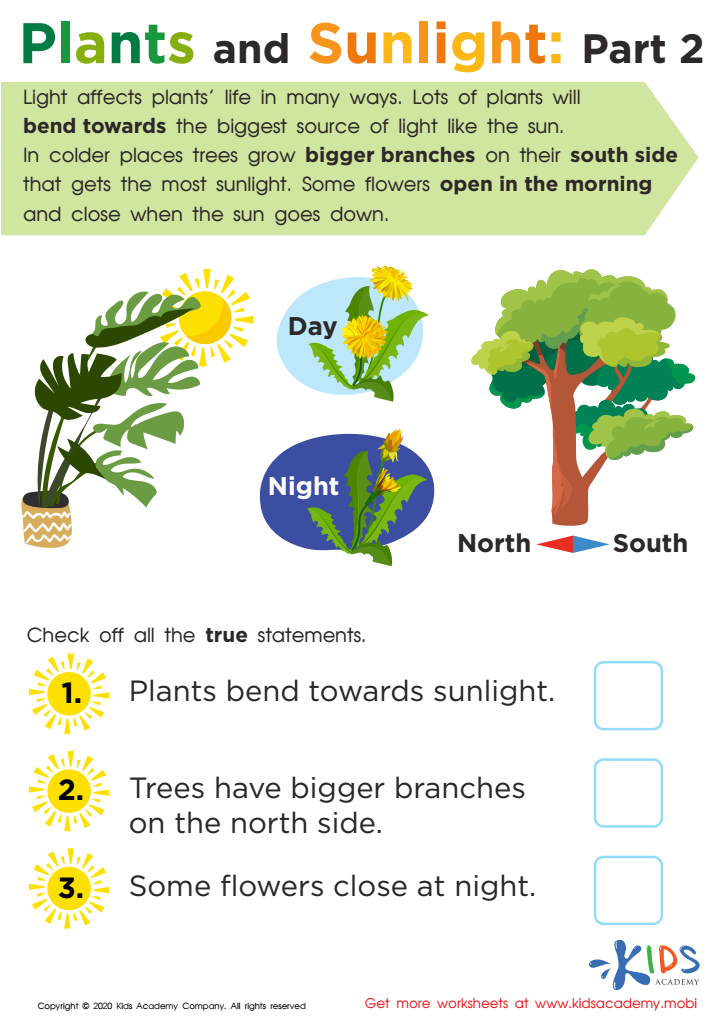
Plants and Sunlight: Part 2 Worksheet
Place a houseplant near the window and observe how it bends to get more sunlight! The sun's effects on plants and trees are amazing - flowers opening and closing, trees growing stronger branches on the south side. Let your child learn with this free Kids Academy printable science worksheet!
Plants and Sunlight: Part 2 Worksheet
Worksheet
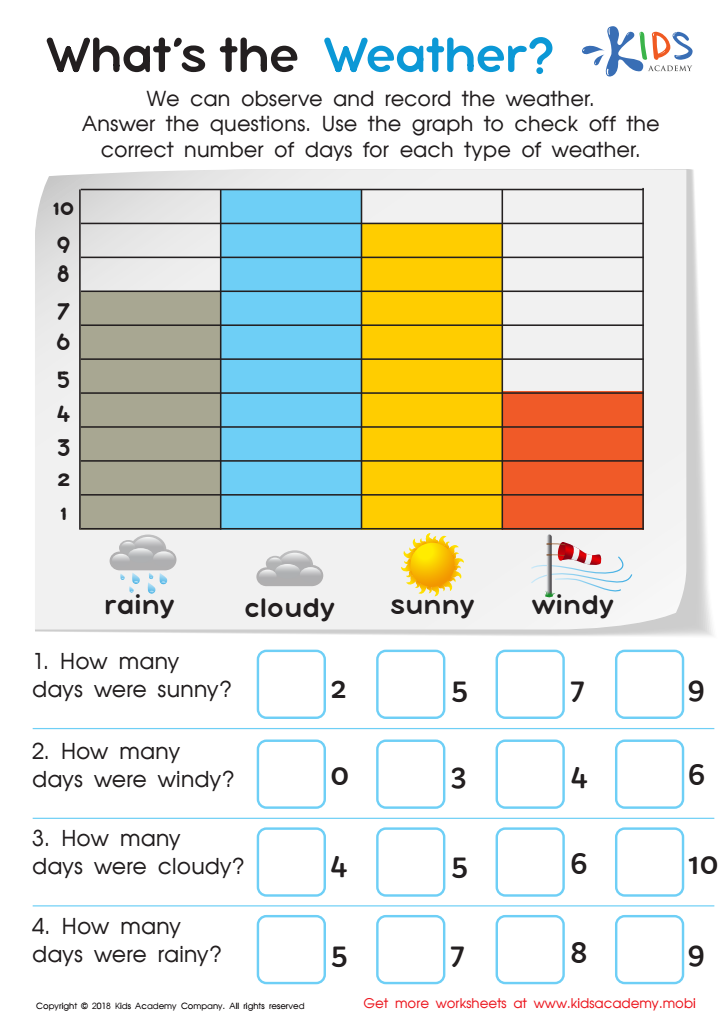
What's the Weather? Worksheet
Check the weather outside. Help kids learn and practice science and math by tracking different types of days using this printable worksheet. Have them count bars next to weather types like cloudy, sunny, windy, and rainy. Answer the questions and take the lesson further by creating a bar graph to show the monthly weather.
What's the Weather? Worksheet
Worksheet
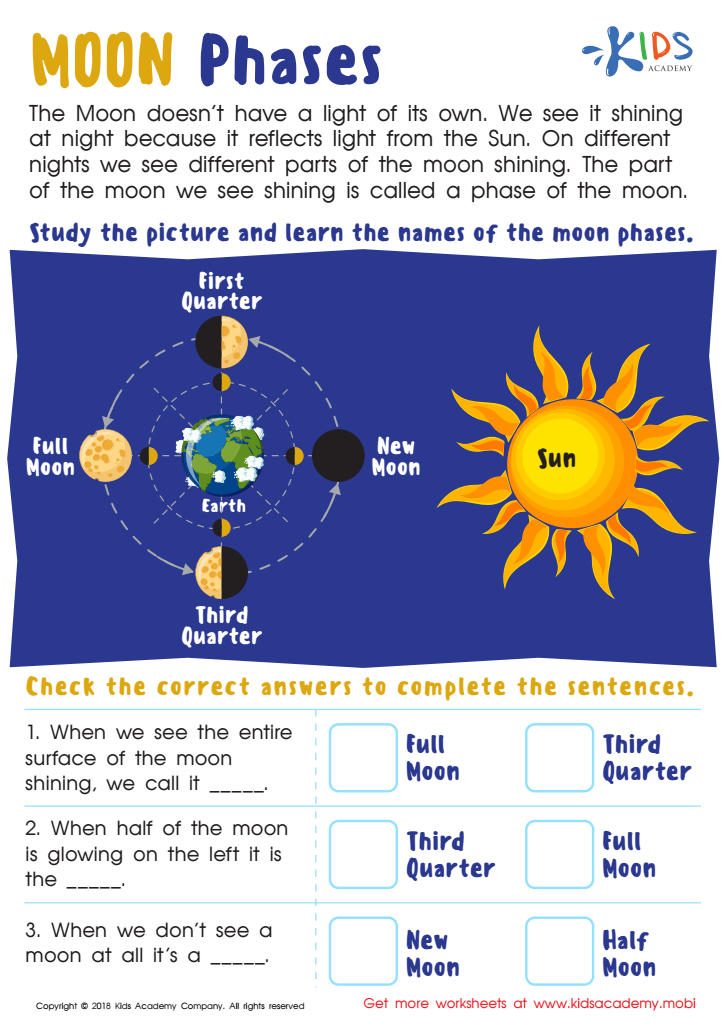
Moon Phases Worksheet
Gaze up at the night sky and the moon's appearance may change from night to night. Encourage your child to learn more about the sun, the moon, and space with this science worksheet. Have them read the text then study the picture. Finally, read the sentences and check the answers to identify the moon's phases.
Moon Phases Worksheet
Worksheet
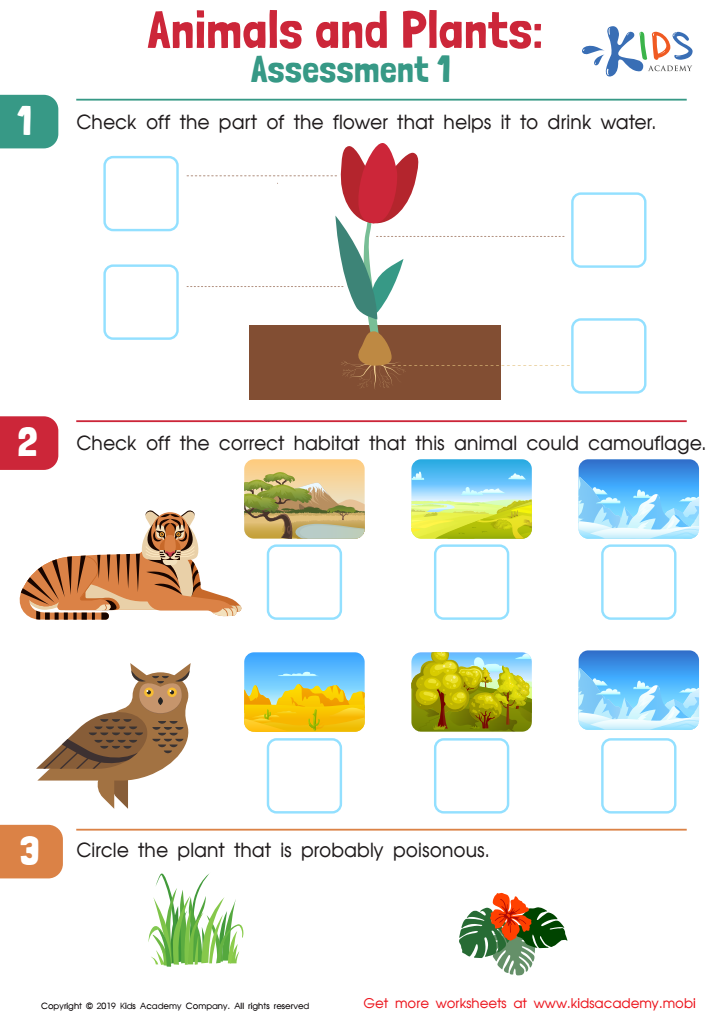
Animals and Plants: Assessment 1 Worksheet
Do you want to easily assess your child's understanding of basic science concepts? This colorful PDF offers a free opportunity for them to test their knowledge about parts of a flower, poisonous plants, animal habitats and more! Bright pictures make it fun and easy for you to see what they know.
Animals and Plants: Assessment 1 Worksheet
Worksheet
Join Kids Academy for Free
Who is primarily going to use this learning content?






Parents and teachers should care about observational skills in the context of normal science for 6-year-olds because these skills lay the foundation for critical thinking, curiosity, and a lifelong love of learning. At this stage, children are naturally curious about their surroundings. Fostering observational skills encourages them to ask questions, make predictions, and explore their environment actively, which is vital for their cognitive development.
Observation helps children to notice details they may otherwise overlook, enhancing their understanding of concepts such as cause and effect, classification, and patterns. These skills also promote scientific thinking, encouraging them to develop hypotheses and seek evidence, which is integral to the normal science curriculum.
Furthermore, strong observational skills contribute to better communication, as children learn to articulate their findings and share their insights with peers and adults. This not only boosts their verbal abilities but also nurtures social interactions and collaborative learning experiences.
Ultimately, prioritizing observational skills in early education supports holistic development, preparing children for more complex scientific concepts in the future while nurturing their innate curiosity and creativity, essential traits in an ever-evolving world.







