Letter-sound recognition Normal Alphabet Worksheets for Ages 7-8
3 filtered results
-
From - To
Enhance your child's reading skills with our "Letter-Sound Recognition Normal Alphabet Worksheets for Ages 7-8" from Kids Academy. These expertly crafted worksheets are designed to help young learners efficiently connect letters with their corresponding sounds, fostering confident reading abilities. Suitable for children aged 7-8, the exercises include engaging activities such as matching letters to sounds, identifying beginning and ending sounds, and practicing phonetic patterns. Encouraging consistent practice, this collection boosts both literacy and phonemic awareness, providing a solid foundation in language skills. Perfect for classroom settings, homeschooling, or extra practice, these worksheets make learning both enjoyable and educational.
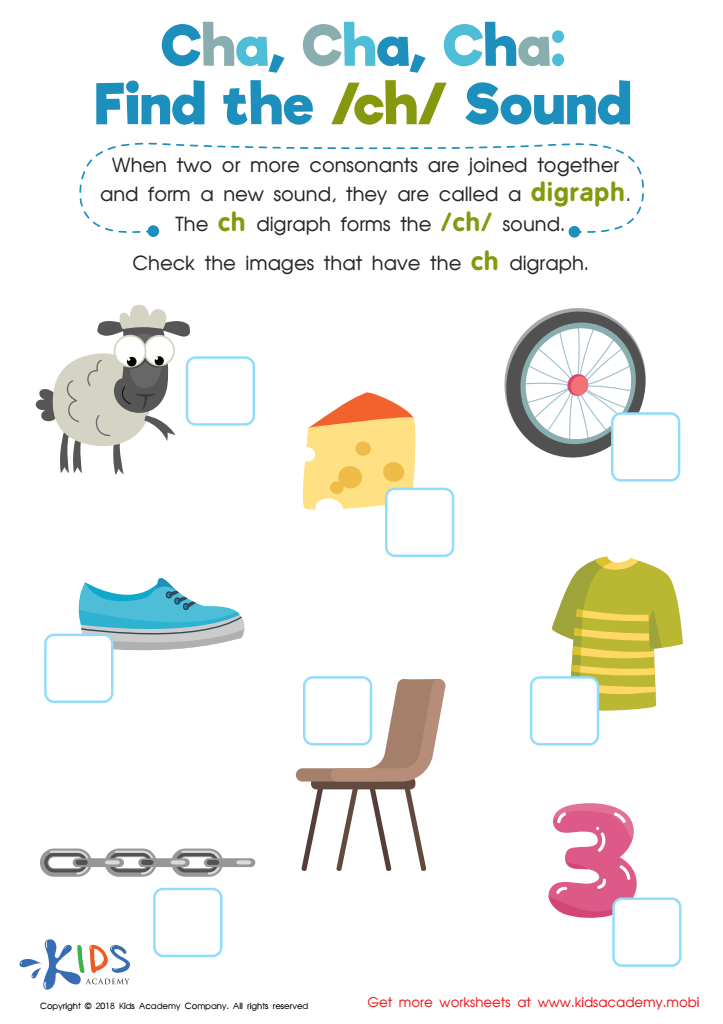
Cha, Cha, Cha: Find the /Ch/ Sound Worksheet
 Assign to My Students
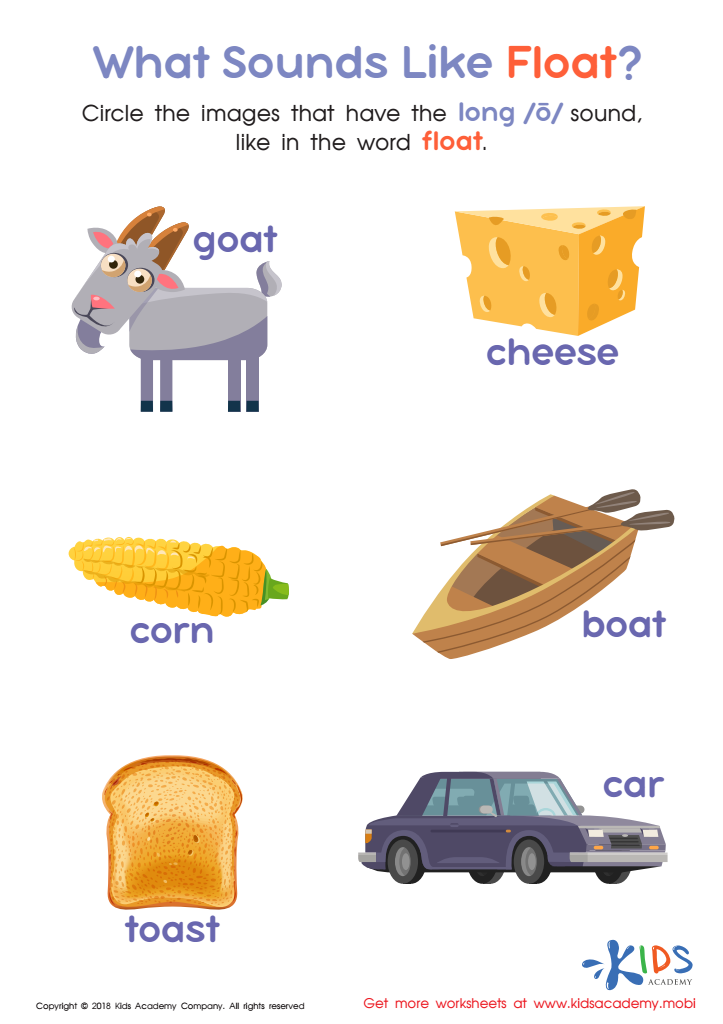
What Sounds Like Float? Worksheet
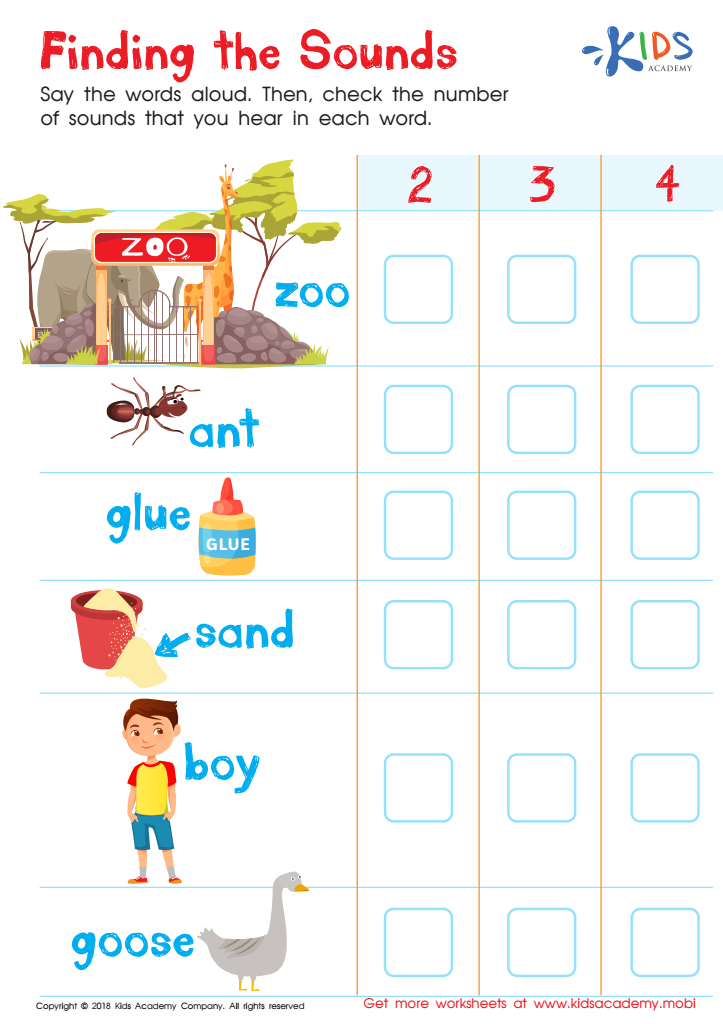
Finding the Sounds Worksheet








Letter-sound recognition is a fundamental skill for early literacy, crucial for children around the ages 7-8. At this developmental stage, children typically transition from learning to read to reading to learn. Recognizing the sounds that correspond to each letter of the alphabet allows them to decode words, which is the ability to interpret written language into spoken words.
When children grasp letter-sound relationships, they can better understand the way words are constructed. This knowledge aids in spelling, writing, and effective communication. Difficulty in letter-sound recognition can lead to reading challenges, which may hinder academic success across various subjects since most school curricula rely heavily on reading comprehension.
Moreover, proficiency in letter-sound recognition builds a child’s confidence. As they realize they can decode new words and read independently, they develop a love for reading, which fosters a lifelong quest for knowledge. Teachers and parents should collaborate to reinforce these skills through fun, engaging activities, such as reading together, interactive games, and phonics exercises. Providing support at this critical stage greatly contributes to a child's overall academic growth and future learning abilities. Caring about and fostering letter-sound recognition is essentially investing in a child's educational and personal development.







