Basic counting skills Normal Worksheets for Ages 7-8
5 filtered results
-
From - To
Enhance your child's understanding of basic counting skills with our engaging worksheets designed specifically for ages 7-8. Our "Basic Counting Skills Normal Worksheets" offer a fun and interactive way for young learners to grasp fundamental math concepts. Featuring a variety of exercises, children will practice counting, number recognition, and simple addition through vibrant visuals and enjoyable activities. These worksheets are perfect for reinforcing classroom lessons or supplementary learning at home. By incorporating our resources, you’ll help your child build a solid foundation in mathematics while keeping their learning experience enjoyable and effective. Start boosting their counting skills today!
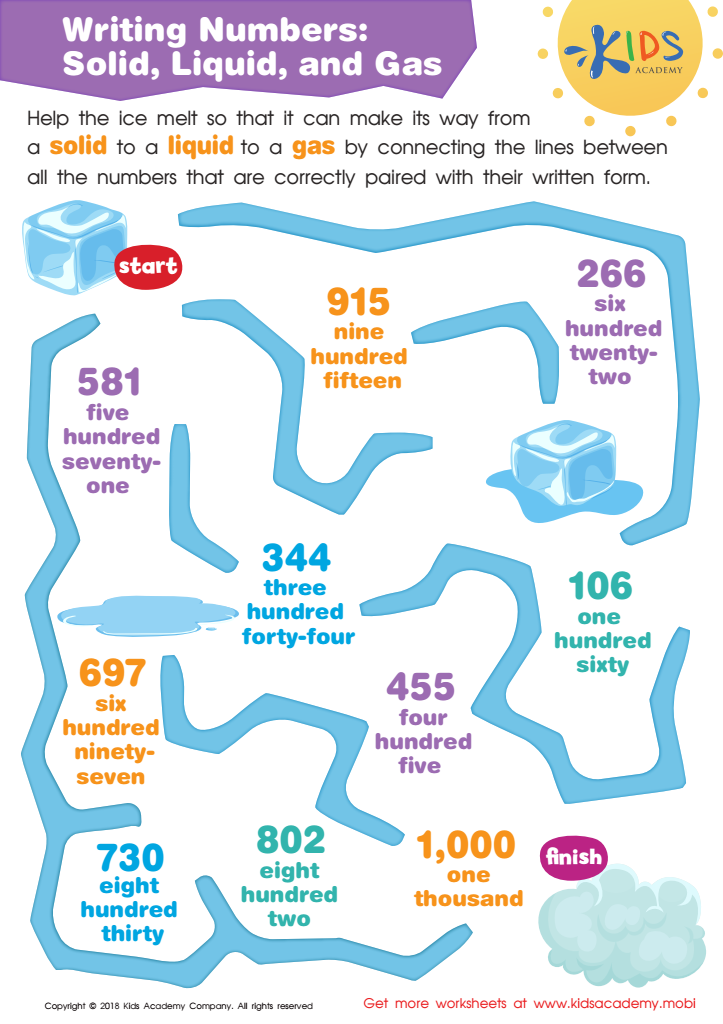
Solid, Liquid, and Gas Writing Numbers Worksheet
 Assign to My Students
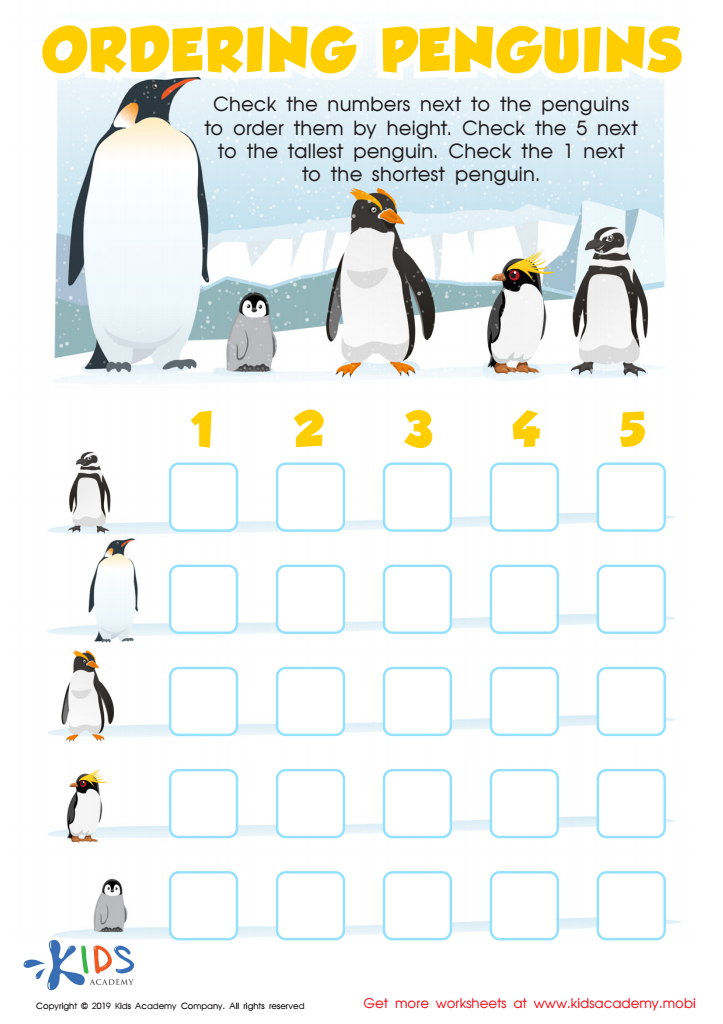
Ordering Penguins Worksheet
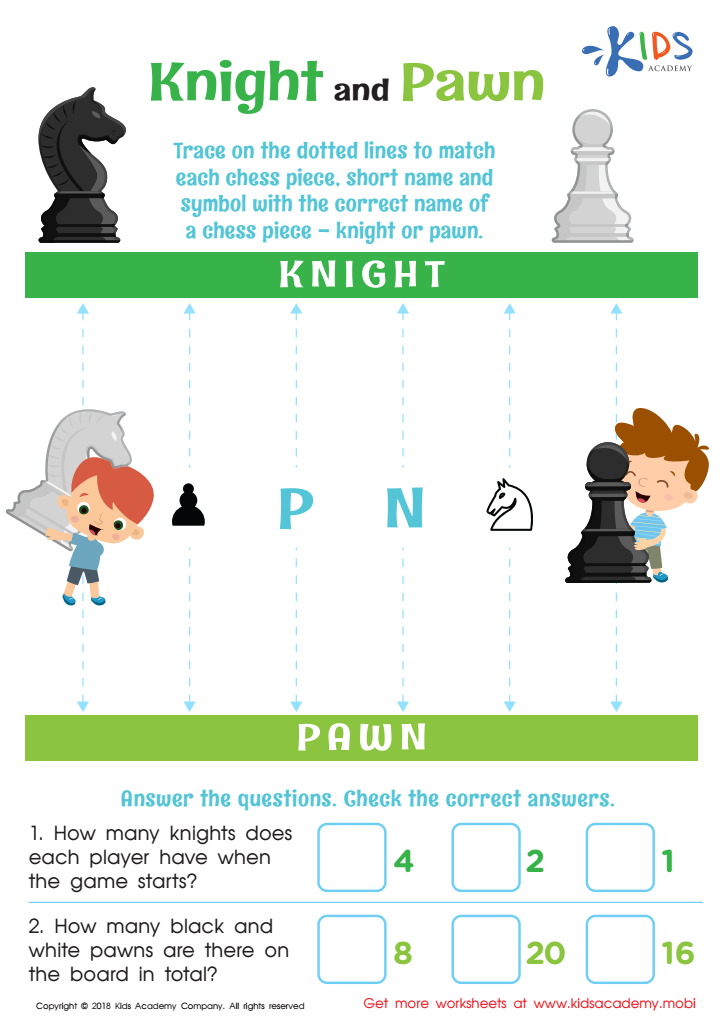
Knight and Pawn Worksheet
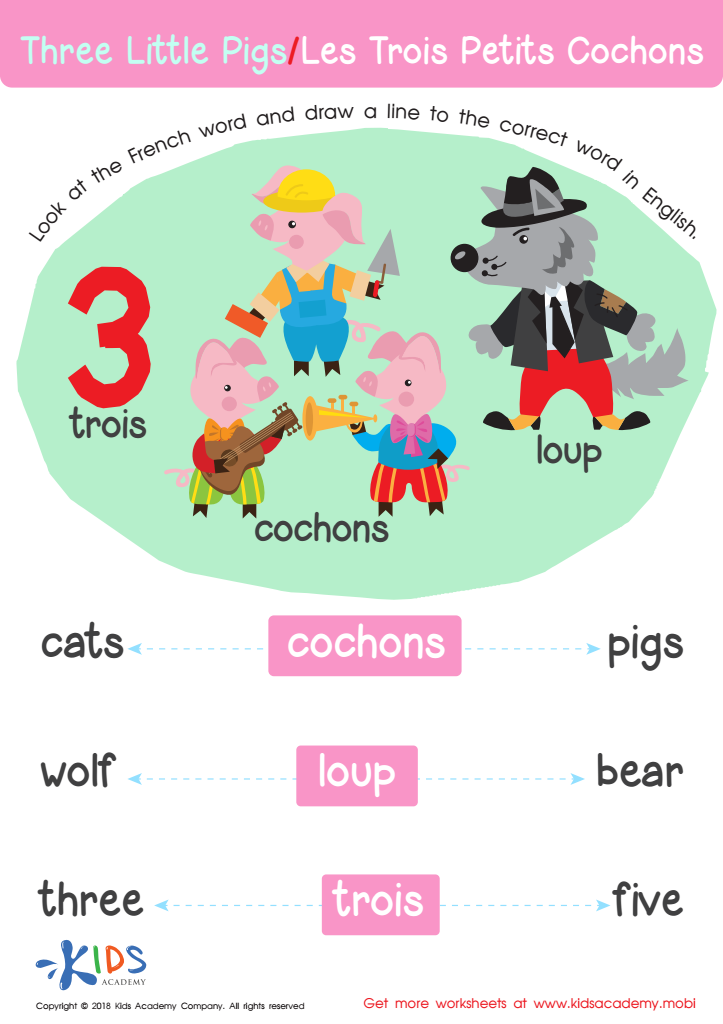
Three Little Pigs / Les Trois Petits Cochons Worksheet
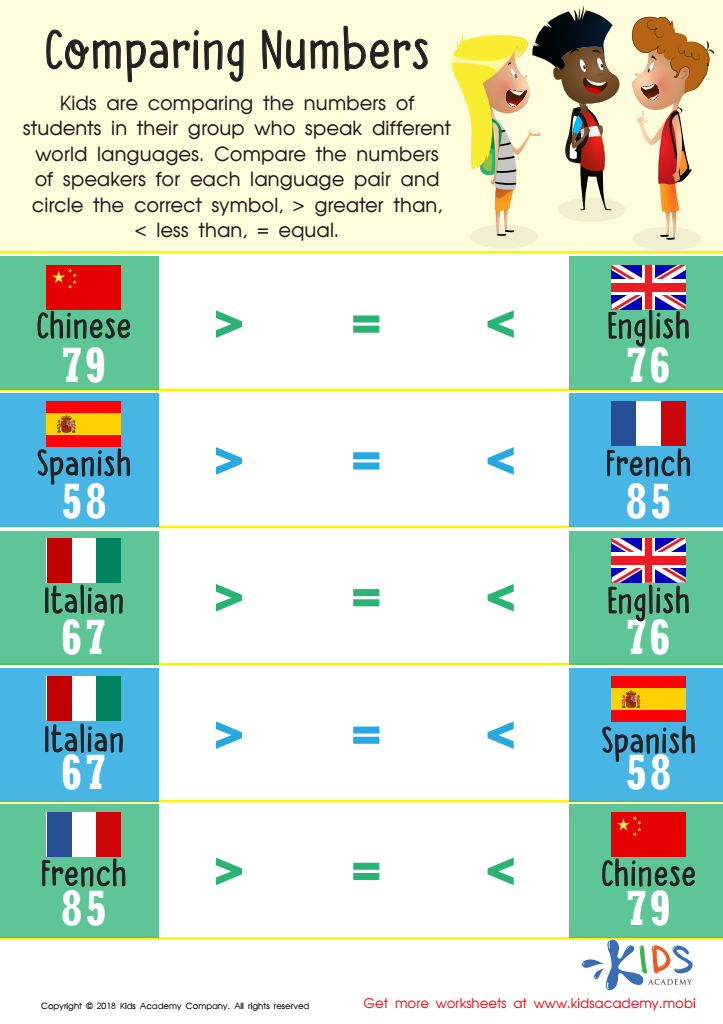
Comparing Numbers Worksheet for 1st Grade



.jpg)




Basic counting skills are foundational for children aged 7-8, impacting their overall academic success and everyday life. At this age, children are transitioning from concrete counting to more abstract mathematical concepts. Mastery of counting lays the groundwork for addition, subtraction, and, eventually, multiplication and division. Without these essential skills, children may struggle with more complex mathematics in later grades, potentially leading to a lack of confidence and interest in the subject.
For parents and teachers, fostering counting skills supports cognitive development and critical thinking. Counting also helps children understand numerical relationships and patterns, which are vital for reasoning and problem-solving. Furthermore, counting skills are applicable beyond academics; it enables children to manage money, tell time, and organize their daily routines.
Moreover, consistent reinforcement of counting through fun games, real-life scenarios, and engaging activities can create a positive learning environment. It encourages children to perceive math as enjoyable rather than intimidating. By prioritizing these basic skills, parents and teachers contribute significantly to building a strong mathematical foundation that benefits children both academically and in real-world situations. Engaging with children in this way can ignite a lifelong love for learning and exploration of mathematics.








